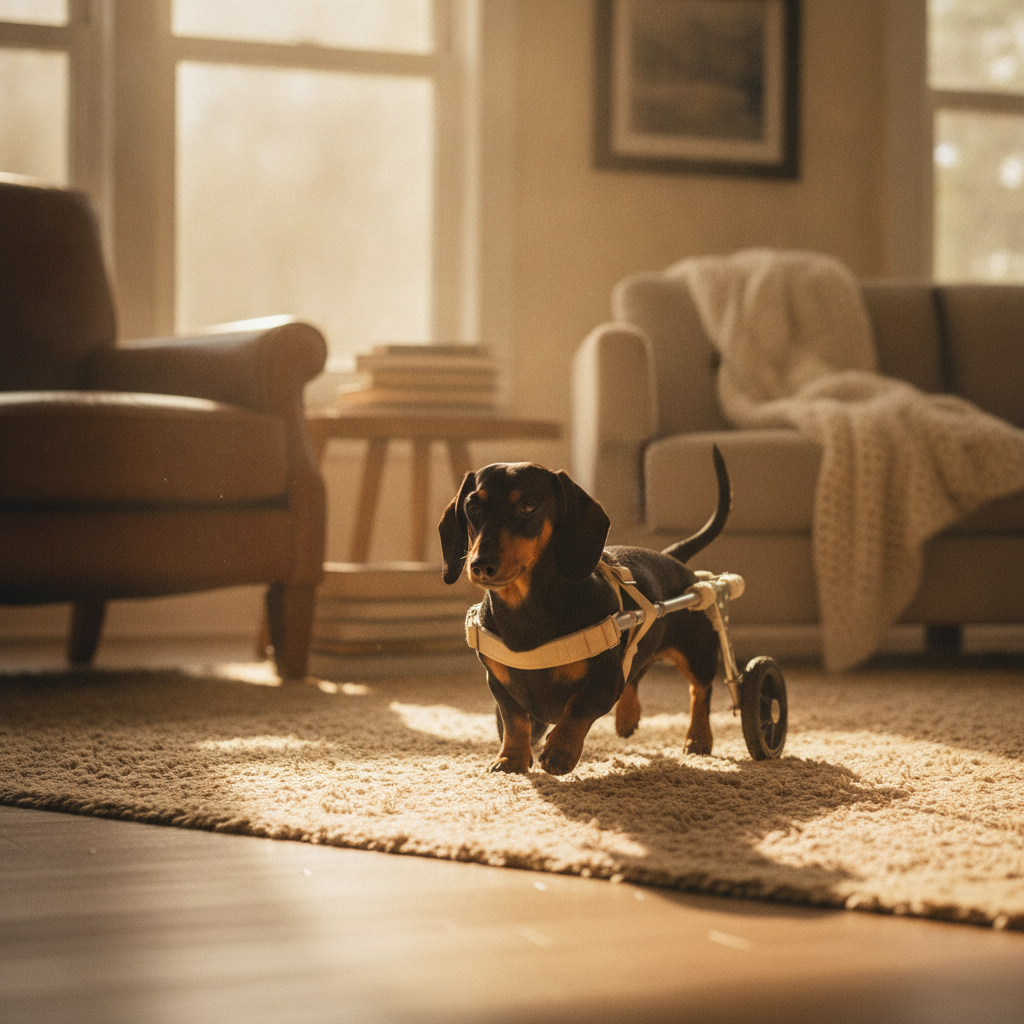
You see it happening in slow motion. Your able-bodied doxie, full of zoomie joy, takes a corner too fast. Your other little sausage, the one on wheels, is right in the path. For a split second, the world freezes. Your heart doesn't just drop into your stomach; it feels like it shatters on the floor. You lunge, you shout, you pray. And when they narrowly avoid a collision, the relief is so intense it makes you dizzy. You’ve just survived another Tuesday afternoon as the owner of a partially paralyzed dachshund and their rambunctious sibling.
If this sounds familiar, you know the feeling. It’s a constant, low-grade hum of anxiety. It’s the guilt that you’re not giving the “fun” dog enough playtime. It’s the guilt that you’re not protecting the “fragile” dog enough. You feel less like a loving dog parent and more like a stressed-out air traffic controller, constantly trying to prevent a mid-air disaster in your own living room.
You live in a state of perpetual vigilance, your ears tuned to the specific frequency of toenails scrambling on hardwood that signals an impending body slam. Every game of bitey-face looks like a major incident. You feel like you’re failing both of them, every single day.
How Do You Stop Being a Full-Time Referee?
So, you’ve tried to solve it. We all do. The first instinct is separation. You put up the baby gates, turning your home into a labyrinth. The wheeled warrior gets the living room, the four-legged torpedo gets the kitchen. It works, for a little while. But then you see them, whining and pawing at opposite sides of the gate, their pack broken by a piece of plastic. The sadness in their eyes is worse than the anxiety of a potential collision. This isn't a solution; it's a punishment for everyone.
Then you try becoming the “No Fun Police.” Every time the able-bodied one initiates play, you shout “No!” or “Gentle!” You hover over every interaction, ready to intervene. The result? Your healthy dog starts to look at you with confusion, wondering why their natural instincts are suddenly “bad.” Your paralyzed doxie, who might still want to engage in some way, is left out entirely. You’ve successfully stopped the risky play, but you’ve also stopped all the joy and stifled the essential bond of their pack.
These solutions fail because they’re based on a flawed premise. They are built on the idea that you have one “normal” dog and one “broken” dog, and that your job is to manage their deficiencies. But that’s not true, and it’s a miserable way to live.
The Reframe: You're Not a Referee, You're an Architect
Here’s the thing that changed everything for me, and what I want you to really hear: The problem isn't your dogs; it's your environment.
You are not trying to manage two fundamentally incompatible animals. You are managing one pack with a diverse set of physical needs. Your job is not to be a referee, constantly blowing the whistle on their behavior. Your job is to be an architect, redesigning their world so they can safely and happily be a pack again.
When you shift from trying to control their every move to controlling the space they move in, the anxiety starts to melt away. You’re no longer trying to suppress their dog-ness; you’re creating a safe arena for it. You’re building a world for the dogs you have, not wishing you had two identical ones. This mindset shift is the key to finding peace and joy again.
The Unified Environment: A 5-Step Framework for a Harmonious Pack
Once you see yourself as the architect, you can start building. This isn’t about buying expensive gear; it’s about being intentional. Here is the step-by-step framework we used in our home to help Marley and Mia find their new normal.
Step 1: Audit the Arena
Get down on the floor. Seriously. Crawl around your house and see it from their perspective. Where are the danger zones? Slippery hardwood floors are a race track for one and a slick, unpredictable surface for the other. A high-pile shag rug can tangle in wheels. A single step down into the living room is a cliff. Identify every single “red zone” where a slip, a fall, or a high-speed collision is likely. Then, identify your “green zones”—areas that are naturally safer, like a carpeted bedroom or a grassy patch in the yard.
Step 2: Universal Design for Doxies
Now, you start renovating—not with a sledgehammer, but with smart choices. The goal is to make as much of the environment as safe as possible for *both* dogs. This is where you can make huge strides in protecting that long little back, whether it's on wheels or not.
- Flooring is Everything: The single biggest change you can make is adding traction. Cover those slippery floors. Use low-pile area rugs and runners in all major pathways. This slows down your speed demon and gives your wheeled warrior the grip they need to maneuver with confidence. We wrote a whole guide on this because it's that important: Choosing the Right Rugs for a Dachshund is a great place to start.
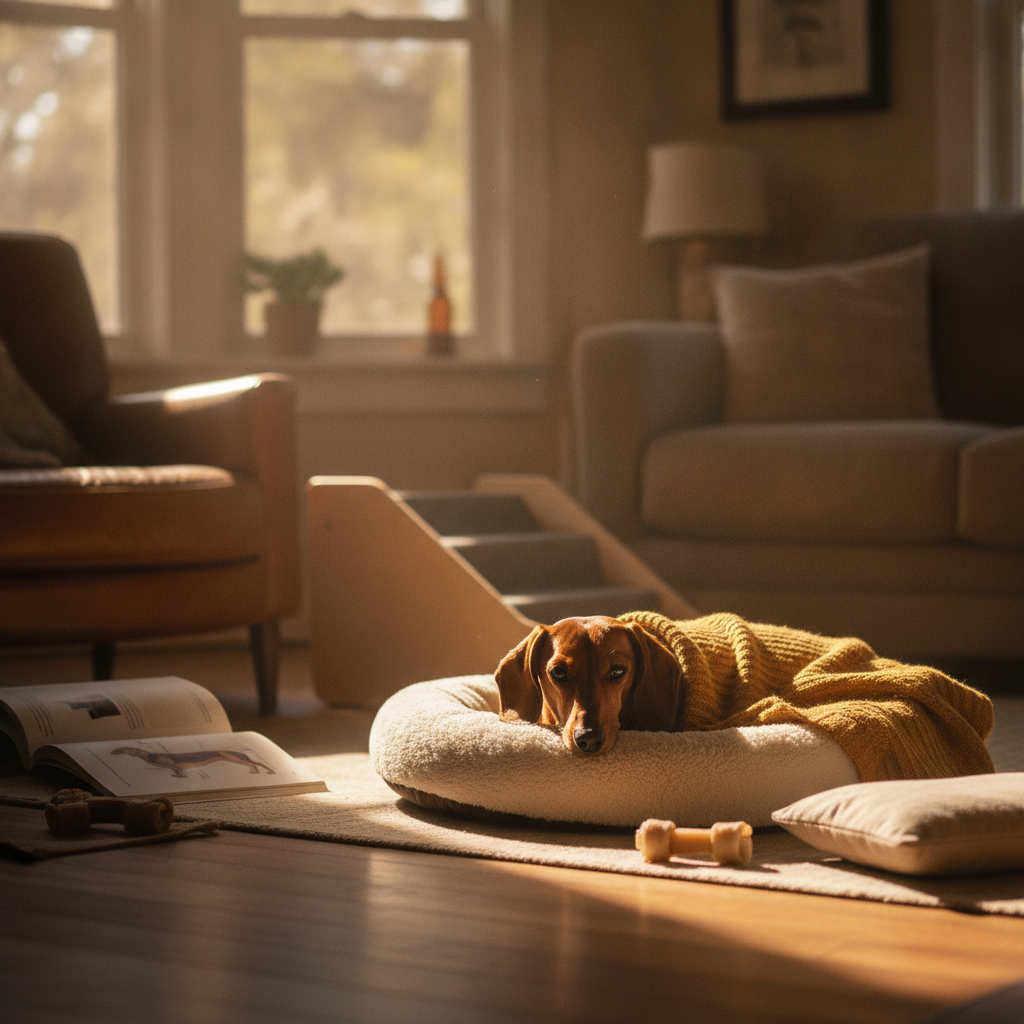
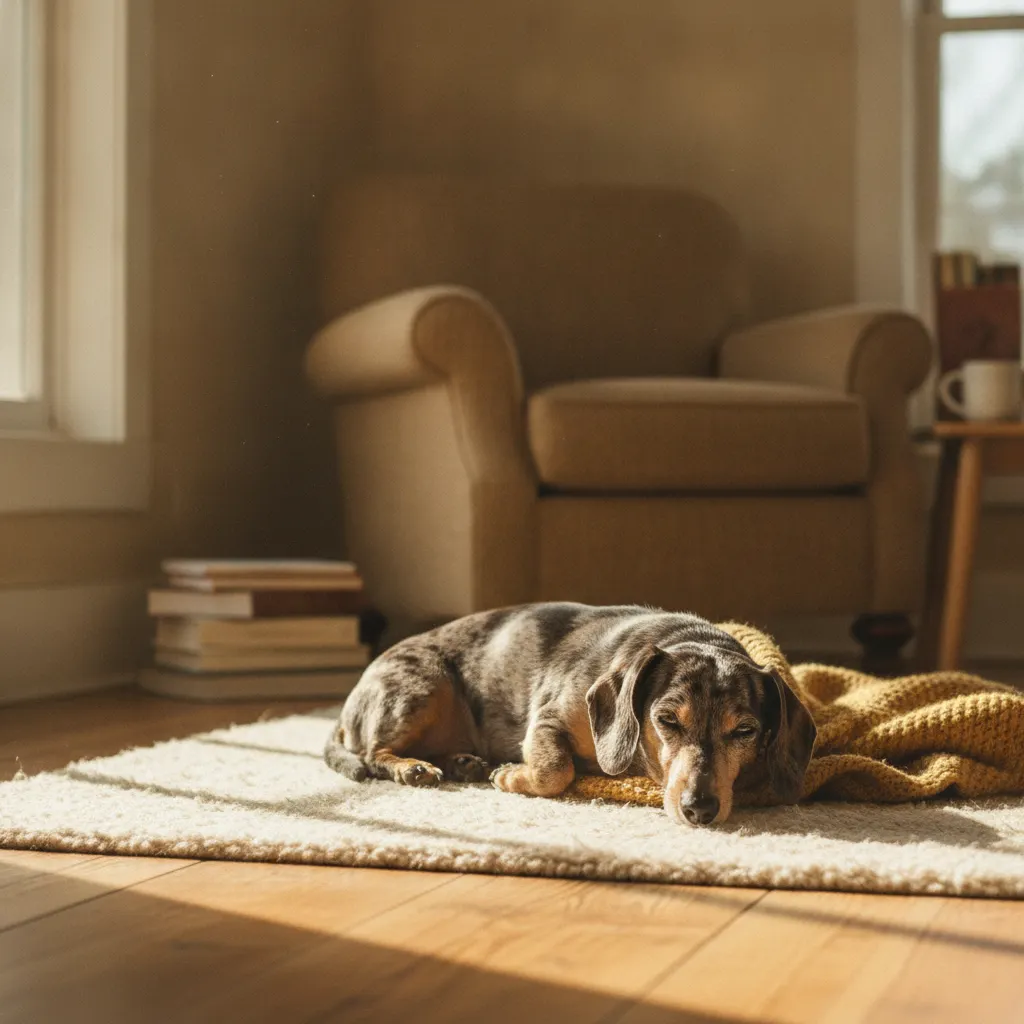
- Go Low: High furniture is the enemy. Instead of letting them on the couch, create an even better, cozier spot on the floor. A pile of firm orthopedic beds and blankets becomes the new pack headquarters. Both dogs can get on and off safely, without ramps or risky jumps. They can cuddle together without you worrying about one pushing the other off.
- Ramp Up (or Down): For any necessary elevation changes, like getting out the back door, invest in a good, wide ramp with a high-traction surface. Make it the *only* way up or down, blocking off the stairs. Soon, both dogs will use it as their default highway.
Step 3: Redefine “Play” and “Togetherness”
The classic dachshund body-slam playstyle might be off the table, but that doesn't mean play is over. It just means you need to get creative and introduce new ways for them to bond.
You aren't a bad dog owner. You're just living with a toddler who has a PhD in manipulation—and sometimes, one of those toddlers is on wheels.
Shared activities that engage their brains instead of their bodies are your new best friend. Snuffle mats, where they can forage for treats near each other, are fantastic. Puzzle toys can be worked on side-by-side. Scent work games, where you hide smelly treats around a safe room, allow them to use their powerful noses and work as a team. This isn't about replacing their old play; it's about expanding their definition of what it means to have fun as a pack. You can learn more about their unique instincts in our guide to how dachshunds *really* play.
Step 4: What Does Safe Play Look Like for a Paralyzed Dachshund?
A dog in a wheelchair is not a fragile flower. They still have the heart and mind of a feisty, tenacious dachshund. They *want* to run and play. Your job is to create a safe space for that to happen.
This is where your “green zones” come in. A securely fenced yard with a flat, grassy lawn is the perfect place for a supervised “assisted zoomie.” Let your able-bodied doxie off-leash while you keep a loose hold on a long line attached to your wheeled doxie. You can guide them, prevent overly-aggressive approaches from their sibling, and let them feel the joy of moving fast together. It’s about controlled chaos, not zero chaos.
Indoors, a large, fully rugged room can serve the same purpose. The key is 100% supervision for these high-energy moments. The rest of the time, the universally designed environment keeps them safe during casual interactions.
Step 5: Separate Needs, Shared Space
Different physical needs don't have to mean different rooms. You just need clever management. Does one dog need physical therapy exercises? Do them in the living room while the other dog chews on a bully stick on their bed a few feet away. They are still together, sharing the pack space.
Meal times can be a challenge, especially if one is a slower eater or has special dietary needs. This is a perfect use for crates or playpens *in the same room*. They each have their own protected space to eat at their own pace, but they aren’t isolated. This principle applies to so many aspects of life and is a core part of successfully managing a multi-wiener household, regardless of their mobility.
Proof That Harmony is Possible
When Mia first came home after her IVDD surgery, paralyzed and confused, Marley didn’t understand. He was a year younger, full of puppy energy, and all he wanted to do was play-tackle his big sister like he always had. My life became a constant chorus of “Marley, NO!” I was exhausted, and I felt like I was failing them both.
The shift happened when I stopped seeing Marley as the problem. He wasn’t being bad; he was being a dachshund. The problem was our shiny wood floors and our high sofa. We rolled up the rugs from the dining room and put them in the living room. We bought three huge, firm dog beds and piled them in a corner with their favorite blankets. That corner became the new heart of our home.
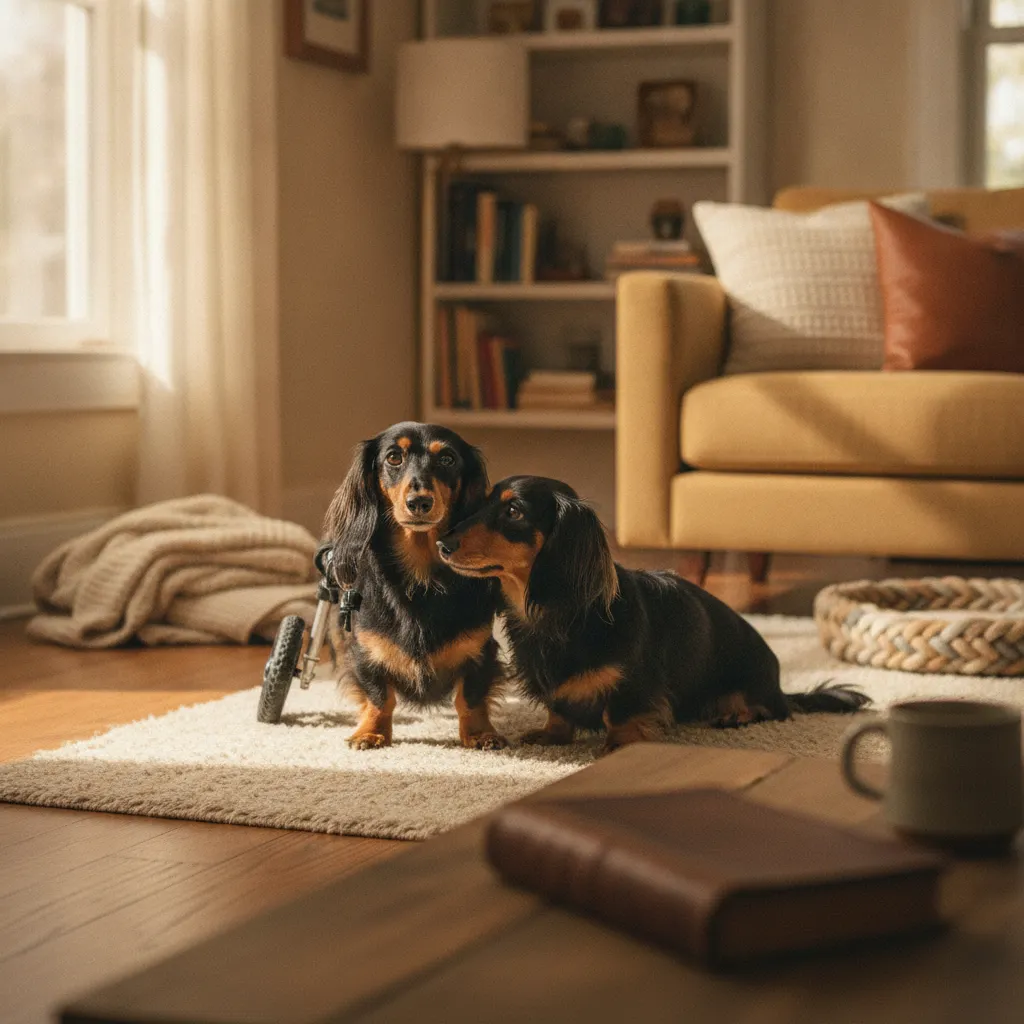
Slowly, a new dynamic emerged. Marley learned that if he brought a toy to the “cuddle corner,” Mia might gently tug on it. They learned to nap together, their bodies curled up side-by-side. In the yard, I taught Marley a “wait” command, so Mia could get a head start in her wheels before he gave chase. They found their rhythm. It wasn't the same as before, but it was a new kind of beautiful. They were still a pack.
Living with a paralyzed dachshund and an able-bodied one is a journey. It will test your patience and break your heart a little bit. But by shifting your focus from being a referee to being a thoughtful architect, you can build a world where both your dogs don't just coexist, but truly thrive—together.
Understanding how to manage your pack's environment is one half of the equation. The other half is understanding the 'why' behind their individual behaviors, which is more important than ever in a special-needs household. To get a deeper insight into what your doxies are thinking and be a more confident doxie parent, I’ve put together a guide on their core motivations. Get the free Dachshund Behavior Decoder.
Frequently Asked Questions
How can I stop my able-bodied dachshund from being too rough with my paralyzed dachshund?
Instead of punishing the rough play, focus on redirecting that energy and managing the environment. Provide plenty of separate enrichment like puzzle toys, and create supervised “safe zoomie” sessions in a rugged, open area. A tired dog is a gentler dog, so ensure your able-bodied doxie gets enough exercise away from your paralyzed dachshund, such as long walks or trips to the dog park.
Is it cruel to keep a paralyzed dachshund?
Absolutely not. A paralyzed dachshund can live an incredibly happy, full, and pain-free life with the right care. Their quality of life depends on a loving owner who can meet their needs for mobility (with a wheelchair), bladder management, and enrichment. They still have the same feisty spirit and desire for love as any other dog.
Do paralyzed dachshunds get depressed?
They can, but it's often a result of pain, boredom, or isolation rather than the paralysis itself. A key sign of depression is a loss of interest in things they once enjoyed. By providing enrichment, including them in pack activities, and ensuring they are comfortable and mobile in their wheels, you can keep their spirits high. A change in behavior always warrants a vet visit to rule out pain.
Should I get a companion dog for my paralyzed dachshund?
This is a very personal decision. If you already have a multi-dog household, the focus should be on integration. If you are considering adding a new dog, it can sometimes bring new life and joy, but it can also add stress. The temperament of the new dog is critical; a calm, gentle adult dog is often a better match than a boisterous puppy.
How do I manage feeding time with two doxies with different needs?
The easiest way is to create a physical barrier without creating social isolation. Feed them in separate crates or playpens placed in the same room. This allows each dog to eat at their own pace without the other trying to steal food, which is especially important if one is on a special diet.
What are the best toys for a paralyzed and able-bodied doxie to play with together?
Focus on stationary or low-movement toys that they can engage with side-by-side. Snuffle mats, LickiMats, and large, shareable puzzle toys are excellent choices. A gentle game of tug-of-war with a soft, long toy can also work well, as long as you supervise to ensure the pulling doesn't become too intense or jerk your paralyzed dachshund's body.
IVDD · paralyzed dog · dachshund health · dog wheelchair