It’s a sound every doxie parent knows. The sudden, sharp yelp from the other room. Or maybe it’s not a sound at all. Maybe it’s the sickening thump of four little paws hitting the floor from a height that was just a little too high. Your heart leaps into your throat. You hold your breath. For a split second, the entire world stops as you wait to see if they stand up, shake it off, and trot over to you like nothing happened.
If that feeling is familiar, you’re living with what I call “IVDD Dread.” It’s more than just a passing worry; it’s a constant, low-grade hum of anxiety that can quietly steal the joy from sharing your life with these incredible little dogs. This constant IVDD anxiety turns you from a happy-go-lucky companion into the full-time “fun police,” shouting “Be careful!” every time they get the zoomies. But here’s the thing: you can’t bubble-wrap a dachshund, and living in a state of constant fear isn’t fair to you or to them. The goal isn't to eliminate every possible risk—that's impossible. The goal is to manage that risk so intelligently that you earn the right to relax and just enjoy your dog.
What Is 'IVDD Dread' and Why Is My IVDD Anxiety So High?
Let’s be honest. Being a dachshund parent is a unique experience. You’re living with a dog whose personality is ten times bigger than its body, and whose body has a very specific, well-known vulnerability. IVDD, or Intervertebral Disc Disease, is the shadow that looms over our love for the breed. And because we love them so fiercely, that shadow can start to feel enormous.
IVDD Dread is the emotional toll of that shadow. It’s the knot in your stomach when you see them wrestling with another dog. It’s the mental calculation you do every time they eye the sofa. It’s the frantic late-night Googling after they seem a little “off” or stumble on a walk. This isn’t just being a responsible owner; it’s a specific form of anxiety that can genuinely impact your mental health and your relationship with your dog.
You become a scanner, constantly watching for the slightest hint of trouble: a dipped back, a wobbly walk, a reluctance to jump into your lap. You might find yourself saying “no” more than “yes” — no more chasing the ball, no more leaping for toys, no more wrestling on the rug. The joy starts to get chipped away by fear, one tiny “no” at a time.
The Bubble-Wrap Approach: Why Our Best Intentions Fail Us
When faced with this fear, our first instinct is to control the environment. We buy every ramp on the market. We install baby gates at the bottom of the stairs. We carry them up and down every step. We essentially try to create a padded, risk-free world for our little sausage dogs.
And while these are all good, sensible precautions, they often fail to cure our anxiety. Why? Because they come from a place of fear, not a place of empowerment. The bubble-wrap approach has three major flaws:
- It’s Unsustainable: You can’t watch them 24/7. The moment you turn your back, they might find a way to launch themselves off the armrest. Constant vigilance is exhausting and, ultimately, impossible.
- It Transfers Anxiety: Dogs are incredibly intuitive. When you’re tense, holding your breath every time they move, they feel it. Your anxiety can make them anxious, leading to a confused dog who doesn’t understand why their world has suddenly become so restrictive.
- It Focuses on the Wrong Goal: The goal of a bubble-wrapped house is to prevent an injury. But the real goal should be to build a life of joyful, back-safe habits. Prevention is a piece of the puzzle, but it can’t be the entire picture, or the picture becomes very small and grey.
Living in a state of reaction, just waiting for the bad thing to happen, is no way to live. It keeps you stuck in a cycle of worry, and it prevents you from being the confident, relaxed leader your doxie needs you to be.
The Reframe: From Fear-Based Prevention to Joy-Based Preparation
Here is the single most important shift you can make to escape IVDD Dread: Stop focusing on what you’re afraid of, and start focusing on how prepared you are. Your job isn't to prevent every possible risk, but to be so thoroughly prepared for it that the fear loses its power over you.
Think about it. We don't drive a car by staring at all the other cars, terrified they might hit us. We put on our seatbelt, check our mirrors, and trust our preparation and skill to handle whatever comes our way. We need to bring that same energy to our lives with dachshunds.
When you shift from fear to preparation, the entire dynamic changes. You’re no longer a victim of chance, waiting for disaster. You are a capable, knowledgeable caretaker who has a plan. And a plan is the ultimate antidote to panic. This mental shift is the key to getting your joy back. It’s about deciding that you will not let the *what if* ruin the *what is*—which is a wonderful life with a funny, stubborn, loving long little dog.
The 3 P's: Your Framework for Doxie Peace of Mind
To make this shift practical, I use a simple framework I call the “3 P’s of Doxie Peace of Mind.” It’s a system for channeling your anxious energy into productive action. Once you’ve addressed these three areas, you will feel the weight of that dread begin to lift.
1. Protect (The Physical Environment)
This is where we take all that anxious energy and use it to make smart, one-time changes to your home and routines. The goal here isn’t to create a padded cell, but a “back-safe playground.”
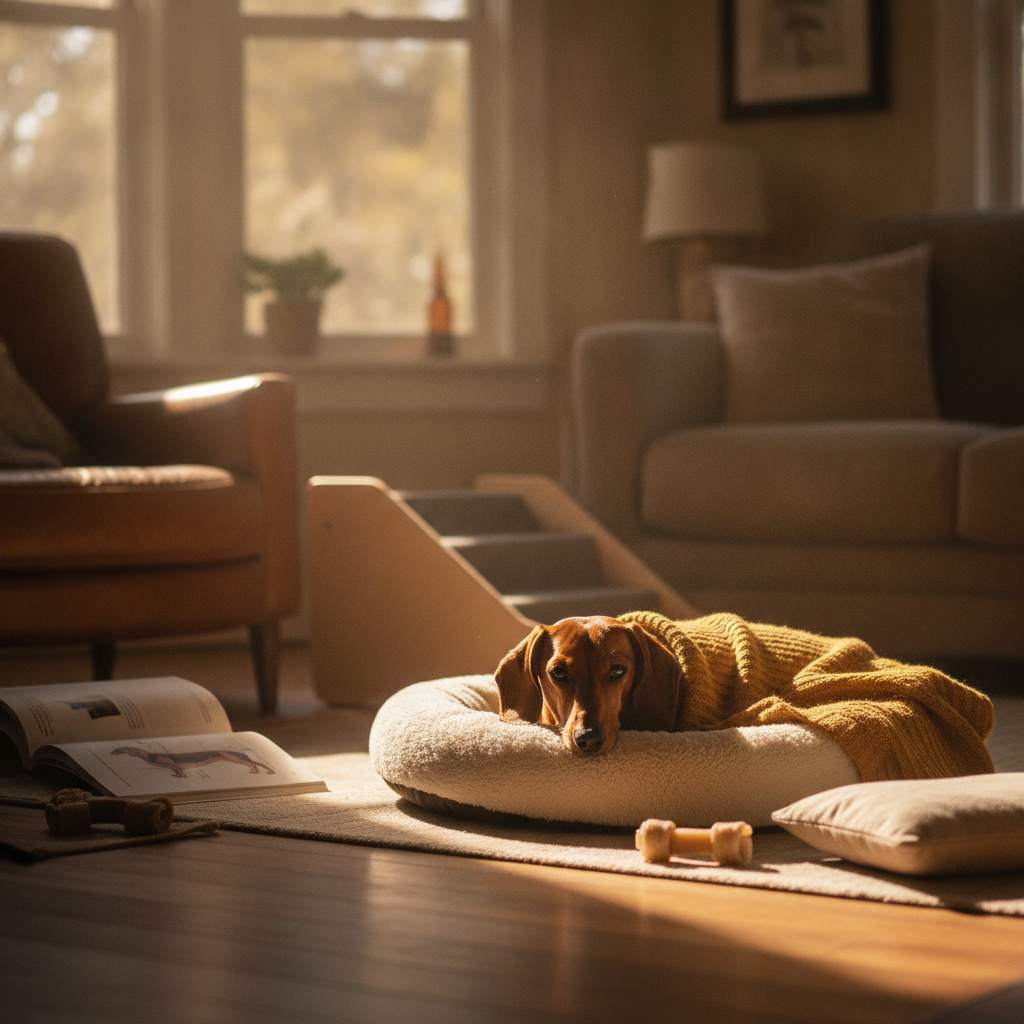
- Ramps are Non-Negotiable: This is the single biggest change you can make. Every piece of furniture your doxie is allowed on—the couch, the bed—needs a ramp. Not stairs, which can still cause jarring impact, but a gentle, sturdy ramp. Teaching them to use it consistently takes patience (and a lot of treats), but it becomes an automatic habit that eliminates thousands of micro-impacts on their spine over a lifetime.
- Manage the Weight: A lean dachshund is a healthier dachshund. Those extra few pounds put a significant, constant strain on their long spine. Work with your vet to keep your doxie at an ideal, healthy weight. This is more protective than any ramp.
- Harness, Never Collar: When walking, always use a well-fitting harness that distributes pressure across their chest and shoulders. Pulling on a collar puts direct strain on their neck and spine.
- Core Strength is Key: A strong core acts as a natural corset, supporting the spine. You can build this with safe, low-impact activities. Think less about jumping for frisbees and more about things like “sniffari” walks on varied terrain (grass, gentle hills) which engage their muscles. You can find more ideas for safe enrichment in our guide to the best doxie toys.
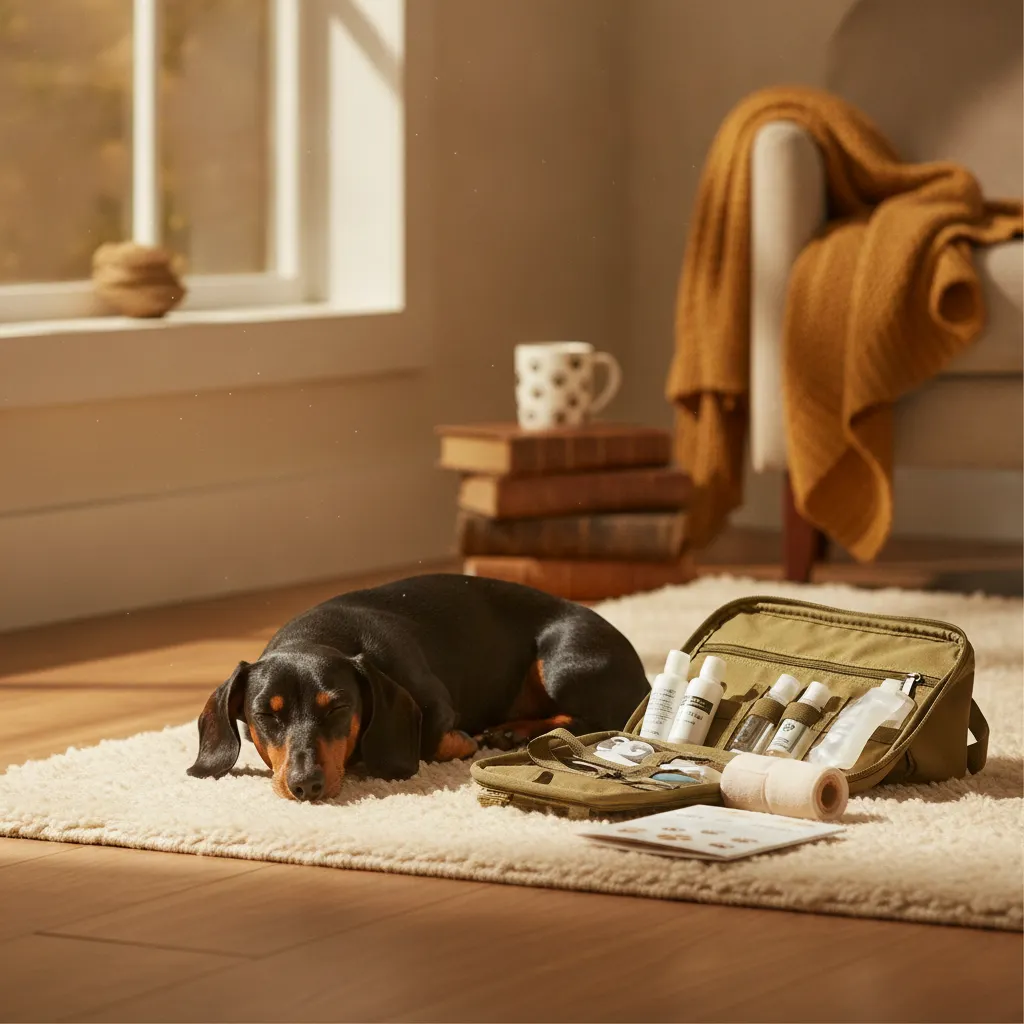
- Build Your Kit: Having supplies on hand is part of preparation. This means having things ready before you need them. We have a whole guide on how to build a back-ready first-aid kit for your dachshund, which is a fantastic way to channel worry into action.
Once you’ve protected the environment, you don’t have to think about it constantly. The ramps are there. The harness is by the door. You’ve done the work, and now you can trust it.
2. Prepare (Your Mind and Your Wallet)
This is the part that directly fights the anxiety. Panic thrives in uncertainty. A plan eliminates uncertainty. Your preparation plan has two key components.
First, the mental and logistical plan. Know the actual signs of a back injury. It’s not always a dramatic yelp. It can be subtle:
- Reluctance to move, eat, or go potty
- A hunched or tense posture
- Shivering or shaking
- Loss of coordination in the back legs (wobbling or “knuckling,” where the paw curls under)
- Crying out when touched or picked up
Write these down. Have your vet’s number and the number for the closest 24/7 emergency vet on your fridge. Know how you would transport your dog safely in an emergency (in a crate or laundry basket to keep them still). Just thinking through these logistics *now*, when you’re calm, will make a world of difference if you ever need them.
Second, the financial plan. Vet care for IVDD can be expensive, ranging from conservative crate rest and medication to major surgery. The stress of a sick dog is immense; the stress of a sick dog combined with a surprise $8,000 vet bill is devastating. Having a financial plan in place is one of the kindest things you can do for your future self. This could be a dedicated savings account (a “Doxie Back Fund”) or, my strong recommendation, a good pet insurance policy. Knowing you have a financial safety net removes a massive layer of fear and allows you to make decisions based on what’s best for your dog, not what you can afford in a panic.
If you've ever had to navigate this journey, you know the importance of your own wellbeing. It's a topic we cover in our guide to caring for yourself when your dachshund has IVDD.
3. Play (In the Present Moment)
This is the reward. This is the whole point. Once you have protected the environment and prepared your plan, you have *earned the right to let go and just play with your dog.*
The first two P’s are the systems you put in place so that you can live in the third P. This is where you reclaim your joy. You stop seeing your dachshund as a fragile object about to break and start seeing them again as the funny, smart, and resilient companion they are. You can relax on the couch together because you know the ramp is there for a safe exit. You can enjoy your walks because their harness is secure and you’re focused on the smells, not the stumbles.
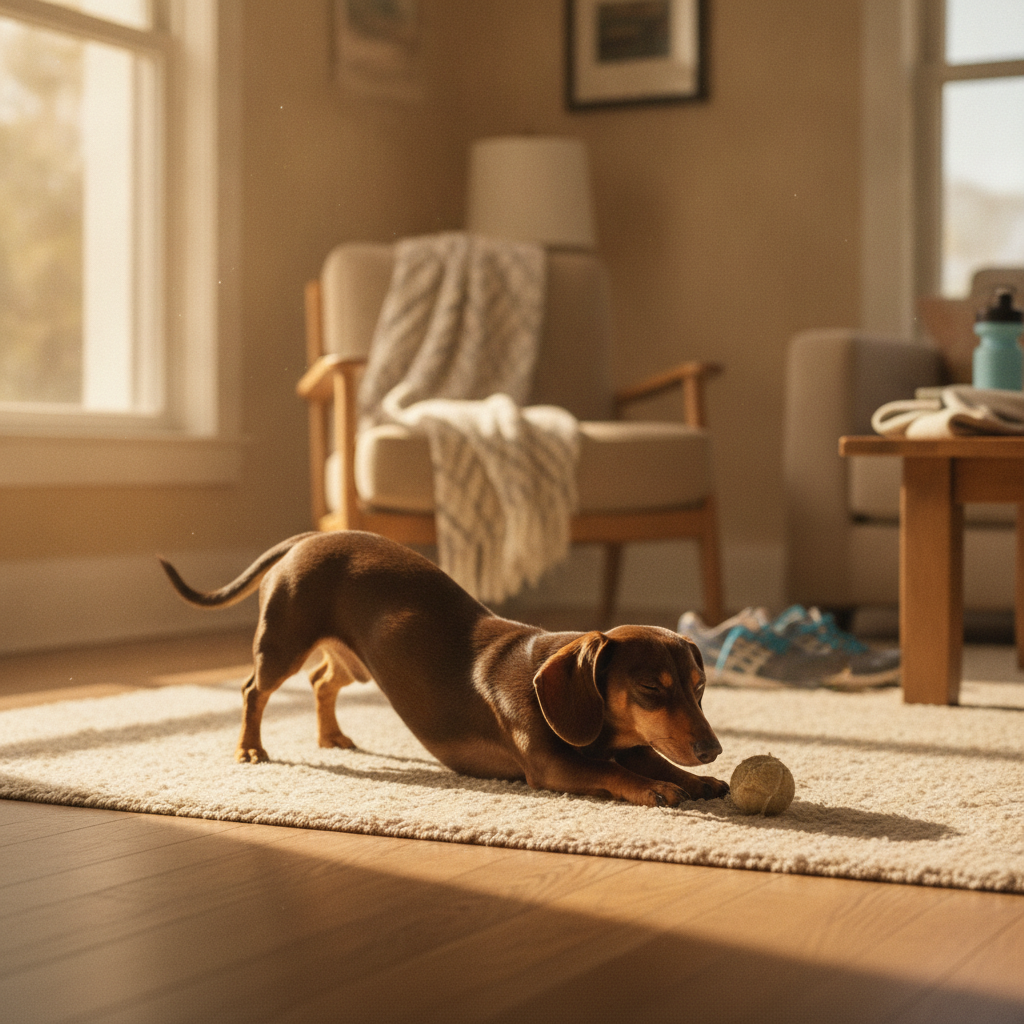
I remember a time with my first doxie, Marley, when my IVDD anxiety was at its peak. I was so afraid of him getting hurt that I stopped our favorite game of rolling the ball down the hallway. I was terrified he’d twist the wrong way. He would look at me with such confusion, his favorite toy sitting untouched. My fear was stealing his joy. With my second, Mia, I put the 3 P's into practice. We have ramps everywhere. We have our vet plan. And now, we play. We go on long “sniffaris.” We play gentle puzzle games. We cuddle without me holding my breath. The plan is in place, so the dread is gone.
Your job isn't to prevent every risk, but to be prepared for it.
This is your permission slip to enjoy the moment. You have done the responsible work. You have a plan. Now, throw the (soft) toy. Go for the walk. Snuggle up and watch a movie. Your dog deserves a parent who is present and joyful, not one who is constantly lost in a spiral of worry.
You Are a Good Doxie Parent
Feeling this anxiety doesn't make you a bad owner. It makes you a loving one. But that love deserves to be expressed as joy and companionship, not as fear and restriction. By shifting your focus from fearful prevention to confident preparation, you can transform your experience of dachshund ownership.
Building your knowledge is a huge part of that confidence. Understanding why your doxie does what they do helps you spot when a behavior suddenly changes—the number one sign that something might be wrong. To be a more confident doxie parent and truly understand the 'why' behind their quirky behavior, I'd love for you to have this guide. Get the free Dachshund Behavior Decoder.
Frequently Asked Questions
Can I completely prevent IVDD in my dachshund?
Unfortunately, no. IVDD has a strong genetic component, so you can't eliminate the risk entirely. However, by managing their weight, preventing high-impact jumping, and building their core strength, you can significantly reduce the likelihood of an injury and minimize your own IVDD anxiety.
Does using ramps and gates mean my dog will have a boring life?
Not at all! It's the opposite. By making their environment safer, you free yourself up to engage in more joyful, low-impact play. Think puzzle toys, scent work, “sniffari” walks, and gentle games of tug. A safe dog is a happy dog with a relaxed owner, which is anything but boring.
Is pet insurance really worth it for a dachshund?
In my personal opinion, yes, absolutely. Given the breed's predisposition to back issues, pet insurance can be a financial and emotional lifesaver. It allows you to make medical decisions based on the best course of treatment rather than cost, which is a massive relief during a stressful time.
How do I know if my IVDD anxiety is normal or excessive?
It's normal to be cautious. It becomes excessive when the fear consistently overshadows the joy of owning your dog. If you find yourself constantly restricting their movement, unable to relax around them, or if your thoughts are consumed by “what ifs,” it may be time to consciously apply a framework like the 3 P's to channel that worry into productive, calming action.
What's the single most important thing I can do today to reduce my worry?
Make a plan. Write down your vet and emergency vet's numbers, and look up the basics of a pet insurance policy. Taking one concrete step towards preparation can immediately make the future feel less scary and more manageable, helping to ease that feeling of IVDD anxiety.
My doxie had an IVDD episode before. Will my anxiety ever go away?
Living through an IVDD episode is traumatic, and it's natural to be hyper-vigilant afterward. The anxiety may never vanish completely, but it can be managed. Focusing on the 3 P's—especially the diligent "Protect" phase—can help you rebuild trust in your dog's resilience and your ability to provide a safe, happy life for them post-recovery.
IVDD · dachshund health · dog anxiety · back safety