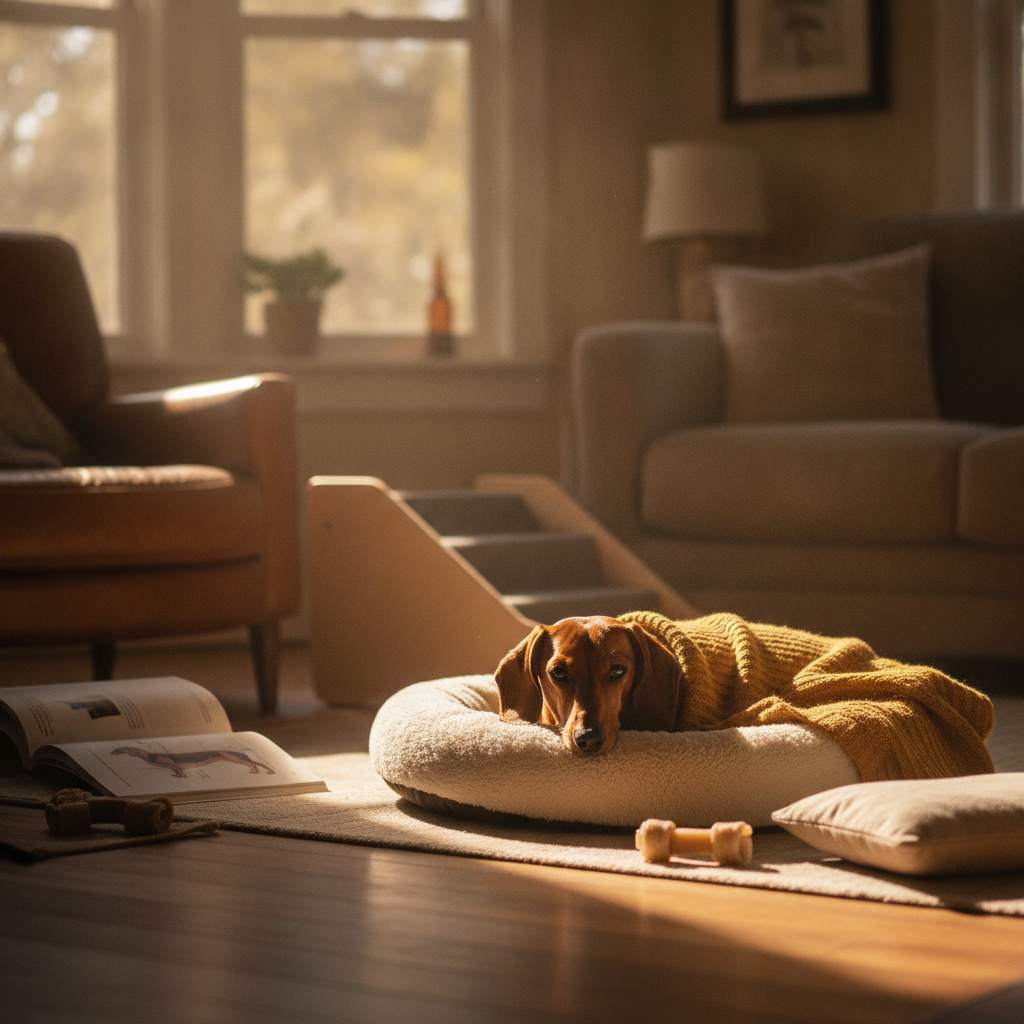
The vet says the words, and the air leaves the room. Intervertebral Disc Disease. IVDD. Maybe they follow it up with phrases like “no deep pain sensation” or “prognosis is guarded.” In that moment, your world shrinks to the size of your dog’s still, silent back legs. It feels like an ending. A terrible, unfair, heartbreaking ending to the life of zoomies and couch-fort burrowing you both knew. But what if it’s not?
What if this overwhelming moment is actually a doorway to a different kind of joy? This is for the doxie parent whose heart is in their throat, who is grieving the loss of mobility, and who is terrified their vibrant, bossy little sausage dog will never be happy again. The idea of a dachshund IVDD cart can feel like admitting defeat, a final sign that things will never be normal again. That’s where we get it wrong.
The Grief is Real, But the Story Isn't Over
Let’s be honest. Seeing your dachshund struggle is a unique kind of pain. You feel helpless. You might blame yourself, replaying every jump off the couch in your mind. You look at their favorite squeaky toy, now silent in the corner, and the grief is overwhelming. The common spiral is to focus only on what’s been lost. You see the stillness, not the spirit. You see the paralysis, not the personality that is still 100% there, trapped in a body that won’t cooperate.
Many loving owners get stuck here, thinking that a life with limited mobility is a life with limited happiness. They worry a cart is cumbersome, unnatural, or a constant reminder of the injury. But the truth is, your dachshund isn’t thinking about what they used to be able to do. They’re thinking about what they want to do *right now*: sniff that interesting spot in the yard, bark at the mail carrier, and follow you into the kitchen. A cart isn’t a symbol of what’s gone. It’s a tool for what’s next.
The Reframe: It's Not a Wheelchair, It's a Hot Rod
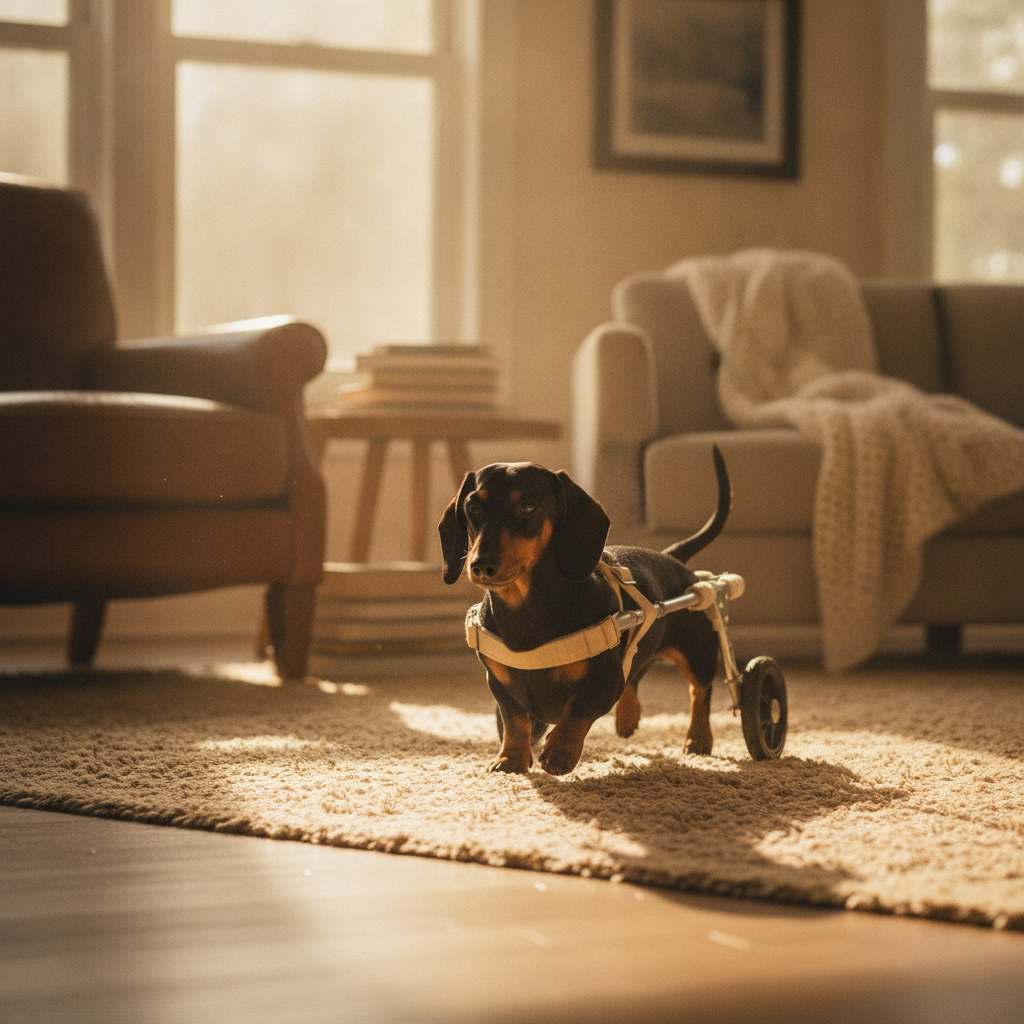
Here’s the perspective shift that changes everything: A dog wheelchair isn’t a medical device of last resort. It's a ticket to freedom. It's a mobility aid. It's a shiny new set of wheels that lets their spirit off the leash.
Your dachshund's stubborn, curious, endlessly bossy soul is not located in their spinal cord. It’s in their heart and their oversized brain. All a cart does is bridge the gap between their will and their body. The moment you stop seeing it as a wheelchair and start seeing it as their personal all-terrain vehicle, the entire picture changes. You’re not managing a disability; you’re enabling an adventure. This isn't the end of their story. It’s just the chapter where they get their cool new ride.
When is the Right Time to Consider a Dachshund IVDD Cart?
One of the biggest questions is “when?” It’s not just for dogs with permanent, complete paralysis. A cart can be a powerful tool in several scenarios, but this decision should always be made with your veterinarian or a certified canine rehabilitation specialist. They are your essential partners in this journey.
A cart might be right for your doxie if:
- They are in post-surgical recovery. After IVDD surgery, a cart can help a dog get mobile sooner in a supported, safe way. It prevents them from dragging their legs, which can cause sores, and helps maintain muscle mass while their nerves are healing. It's a key part of a comprehensive IVDD recovery plan.
- They have long-term paralysis. For dogs who don't regain function in their back legs, a cart gives them back their independence, their ability to explore, and their role in the family pack.
- They are a senior with declining mobility. It’s not just for IVDD. Older doxies with degenerative myelopathy, severe arthritis, or general weakness can get a new lease on life with wheels. It helps them keep up on walks and stay engaged, which is crucial for their mental health in their golden years.
The real signal is when your dachshund’s spirit is writing checks their body can’t cash. If you see them trying to pull themselves forward with their front legs, whining with the desire to get somewhere, or looking at you with that “let’s go!” expression, their mind is ready. The cart just helps their body catch up.
How Do You Choose the Best Wheels for Your Wiener Dog?
Not all dog wheelchairs are created equal, and a dachshund’s long, low build requires special consideration. Getting the right dachshund IVDD cart is critical for their comfort, safety, and willingness to use it. Here’s what to look for.
Custom-Fitted vs. Adjustable
While adjustable, off-the-shelf models can seem convenient, a custom-built cart is almost always the superior choice for a dachshund. Their unique proportions mean a generic cart often won’t provide the right support. A custom cart is built to your dog’s exact measurements, ensuring a perfect fit that prevents rubbing, pressure sores, and imbalance.
Key Features of a Great Doxie Cart:
- Lightweight Frame: Look for aircraft-grade aluminum. It’s strong enough to be durable but light enough that your doxie isn’t working overtime just to move the cart.
- The Right Saddle: The saddle supports their pelvis. It should be comfortable, padded, and not put pressure on their spine or bladder area. This is the most important part of the fit.
- Adjustability: Even custom carts should have some adjustability in height, length, and width. Your dog’s weight and muscle tone may change over time, and you’ll need to tweak the fit.
- Appropriate Wheels: Smaller, lightweight wheels are great for indoor use. Larger, more rugged wheels are better for navigating grass, trails, and varied terrain. Some carts offer interchangeable wheel sets.
The measurement process is meticulous for a reason. You’ll typically need to measure their height at the withers, the length from front legs to back, the width of their chest and hips, and several other points. Take your time, measure twice, and work with a reputable company that offers good customer support.
The First Roll: A Guide to a Happy Introduction
You’ve got the cart. You’re hopeful. You put your dachshund in it, and they... freeze. Or they try to back out of it. Or they just look at you with utter betrayal. Don’t panic! This is normal. Introducing the cart is a process built on patience and an obscene amount of high-value treats.
Step 1: Make it Furniture
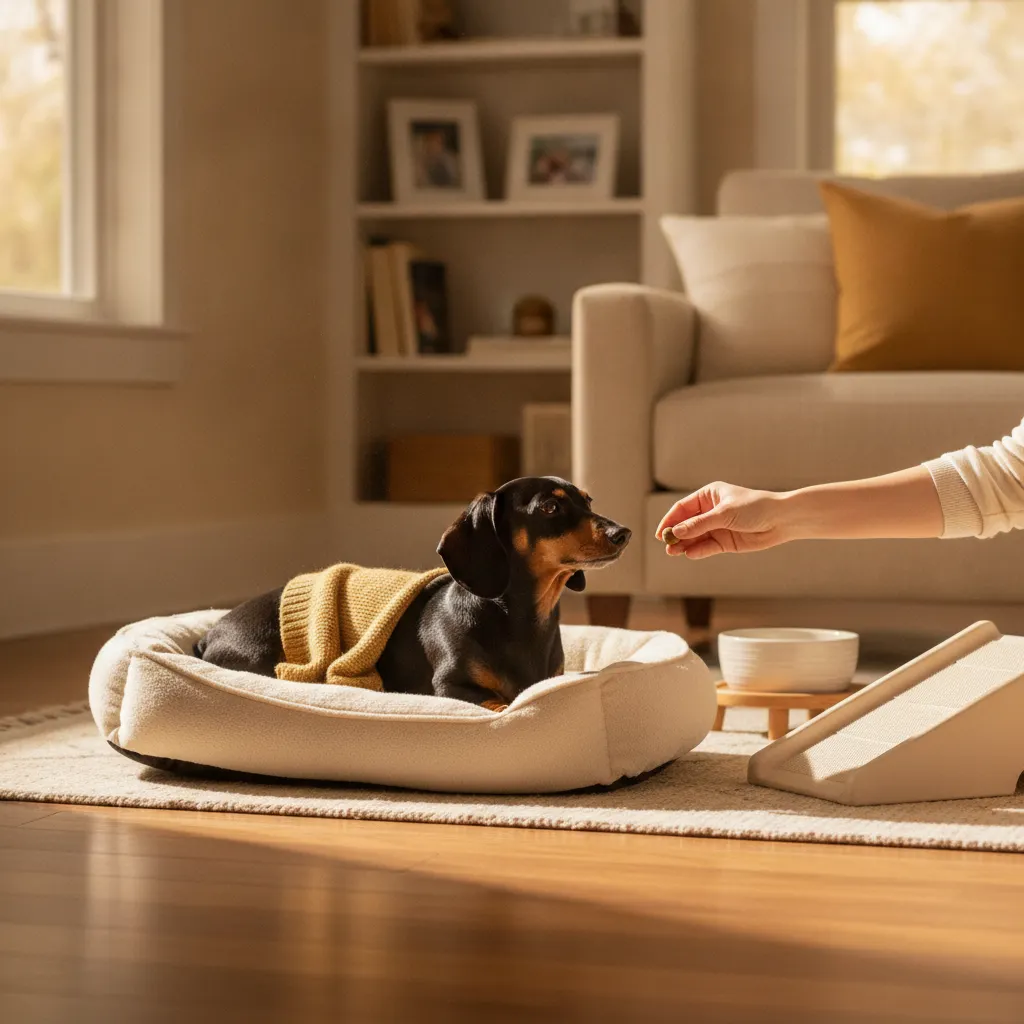
Before you even try to put them in it, just leave the cart in the middle of the living room for a day or two. Let them sniff it. Put treats on it. Let it become a boring, non-threatening part of the scenery that occasionally dispenses snacks.
Step 2: The Fitting (No Movement)
With a helper and lots of their favorite treats, gently place your doxie in the cart. Don't attach the wheels yet if they are removable. Just let them stand in the harness and saddle for 5-10 seconds. Shower them with praise and treats, then take them out *before* they have a chance to get anxious. The goal is for them to associate the cart with amazing things. Repeat this over several short sessions.
Step 3: The First Steps
Once they are comfortable just being in the cart, it's time to roll. Place their absolute favorite thing (a piece of cheese, a smelly treat, their best squeaky toy) just out of reach. Encourage them to move forward. The instant they take a single step, it’s a party! Praise, treats, excitement! Keep the first few sessions incredibly short—just a minute or two—and always end on a high note.
Remember, your dog is learning a whole new way to move. It’s weird for them. Your calm, positive, patient energy is the most important tool you have. They are masters at reading our emotions, so if you’re anxious, they will be too.
Proof that Life on Wheels is a Joyful Life
I’ve been in the doxie community for nearly 20 years, and some of the most inspiring stories I’ve seen are from the “wheelie dogs.” I remember a little long-haired doxie named Gus who lost the use of his back legs after a severe IVDD episode. His mom, Jenny, was heartbroken. She thought his days of chasing squirrels in the park were over.
She invested in a custom cart, and the first video she posted brought tears to my eyes. It was Gus, hesitant for about three seconds, and then he spotted a squirrel. The instinct took over. He took off, wheels spinning, ears flying, barking with the same ferocious joy he’d always had. He wasn’t a disabled dog. He was a mighty badger hunter with a new secret weapon. That’s the power of wheels. They don’t just give back mobility; they give back a dog’s sense of self.
Your dachshund’s body may have changed, but their spirit is as stubborn and wonderful as ever. Understanding that core spirit is the key to being the best parent you can be, through thick and thin. To learn the “why” behind all their other quirky behaviors—from burrowing under blankets to their selective hearing—and become an even more confident doxie parent, I’d love for you to have this guide. Get the free Dachshund Behavior Decoder.
Frequently Asked Questions
Will my dachshund be happy in a wheelchair?
Most dachshunds adapt incredibly well and are very happy in their wheelchairs! Once they realize the cart allows them to run, play, and explore again, their spirits soar. The key is a proper fit and a positive, patient introduction process.
How long can a dachshund stay in a cart each day?
This should be discussed with your vet or rehab specialist. Generally, dogs shouldn't live in their carts. Use them for active periods like walks, playtime, and exploring, and then let them rest out of the cart to avoid sores and fatigue. Start with short sessions and gradually increase the time as they build strength.
Can a dog in a dachshund IVDD cart still go to the bathroom?
Yes, absolutely. A well-designed dachshund IVDD cart is built to allow them to relieve themselves cleanly while in the device. The open design at the rear and the supportive saddle ensure they can go to the bathroom without making a mess on themselves or the cart.
Are dog wheelchairs expensive?
The cost can vary widely, from a few hundred to over a thousand dollars. Custom-fitted carts from reputable brands cost more but are a worthwhile investment for a dachshund's long-term comfort and health. Think of it as an investment in their quality of life.
Does using a cart mean my dog will never walk again?
Not necessarily. For dogs recovering from surgery, a cart is often a temporary tool used during rehabilitation to help them build strength safely. Some dogs go on to walk again, while for others with permanent damage, the cart becomes their long-term key to an active life.
How do I maintain a dachshund IVDD cart?
Maintenance is usually quite simple. Regularly check that all screws and bolts are tight, clean the wheels to remove any dirt or hair, and wipe down the saddle and straps. It's a good habit to give the cart a quick once-over before each use to ensure it's safe and comfortable for your dog.
IVDD · dachshund health · dog wheelchair · paralysis