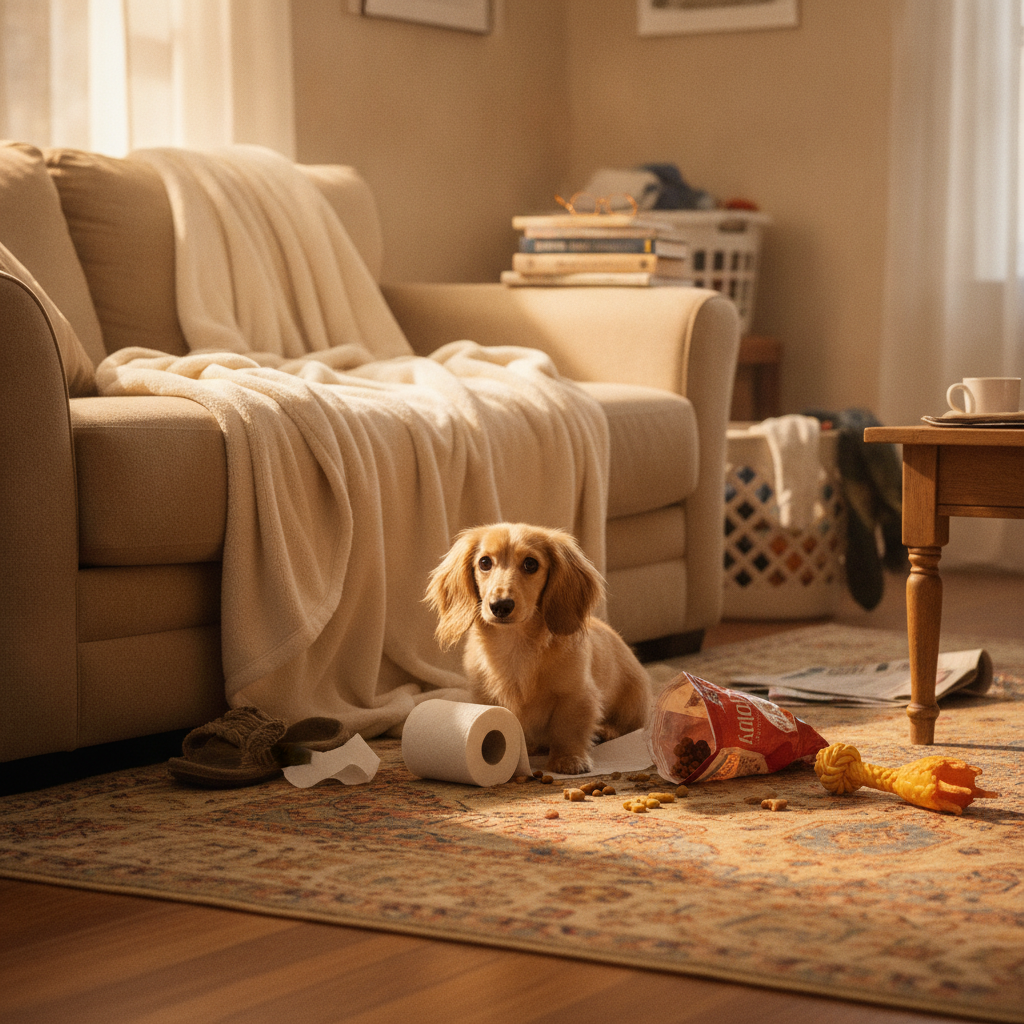
You pictured it, didn’t you? Quiet, cozy afternoons with a sweet little sausage dog curled up on your lap, a warm cup of tea in your hand, a gentle rain tapping against the window. Instead, you have a four-legged dictator who just redecorated your living room with the contents of a trash can, is currently barking at a dust bunny with the force of a foghorn, and gives you a look that says, “I dare you to stop me.” If you’re a new dachshund owner, welcome to the club. Your life will never be the same, and your sanity is now a negotiable asset.
You’re probably feeling a little overwhelmed. You might be scrolling through your phone at 3 AM, frantically Googling “why won’t my dachshund stop barking” or “is it normal for a puppy to have this much sass?” You love this long little dog with your whole heart, but you’re exhausted. You feel like you’re failing. Every piece of advice from your friend with the perfectly behaved Golden Retriever seems to backfire spectacularly.
Here’s the thing: you’ve tried the generic advice. You’ve tried being the “alpha,” which only made your doxie look at you like you’d grown a second head. You’ve tried “ignoring the bad behavior,” which your dachshund interpreted as a fun new game called “Let’s See How Loud I Can Scream Until the Human Cracks.” None of it works, and it’s not your fault. You’ve been given the wrong instruction manual.
Let’s reframe this. Your dachshund isn’t being bad. Your dachshund isn’t broken. Your dachshund is being a dachshund. You didn’t get a generic dog; you adopted 600 years of German engineering designed for one purpose: to hunt badgers. Alone. Underground. In the dark. They were bred to be brave, independent, loud, and relentless. You’re not living with a lapdog; you’re living with a tiny, furry gladiator who thinks your sofa cushions are the perfect practice arena.
Once you understand that you’re not trying to “fix” bad behavior but rather channel a brilliant, purpose-built instinct, everything changes. This isn’t just about surviving; it’s about learning to speak their language. And I’m here to be your translator.
What Should a New Dachshund Owner Expect?
Forget everything you thought you knew about dogs. Being a new dachshund owner is a unique experience, a masterclass in negotiation, patience, and the art of hiding snacks. Here’s the real scoop on what you’ve signed up for.
The Sound and the Fury: Yes, They Are Loud
Your dachshund’s bark is not a bug; it’s a feature. They were bred to have a massive bark so that hunters above ground could locate them when they were deep in a badger den. That booming voice is a tool, and they are masters of using it. They will bark at the mail carrier, a leaf blowing across the lawn, a strange shadow, the sound of the refrigerator making ice, and their own reflection. Your job isn’t to silence them—an impossible task—but to teach them the “thank you, that’s enough” cue. Acknowledge their alert, then redirect. It’s a long process, but it’s better than a life of constant shouting matches with a dog who will always win.
The Myth of Stubbornness: It's Called Independent Thought
People will tell you dachshunds are stubborn. I prefer the term “brilliantly independent.” When your doxie was facing down a furious badger, there was no human underground to give commands. They had to make life-or-death decisions on their own. That instinct is still hardwired into their brains. So when you ask them to “come” and they just stare at you, they’re not being defiant. They’re running a cost-benefit analysis. “Is what you’re offering better than what I’m currently sniffing? The answer is probably no. I’ll be over when I’m done.” This is why training a dachshund requires you to be more interesting and more rewarding than anything else in their world. Think less drill sergeant, more game show host with a pocket full of cheese.
The Potty Training Pilgrimage
If there’s one topic that brings new doxie parents to their knees, it’s potty training. It can be a long, frustrating journey. Their bodies are low to the ground, so trekking through wet grass is unpleasant. Their bladders are small. And that independent streak means if they don’t feel like going outside, they’ll find a perfectly good spot behind the couch. Consistency, a strict schedule, and over-the-top, ridiculously enthusiastic praise for every successful outdoor potty break are your only weapons. As I explain in my guide to potty training, you have to out-stubborn your dachshund, and that takes commitment.
The Burrowing Instinct: Master of the Blanket Fort
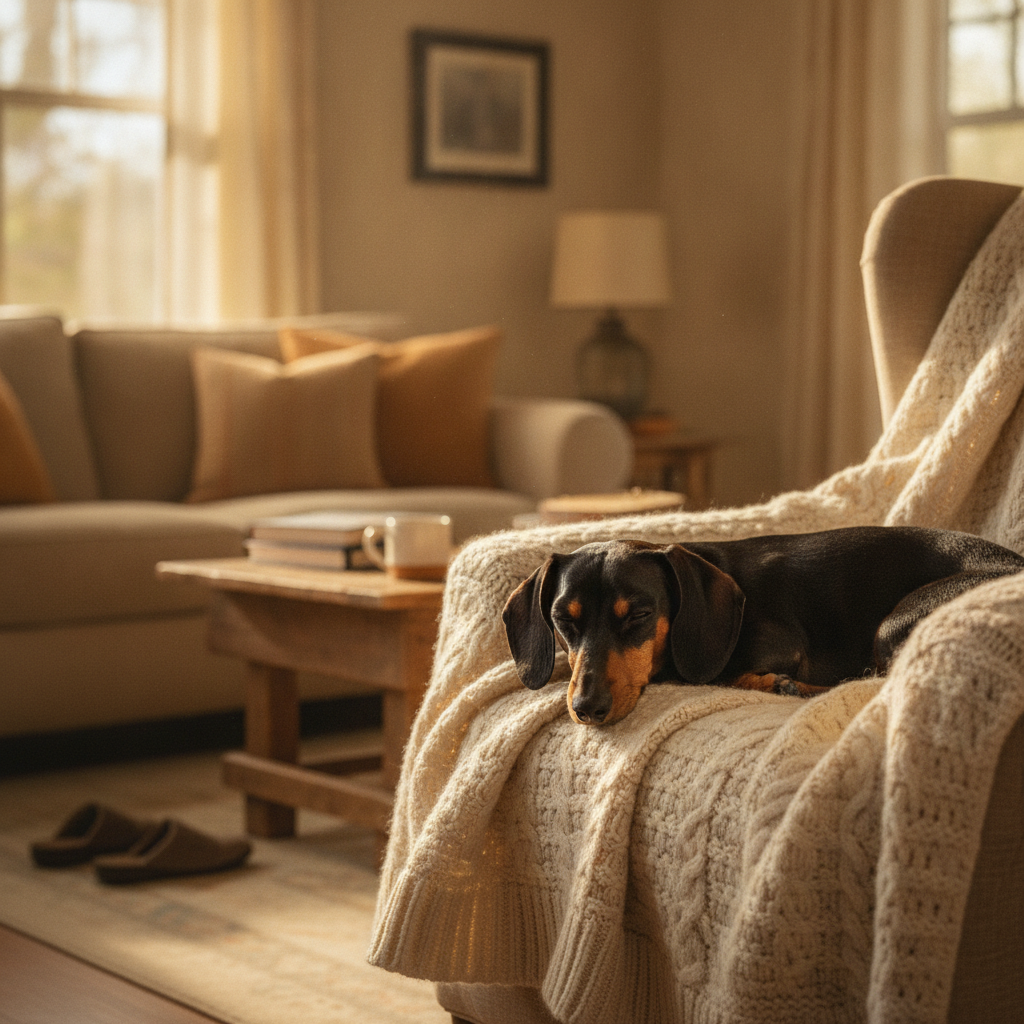
You will lose your dachshund. You’ll search the house in a panic, only to find a suspicious lump in the laundry basket or under the duvet. This is their denning instinct. They are born burrowers, seeking out dark, cozy, safe spaces. It’s not just cute; it’s a deep-seated need. Provide them with plenty of soft blankets, cozy beds, and maybe even a covered “cave” bed. It makes them feel secure. And always, always check for lumps before you sit down on the couch. You can learn more about this adorable quirk in my article about why dachshunds burrow.
How Do I Survive the Puppy Gauntlet?
The puppy phase is a special kind of beautiful chaos. It’s a whirlwind of sharp teeth, boundless energy, and moments of pure, heart-melting sweetness. Surviving it is about being prepared and managing expectations.
Rule #1: Your Home is Now a Puppy-Proof Fortress
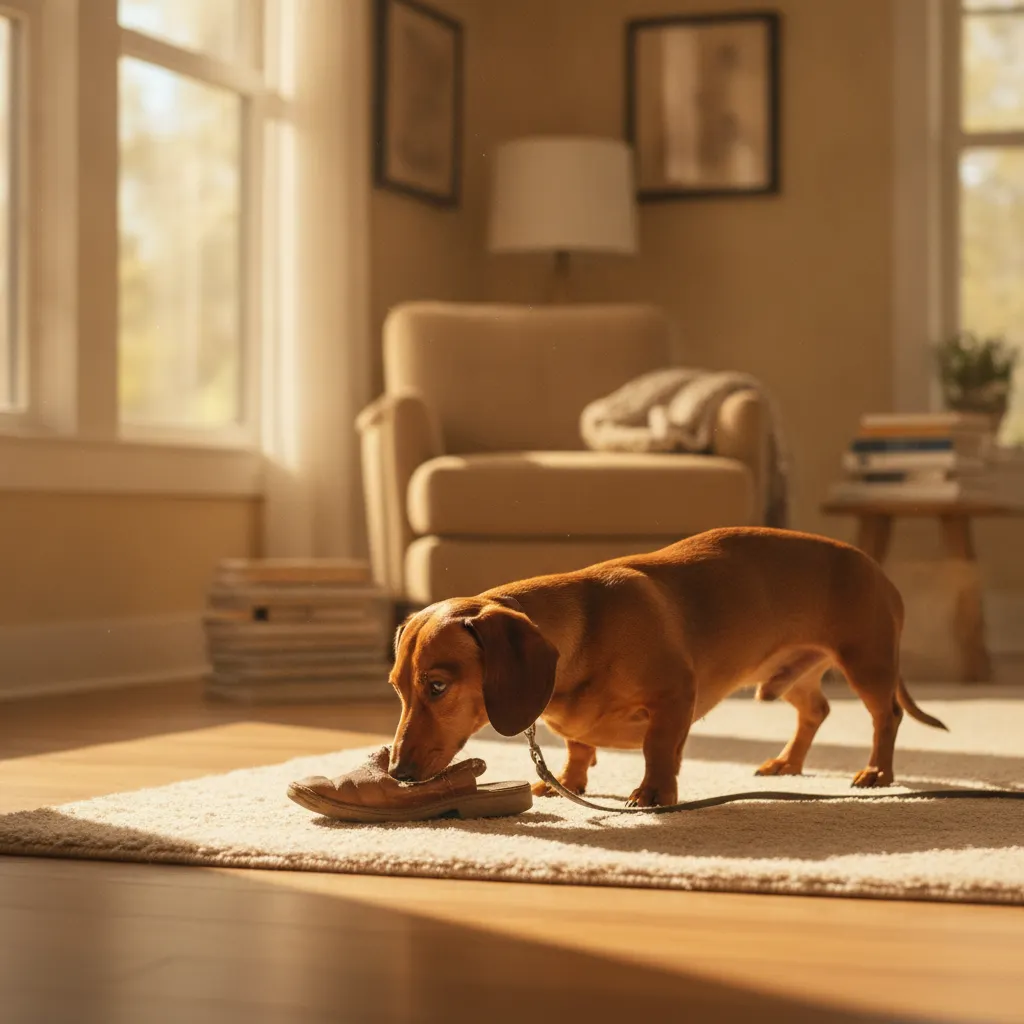
You cannot win a battle of wits with a curious dachshund puppy. They will find the one thing you don’t want them to have. Wires, shoes, remote controls, house plants—it’s all fair game. Management is your best friend. Use baby gates to block off rooms, a crate or playpen for when you can’t supervise them, and get down on your hands and knees to see the world from their level. What can they reach? What can they chew? Secure it all. This is the first and most important step in 'dachshund-proofing' your home, not just for their safety, but for your sanity.
Rule #2: Embrace the Power of Bribery
Dachshunds are famously food-motivated. This is your superpower. Forget vague praise; they work for a paycheck. Use small, high-value treats (think tiny pieces of chicken, cheese, or freeze-dried liver) for training. This will make you far more compelling than that interesting smell on the carpet. A doxie will do almost anything for a tasty reward, so use that to your advantage. It’s not bribery; it’s a smart business transaction.
Rule #3: Protect That Long Little Back From Day One
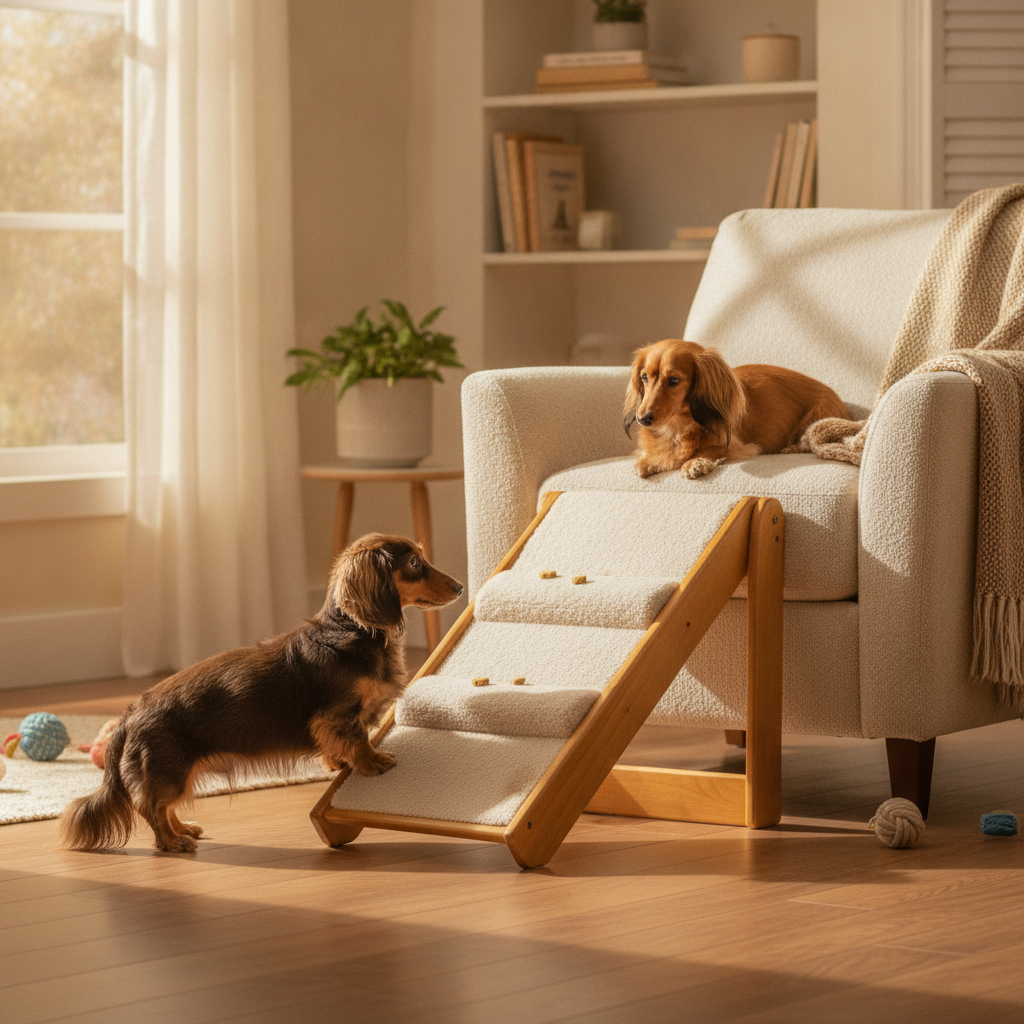
This is the most important rule. Dachshunds are prone to Intervertebral Disc Disease (IVDD) due to their long spine and short legs. One bad jump can lead to paralysis. While the risk is serious, it’s also highly preventable. The rules are simple and non-negotiable: no jumping on or off furniture, and limit stair use as much as possible. Invest in ramps for the couch and bed from the day they come home. Teaching them to use ramps as a puppy will protect their precious back for a lifetime.
Remember my golden rule for all things health-related: quirks are consistent; problems are a change. A behavior your doxie has always had is almost never an emergency. A sudden shift is. If your always-active puppy is suddenly lethargic, or your food-motivated dog refuses to eat, that’s your cue to call the vet. This is educational content, not veterinary advice, and your own vet is the ultimate authority on your individual dog.
Am I a Bad Owner? (Spoiler: No, You're a New Dachshund Owner)
Let me tell you something I wish someone had told me when I brought my first dachshund, Marley, home nearly 20 years ago. You are not a bad owner. You are a new dachshund owner, and you are on the steepest learning curve in the dog world. It’s okay to feel frustrated. It’s okay to feel like you don’t know what you’re doing. Every single doxie parent has been there.
I remember sitting on my kitchen floor, close to tears, because Marley had once again decided the expensive dog bed was a toilet. I thought I was failing him. But what I was really doing was learning. I was learning that he wasn't a Labrador in a tiny suit. He was a dachshund, and he needed me to understand his world, his instincts, and his logic. My second doxie, Mia, only confirmed that they are all unique little weirdos, each with their own PhD in manipulation.
You haven’t made a mistake. You’ve just embarked on an adventure with one of the most charismatic, hilarious, and loving breeds on the planet. They will test your patience, but they will also fill your life with more laughter and love than you can imagine. Give yourself grace. You’re learning a new language, and soon you’ll be fluent in Dachshund.
Feeling a little less overwhelmed and a lot more seen? That's the goal. But understanding the 'why' is just the first step. If you want to become a true doxie whisperer and learn to decode all those quirky behaviors—from the side-eye to the frantic digging in your pillows—I’ve put everything I’ve learned into one place. It will help you feel like a more confident doxie parent. Get the free Dachshund Behavior Decoder.
Frequently Asked Questions
Is it true that dachshunds are hard to potty train?
Yes, they have a reputation for being challenging to potty train, and it's often earned. Their combination of stubbornness, low-to-the-ground bodies (making wet grass unpleasant), and small bladders requires extra patience and consistency from a new dachshund owner. A strict schedule and lots of positive reinforcement are key.
My dachshund puppy bites a lot. Is this normal?
Yes, puppy biting, often called 'nipping,' is completely normal for all breeds, including dachshunds. They explore the world with their mouths. The key is to teach them bite inhibition by redirecting their teeth onto appropriate chew toys and letting out a sharp 'ouch!' to let them know when they've chomped on you too hard.
How do I stop my dachshund from jumping off furniture?
This is critical for their back health. The best way is through management and training. Never allow them to jump down. Invest in ramps for couches and beds and use treats to teach them that the ramp is the only way up or down. Preventing jumping from a young age is one of the most important things you can do for them.
Should I get a second dachshund to keep the first one company?
Dachshunds often do well in pairs (they are pack animals, after all!), but it's not a magic fix for behavioral issues like separation anxiety. It's crucial to ensure your first dog is well-adjusted and trained before introducing a second. Getting another dog adds double the work and expense, so it's a decision that requires careful thought.
What's the one piece of advice every new dachshund owner needs to hear?
Embrace their nature, don't fight it. You will never train the 'dachshund' out of your dachshund. Once you stop trying to make them into a different kind of dog and start working with their unique intelligence, independence, and instincts, you'll build an incredible bond based on mutual respect and understanding (and a lot of cheese).
dachshund puppy · new owner guide · dachshund behavior · dog training