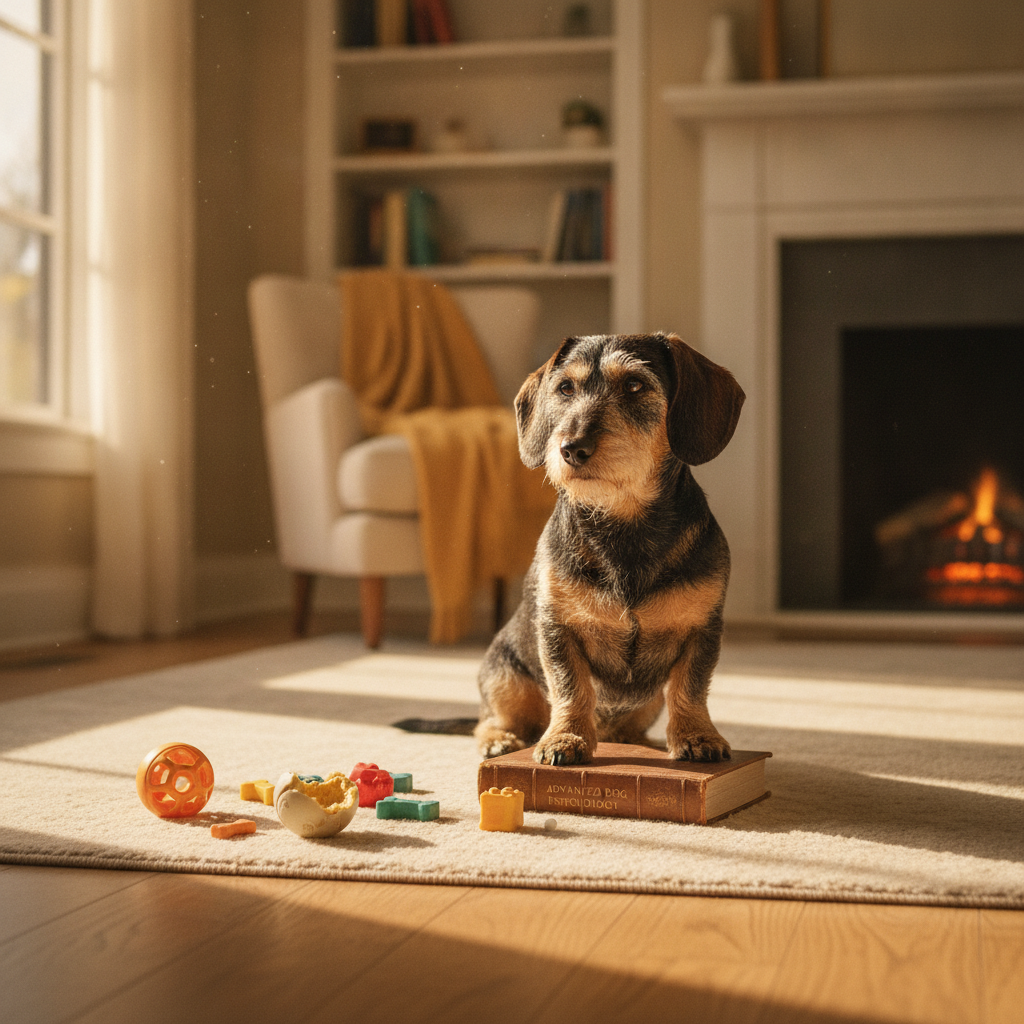
I once spent ten minutes trying to convince my dachshund, Marley, to come inside. I called. I clapped. I used my most cheerful, inviting voice. He stood in the middle of the yard, looked directly at me, looked at the sky, sniffed a blade of grass, and then deliberately turned his back. It wasn't defiance. It was a negotiation, and my offer was terrible. This is the first lesson in training a stubborn dachshund: you are not a commander, you are a middle manager trying to motivate a tiny, furry CEO who works for himself.
Why Does My Dachshund Seem So Stubborn?
Let's get this out of the way: you are not a bad dog parent. Your dachshund isn't broken, and you haven't failed. You're just trying to use a training manual written for a Golden Retriever on a creature designed for trench warfare. The frustration is real. You see other dogs sitting politely, coming when called, and generally behaving like well-adjusted members of society. Meanwhile, your doxie is operating on a completely different frequency, one that seems to involve a complex algorithm of 'What's in it for me?'.
You've probably tried the standard advice. You've repeated 'Sit, sit, sit!' until you're blue in the face, only for your dog to lie down with an exasperated sigh. You've tried the stern 'Alpha' voice, which earned you a skeptical head-tilt and nothing more. Maybe you've even tried withholding a treat, and watched in amazement as your dachshund simply shrugged and decided the treat wasn't worth the effort anyway. These methods fail because they are based on a fundamental misunderstanding of the dachshund's mind. They aren't built for blind obedience; they're built for brilliant, independent decision-making.
The Big Reframe: Your Dachshund Isn't Stubborn, They're a Specialist
Here is the single most important shift in perspective you need to make: stubbornness is just independence without a clear job. For 600 years, we bred these long little dogs for a very specific, very dangerous task. We didn't ask them to fetch ducks or herd sheep under our watchful eye. We asked them to go down a dark, narrow hole, by themselves, and fight a badger—an animal significantly larger and meaner than they are. They had to make their own decisions, assess risk, and solve problems without a human whispering instructions in their ear. They were bred to argue with us. That 'stubborn' streak is actually a survival instinct.
Your dog isn't ignoring you to be a jerk. They are weighing your request against their own internal priorities, just like their ancestors did in a badger den. Our job isn't to crush that spirit; it's to convince them that our idea is better than theirs.
When you stop seeing a disobedient pet and start seeing a retired badger-hunter who is bored out of their mind, everything changes. You stop being a frustrated boss and start being a clever partner. You learn to 'speak dachshund'.
The 'Speak Dachshund' Framework: How to Actually Train Your Doxie
Training a dachshund isn't about dominance; it's about motivation. It’s less about commands and more about contracts. Here’s how you become the best business partner your doxie has ever had.
Principle 1: You are the Chief Financial Officer
Your dachshund is a tiny capitalist, and their currency is high-value rewards. A piece of their regular kibble is like getting paid minimum wage for a difficult job. A tiny, crumb-sized piece of freeze-dried chicken or cheese? That's a corner office with a view. You must control the currency, and the currency must be worth their time. Find out what your dog considers a five-star, Michelin-level treat. That is your training payroll. Use it exclusively for training sessions, so it stays special. Don't try to teach a new, hard skill with a low-value reward. You wouldn't do calculus for a nickel, and they won't either.
Principle 2: Make It Their Brilliant Idea
Dachshunds love to solve puzzles. They hate being told what to do. So, frame every training request as a game or a challenge, not a command. Instead of a stern 'Come!', crouch down, use an excited, high-pitched voice and say 'Find me!' or 'What's this?!' and run a few steps away. You've just turned a boring recall command into a thrilling game of chase with a huge reward at the end. They didn't obey you; they brilliantly won your game. See the difference? It's all about marketing the behavior you want as the most fun and profitable option available.
Principle 3: Respect the Union Rules (Their Boundaries)
Your dachshund is a union of one, and they have strict rules. Rule one: training sessions must be short. Their brilliant minds get bored quickly. Three to five minutes, a few times a day, is infinitely more effective than one grueling 20-minute session. Rule two: end on a success. Always finish with a command they know and can nail, so they end feeling smart and successful. This builds confidence. Rule three: respect their physical build. Don't ask for endless 'sit' to 'down' repetitions that can be uncomfortable for their long backs. A happy worker is a productive worker.
Principle 4: Your Enthusiasm is Part of the Paycheck
Doxies are incredibly sensitive to our emotional state. If you are frustrated, bored, or angry, they will shut down. Your tone of voice and body language are half the battle. When they do something right, even if it's a tiny step in the right direction, your celebration should be ridiculously over the top. I'm talking happy dances, squeaky voices, the whole nine yards. You need to become the most exciting thing in the room. This is especially true for potty training. An accident is met with quiet cleanup, no comment. A successful trip outside is treated like they just won an Olympic gold medal. They will quickly learn which behavior gets the party started.
Proof from the Trenches: A Marley & Mia Story
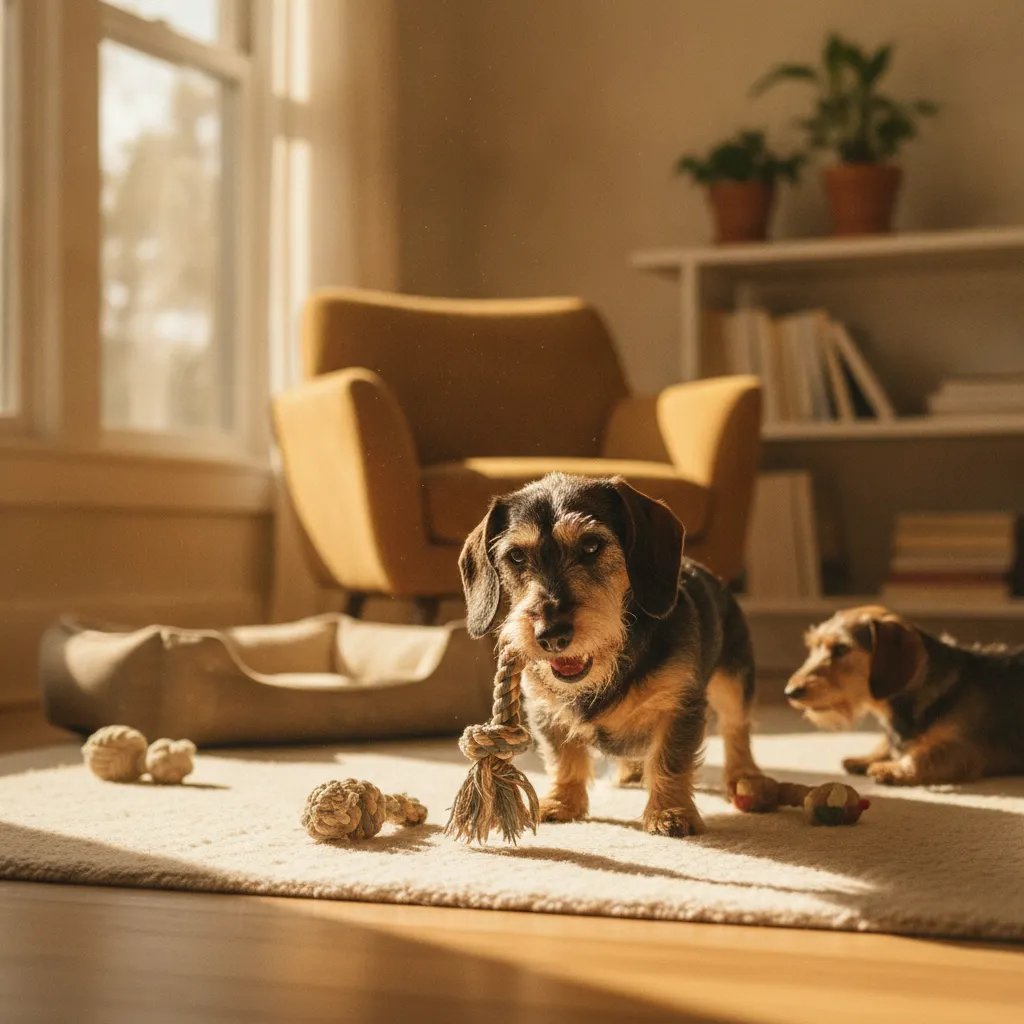
For years, I struggled with getting my two, Marley and Mia, to stop barking their heads off when the doorbell rang. I tried the stern 'No!', which only seemed to add fuel to their fire. They thought I was just barking along with them. It was a mess.
The change came when I stopped trying to stop the barking and instead gave them a different job. I reframed the problem. The doorbell wasn't a trigger for chaos; it was a cue for a new game called 'Go to your blanket!' I tossed a super high-value treat onto their favorite blanket in the other room every single time the doorbell rang. At first, they'd bark, then run to get the treat. After a week, they heard the bell and would look at me, then sprint to the blanket, ready for their reward. I didn't fight their instinct to react; I just successfully convinced them that my reaction was more profitable. That's the secret to living with a stubborn dachshund.
Understanding their unique wiring is the key. They aren't just small dogs; they are a whole different operating system. It's why they do everything they do, from their need to dig in the garden to their insistence on sleeping under the covers. This is a common doxie trait, and you can learn more about why your dachshund burrows under blankets here. Every quirky behavior has a reason rooted in their history.
If you truly want to stop feeling frustrated and start enjoying your clever, comical, and sometimes challenging companion, you have to learn their language. It's about seeing the world from their short-legged point of view.
Understanding these little quirks is the key. It's not just about training; it's about decoding their entire world. If you want to get even deeper into why your doxie does what they do, from burrowing to barking, I've put all my secrets into one place.
Get the free Dachshund Behavior DecoderFrequently Asked Questions
Why does my dachshund listen at home but ignore me outside?
The outside world is a buffet of amazing smells, sights, and sounds that are far more interesting than you are. To compete, you must increase your value. Use extra-special treats that are only for outdoor training and keep sessions short and game-like to hold the attention of your stubborn dachshund.
Is it ever too late to train a stubborn dachshund?
Absolutely not! An older dachshund might have more established habits, but their intelligent, food-motivated brain is always ready to learn. The key is patience, consistency, and finding a reward that is valuable enough to convince them to try something new. You're not breaking old habits, you're offering a better-paying new job.
What are the worst training mistakes to make with a dachshund?
The biggest mistakes are using punishment, being inconsistent, and holding long, boring training sessions. Punishment creates fear and erodes trust, which is fatal for a breed that needs to see you as a partner. They will simply shut down and refuse to engage.
Are male or female dachshunds more stubborn?
This is more about individual personality than gender. Both males and females can be equally independent thinkers. Instead of focusing on gender, focus on discovering what motivates your specific dog, whether it's a particular treat, a favorite squeaky toy, or a game of tug.
How can I stop my dachshund from barking at everything?
You can't stop the instinct to alert, but you can manage it. Acknowledge the bark with a calm 'thank you,' and then redirect their attention to a more rewarding activity, like a puzzle toy or a 'find the treat' game. This teaches them that you've heard the alert and they can now stand down from their guard duties.
My dachshund knows 'sit' but often just stares at me. Why?
They are likely asking, 'Why should I?' and 'What's in it for me?'. This is classic dachshund negotiation. Ensure your reward is high-value enough for the effort, keep the request fun and energetic, and make sure they aren't tired or uncomfortable. A stubborn dachshund isn't being disobedient; they're asking for better terms on their contract.
dachshund training · stubborn dogs · dog behavior · positive reinforcement