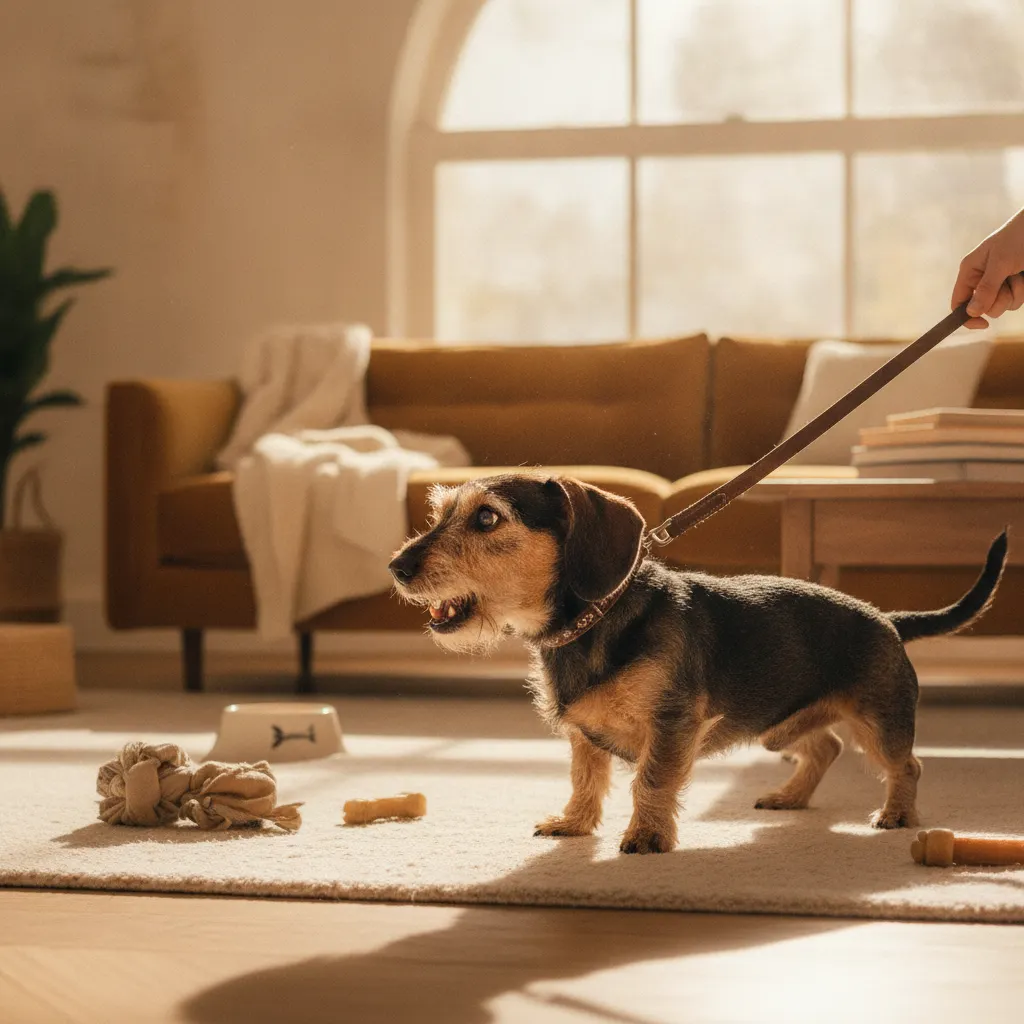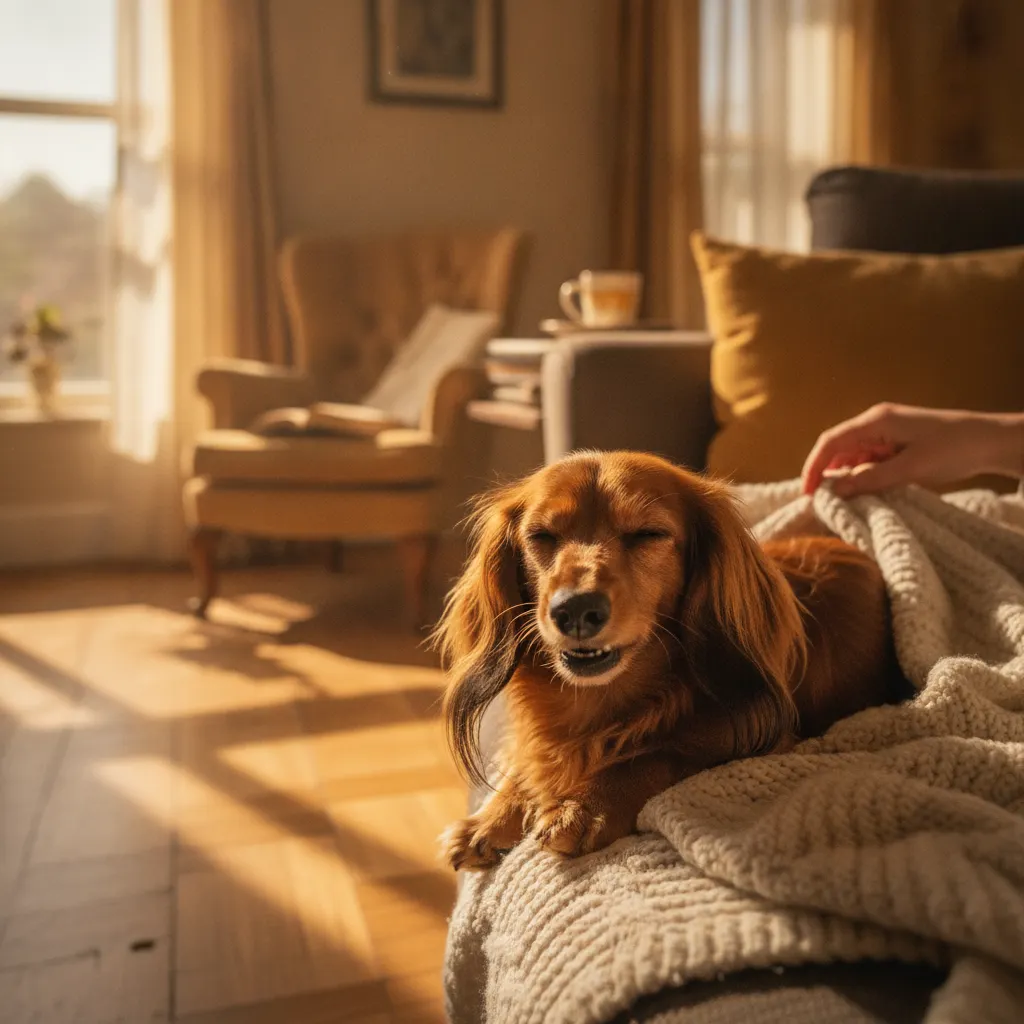
You see them, curled up in a perfect, warm little donut on their favorite spot on the couch. They look so peaceful. You just need to shift a cushion, or maybe it’s bedtime and you need to move them to their crate. You reach out a loving hand, gently touch their back, and then it happens: a low, guttural rumble from the depths of the blanket pile. The Grumpy Couch Dragon has awoken. Your heart sinks. Is he mad at me? Did I do something wrong? Is my sweet little sausage dog… aggressive?
If you’ve ever felt that jolt of confusion and hurt when your dachshund growls when moved from a nap, take a deep breath. You are not alone, and you do not have a “bad dog.” You have a dachshund. And that low growl isn’t an insult—it’s a piece of ancient data, a 600-year-old instinctual signal that we just need to learn how to decode.
Why Does My Dachshund Growl When I Try to Move Them?
That sudden growl feels personal, doesn't it? It feels like a rejection from the very creature you adore. You provide the food, the walks, the endless belly rubs, and in return, you get a grumpy rumble for daring to adjust a pillow. It’s easy to fall into a spiral of worry. You start wondering if you’ve failed at training, if your dog doesn’t trust you, or if this is the first sign of a serious aggression problem.
Many owners react in one of two ways, both of which can unfortunately make things worse. The first is to scold the dog. We say “No!” or “Don’t you growl at me!” in a firm voice. We think we’re setting a boundary, but what the dog hears is, “The warning signal you gave me when you were scared made the situation even scarier.” Over time, this can teach a dog to skip the growl and go straight to a snap. The growl is communication, and punishing it is like taking the batteries out of a smoke detector.
The second common reaction is to get scared and stop touching the dog when they’re resting. We tiptoe around them, creating a little bubble of anxiety. While this avoids the growl, it also creates distance in your relationship and reinforces the idea that being approached while sleeping is a negative event. Neither of these approaches addresses the real reason your doxie is doing it in the first place.
Your dachshund isn't being dominant or disrespectful. They're being startled. They are reacting from a deeply wired, pre-cognitive place that has nothing to do with their love for you.
The biggest mistake we make is interpreting this behavior through a human lens of manners and respect. We think, “I wouldn’t grumble at someone who was just trying to make me comfortable!” But your dachshund isn’t a tiny human in a fur coat. They are a highly specialized hunter, bred for centuries to be brave, independent, and reactive. Let’s reframe this entire situation. The problem isn’t that your dog is being grumpy; it’s that we are accidentally triggering a primal survival instinct.
It's Not Aggression, It's an Ancient Alarm System
Imagine being in the deepest, most comfortable sleep of your life. Suddenly, a large, shadowy figure grabs you without a word. You’d probably scream, right? You wouldn’t stop to ask, “Oh, excuse me, are you my loving human who is just trying to move me to the big bed?” You’d react first and think later. This is precisely what’s happening with your doxie. It’s a phenomenon often called “sleep startle” or, more intensely, “sleep aggression.”
Dachshunds were bred to hunt badgers. This meant going alone into dark, tight tunnels, relying on their own wits and courage. When they slept in those burrows, they had to be on high alert for threats. Being suddenly touched or moved could mean a predator had found them. Their brain is wired to go from zero to sixty—from deep sleep to “defend yourself!”—in a split second. That growl is the engine revving. It’s an instinctual, involuntary response that says, “WHOA! I’m vulnerable! Identify yourself!”
When you reach out and move your sleeping sausage, you aren’t their beloved parent in that moment. You are the unknown shadow. The growl is their way of saying, “Hang on, I was asleep, you scared me, give me a second to reboot my brain and realize it’s you.” It’s a request for space and time, not a declaration of war. Once you understand this, you can stop taking it personally and start working with their nature, not against it.
A Critical Health Caveat: When a Growl Isn't Just a Growl
Before we go any further, it's essential to apply the most important rule of dog behavior: quirks are consistent, but problems are a change. If your dog has always been a little grumbly when woken up, that’s likely their personality and instinct. But if your previously placid doxie *suddenly* starts growling when touched or moved—sleeping or awake—your first call should be to the vet. Pain is a huge driver of new aggression. A sore back (a constant worry for us doxie parents), a tender joint from arthritis, or an upset stomach can make a dog unwilling to be handled. They growl because they’re anticipating pain. If this behavior is new, please rule out a medical cause first. You can learn more about spotting red flags in our guide on when to call the vet.
The 'Wake, Wait, Welcome' Method: A Gentle Approach
So, how do we move the Grumpy Couch Dragon without getting scorched? We need a system that respects their instincts and gives their brain time to catch up. I call it the “Wake, Wait, Welcome” method. It’s a simple, three-step process that has worked wonders with my own doxies, Marley and Mia, and it can transform this stressful moment into a peaceful one.
Step 1: Wake (With Your Voice, Not Your Hands)
This is the most important rule: never surprise a sleeping dachshund with your touch. Their name is your magic word. Before your hand ever gets near them, start by softly calling their name. “Miaaa... sweet girl.” Use a gentle, happy tone. You can also make other quiet, familiar sounds, like a soft kissing noise or a gentle rustle of the blanket a few inches away from them. The goal is to bring them from deep sleep to a drowsy state using sound, which is far less startling than a sudden physical touch. You’ll see their ears twitch, their breathing change, and maybe their eyes will start to flicker open. You have successfully alerted the dragon that someone friendly is approaching the lair.
Step 2: Wait (For the Brain to Reboot)
Once their eyes are open, do not move them yet! This is the step everyone skips. They need a moment to process where they are and who you are. Their brain is literally shifting from the primal, instinctual part to the conscious, “Oh, that’s my person” part. Look for a sign of recognition. It might be a sleepy tail thump-thump-thump against the cushion, an ear flick, a soft sigh, or them stretching their long little body. This is the signal that their conscious brain is back online. They have recognized you and understand that there is no threat. This might take two seconds or it might take ten. Be patient. Rushing this step is what causes the growl.
Step 3: Welcome (The Move)
Now that they are awake, aware, and have acknowledged you, you can “welcome” the move. Continue using your happy, gentle voice. “Okay, sweetie, let’s go to bed.” You can give them a little chest scratch (a less vulnerable spot than their back) and then gently scoop them up or guide them off the furniture. By making the whole process predictable and positive, you’re not just avoiding a growl; you’re building trust. You’re teaching them that being approached while they’re resting leads to a calm, pleasant interaction, not a sudden, startling eviction.
I remember when I first brought Marley home. He was a champion napper and a world-class sleep grumbler. The first time he let out a low growl when I moved him, my heart just about stopped. But once I realized I was startling him, I started using this method. I’d whisper “Marley-man...” and wait for that little tail thump before I even thought about picking him up. The growling stopped. It wasn’t a training issue that needed to be corrected; it was a communication gap that needed to be bridged. This is just one part of teaching our strong-willed sausages how to live happily in our world, a concept we explore more in The 'Polite Sausage' Project.
Dealing with a dachshund that growls when moved is not about winning a battle of wills. It’s about being a loving, respectful leader who understands the unique wiring of this incredible breed. You’re not spoiling them by doing this; you’re showing them you understand their language. And that understanding is the foundation of a truly unbreakable bond.
This is just one of the many “quirks” that make perfect sense once you look at the world from their short-legged perspective. If you want to become fluent in your dachshund’s language and understand the ‘why’ behind everything they do, from burrowing in your laundry to that intense stare, I’ve put all my years of experience into a simple guide. To be a more confident doxie parent, Get the free Dachshund Behavior Decoder and start understanding the little hunter living in your home.
Frequently Asked Questions
Why does my dachshund only growl when moved while sleeping?
This is typically due to a sleep startle reflex. When your dog is in a deep sleep, a sudden touch can trigger a defensive, instinctual reaction before their conscious brain has time to recognize you. It's less about being moved and more about being startled while in a vulnerable state.
Is this sleep growling a sign of aggression?
In most cases, a dachshund that growls when moved from sleep is not showing true aggression. It's a reflexive, fear-based communication that says, "You startled me!" True aggression is often more consistent and appears in various situations, whereas sleep growling is specific to being disturbed while resting.
What should I do if my dachshund growls and then snaps?
A snap is an escalation, indicating your dog felt their initial warning (the growl) was ignored. The first step is to stop trying to move them and give them space. Consistently use the 'Wake, Wait, Welcome' method to prevent startling them in the future. If snapping occurs or you feel unsafe, it's wise to consult a professional veterinary behaviorist to address the issue.
Can I train my dachshund to stop growling when moved?
Instead of training them *not* to growl (which is risky as it removes their warning signal), you should focus on changing how you approach them. By using the 'Wake, Wait, Welcome' method, you remove the trigger—the startle—which in turn eliminates the need for the growl. You're managing the environment, not punishing the instinct.
Does this behavior get worse with age?
It can, especially if hearing or vision loss is a factor. A senior dog might be more easily startled because they can't hear you approaching. Additionally, conditions like arthritis can make being moved painful, leading to a new or worsening growl. Always consider age-related health changes with any new behavior.
When should I be worried about my dachshund growling?
You should be concerned if the growling is a sudden change in behavior, if it happens when the dog is awake and being gently petted, if it's accompanied by signs of pain (yelping, stiffness), or if it escalates to snapping or biting. In any of these cases, a thorough check-up with your vet is the most important first step.
dachshund behavior · dog training · sleep aggression · growling