You did it. You researched, you read the reviews, you spent the money on that beautiful, non-slip, perfectly angled ramp. You set it up next to the couch, your heart swelling with pride. You are a good doxie parent protecting that long little back. And then you watch, in slow motion, as your dachshund trots right up to it, gives it a suspicious sniff, and then takes a flying leap off the couch cushion, landing with a thud that makes your own spine ache in sympathy. The ramp might as well be invisible.
If your heart is in your throat every time your doxie jumps, you are not alone. There is a unique frustration that comes from buying a solution to a problem, only to have the intended user completely reject it. You feel helpless, maybe a little foolish, and worried sick about the one thing we all fear: a back injury. You bought the ramp to help prevent a serious back issue like IVDD, but what good is it if it’s just another piece of furniture they ignore? This is the starting point for almost every doxie parent's journey into dachshund ramp training, and it’s a journey that requires more patience than you might think.
Why Is My Dachshund So Stubborn About the Ramp?
Let’s get one thing straight: your dachshund isn’t being stubborn, spiteful, or stupid. They are being a dachshund. For centuries, these dogs were bred to make their own life-or-death decisions in dark, underground tunnels. They are cautious, analytical, and deeply suspicious of anything new or unstable in their environment. To you, it’s a helpful ramp. To them, it’s a wobbly, strange-smelling object that suddenly appeared in their safe space. Their instinct isn't to trust it; it's to avoid the potential trap.
You’ve probably tried luring them with a treat, which they snatch before hopping off the side. You might have tried placing them on it, only for them to scramble off in a panic. These methods fail because they treat the symptom (not using the ramp) instead of the root cause: fear and distrust. We’re trying to use human logic—it’s safer, so use it!—on a creature whose brain is wired for survival. The reframe is this: you are not trying to force your dog to use a tool. You are trying to convince a highly intelligent, cautious creature that this new path is not only safe, but that it was their brilliant idea to use it all along.
It's a classic doxie trait. We often joke about it, asking if dachshunds are hard to train or just smarter than us. When it comes to their safety, we have to respect that intelligence and work with it, not against it.
The Real Secret to Dachshund Ramp Training: The Art of Patience
The biggest mistake we make is trying to train this behavior in an afternoon. For a suspicious dachshund, this needs to be a slow, deliberate process of building trust. Think of it less as a training session and more as a long-term marketing campaign where the ramp is the product and your doxie is the skeptical customer. Here is the step-by-step framework that turned my own ramp-hating Mia into a ramp-loving pro.
Step 1: The Ramp is Just Boring Furniture (Acclimation)
Before you even think about getting them to walk up it, the ramp needs to become a normal, non-threatening part of the landscape. For the first two to three days—or even a week for a very nervous dog—lay the ramp completely flat on the floor in the middle of the room. Don't put it against any furniture. Just leave it there. Ignore it. Don't point to it, don't praise them for going near it. The goal is for it to become so boring it’s invisible. Let them sniff it, walk across it, or ignore it completely. You can casually toss a few high-value treats onto it when they aren't looking, so they “discover” them on their own. This builds a positive, no-pressure association.
Step 2: The Ramp is a Magical Food Dispenser (Positive Association)
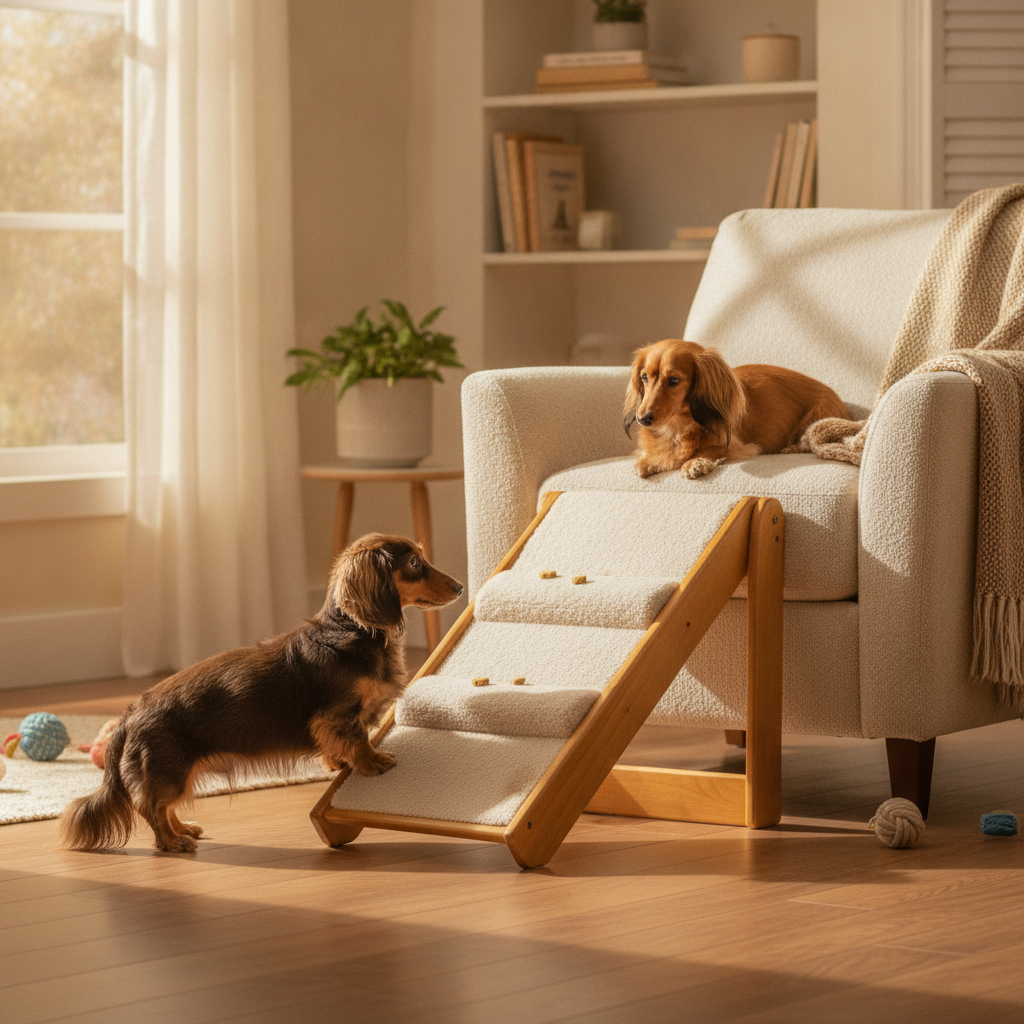
Once your doxie is no longer giving the flat ramp the side-eye, it's time to make it interesting. Start creating a little trail of tiny, delicious treats (think freeze-dried chicken or cheese, not their regular kibble) along the length of the flat ramp. Let them follow the trail at their own pace. Don't command or coax them. Just let them discover that this boring object now magically produces snacks. Do this a few times a day for a couple of days. You're teaching them that approaching the ramp leads to good things.
Step 3: The Ramp is a Fun Game (Engagement)
Now, we introduce a tiny bit of incline. And I mean tiny. Prop the top end of the ramp on a single thick book or a yoga block. The incline should be almost unnoticeable. Now, repeat the treat trail game. You can also turn it into a training session. Use a command they know, like “touch,” and reward them for touching the ramp. Then reward for one paw on the ramp, then two. Keep these sessions incredibly short—like, 60 seconds max—and end on a high note. The goal is to leave them wanting more, not to drill them until they are stressed.
Step 4: The Slow Climb to the Top (Gradual Incline)
This is where patience is everything. Over the course of several days or even weeks, slowly increase the incline. Add another book. A few days later, swap the books for a small stool. Every time you increase the height, go back a step and reinforce the easy wins. Treat trails, rewarding for paws-on, and lots of praise. If they ever seem hesitant or scared, you've gone too fast. Go back to the previous, lower height where they were confident and stay there for another day or two before trying to increase it again. This gradual process is essential for successful dachshund ramp training. It builds both muscle memory and confidence, ensuring they feel stable and secure every step of the way.
Step 5: Reaching the Destination (The Final Goal)
Finally, the day has come to place the ramp against the couch or bed. The key here is to make the destination—the furniture—the most amazing place on earth. Don't just expect them to go up. You get on the couch first. Have their favorite toy, a special chew, or some top-tier treats. Pat the cushion and use an excited, happy voice. Lure them up the ramp with a treat in your hand, letting them nibble it as they walk up. When they make it to the top, throw a party! Lavish them with praise, pets, and the jackpot reward. They didn't just walk up a ramp; they scaled Mount Everest!
Remember the golden rule of dachshund ownership: Quirks are consistent; problems are a change. A dog who has never liked a ramp is just being cautious. A dog who has always used a ramp and suddenly stops, or shows pain or hesitation while using it, is telling you something is wrong. That sudden change is your signal to call the vet. This guide is for training, never for diagnosing a health issue.
Making it Stick: Consistency is Everything
Once your dachshund uses the ramp successfully a few times, the job isn't over. Now you have to make it a non-negotiable habit. For a while, the ramp needs to be the *only* way up and down. You can use pillows or ottomans to block their usual jumping spots. When they go to the edge to jump down, gently guide them back to the ramp and encourage them to use it, rewarding them when they do. Consistency is what turns a new skill into a lifelong habit that protects their back.
My Mia was the queen of the suspicious side-eye. It took us nearly two weeks to get her confidently using the ramp to the couch. There were days I was sure she'd never get it. But breaking it down into these tiny, confidence-building steps was the key. Now, she trots up and down it like she was born to it. It’s a huge peace of mind, and it’s a core part of our doxie-proof home. Every jump they don't take is a small victory in the long-term effort of preventing back problems, something every doxie parent thinks about. It’s the single best thing you can do to avoid the heartache so many of us have seen with IVDD, a lesson that many a 'wheelie wiener' can teach us.
Understanding why your dachshund is hesitant about the ramp is the first step to solving the problem. It’s not about defiance; it’s about their deep-seated instinct. If you want to get better at decoding *all* their quirky behaviors—from barking at the wind to burrowing in your laundry—so you can be a more confident doxie parent, I’ve put everything I’ve learned into a simple guide. Get the free Dachshund Behavior Decoder and start understanding the why behind what they do.
Frequently Asked Questions
What if my dachshund is scared of the ramp's texture?
If the surface is slippery or feels weird on their paws, you can add a yoga mat or a low-pile runner rug cut to size. This provides extra grip and a more familiar texture. Introduce the new surface while the ramp is still flat on the ground so they can get used to it without the added challenge of an incline.
How long does dachshund ramp training usually take?
It varies wildly! A confident puppy might get it in a few days, while a cautious senior rescue could take a few weeks or even a month. The key is to go at your dog's pace. Rushing the process is the fastest way to create a negative association that's hard to undo.
My older dachshund is set in his ways. Can he still learn?
Absolutely! Old dogs can definitely learn new tricks. The process might just be slower. Be extra patient, use very high-value treats, and keep sessions short to avoid tiring them out. The reward of protecting their senior spine is well worth the extra effort in their dachshund ramp training.
Should I use a ramp for the bed and the couch?
Yes, ideally any furniture they are allowed on should have a ramp. Consistency is key. If they have a ramp for the couch but are still allowed to jump off the bed, it sends a mixed message. Providing safe passage everywhere reinforces the habit.
What are the best treats to use for ramp training?
Use something they absolutely love and don't get all the time. Small pieces of freeze-dried chicken, tiny cubes of cheese, or bits of boiled hot dog work wonders. The treat needs to be more motivating than the fun of jumping.
ramp training · dachshund behavior · IVDD prevention · dog training