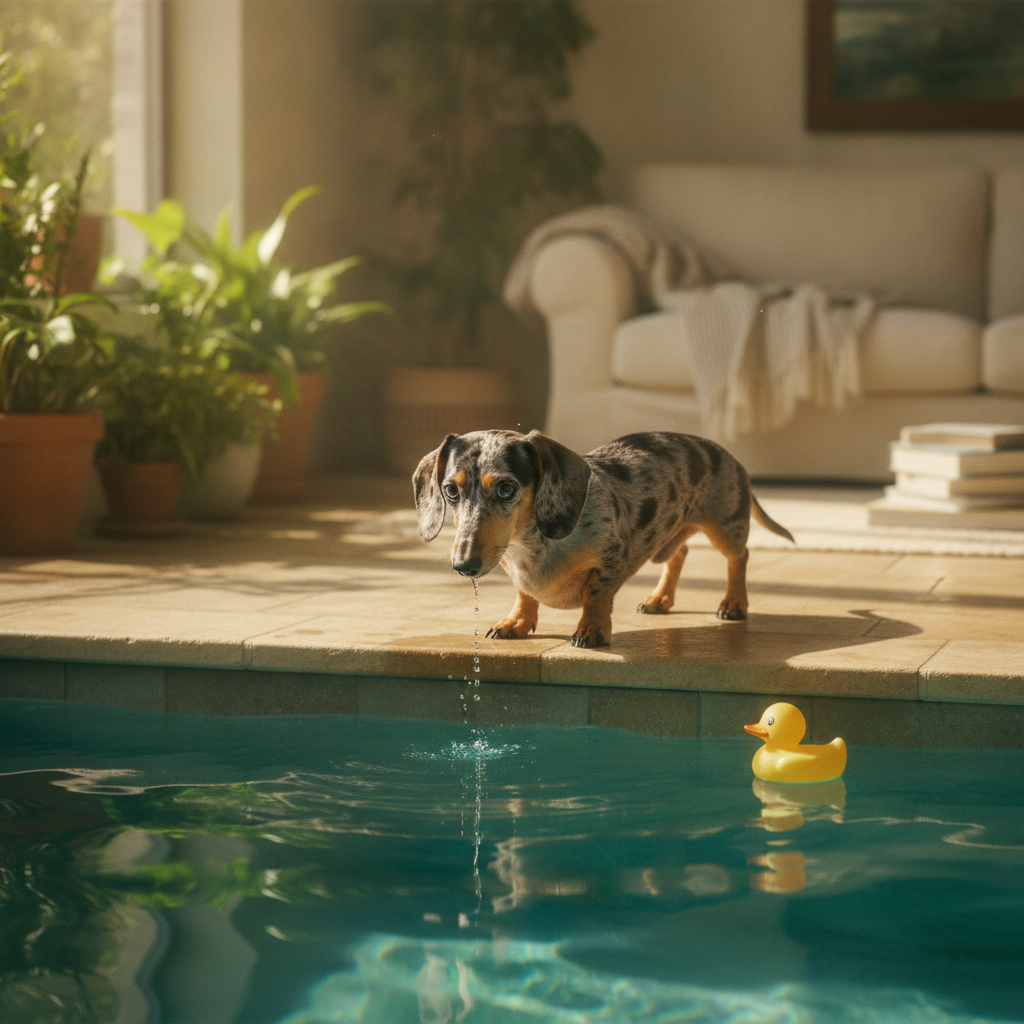
So You Think Your Doxie Can Swim? A (Hilarious) Guide to Pool Safety for Low-Riders
I’ll never forget the first time my Marley saw a swimming pool. He trotted right up to the edge, peered in with intense curiosity, and looked back at me with an expression that clearly said, “You have installed a ridiculously large water bowl.” He had the confidence of an Olympic diver and the body of a bratwurst. It’s a combination that can make a doxie mom’s heart stop. The question isn't just **can dachshunds swim**, but a much more important one: *should* they, and how on earth do we keep our little low-riders safe around water?
If you’ve ever felt a wave of panic watching your sausage dog get a little too close to the deep end, you are not alone. You see their brave, tiny heart and their long, sinking body, and your brain does a quick calculation that doesn't add up. Friends with Golden Retrievers will tell you, “Oh, all dogs are natural swimmers!” and you just want to show them your dachshund’s two-inch legs and ask them to please, explain the physics.
This fear often leads us down two paths, neither of which is great. The first is the “let’s just hope for the best” approach, which is a gamble I’m not willing to take with my little guys. The second is buying a generic, ill-fitting life jacket that your doxie hates, or simply avoiding water altogether. You might miss out on family fun at the lake or a relaxing day by the pool, all because you're not sure how to keep them safe.
The Real Question: It's Not About Ability, It's About Endurance
Here’s the reframe that changed everything for me: Your dachshund *can* instinctively paddle. It’s in their wiring. But they are built for digging, not for distance swimming. Think of their body like a canoe with very, very short paddles. They can move, but it takes a massive amount of energy, and they tire out incredibly fast. Their long spine and heavy chest want to pull them vertical in the water, forcing them to burn even more energy just to stay afloat.
The danger isn't the first 30 seconds of paddling. The danger is minute three, when they’ve exhausted their little legs, can’t find the stairs, and panic sets in. That’s why our job isn’t just to ask **can dachshunds swim**, but to build a safety system that accounts for their unique, adorable, and wildly inefficient build.
Step 1: Gearing Up Your Sausage for Success (The Unsinkable Wiener)
Before your doxie’s paw ever touches the water, we need to talk about gear. A life vest is not optional; it is a non-negotiable piece of safety equipment. But not just any life vest will do. Putting a standard dog life jacket on a dachshund is like trying to put a life raft on a torpedo—it just doesn’t fit right.
Here’s what to look for in a dachshund-specific life vest:
- A Rescue Handle: This is the most important feature. A sturdy handle on the back allows you to quickly and safely lift your doxie out of the water. I call it the “wiener-reacher,” and it’s a lifesaver.
- Belly Support: Look for a vest with wide, supportive straps under the belly. This helps keep their long back horizontal and supported in the water, preventing their rear end from sinking and causing them to struggle.
- A Snug, Chafe-Free Fit: It should be snug enough that they can’t wiggle out of it, but not so tight that it chafes their armpits. Adjustable straps are key.
Let them wear it around the house for a few minutes at a time, giving them lots of treats and praise. You want them to associate the vest with good things *before* you even get near the pool.
Step 2: The Grand Introduction (More Pawsitive, Less Jaws)
Please, for the love of all things holy, never just toss your dachshund into the water. That’s a surefire way to create a lifelong fear. The introduction should be slow, calm, and completely on their terms.
Start on the top step of the pool, the baja shelf, or the shallowest part of the lake. With their life vest securely on, let them get their paws wet. Sit with them, offer waterproof toys, and give them a mountain of praise for just being there. If they want to venture further, support their body with your hands as they start to paddle. Keep these first few sessions incredibly short—just a few minutes is plenty.
Remember, some dachshunds are natural water lovers, and some, like my Marley, will look at you with deep betrayal. As I’ve learned, your dachshund isn't stubborn, he's a badger hunter, and his instincts might be telling him this giant puddle is suspicious. Respect their personality and never force it.
The Single Most Important Swimming Lesson: The Exit Strategy
If you teach your dachshund only one thing about swimming, make it this: where the exit is. A dog’s biggest danger in a pool is not being able to find the stairs. They will often swim to the nearest edge and try to claw their way out, exhausting themselves in the process.
This simple step makes all the difference. Once your doxie is comfortable paddling a little, guide them to the steps. Help them get out and then give them the biggest party they’ve ever seen—treats, praise, the works. Then, carry them a few feet away and let them swim back to the steps. Repeat this over and over from different points in the pool. You are literally programming a GPS map to safety in their brain.
My Mia knows exactly where the stairs are, no matter where she is in the pool. That knowledge is a far better safety net than just her life vest alone. It gives her confidence and gives me peace of mind.
Rules of the Pool for Low-Riders
Once you have the gear and the training, a few simple rules will keep swim time fun and safe for everyone.
- Constant Supervision: This is the golden rule. Never, ever leave your dachshund unattended near any body of water, not even for a second. A lot can happen in a very short amount of time.
- Keep it Short and Sweet: Remember their limited endurance. Five to ten-minute swim sessions are perfect. Watch for signs of fatigue, like slower paddling or a panicked look. It’s always better to end on a high note before they get too tired. For doxies who hate swimming, there are plenty of other back-friendly games and activities they can enjoy on dry land.
- Post-Swim Pampering: Always rinse your dachshund with fresh water after they swim, especially in a chlorinated pool or salt water, to prevent skin irritation. And don't forget those ears! Their floppy ears can trap water, creating a perfect environment for infections. Gently dry the inside of their ear flap after every swim. This is especially important as they get older, a key part of caring for your senior sausage.
Swimming can be a wonderful, low-impact exercise and a fun way to cool off on a hot day. It’s all about respecting their unique build and setting them up for success. With the right gear, the right training, and your watchful eye, your little low-rider can absolutely enjoy the water safely.
Ready to Decode More Doxie Quirks?
Understanding your dachshund's physical needs for swimming is one thing, but knowing why they bark at the mailman with the fury of a thousand suns is a whole other level of connection. Their little bodies and big personalities come with a unique instruction manual. To become a more confident doxie parent and finally learn the 'why' behind their funny, confusing, and adorable habits, I’ve put together a guide just for you. Get the free Dachshund Behavior Decoder and start understanding your best friend like never before.
Frequently Asked Questions
Do all dachshunds naturally know how to swim?
While most dogs have a natural instinct to paddle, a dachshund's body shape—long spine, short legs—makes swimming difficult and tiring. They are not natural swimmers like a Labrador, so they always require supervision and a life jacket.
What is the most important feature of a dachshund life jacket?
The single most important feature is a sturdy, reliable rescue handle on the back. This allows you to lift them out of the water quickly and safely. Good belly support to keep their back level is a close second.
How can I teach my scared dachshund to like the water?
The key is patience and positive reinforcement. Start slowly on the pool steps or in very shallow water, using lots of high-value treats and praise. Never force them, and keep sessions short and happy to build a positive association.
Can dachshunds swim for a long time?
No, absolutely not. Due to their build, dachshunds tire very quickly in the water. Swim sessions should be kept short, around 5-10 minutes, and you should always watch for signs of fatigue. It's a fun activity, not an endurance sport for them.
Is it safe for a dachshund to swim in a chlorine pool?
Yes, it's generally safe for them to swim in a well-maintained chlorine pool. However, it's very important to rinse them off thoroughly with fresh water afterward to prevent chlorine from drying out and irritating their skin and coat. Also, be sure to dry their ears well.
dachshund health · dog swimming safety · dachshund care · pool safety