My heart leaped into my throat. There I was, just cuddling with Marley on the couch, rubbing his belly like I do a hundred times a day, when my fingers brushed against it. A lump. It wasn't big, but it was definitely new. In that split second, my mind spiraled. I went from cozy doxie mom to frantic, worst-case-scenario Googler in about ten seconds flat. Does that feeling sound familiar? That sudden, cold dread that you might have missed something important?
This is the secret tax we pay for loving these long little dogs. We live with a constant, low-level hum of anxiety about their health, especially those precious, fragile-looking backs. We see them take a funny step or yelp for no reason, and our brains immediately jump to the worst possible conclusion. The problem isn't that we don't care—it's that we care so much, and our dachshunds are masters at hiding when something is wrong. They're tough little badger hunters in cozy blankets, and they won't always tell you when they're in pain.
So what do we do? We fall into traps. We either become walking encyclopedias of terror, thanks to late-night internet searches that diagnose a simple sneeze as a terminal illness, or we swing the other way. We dismiss a little limp as them being “dramatic” because, let's be honest, they have a flair for the theatrical. We might even rush to the vet for every tiny change, stressing out our dogs (and our wallets) in the process. None of these approaches actually make us feel better. They just feed the cycle of worry.
The Real Secret to Peace of Mind: Know Your Normal
Here’s the thing I've learned after nearly 20 years with this breed: the goal isn’t to become a vet. The goal is to become the world’s leading expert on your dog. The real problem isn't a lack of medical knowledge; it's the lack of a baseline. You can’t spot what’s abnormal if you aren’t deeply familiar with what’s normal.
This is where we reframe the entire idea of a health check. It’s not a scary, clinical search for what’s wrong. It’s a loving, weekly ritual to confirm what’s right. It’s about building a physical memory of your dog's body so that when a change does occur, it feels as obvious as a new piece of furniture in your living room. This is the heart of a successful dachshund health check: it turns you from a worrier into a watchful, confident guardian. Remember my one big rule: Quirks are consistent; a change is the signal. A weekly checkup is how you learn to spot the change.
Your 5-Minute Head-to-Tail Dachshund Health Check Ritual
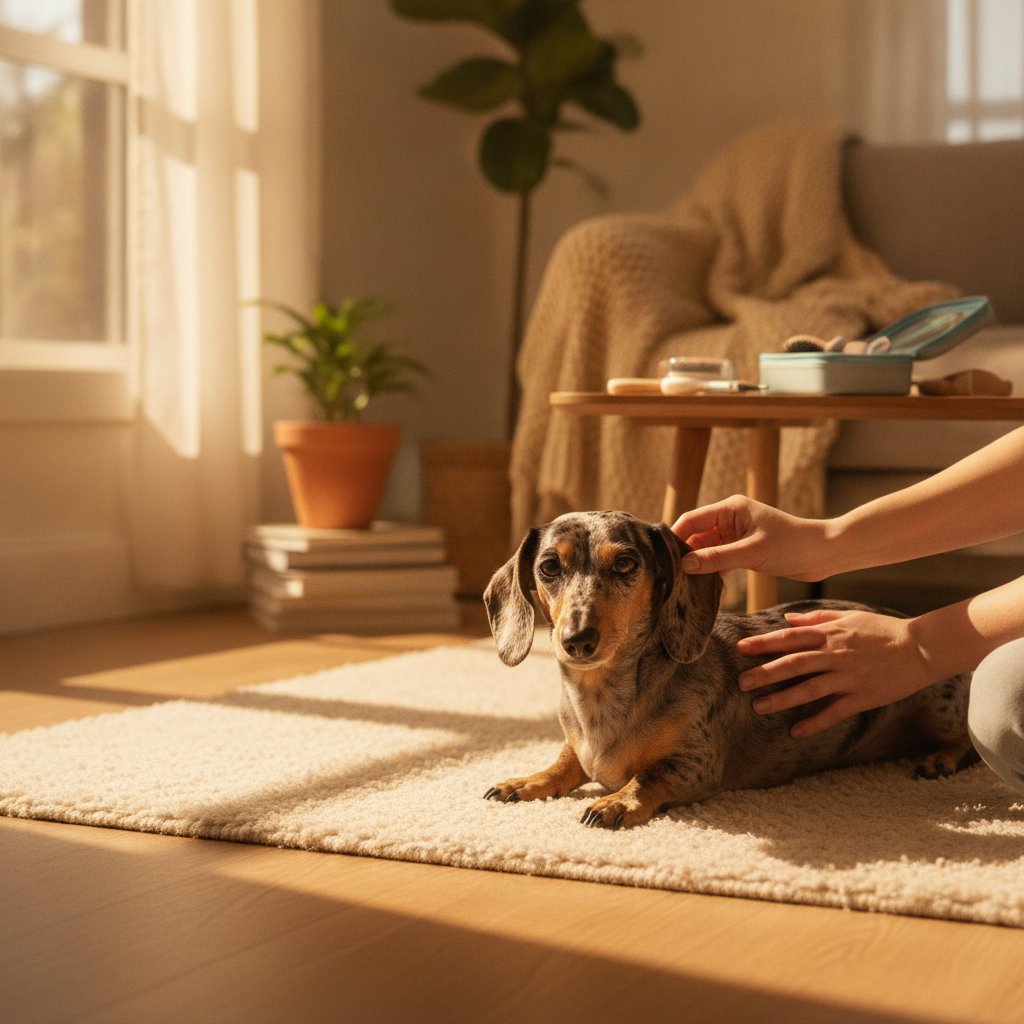
Turn this into a special bonding time. Put on some calm music, grab some high-value treats, and sit on the floor with your doxie. Make it a massage, a cuddle session that just happens to be incredibly informative. You’re not performing an exam; you’re paying loving attention.
Step 1: The Face (Eyes, Nose, and Mouth)
Start at the front. Gently look into your dachshund’s eyes. They should be bright and clear. A little bit of sleep crust in the morning is normal, but constant goop, redness, squinting, or cloudiness is worth noting. Now, look at their nose. It might be wet or dry depending on the time of day, but it shouldn't have any colored discharge or be cracked and sore. Finally, the mouth. This is a big one. Gently lift their jowls. Their gums should be a healthy pink (unless they have naturally dark pigment). Press a finger gently on the gum; the color should return in a second or two. Take a peek at their teeth. Are they caked in tartar? Any loose or broken ones? And take a quick sniff—bad breath isn't just “dog breath,” it can be a sign of dental disease, which is surprisingly common in doxies. You can read more about other non-back issues in my guide to common dachshund health quirks.
Step 2: The Ears
Those long, velvety ears are adorable, but their floppy nature can trap moisture and debris, making them a prime spot for infections. Gently lift the ear flap and look inside. The skin should be a pale pink and clean. Sniff the ear. A healthy ear doesn't smell like much. A yeasty, funky, or foul odor is your first clue that something is brewing. Look for excessive dark wax, redness, or swelling. If your doxie is shaking their head a lot or scratching at their ears, this check can help you pinpoint the cause.
Step 3: The Full Body Scan (Lumps, Bumps, and Coat)
This is the part that feels like a massage. Starting at the neck, run your hands firmly but gently all over your dog’s body. Go down their back, along their sides, over their ribs, and down each leg. You’re feeling for anything that wasn’t there last week: new lumps, bumps, scabs, or sore spots. Pay attention to how your dog reacts. Do they flinch when you touch a certain area? That’s important information. While you're at it, notice their coat. Is it shiny and healthy, or is it dull, dry, or flaky? Are there any patches of thinning hair or bald spots? The condition of their coat is a great outward indicator of their internal health.
Step 4: The Undercarriage and Paws
Have your doxie roll over for a belly rub. Check the skin on their stomach and in their armpits (legpits?) for any rashes, redness, or discoloration. Then, move on to their paws. These little feet do a lot of work! Gently spread their toes and look between the pads for any cuts, thorns, or irritation. Check the pads themselves—are they cracked or sore? Finally, look at their nails. If you can hear their nails clicking on the floor like tiny tap shoes, they’re too long. Long nails can affect their posture and gait, which puts extra stress on—you guessed it—that long little back.
Step 5: The Spine and Gait Check (The Most Important Part!)
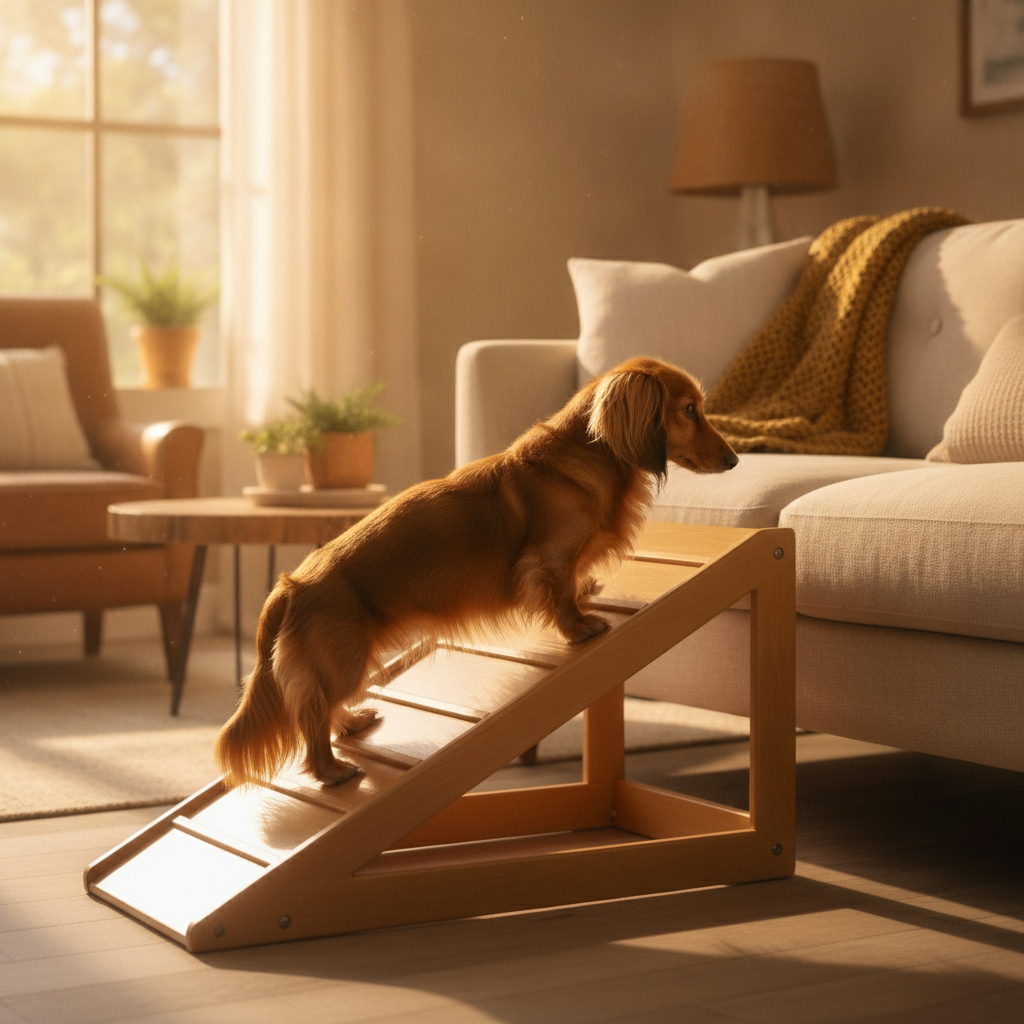
This is the cornerstone of the weekly dachshund health check. First, with your dog standing, run your hand gently but firmly along their spine, from the base of their neck to the tip of their tail. Feel for any tenderness, muscle spasms, or areas where they seem sensitive. Then, watch them walk. Just toss a toy or have them walk across the room. Does their movement look fluid and normal? Or do you see a limp, a wobble, or any stiffness? Is their back straight, or is it arched up like a Halloween cat? Are they hesitant to move, or reluctant to go up a single step they usually bound over? A change in how they carry themselves is one of the very first signs of back trouble. Making your home safer with things like ramps is a huge part of prevention, because a sudden change in their willingness to use them can be a signal. We learned this the hard way when our dachshund suddenly refused the ramp.
Remember, your job isn't to diagnose. Your job is to notice. Your vet will connect the dots. You just need to give them the dots to connect.
What My Own Weekly Check Taught Me
I can’t tell you how many times this simple routine has saved me from both panic and problems. That lump I found on Marley? My vet was able to look at my photo and tell me it was a common, harmless fatty lipoma, saving me a frantic emergency visit. But another time, with Mia, I noticed she was persistently licking one of her paws during our weekly check. I looked closer and found a tiny sliver of glass embedded there that I never would have seen otherwise. It’s not always about finding something dramatic. More often, it's about catching the little things before they become big, painful, and expensive things. It’s about peace of mind. It’s about trading vague anxiety for confident awareness.
This weekly ritual transforms your relationship with your dog's health. You stop seeing them as a fragile creature you have to worry about and start seeing them as a partner whose body you understand. You build a library of knowledge in your fingertips and in your eyes. This is how you become the advocate your dachshund deserves. This simple dachshund health check is an act of love.
Knowing your dog's physical baseline is the first half of the equation. The other half is understanding their behavior. Knowing what a sudden change in their gait means is crucial, but so is knowing what it means when they suddenly start barking at nothing or hiding under the bed. To be a truly confident doxie parent, you need to speak both languages: physical and behavioral. That's why I put together a guide to help you decode their quirky actions. It’s the perfect complement to your new weekly health check.
Ready to feel more connected and confident than ever? Get the free Dachshund Behavior Decoder and learn the 'why' behind what your doxie does.
Frequently Asked Questions
How often should I really do this health check?
Once a week is the perfect frequency. It’s often enough to catch changes early but not so often that it becomes a chore. Pick a specific day, like Sunday evening, to make it a consistent and calming ritual for both of you.
What if my dachshund hates being touched in certain spots?
Go slow and use lots of high-value treats. If they hate their paws being touched, start by just touching their leg for a second, then treat. Gradually work your way to their paws over several sessions. The goal is to make this a positive experience, not a fight. A sudden new sensitivity to being touched, however, is a key finding for your weekly dachshund health check and is worth a call to the vet.
Can this weekly check prevent IVDD?
While it can't prevent the genetic predisposition for Intervertebral Disc Disease (IVDD), it is one of your most powerful tools for early detection. Catching subtle signs like a slight back arch, muscle tension, or reluctance to move can allow you to intervene with crate rest and vet care before a minor issue becomes a major crisis. A safe home environment is also key, as discussed in our guide to creating a doxie-proof home.
What are the most common things I might find during a dachshund health check?
Besides the big things, you'll most likely find minor issues you can handle easily. Common findings include ticks (especially after walks), minor cuts on paw pads, dirty ears that need a gentle cleaning, or nails that are ready for a trim. Finding these small things regularly is a success!
Is it normal for my dachshund's back to be slightly arched?
Some dachshunds have a slight natural arch to their back, which is part of their normal conformation. The key thing to watch for during your health check is a *change*. A new, more pronounced arch, especially if it looks tense or your dog seems uncomfortable, is a classic sign of back pain and warrants an immediate call to your vet.
My dachshund seems perfectly healthy, is this checkup still necessary?
Absolutely! That's the perfect time to start. The entire purpose of a routine dachshund health check is to establish a detailed baseline of what "perfectly healthy" looks and feels like for your specific dog. When you know their healthy state inside and out, any deviation will be much easier and faster to spot.
Dachshund Health · IVDD Prevention · Dog Health Check · At-Home Pet Exam