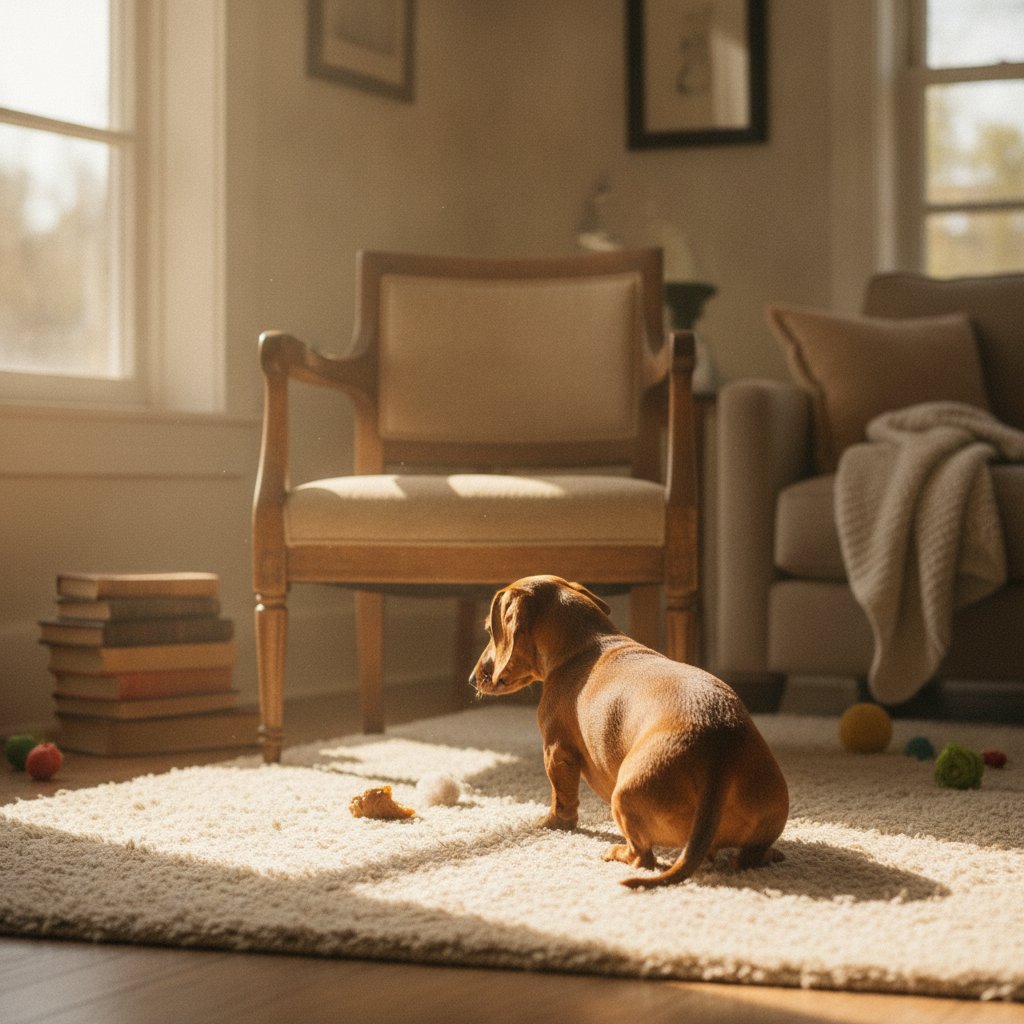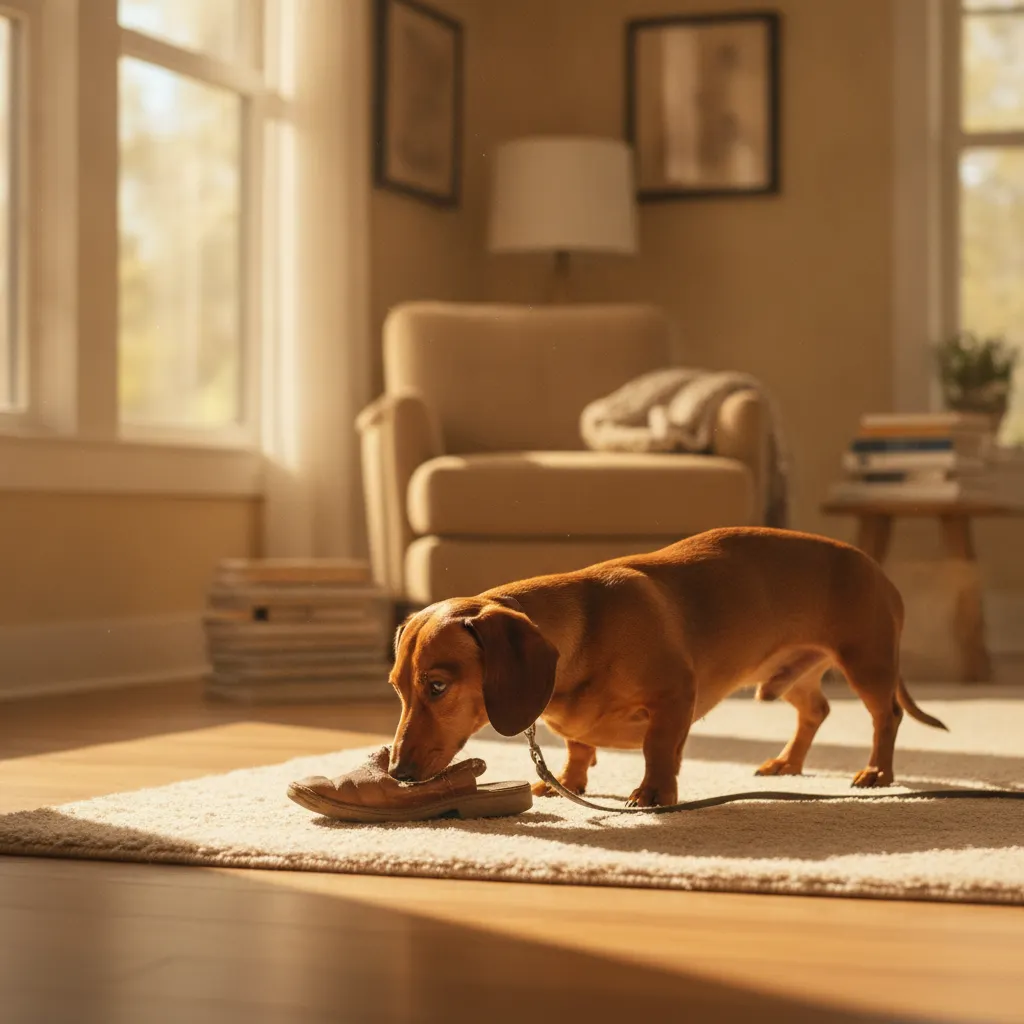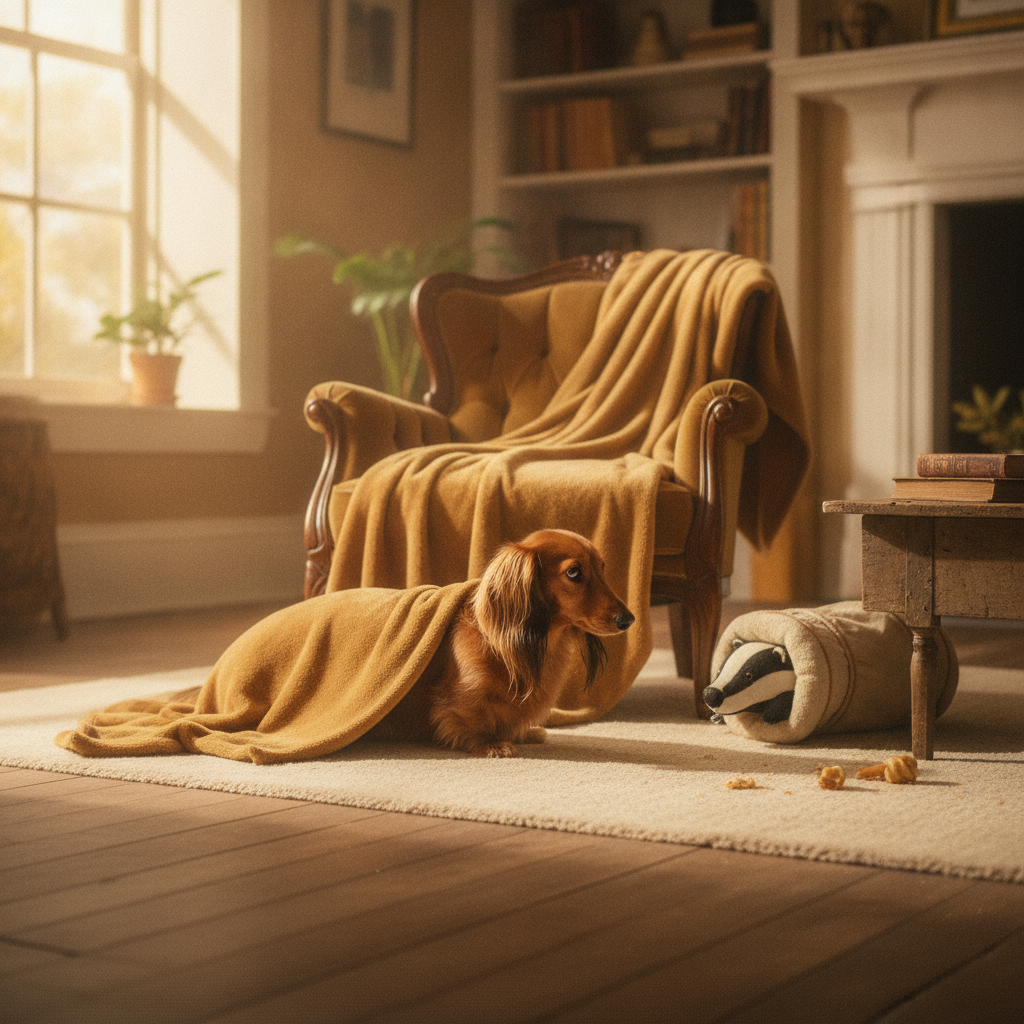
You’re standing at the back door, holding a fluffy towel. It’s pouring rain. You call your dachshund’s name. He looks at you, makes direct eye contact, and then deliberately turns his head to continue sniffing a fascinatingly damp leaf. You call again, your voice a little tighter. Nothing. It feels personal, doesn't it? Like a tiny, four-legged teenager giving you the silent treatment. This is the classic moment that fuels the myth of dachshund stubbornness.
You love your little sausage dog more than words, but some days you feel like you're talking to a furry brick wall. You wonder, "Why won't he listen? Am I doing something wrong? Is he just… difficult?" It's frustrating, and it can even be a little worrying when his "selective hearing" puts him in a risky situation. You see other dogs at the park snapping to attention when their owners call, and you're left pleading with a creature who seems to have suddenly lost the ability to hear.
You've probably tried the training methods that worked for your friend's Labrador. You've repeated "come" until you're blue in the face. You've offered a standard treat, which he inspected with the disdain of a food critic before walking away. These methods fail because they are designed for dogs bred to cooperate with humans—retrievers, herders, pointers. Their job was to take direction. Your dachshund was not bred to cooperate. He was bred to argue with a badger, underground, in the dark, with no one to ask for help.
So, Why Does My Dachshund Seem So Stubborn?
Here’s the secret that will change everything: Your dachshund isn’t being stubborn; he's being a dachshund. That brain isn't wired for blind obedience. It’s wired for courage, independent problem-solving, and a single-minded focus that was necessary to face a ferocious opponent in its own den. What we call stubbornness is actually the very set of traits that made them legendary hunters in 17th-century Germany.
Think about their original job. They were sent down dark, narrow tunnels to find and confront a badger—an animal known for its ferocity. They weren't waiting for instructions from the farmer up on the surface. They were making life-or-death decisions on their own, often for extended periods. They had to be brave, persistent, and incredibly self-reliant. That genetic programming doesn't just disappear because they now live in a cozy house with blankets and squeaky toys. That same intensity and independent spirit live on in your living room, manifesting as an intense debate over whether coming inside is as important as investigating that weird smell by the fence.
What you see as a flaw is actually their greatest historical strength. They aren't trying to defy you; they are simply running on a different operating system.
Understanding this reframe is the first, most important step. You're not living with a disobedient dog; you're living with a retired hunter who still sees the world as a series of fascinating problems to solve and missions to accomplish. The squirrel in the yard isn't just a squirrel; it's an intruder to be vanquished. The blanket on the sofa isn't just a blanket; it's a den to be excavated. For more on this, you might find it interesting to read about why dachshunds burrow—it's all connected.
How to 'Speak Dachshund': Working With Their Nature, Not Against It
Once you accept that you can't erase 600 years of breeding, you can stop fighting a losing battle and start working *with* your doxie's unique logic. This is where the real magic happens. It’s not about finding the right punishment; it’s about becoming the most interesting thing in their world. Here’s a framework for shifting your approach from a drill sergeant to a clever negotiator.
1. Become a Negotiator, Not a Dictator
Dachshunds run on a "what's in it for me?" operating system. Your request has to be more compelling than what they're currently doing. This is where high-value treats come in. Forget the dry biscuit. Think tiny pieces of cheese, chicken, or freeze-dried liver. You're not bribing them; you're paying them for a job well done. Their focus is a valuable commodity, and you need to make a compelling offer to purchase it.
2. Respect the Mission
When your doxie is intensely focused on something—sniffing a spot on the carpet, "killing" a squeaky toy, barking at a leaf blowing down the street—their hunter brain is fully engaged. Yelling their name is like trying to interrupt a surgeon during a critical procedure. Instead of demanding they stop, try joining their mission for a second. Get down on their level. "What's that? Did you get it?" Acknowledge their important work. Then, use a high-value treat to redirect that laser-focus onto you. You've honored their instinct before asking them to switch gears.
3. Master the "Trade Up"
They have your sock, and they're not giving it back. Chasing them only turns it into the best game ever invented. Instead of a confrontational "Drop it!", offer a trade. Hold a super-tasty treat or a favorite toy near their nose and say "Trade?" in an excited voice. The moment they drop the sock to take the better item, you praise them like they just won a Nobel Prize. You're teaching them that giving things to you results in something wonderful, not a loss.
4. The Power of a "Touch" Command
Teaching a "touch" (or "target") command where they bop their nose to your hand is incredibly helpful. It's not a formal recall, which they often resist because it feels like an order. It's a simple, fun game that you can use to move them from point A to B without a fight. "Touch!" to get them off the couch, "Touch!" to get them closer to the door, "Touch!" to get them into their harness. It turns movement into a collaborative game.
5. Make It Their Idea
I learned this with my Mia. She hates her raincoat. If I try to just put it on her, she goes limp and becomes a boneless sausage of protest. But if I lay it on the floor and put a tiny treat in the neck hole, she'll stick her head through herself. Suddenly, it's her brilliant idea. Find creative ways to make obedience feel like their choice. This approach is central to how we approach everything from potty training to more advanced commands. If you're struggling, my guide on how to 'speak dachshund' during training goes into even more detail on this philosophy.
A Quick Note on Health vs. Behavior
It's critical to remember that sometimes what looks like stubbornness can be a sign of pain. If your doxie suddenly refuses to jump on the couch, use the stairs, or go for a walk, it might not be a mood—it could be a sore back. This is the one rule I tell every doxie parent: Quirks are consistent; problems are a change. A sudden shift in behavior always warrants a call to your vet. Protecting their long little backs is our number one job. Make sure your home is set up for their safety; small changes like adding ramps can make a huge difference in preventing injury.
It's a Partnership, Not a Dictatorship
I've spent nearly two decades living with these hilarious, opinionated dogs. My Marley once spent a full ten minutes refusing to come inside because a specific blade of grass required his full and undivided attention. My old training attempts would have ended in a stalemate and frustration for both of us. But now? I go out, crouch down, and say, "Okay, show me what's so interesting." I give the grass a sniff myself (yes, really). He looks at me, satisfied that his important work has been acknowledged. Then I say, "Alright, big guy, let's go get a treat," and he trots right in.
It's not about winning a battle of wills; it's about respecting their world and inviting them back into yours. When you stop seeing **dachshund stubbornness** and start seeing dachshund intelligence, your entire relationship with your little long dog will change for the better. You'll move from a place of frustration to one of deep appreciation for the incredible, brave little hunter living in your home.
Understanding this core "hunter logic" is the first step. If you want to stop feeling frustrated and start feeling like you and your doxie are finally on the same team, I've put all my best "translation" tips into a simple guide. It's about learning the 'why' behind their quirky behaviors so you can be a more confident, connected doxie parent. Get the free Dachshund Behavior Decoder and start speaking their language today.
Frequently Asked Questions
Are male or female dachshunds more stubborn?
Honestly, it varies more by individual personality than by gender. Both males and females can exhibit that classic dachshund stubbornness. The key is understanding their hunting instincts, which are strong in all of them, regardless of whether they're a boy or a girl.
Will my dachshund ever grow out of being stubborn?
Not really, because it isn't a phase—it's their fundamental nature. However, as you learn to work with their instincts instead of against them, it will feel less like stubbornness and more like a predictable, manageable part of their personality. Your relationship will change for the better.
Why does my dachshund ignore me when I call their name?
They're likely "on a mission." Their powerful noses and hunting drive mean that when they're focused on a scent or a sound, the rest of the world fades away. To get their attention, you need to present something more interesting than their current target, like a high-value treat or an exciting squeaky toy.
Is my dachshund being stubborn or is it anxiety?
This is a great question. Refusal to move or do something can be anxiety. Look at their body language. Is their tail tucked? Are they yawning or licking their lips excessively? These are signs of stress. The behavior we call stubbornness often looks more like a confident, deliberate choice, whereas anxiety looks like fear or uncertainty.
What's the number one mistake people make when dealing with a "stubborn" dachshund?
The biggest mistake is treating them like a Golden Retriever. Trying to force compliance through repetition or a loud voice will almost always backfire. It turns the situation into a battle of wills, and a dachshund will dig their heels in and win that battle every time. Negotiation and partnership are the only ways to go.
Can dachshund stubbornness be a sign of a health problem?
Yes, absolutely. A sudden increase in what appears to be stubbornness—like refusing to walk, jump, or play—can often be a sign of back pain (IVDD) or other discomfort. If the behavior is new and out of character for your dog, it's crucial to consult your vet to rule out any underlying health issues.
dachshund behavior · dog training · stubborn dogs · breed traits