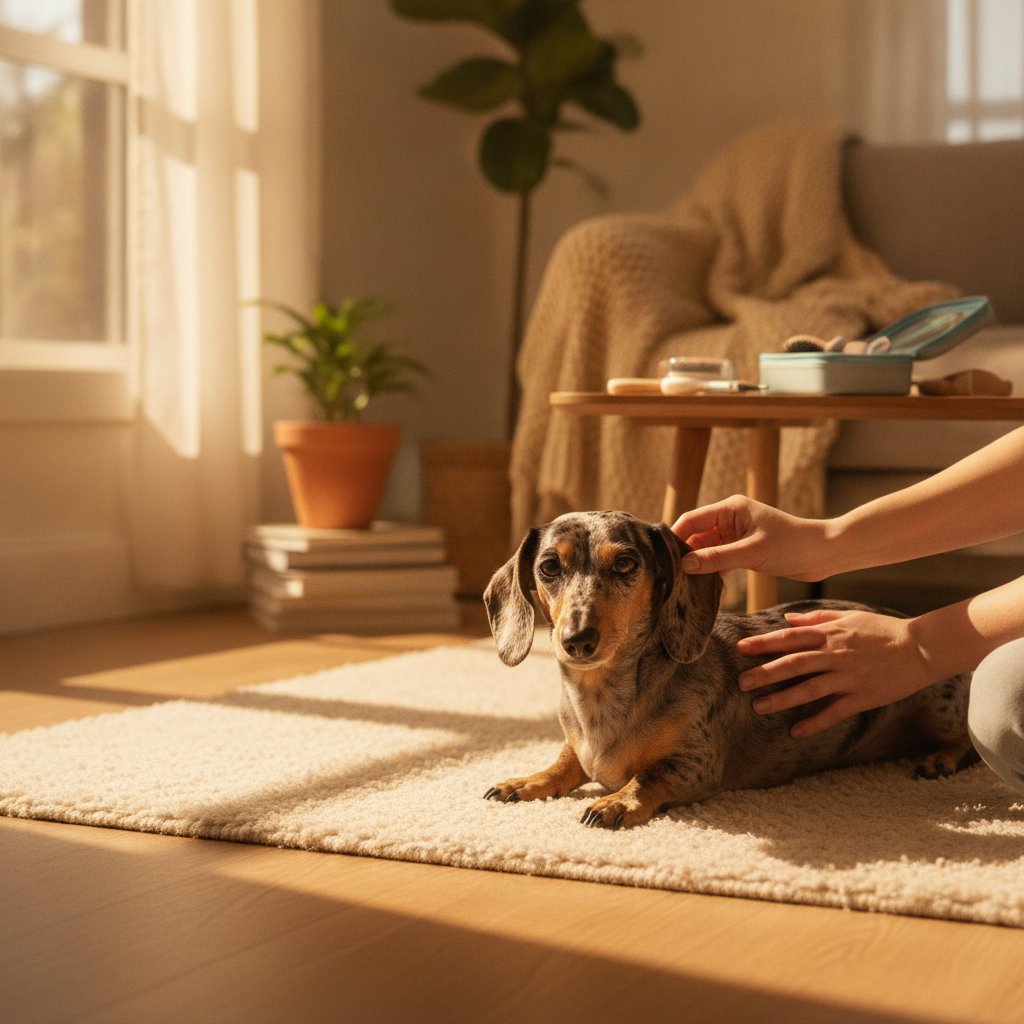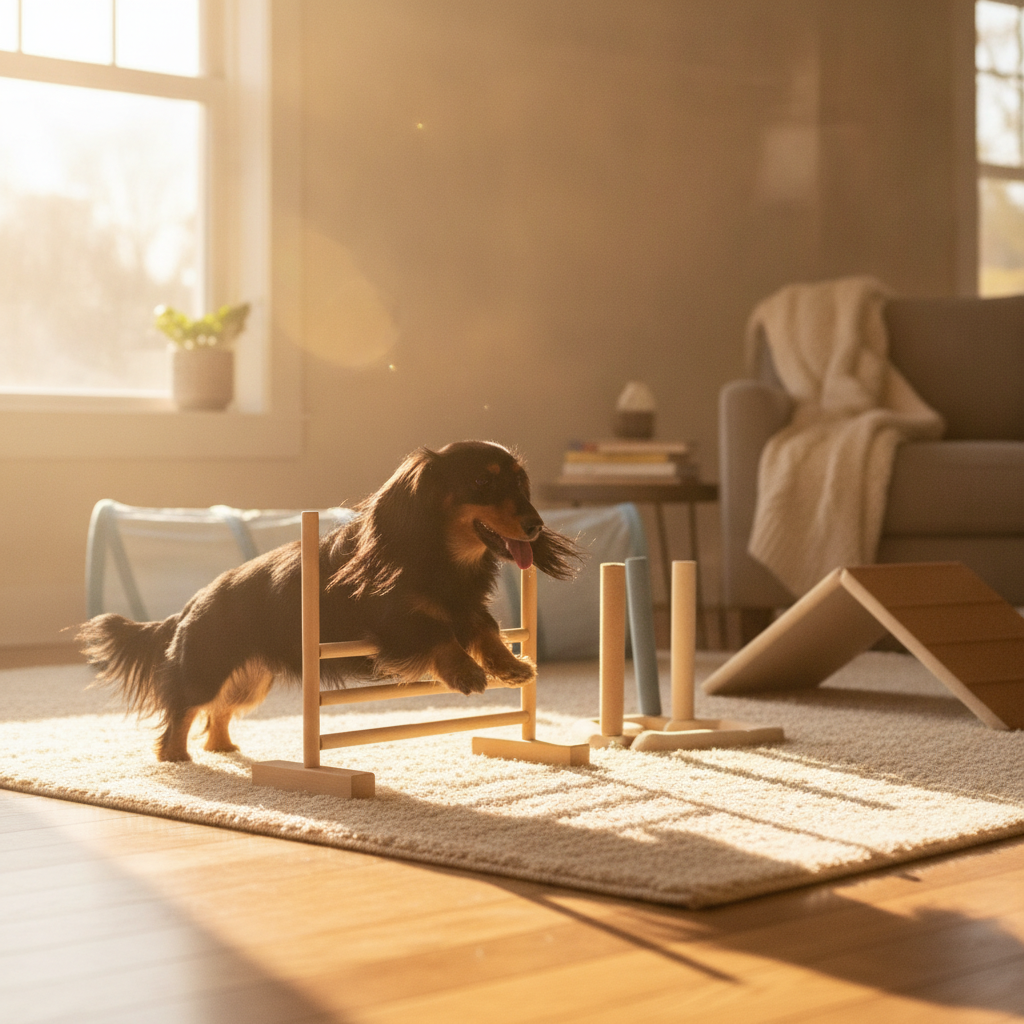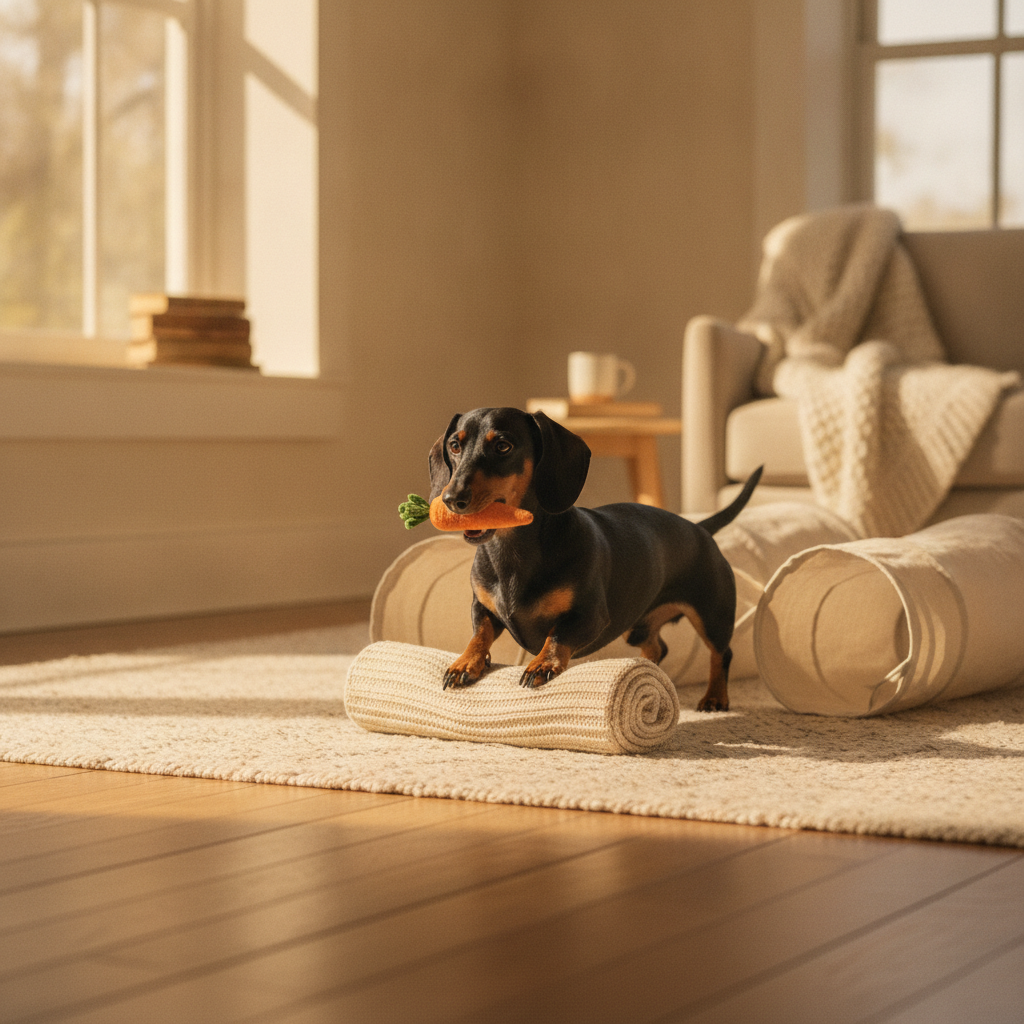
My heart is in my throat. It’s a feeling every doxie mom knows. Marley, my long-haired cream, has just spotted a squirrel through the window. Before I can even form the word “No,” he launches himself off the back of the couch like a furry, four-legged torpedo. He lands with a soft thud, thankfully, but for that one split second, my world stops. All I can see is that long, precious back twisting in mid-air. It’s the constant, low-grade hum of anxiety that comes with loving a dachshund.
You want to see them happy, energetic, and playful. But every game of fetch feels like a gamble. Every zoomie around the living room comes with a silent prayer. You feel like the “fun police,” constantly saying “be careful,” “don’t jump,” and “get down from there!” You’ve probably searched for dachshund exercises and found a list of activities that seem designed for a Golden Retriever, not a low-rider with a spine like a suspension bridge.
Maybe you’ve tried just limiting playtime, only to end up with a bored, barky, and frankly destructive sausage dog who has decided your throw pillows are a worthy substitute for badgers. Or you’ve tried “safe” games that are so boring your doxie gives you a look of pure, unadulterated pity. The problem isn’t the games; it’s our whole approach to what “exercise” means for these unique little dogs.
Here’s the reframe that changed everything for me: The goal isn't to stop your dachshund from being active. It's to channel their powerful, hardwired instincts into movements that strengthen their core and back muscles, rather than strain them. The best dachshund exercise isn’t about wearing them out physically; it’s about engaging their brilliant, stubborn, problem-solving brains. When you work *with* their instincts, you protect their back.
Why Brain Work is the Best Back-Safe Dachshund Exercise
A tired dog is a happy dog, but we often forget that mental fatigue is just as effective—if not more so—than physical fatigue. For a dachshund, ten minutes of intense sniffing and problem-solving can be more tiring than a 30-minute walk. Why? Because it taps directly into the core of who they are.
These dogs were bred for centuries to think for themselves. Deep in a dark, narrow tunnel, they had to make life-or-death decisions without a human to guide them. They are independent thinkers, puzzle-solvers, and relentless hunters. A game of fetch is fun, but it doesn't scratch that deep cognitive itch. When you give them a job to do, a puzzle to solve, or a scent to track, you are honoring their heritage. You're giving them the work they were born to do, and it just so happens that this kind of work is incredibly safe for their backs.
Brain games encourage low-impact movements. Sniffing, tracking, and gentle manipulation of puzzle toys all keep four paws on the floor. This kind of work also builds confidence and can reduce anxiety and boredom-related behaviors like excessive barking or chewing. It’s a win-win: a happy, fulfilled dog and a calm, reassured doxie parent.
5 Back-Friendly Games to Engage Your Doxie's Mind and Body
Ready to transform playtime from a source of anxiety into a joyful bonding experience? Here are five of my go-to games that Marley and Mia absolutely love. They are fun, easy to set up, and most importantly, they are designed to protect that long little back.
1. The Sniffari & Snuffle Mat Treasure Hunt
This is, without a doubt, the number one activity in our house. A dachshund’s nose is a supercomputer, and putting it to work is the fastest way to their happy place. A “sniffari” is simply a walk where your dog is in charge of the sniffing. Instead of focusing on distance, you let them lead the way with their nose, lingering as long as they want on a particularly fascinating blade of grass. It's calming and deeply satisfying for them.
For indoor fun, the snuffle mat works wonders. It’s a mat made of fleece strips where you can hide small, high-value treats or even their regular kibble. Your doxie has to use their nose to hunt through the fabric to find the food. It’s a fantastic way to feed them their meals, slowing them down and turning eating into a rewarding puzzle. Mia, my little piebald, will spend a solid 15 minutes meticulously clearing her snuffle mat. When she's done, she's not hyper; she's content and ready for a nap. There is zero jumping, zero twisting—just pure, instinct-driven focus.
2. The Low-Rider Obstacle Course
Forget agility jumps and high platforms. A doxie-friendly obstacle course is all about navigating a low-to-the-ground environment. This builds body awareness (proprioception), which is crucial for preventing injuries. A dog who knows exactly where their back end is in space is less likely to make an awkward, dangerous movement.
Here’s how to build one: Use pillows, couch cushions (on the floor!), and blankets to create a varied terrain. Lay a broomstick on the floor and encourage them to step over it. Create a tunnel by draping a blanket over two chairs or simply by forming a bridge with your own legs. The goal is to get them to step over, crawl under, and weave around objects. Use treats to lure them through the course. Marley loves this game; he prances through his pillow maze like he’s won a gold medal. It’s a fantastic rainy-day activity that strengthens their core muscles in a safe, controlled way.
3. The "Find It!" Game
This is another nose-work game that taps into their hunting drive. It’s hide-and-seek for dogs, and it’s endlessly adaptable. Start simple. With your dachshund in a “stay” (or held back by another person), show them a favorite toy or a smelly treat. Then, place it a few feet away in plain sight and say, “Find it!” When they get it, praise them lavishly.
Once they understand the game, you can make it harder. Hide the object just around a corner. Then under the edge of a rug. Then in another room. Soon, you’ll be able to hide a treat almost anywhere in the house, and your little detective will spend minutes happily sniffing it out. This is one of the best dachshund exercises because it combines mental work with gentle physical movement. They are walking, sniffing, and thinking—all while their spine stays in a safe, neutral position.
4. Hallway Bowling (The Safe "Fetch")
The classic game of fetch in an open yard can be risky for a dachshund. They accelerate, slam on the brakes, and twist sharply to grab the ball, all of which puts immense torque on their spine. Hallway Bowling removes that risk. The narrow confines of a hallway prevent those dangerous lateral twists.
Use a soft, lightweight ball that’s easy for them to pick up. Sit at one end of the hall and gently roll the ball to the other. Your doxie gets the thrill of the chase in a straight line. They run down, pick it up, and run straight back. It’s a simple switch, but it makes a world of difference for back safety. It satisfies their prey drive without encouraging the high-impact acrobatics that can lead to injury. For a breed that can be surprisingly stubborn about giving up the ball, you might find this is also a great opportunity to practice the "drop it" command in a controlled space, as explained in our guide on how to 'speak dachshund'.
5. Core Conditioning "Tricks"
Many basic obedience tricks are actually fantastic, low-impact core-strengthening exercises. Think of it as doggy pilates. These aren’t about performance; they are about building the small muscles that support and protect that long spinal column. A strong core is the best defense against back problems.
Some great ones to teach include:
- Puppy Push-ups: Asking your dog to go from a “down” to a “stand” and back to a “down.” This engages their entire core.
- Leg Weaves: Stand with your feet apart and use a treat to lure them to weave through your legs in a figure-eight pattern. This encourages gentle spinal flexibility and body awareness.
- Paws Up: Teach them to put their front paws up on a low, stable surface (like a thick book or a very low step). This strengthens their shoulders and core as they hold the position.
What to Avoid: The High-Risk List
Just as important as knowing what games to play is knowing what activities to avoid. For dachshunds, the biggest risks come from vertical jumping and sharp, twisting motions. This means:
- No jumping on or off furniture. This is the big one. Ramps and steps are your best friends. Make them non-negotiable.
- No jumping up to catch balls or frisbees. This kind of vertical leap and mid-air twist is incredibly dangerous.
- No aggressive tug-of-war. A gentle game is fine, but avoid any shaking or twisting motions that could jerk their neck and back.
- No unsupervised stair use, especially for puppies or seniors.
By focusing on these brain-first, back-friendly games, you can give your dachshund a rich, stimulating life while keeping them safe. You’ll replace your anxiety with the joy of watching your clever little sausage solve a puzzle and the pride of knowing you’re doing the best thing for their long-term health.
Understanding *why* your doxie loves these games is the key to being a more confident and connected doxie parent. To learn the secrets behind their quirky instincts and unique needs, Get the free Dachshund Behavior Decoder.
Frequently Asked Questions
How much exercise does a dachshund need each day?
Most adult dachshunds need about 30 to 60 minutes of activity per day. This should be a mix of walks for physical conditioning and brain games for mental stimulation. Remember, a few short, engaging sessions are often better than one long, exhausting one.
Are walks good enough dachshund exercises?
Walks are essential for cardiovascular health and sensory enrichment, but they aren't enough on their own. The best routine for dachshund exercises includes walks plus daily mental stimulation games, like the ones listed in this article, to satisfy their intelligent minds and prevent boredom.
Can my dachshund play fetch?
Traditional fetch in an open space is risky due to the quick stops and twists. A much safer alternative is “Hallway Bowling,” where you roll a soft ball down a hallway. This allows for a straight-line chase, which minimizes the risk of back injury.
What are the signs of a back injury I should watch for?
Watch for any sudden changes. Signs can include reluctance to move, a hunched back, crying out when touched or picked up, wobbly walking, or dragging their back legs. If you see any of these signs, contact your vet immediately.
At what age should I start being careful about my dachshund's back?
You should be mindful of a dachshund's back from the moment you bring them home. Start good habits early, like using ramps and discouraging jumping. Prevention is a lifelong commitment that starts in puppyhood.
Are puzzle toys a good form of exercise?
Yes, puzzle toys are an excellent form of mental exercise and enrichment. They are a safe, low-impact way to keep your dachshund engaged and prevent boredom, making them a perfect component of a well-rounded routine of dachshund exercises.
dachshund health · IVDD prevention · dog games · low-impact exercise