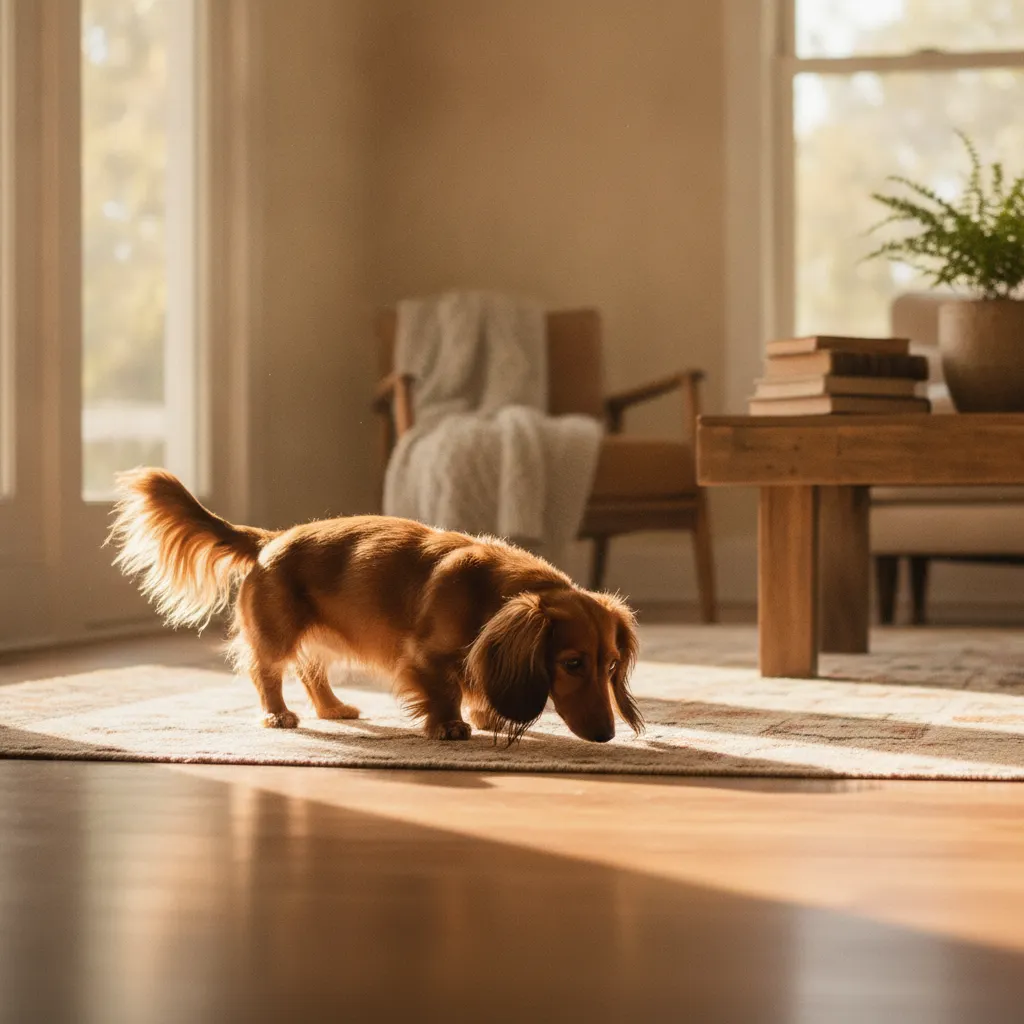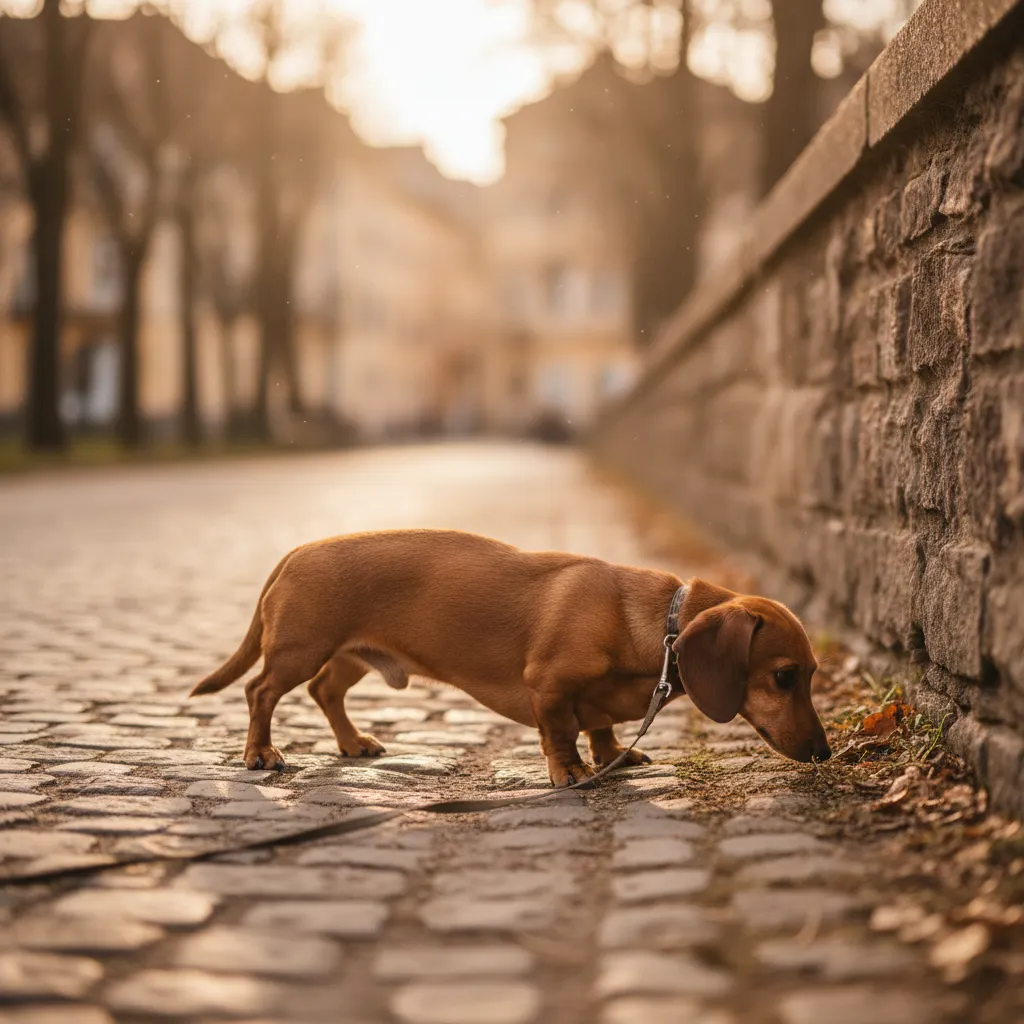
You know the moment. The sun is shining, you’ve got your shoes on, and you’re ready for a nice, brisk walk to start the day. Your dachshund trots happily out the door, tail wagging… for about twenty feet. Then, it happens. The brakes engage. The paws plant. The nose hits the pavement, and your dog transforms into a 15-pound immovable anchor. You are no longer walking a dog; you are holding a leash attached to a furry statue. You tug gently. Nothing. You call their name cheerfully. They might flick an ear, but their nose remains glued to a particularly fascinating blade of grass. Congratulations, you’re experiencing the Doxie Dead Stop, a classic among dachshund walking problems.
It’s a special kind of frustration, isn’t it? That feeling of being in a silent standoff with a creature one-tenth your size, in full view of your neighbors. You feel a mix of annoyance, embarrassment, and a flicker of worry. Is something wrong? Are they hurt? Are they just being the most stubborn being on planet Earth? You just want to have a normal walk, but instead, you’re in a battle of wills over a patch of dirt.
Why Hasn't Pulling, Pleading, or Bribing Worked?
If you’re like most doxie parents, you’ve probably run through the standard playbook. First, there’s the gentle-but-firm leash tug. This usually results in your dachshund digging in even harder, leaning back against the pressure like they’re in a tug-of-war championship. Their low-slung body gives them a comical amount of leverage.
Next, you might try the high-pitched, encouraging voice. “Come on, sweetie! Let’s go! This way!” This is often met with a blank stare that seems to say, “I am incredibly busy with important business right here, and your noises are irrelevant.”
Then comes the nuclear option: the treat bribe. You wave a high-value snack in front of their nose. This might get you a few feet of forward motion, but as soon as the treat is gone, the brakes are back on. Now you’ve just taught them that planting their feet produces cheese. You haven’t solved the problem; you’ve just made it more expensive.
These tactics fail because they all start from the same wrong assumption: that your dachshund is being disobedient. You’re trying to solve a problem of compliance, but your dachshund isn’t even playing that game. You’re speaking English, and they’re reading the news in a language you can’t comprehend.
The Reframe: It's Not a Walk, It's a 'Sniffari'
Here is the single most important shift you can make: A walk is not for you. It is for them. You put on your shoes to get exercise, to move your body from point A to point B. Your dachshund puts on their harness to go read their newspaper.
A dachshund’s nose is a marvel of biological engineering, up to 100,000 times more sensitive than our own. When you walk down the street and see a sidewalk, trees, and houses, your doxie experiences something completely different. They are immersed in a world of information. They can smell which dogs have been by, when they were there, what they had for lunch, and whether they were feeling stressed or happy. That single blade of grass isn’t just grass; it’s the front page of the neighborhood news, the gossip column, and the social media feed all in one.
When you pull them away from a fascinating smell, you are not just interrupting a sniff. In their world, you are yanking the newspaper out of their hands mid-sentence or shutting the laptop while they’re in the middle of reading an urgent email. They aren't refusing to walk; they are refusing to be dragged away from the most interesting and stimulating part of their day. This is a core part of their identity, a behavior that comes from centuries of being bred to follow scent trails underground. To them, following a scent is their job. Ignoring it would be like you ignoring a ringing fire alarm.
The Solution: A New Walking Framework for Your Wiener Dog
Once you accept that the goal of a walk is mental enrichment, not mileage, everything changes. You can stop the battle of wills and start working with your dog's nature, not against it. Here’s a step-by-step approach to transform your frustrating strolls into joyful journeys.
Step 1: The Health Check (Rule Out Pain First!)
Before you diagnose your doxie with a case of stubbornness, you must rule out any physical discomfort. This is non-negotiable. A sudden refusal to walk can be a critical sign of a problem, especially in a breed prone to back issues.
Remember the golden rule: quirks are consistent, problems are a change. If your doxie has always been a super-sniffer, that’s just their personality. But if your previously brisk walker suddenly starts planting their feet, stopping, or seems reluctant to move, your antennae should go up.
Do a quick check: Are they limping? Do they seem stiff? Are they hunching their back at all? Do they yelp or seem hesitant when you pick them up? These can be subtle signs of pain that a doxie tries to hide. Also, check their paws for cuts, scrapes, or something stuck between their pads. Ensure their harness fits correctly and isn’t chafing them. If you have any doubt, a visit to your vet is the most important first step. Never assume stubbornness when it could be pain.
Step 2: Redefine the Walk with the Two-Walk System
The root of our frustration is a mismatch of expectations. We want to go, and they want to sniff. The solution is to create two different *types* of walks, each with its own clear purpose and gear. This manages expectations for both of you.
Walk Type A: The 'Sniffari'This is the most important walk of the day. This is *their* walk. The goal is 100% mental stimulation and sensory enrichment. For this walk, use a longer lead—a 10 or 15-foot simple nylon training leash is perfect (never a retractable leash, which can be dangerous and teaches pulling).
On the Sniffari, you are not the leader. You are the safety coordinator. Your only job is to keep the leash from getting tangled and ensure they don’t wander into the street or eat something dangerous. Let them choose the path. Let them spend five full minutes sniffing one bush. Let them double back to re-read a particularly juicy patch of “pee-mail.”
It feels strange at first. You’ll feel unproductive. But watch your dog. You will see their body relax. You’ll see the intense focus in their eyes. This is a dog fulfilling its primary purpose. A 20-minute Sniffari can be more tiring and satisfying for a dachshund than a 40-minute forced march. It works their brain, which is just as important as working their body.
Walk Type B: The 'Potty & Go'This is the functional walk. It’s for those times you need them to do their business quickly, like before bed or during a rainy day. For this walk, use a standard 6-foot leash. The expectation here is different. The pace is brisker, and the focus is on a specific task.
Because you have already fulfilled their deep need to sniff on the Sniffari, they are often much more compliant on these shorter, structured walks. They’ve already read the news, so now they can focus on the task at hand. Keep it short, sweet, and to the point.
Step 3: What to Do When They Plant Their Feet
Even with this new system, you’ll still have moments where they become a wiener-anchor. The old habit of pulling is tempting, but it’s a trap. Pulling creates opposition. Instead, try the “Be a Tree” method.
When they stop, you stop. Relax. Take a deep breath. Don’t pull or add tension to the leash. Just stand there with them. This immediately diffuses the power struggle. You’re not fighting them; you’re just waiting. After a few moments, when they’ve finished their sniff or just gotten bored of standing still, use a cheerful, upbeat cue like “Let’s go!” and take a single step forward. The second they move with you, praise them enthusiastically or give them a tiny, high-value treat. You are rewarding the choice to move forward, not bribing them to do it.
This patient approach respects their needs while still gently guiding them. It’s a conversation, not a command. It acknowledges their inner 'big dog' attitude and works with it, rather than trying to crush it.
My Life with a Master Sniffer
I live this every day with my two doxies, Marley and Mia. Mia is happy to have a brisk walk, do her business, and come back inside. Marley, on the other hand, is a world-class sniffing connoisseur. A walk with Marley used to be a source of immense frustration for me. I’d be trying to get my steps in, and he’d be obsessing over a leaf for what felt like an eternity.
The day I reframed our walks as “his time” was the day everything changed. I bought a long training lead, and I started calling our morning outings “Marley’s Sniffari.” I stopped looking at my watch and started watching him. I saw the pure joy and focus he had. I realized he wasn't being difficult; he was being a dachshund. Our walks instantly became calmer, happier, and a point of connection instead of conflict. We still have our shorter “potty walks,” and he’s perfectly fine with those because he knows his big, important sniffing adventure is always coming.
This isn't just a training technique; it's a way to deepen your bond. When you honor their fundamental nature, you’re telling them, “I see you, and I understand you.” And there is no greater gift you can give your long little dog.
Understanding this one core truth—that their nose runs their world—explains so much of their quirky behavior. If you want to get to the “why” behind more of their funny, frustrating, and utterly baffling habits, it can be a huge confidence boost. It helps you become the doxie parent who doesn't just love their dog, but truly *gets* them. To help you do just that, I’ve put all my notes from nearly 20 years with the breed into a simple guide. Get the free Dachshund Behavior Decoder and start seeing the world through their eyes (and nose!).
Frequently Asked Questions
Why does my dachshund stop and refuse to walk all of a sudden?
A sudden change in walking behavior should always be taken seriously. First, rule out pain, especially in their back or paws, with a vet visit. It could also be fear (a loud noise or a scary object), or they could have simply hit a sensory jackpot—an overwhelmingly interesting smell they feel compelled to investigate.
Is it okay to let my dachshund sniff everything on walks?
Yes, absolutely! Sniffing is the most important form of mental enrichment for a dachshund. It tires them out in a healthy way, reduces stress, and allows them to be a dog. Think of it as letting a child read books; it's crucial for their brain development and well-being.
How can I stop my dachshund from pulling on the leash?
Leash pulling is a separate issue from stopping, but it's often related to excitement. The key is positive reinforcement training. Reward them for walking on a loose leash with treats and praise. Never use choke or prong collars. Many dachshund walking problems can be improved by making the walk a more collaborative and fun experience.
My dachshund seems scared on walks. What should I do?
If fear is causing your dachshund walking problems, never force them. Identify the trigger if you can. Work on building their confidence with short, positive walks in quiet areas. You can find more tips in our guide to helping an anxious dachshund feel safe.
Could my dachshund's walking problems be related to their back?
Yes, this is a major concern for the breed. Reluctance to walk, a hunched posture, stiffness, or yelping are all potential signs of Intervertebral Disc Disease (IVDD) or other back pain. If you notice a sudden change in their walking habits, please consult your veterinarian immediately.
How long should I walk my dachshund every day?
Focus on quality over quantity. Two 20-minute “Sniffari” walks where they get to explore and engage their brain are far more beneficial than one 40-minute forced march. Adjust the length based on your dog's age, health, and energy levels, but always prioritize their mental enrichment over mileage.
walking · stubbornness · training · behavior