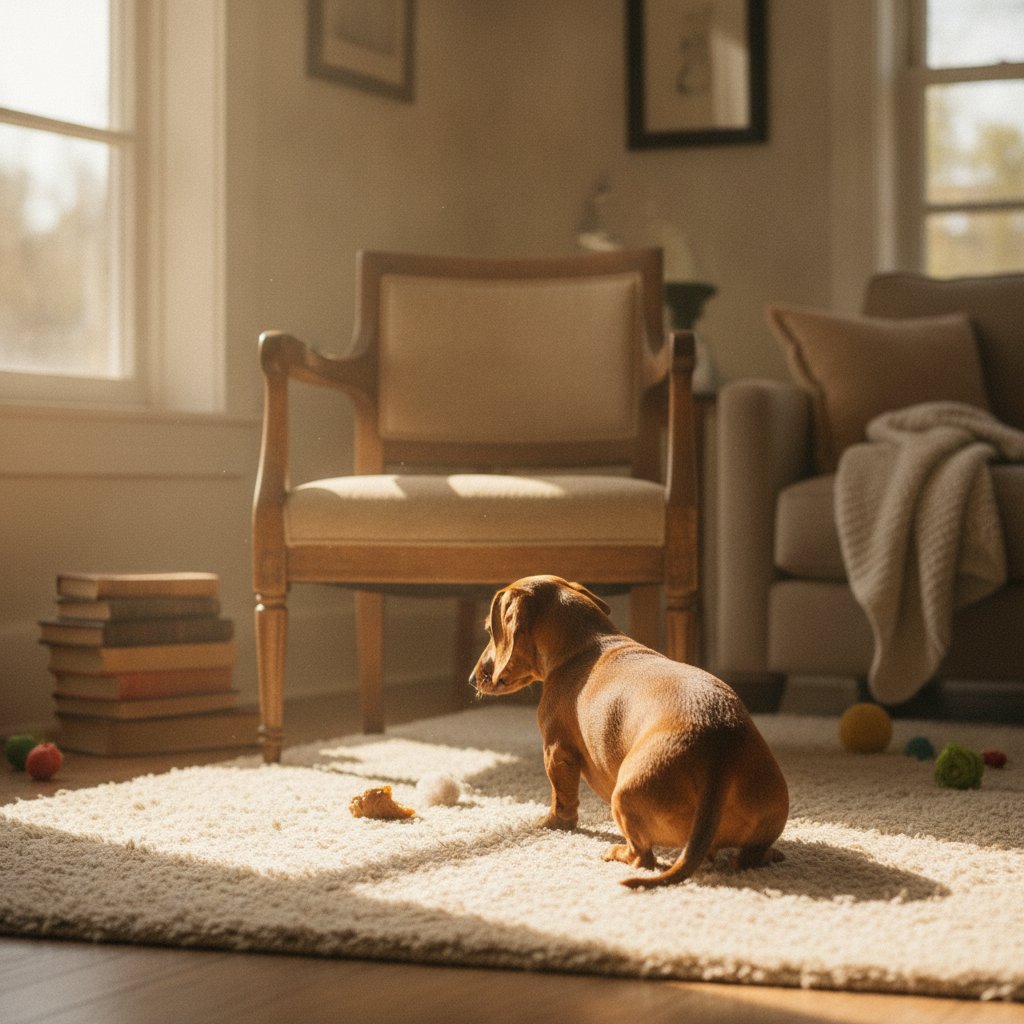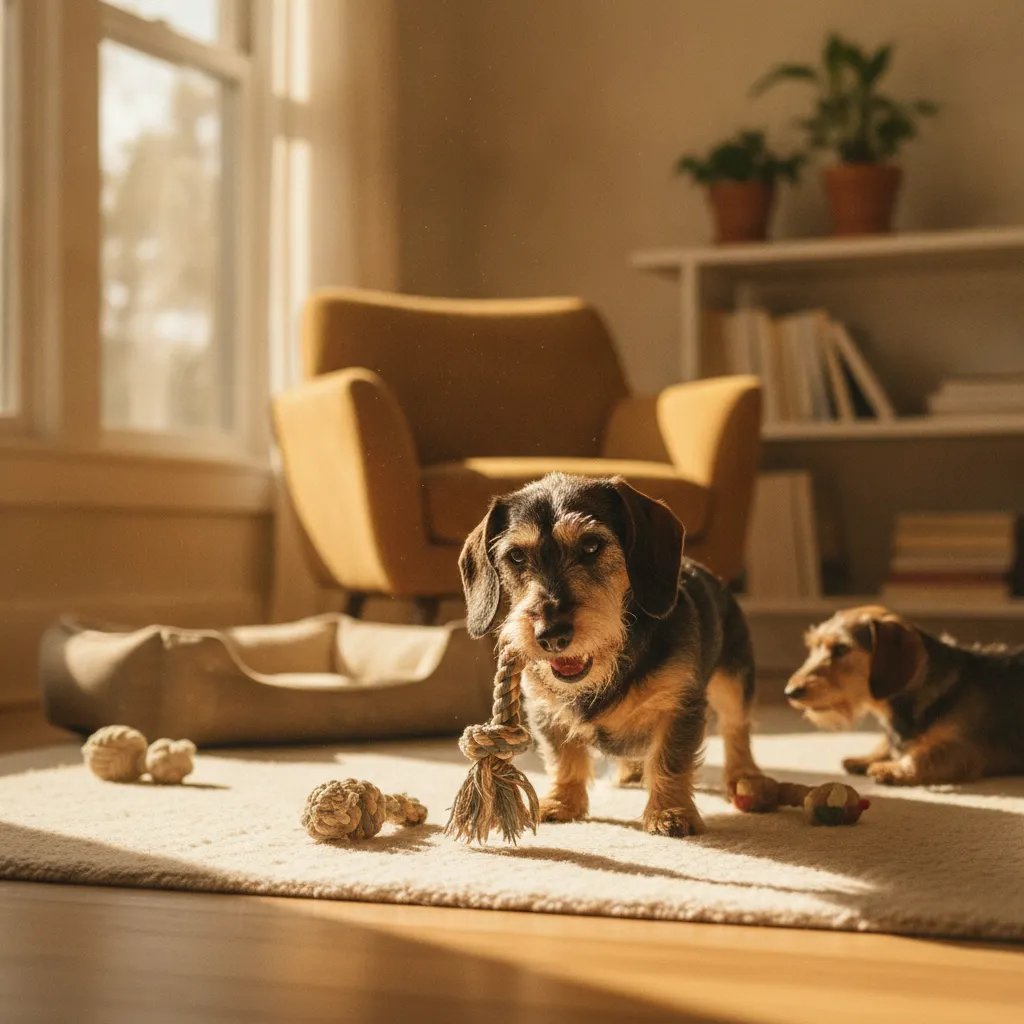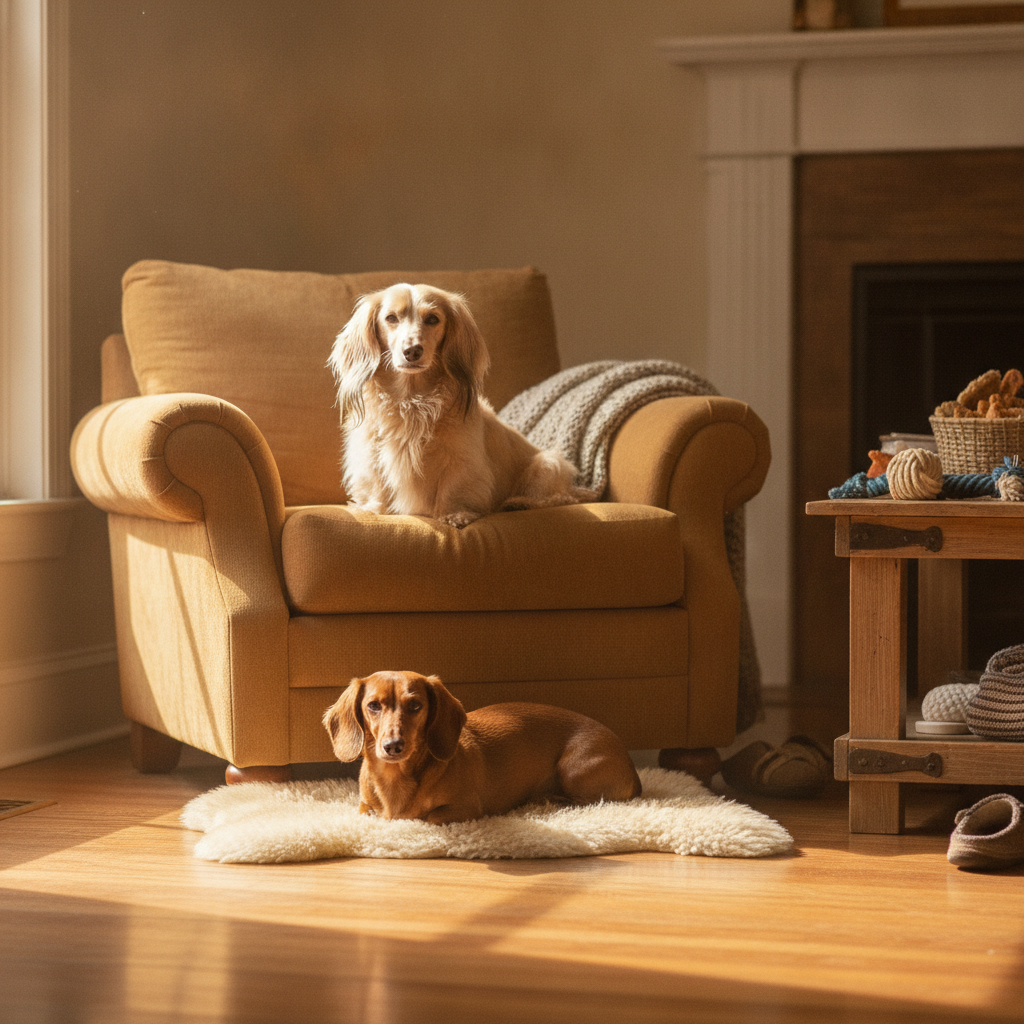
You’ve seen it. That moment when your fifteen-pound sausage dog plants their little feet, puffs out their chest, and lets out a bark deep enough to challenge a Great Dane. Or when they stare you down from the prime spot on the sofa, the one you just vacated for ten seconds, with an expression that says, “This is mine now. Find another.” If you’re nodding along, you know that living with a doxie means dealing with some hilarious, and sometimes frustrating, dachshund behavior problems. But here's the secret: that bossy attitude isn't a flaw. It's the whole point.
It’s easy to feel a little defeated. You love your long little dog more than anything, but their stubborn streak can be exhausting. You might feel embarrassed at the dog park when your tiny companion tries to police every other dog there. You might feel frustrated when they completely ignore a command they’ve known for years, giving you a look that clearly says, “I’m considering your request and have found it lacking.” You’re not a bad dog parent. You're just living with a four-legged general who believes they are in charge of the entire household operation.
Many of us have tried the standard advice. We’ve taken them to puppy classes where they were the loudest and most defiant student. We’ve tried repeating commands in a firmer voice, only to be met with a yawn. The problem with most dog training advice is that it’s designed for dogs who were bred to please, like Retrievers or Labradors. Trying to apply that logic to a dachshund is like trying to explain the rules of chess to a honey badger. It doesn't work because it completely misses the point of who they are. They weren't bred to take orders; they were bred to give them—to badgers, mostly.
You aren’t a bad dog owner. You're just living with a toddler who has a PhD in manipulation and a bark that could shatter glass.
The biggest shift in my nearly 20 years with dachshunds, from my first doxie to my current chaos coordinators Marley and Mia, was when I stopped seeing their bossiness as a problem to be solved. I started seeing it as their heritage. These dogs were created to be incredibly brave, independent thinkers. They were sent alone into dark tunnels to face a formidable, toothy opponent. A dog that waited for permission down there wouldn't come back out. They had to make their own decisions, trust their own instincts, and be stubborn enough to see a fight through. That DNA doesn't just vanish because they now live in a cozy house with a surplus of blankets. Your dachshund isn’t being bad—they are being a dachshund.
Why Does My Dachshund Act Like They Run the House?
Understanding the “why” behind their behavior is the first step to living happily with your little dictator. Their entire history is built on three pillars: independence, bravery, and a very loud voice. When you see them barking at the mail carrier, it’s not just noise; it's a deeply ingrained instinct to alert the pack (that's you!) to a potential intruder. When they dig in your couch cushions, they aren't just destroying your decor; they are following a 600-year-old impulse to burrow and hunt.
This independent streak is why they can be so challenging to train. As I've said before, dachshunds aren't necessarily hard to train, it's more that they might just be smarter than us. They perform a constant cost-benefit analysis. Is the treat you're offering worth abandoning the very important task of watching a squirrel outside the window? Often, the answer is no. They aren’t being disobedient; they are making a logical choice based on their own priorities. Recognizing this changes everything. You stop seeing a naughty dog and start seeing a brilliant, strategic mind at work.
How Can I Manage My Dachshund's "Big Dog" Attitude Without Crushing Their Spirit?
The goal is never to break their spirit. That fiery, confident personality is what we love about them! Instead, the goal is to become a benevolent leader they respect and trust. It's about redirecting their powerful instincts into positive outlets so they don't manifest as destructive or annoying habits. Think of yourself as a manager for a very talented, very opinionated employee.
1. Become a Partner, Not a Dictator
Doxies don't respond well to force or intimidation. Yelling or using harsh corrections will only make them dig their heels in more or become anxious. They need a calm, confident leader they can trust. When you give a command, use a clear, happy tone. Make it a fun invitation, not a demand. Your relationship should be built on mutual respect. They need to know the rules, but they also need to know you’re on their side.
2. Give Their Brain a Job
A bored dachshund is a mischievous dachshund. Their big brains were designed for problem-solving in a badger den, and when that mental energy has nowhere to go, it comes out as excessive barking, digging, or chewing. Channel that brilliance! Scent work games, puzzle toys, and snuffle mats are fantastic ways to satisfy their need to hunt and think. Even five to ten minutes of focused brain games can be more tiring for them than a long walk, leading to a calmer, more contented companion.
3. Consistency is Your Superpower
Dachshunds are experts at finding loopholes. If you let them on the couch *just this once*, they will remember it forever and consider it a new rule. If you sometimes give them a piece of your dinner from the table, you have created a persistent, whining dinner guest for life. The key is for everyone in the house to be on the same page with the rules. Be firm, be loving, but most of all, be consistent. They thrive on knowing what to expect.
What are Common Dachshund Behavior Problems Stemming from This Attitude?
Once you understand their core nature, you can see how it fuels some of the most common challenges. These aren't random quirks; they are direct results of their breeding.
- Excessive Barking: Their bark is their superpower. It was bred to be loud and deep so hunters above ground could locate them in a burrow. Today, they use it to alert you to everything: a leaf blowing by, a neighbor getting their mail, or the unforgivable crime of you not sharing your popcorn. Acknowledge their alert with a calm “thank you, I see it,” and then redirect their attention.
- Stubbornness and 'Selective Hearing': This is pure independent thinking. When your doxie ignores you, it's often because they genuinely don't see the point in what you're asking. As we've explored, there are many funny reasons your doxie doesn't listen. The trick is to make yourself more interesting than whatever else has their attention. Use high-value treats and keep training sessions short and fun.
- Resource Guarding: Does your doxie protect their favorite toy, their food bowl, or even you with a low growl? This comes from that tenacious instinct to hold onto what's theirs. The key here is to teach them that your presence around their stuff is a good thing. Practice trading them a low-value toy for a high-value treat, so they learn that giving things up to you results in something better. For serious guarding, it's always best to consult a professional trainer.
- Leash Reactivity: Barking and lunging at other dogs or people on walks can be incredibly stressful. Often, this isn't true aggression. It's a mix of fear, frustration, and their innate desire to be the boss. They feel vulnerable on a leash and are trying to create distance by making a big, scary display. Working on building their confidence and teaching them to focus on you during walks is the best path forward.
Living with my Marley and Mia has taught me that embracing their inner big dog is the only way to go. I used to get so frustrated when Mia would stand on the back of the couch, barking orders at the entire neighborhood. Now, I just smile and call her the 'Neighborhood Watch Captain.' Reframing her behavior helps me appreciate her for who she is: a brave, bossy, brilliant little dog doing the job she was born to do. Your doxie isn't giving you a hard time; they're just having a hard time fitting their giant personality into their little body.
Understanding the 'why' behind their quirky, bossy, and utterly charming behavior is the key to a deeper, more joyful relationship. It helps you become a more confident doxie parent, armed with patience and a sense of humor. If you want to finally decode what your sausage dog is trying to tell you with every bark, stare, and stubborn refusal, we've put together the perfect guide. Get the free Dachshund Behavior Decoder and start speaking their language today.
Frequently Asked Questions
Is my dachshund being aggressive or just bossy?
Most of the time, what appears as aggression is actually bossiness, fear, or frustration. A key thing to remember is that a sudden change is always the biggest signal. If your doxie has always given a little grumble over their food, that's a consistent quirk to manage. But if a normally relaxed dog suddenly starts guarding resources, that change warrants a call to your vet to rule out pain or illness. For any behavior that worries you, especially if it's new or escalating, the best first step is always a chat with your vet or a professional veterinary behaviorist.
Can you train the bossiness out of a dachshund?
You can't train out their core personality, nor should you want to! You can, however, manage it and teach them polite ways to behave. The goal is to channel their intelligence and independence into positive activities and establish clear, consistent boundaries so their bossiness doesn't become one of your major dachshund behavior problems.
Why is my dachshund so bossy with me but shy with strangers?
This is very common. With you, their family and pack, they feel safe and confident enough to express their opinions and try to run the show. With strangers, their vulnerability as a small dog can take over, leading to shyness or fear. It's a testament to the strong bond and sense of security they feel with you.
Does neutering or spaying help with common dachshund behavior problems?
Spaying or neutering can sometimes reduce hormone-driven behaviors like marking or roaming, but it's not a magic fix for personality traits. It won't change their inherent stubbornness or intelligence. Managing these core dachshund behavior problems still comes down to consistent training, understanding their instincts, and providing proper mental stimulation.
At what age does a dachshund's "big dog" personality really show up?
You'll see glimpses of it in puppyhood, but the full-blown 'big dog' attitude often solidifies during adolescence, around 6 to 18 months of age. This is when they are testing boundaries and their independent nature truly comes to the forefront. Consistent training during this phase is crucial.
Is this bossy behavior one of the dachshund behavior problems that gets worse with age?
It can if it's not managed. If a dachshund learns that being bossy gets them what they want (the best spot on the couch, a bite of your food), they will continue and escalate the behavior. However, with consistent boundaries and positive reinforcement, most doxies mellow into wonderfully opinionated but well-behaved seniors.
dachshund behavior · dachshund training · stubborn dogs · small dog syndrome