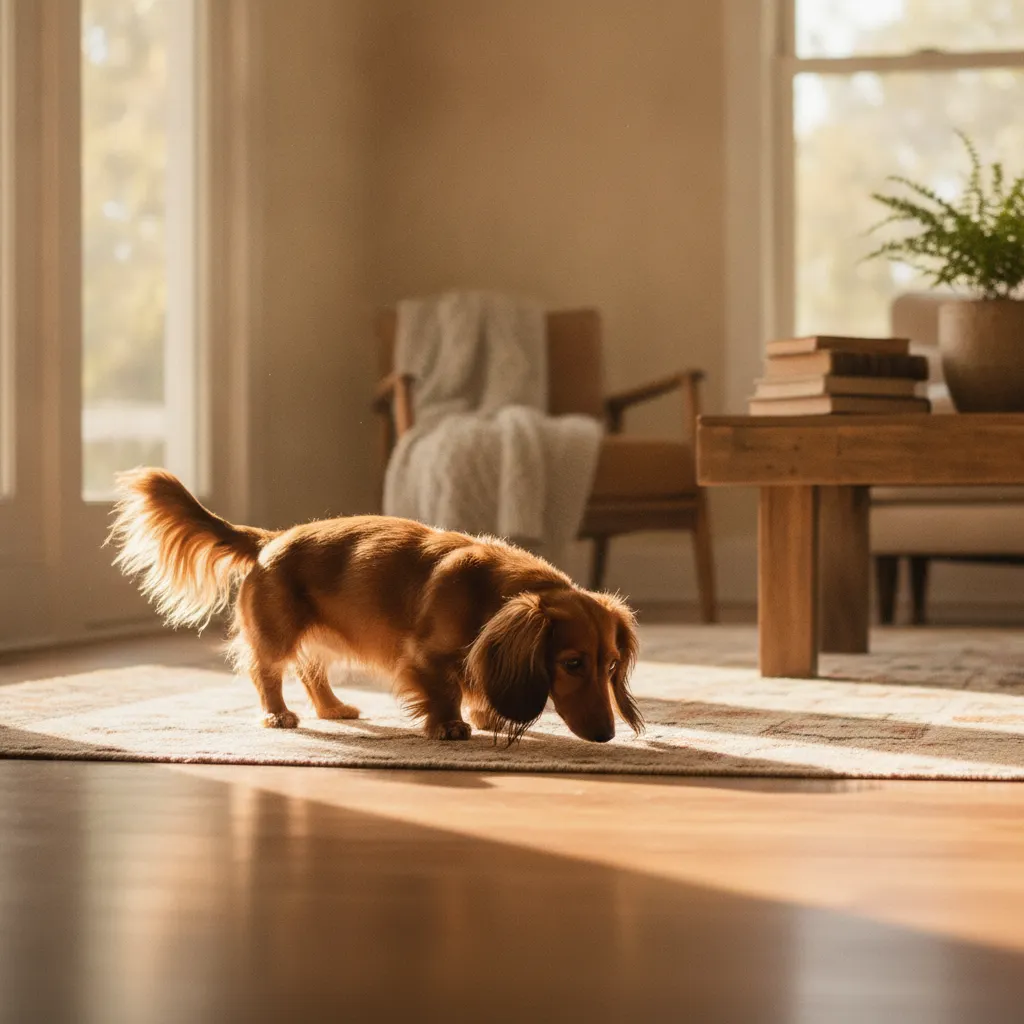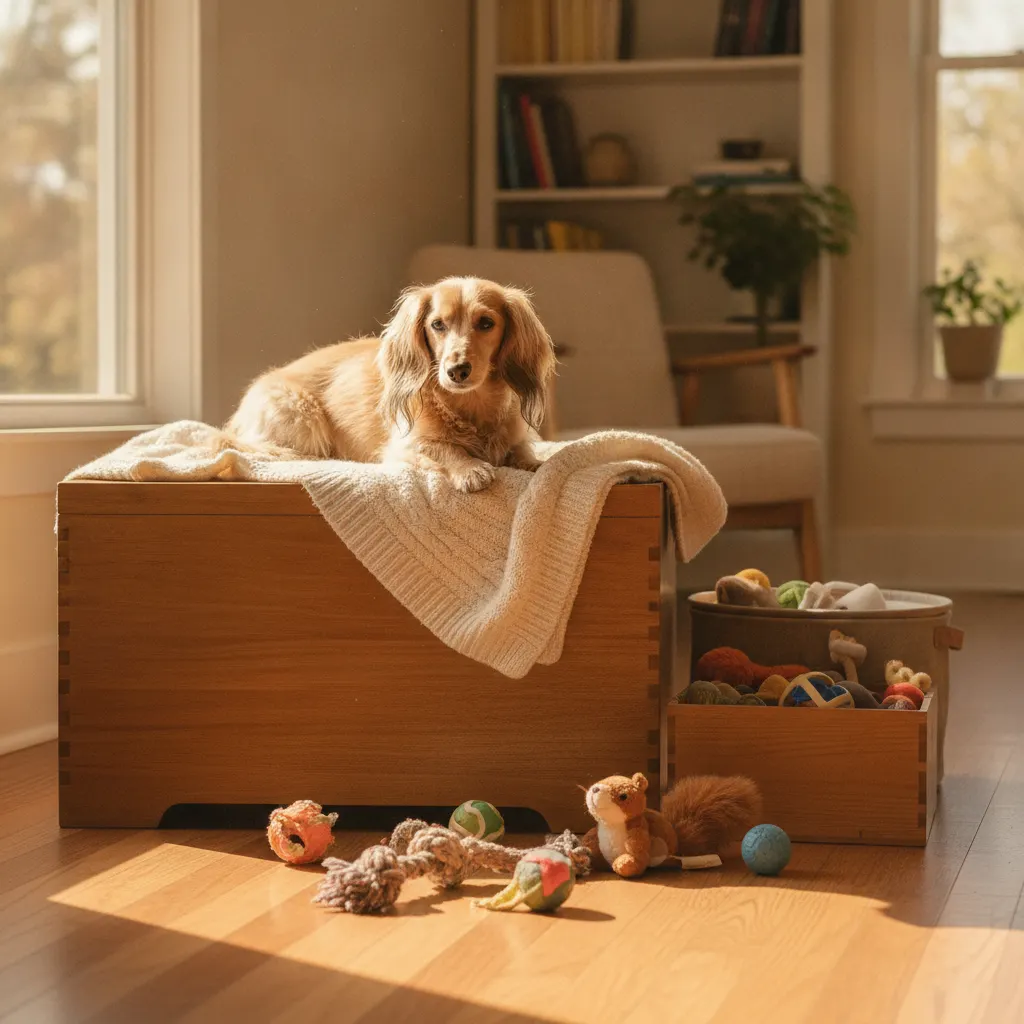
You see it every day. The toy basket, overflowing with plush squirrels, squeaky hedgehogs, and that one rubber chicken you’re pretty sure is now a family heirloom. It’s a veritable graveyard of forgotten friends. Your dachshund, meanwhile, is staring at a dust bunny under the couch with more interest than they’ve shown any of those expensive toys in weeks.
If you’ve ever felt a pang of guilt, wondering if your doxie is unhappy or if you’re failing as their entertainment director, you are not alone. It’s a uniquely frustrating part of doxie parenthood. You bring home a new toy, full of hope. They love it—passionately, obsessively—for exactly seven minutes. Then, it’s dropped, forgotten, and absorbed into the pile of has-beens. This cycle of excitement, abandonment, and your growing credit card bill is exhausting. The core of the problem is figuring out a sustainable dachshund toy rotation that actually works for their incredibly clever, problem-solving brains.
You aren’t just imagining it. Your dachshund isn’t being spoiled or ungrateful. They are being a dachshund. And once you understand what’s really going on in that long little head, you’ll see the toy graveyard not as a failure, but as a puzzle you can finally solve.
Why a Mountain of Toys Just Makes Them More Bored
Most of us have tried the obvious solutions. When the old toys get boring, we buy new ones. When the squeaky toys lose their charm, we buy crinkly ones. When the crinkly ones are ignored, we invest in complex puzzle toys that we spend more time solving than they do. The result is always the same: a temporary spike in interest followed by the inevitable crash into boredom.
This is what I call the “More is More” fallacy. We think that if five toys aren’t enough, surely fifteen will be. We create a toy buffet, leaving everything out all the time, hoping our doxie will wander over and pick something to play with. But what we’re actually creating is “toy blindness.”
Imagine walking into a room with a hundred paintings on the wall. At first, it’s overwhelming. After a while, your brain starts to tune them out. They become background noise. This is what happens to your dachshund. When toys are always available, they lose their value. They become part of the furniture. There’s no novelty, no excitement, no reason to engage. They are simply *there*.
The other failed approach is blaming the toy. We think, “He didn’t like the plush fox, so maybe he’ll like the rubber donut.” While preferences exist, the issue usually isn't the *object* itself. The issue is that the object no longer presents an interesting problem for their brain to solve.
The Big Reframe: Your Doxie Doesn't Want a Toy, They Want a Job
Here’s the secret that changed everything for me and my two doxies, Marley and Mia. Your dachshund isn’t bored of the *toy*. They’re bored of the *problem*. And once the problem is solved, the toy is dead to them.
Think about it. Dachshunds weren't bred to be lap dogs who passively enjoy a squeaker. They were bred for a specific, highly complex job: to hunt badgers. This meant going into a dark tunnel, alone, and using their senses, intelligence, and relentless determination to outsmart a formidable opponent. Their brains are hardwired for three things: novelty, challenge, and reward.
A brand-new toy is full of novelty. What does it smell like? What sound does it make? How does its fabric feel? Can I rip the squeaker out? This is a series of small, interesting problems. For the first ten minutes, your doxie is an engineer, a detective, and a demolition expert all in one. But once they’ve figured it all out—once the problem is solved—the job is over. The toy becomes just another stuffed object on the floor.
Your dachshund's boredom isn't a sign of pickiness; it's the burnout of a highly intelligent mind that has run out of problems to solve.
When we just leave toys lying around, we’re giving a master strategist a pile of solved crossword puzzles. It’s no wonder they’d rather investigate a mysterious crumb by the dishwasher. That crumb is a new problem! The key isn’t to give them more toys, but to give them a steady stream of new *problems*. And that is where a proper dachshund toy rotation system comes in.
The 'Vault' System: A Step-by-Step Guide to Dachshund Toy Rotation
This isn’t just about swapping toys in and out. It’s a system designed to appeal directly to that problem-solving, novelty-seeking dachshund brain. I call it the Vault System, and it has completely transformed playtime in our house.
Step 1: The Great Toy Audit
Your first mission is to gather every single dog toy in your house. Look under the couch, behind the curtains, in the car. Put them all in one giant pile in the middle of the floor. You will likely be shocked at how many there are. Now, sort them into three simple categories:
- Interactive Toys: These are toys that require you, like tug ropes or balls for fetching.
- Enrichment Toys: These are puzzle toys, snuffle mats, or treat-dispensing toys that make them think.
- Comfort/Chew Toys: These are plush toys for cuddling or durable chew toys for independent gnawing.
Step 2: Create The Vault
This is the most important step. Choose a box, a bin, or a closet shelf that your dachshund absolutely cannot access. This is your Toy Vault. Now, take at least 75% of the toys from your pile and put them away in the Vault. I know it feels wrong. It feels like you’re taking their things away. But what you’re actually doing is creating value through scarcity. These toys are now out of sight and out of mind.
Step 3: Curate the Weekly Roster
From the 25% of toys left, choose a small, balanced “Active Roster” for the week. I recommend no more than 4-5 toys total. A good roster might look like this:
- 1 Interactive Toy (e.g., a tug rope)
- 1 Enrichment Toy (e.g., a treat ball)
- 2 Comfort/Chew Toys (e.g., a plush squirrel and a nylon bone)
These are the *only* toys that are available to your dachshund for the entire week. The toy basket should look almost empty. This is a good thing! Each toy now has a chance to shine.
Step 4: The Monday Morning Swap Meet
Pick a day of the week to be your official rotation day. For us, it’s Monday morning. On this day, you’ll perform the swap. Gather up the previous week’s Active Roster and put them back into the Vault. Then, go to the Vault and “shop” for a brand new Active Roster for the coming week.
The key here is to make a little ceremony out of it. Don’t just silently swap the toys. When you bring out the “new” toys, act excited! “Look what I found, Marley! Your old hedgehog!” The toys that have been locked away for two or three weeks will smell different and feel new again. Their novelty has been reset. To your doxie, it’s like getting a whole new set of toys, every single week, for free.
Step 5: It's Not Just Rotation, It's Re-Introduction
Simply putting the toys on the floor isn't enough. You have to reactivate their purpose. When you bring out the tug rope, initiate a quick game of tug. When you bring out the treat ball, put a single, high-value treat inside to remind them how it works. You are re-introducing the *problem* associated with the toy.
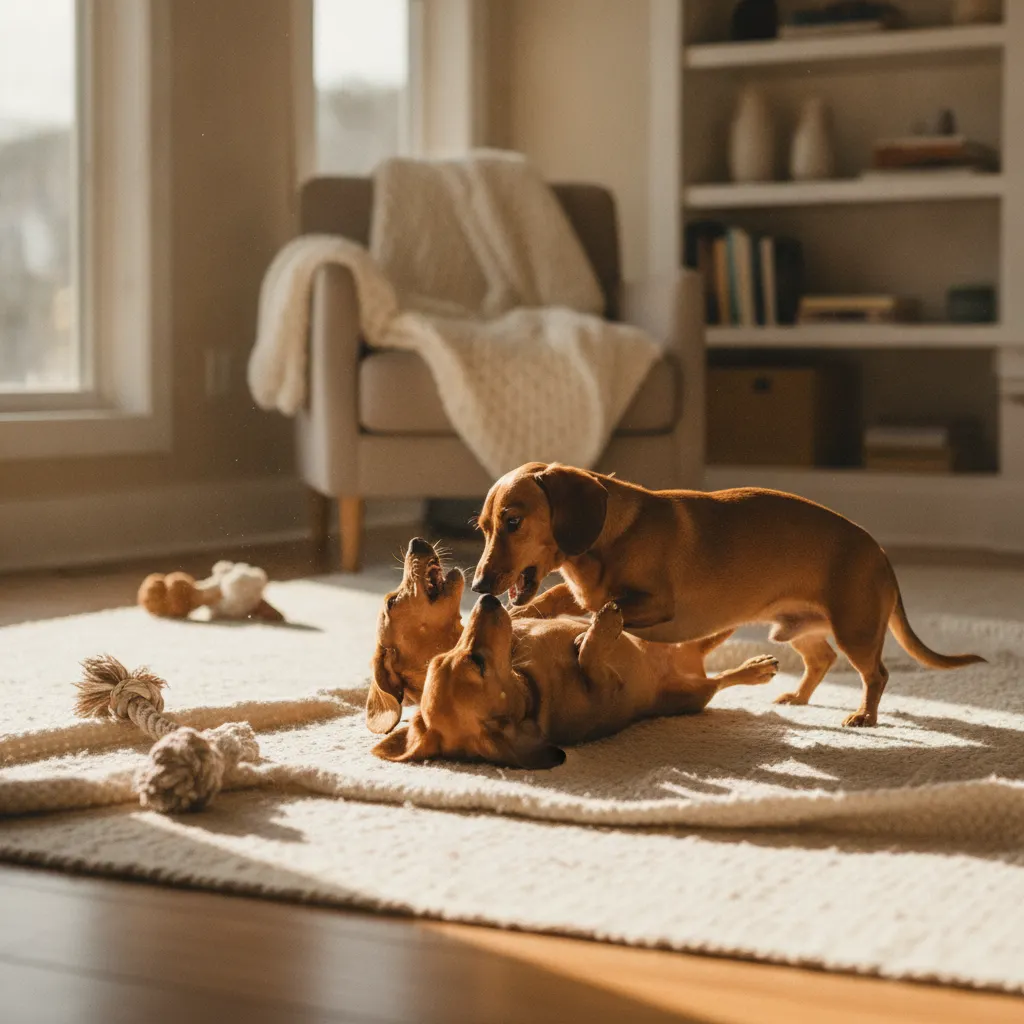
This is also where understanding their unique play style comes in handy. Some doxies love to “kill” their plushies with a vigorous shake, while others prefer the intellectual challenge of a puzzle. Knowing how your doxie likes to play helps you re-introduce toys in the most engaging way possible. It’s less about fetch and more about the hilarious, full-contact sport that is how dachshunds really play.
With Marley, I found that his interest in a plush toy skyrockets if I hide it under a blanket first, turning its reappearance into a mini hunting expedition. For Mia, who is the chewer, rotating her hard chews is critical to keeping her from getting interested in my furniture legs. The system is flexible; you adapt it to your dog's personality.
This structured approach also helps reinforce household rules. Playtime becomes a more intentional activity, which can support other training goals, like teaching them what they can and cannot chew on. It’s all part of a bigger picture of creating a happy, well-adjusted dog, which is what we work on in The 'Polite Sausage' Project.
The Proof Is in the Playtime
Before I started this, my living room was a toy battlefield, and Marley was the bored general surveying his fallen (and ignored) troops. I felt like I was constantly failing to keep him engaged. Now, our toy collection is smaller, but his engagement is a thousand times higher. The sound of me opening the Vault closet on a Monday morning sends him into a frenzy of excited tippy-taps.
He rediscovers old favorites with the same passion as the day we first bought them. Not only has this saved me a small fortune on new toys, but it has deepened our bond. Playtime is more interactive and fun for both of us. It’s a simple shift, but it honors the brilliant little mind that lives inside that long little body.
Understanding this one thing—that they crave a job, not an object—is the key. It unlocks so much about their other weird and wonderful behaviors, from their complex vocalizations to their stubborn streak. It’s the first step to becoming a more confident doxie parent.
If you’re ready to stop the cycle of buying and boredom and finally understand the “why” behind your dachshund’s quirky behavior, the next step is to get the framework for all of it. Learning why they ignore their toys is just the beginning. Get the free Dachshund Behavior Decoder and start translating all those other funny little things they do.
Frequently Asked Questions
How many toys should be in my dachshund's active rotation?
A good starting point is 4 to 5 toys. This provides variety without being overwhelming. The goal is to make each toy feel special and novel, and a smaller number accomplishes that much better than a full toy box.
What if my dachshund has a favorite comfort toy they can't live without?
That's completely fine! Every rule has an exception. If your doxie has a special plushy they sleep with every night, you can designate that as their permanent “resident” toy and leave it out of the dachshund toy rotation system. The rest of the toys, however, should still go into the vault.
How often should I perform a dachshund toy rotation?
Once a week is the ideal frequency for most dachshunds. It’s long enough for the toys in the vault to feel “new” again but not so long that your doxie gets completely bored with their current active roster. You can adjust this based on your dog's individual interest levels.
My dachshund is a heavy chewer and destroys toys. Does toy rotation still work?
Yes, and it can actually help! By rotating durable chew toys, you keep them interesting and can redirect destructive chewing away from household items. For plush toys, use the rotation to have supervised “kill” sessions where they can shred a designated toy, which satisfies that deep prey drive.
Are puzzle toys better than regular squeaky toys for dachshunds?
Neither is inherently “better,” they just serve different purposes. Squeaky toys are great for satisfying prey drive, while puzzle toys provide mental stimulation and problem-solving. A good dachshund toy rotation will include a mix of both to provide balanced enrichment for their clever minds.
What if my doxie is still bored after I start rotating toys?
First, make sure you are actively re-introducing the toys with excitement and play. If they are still bored with the rotated toys, it might be a sign they need a different kind of enrichment. Try a new walking route, a training session, or a snuffle mat. Toy rotation is a huge piece of the puzzle, but overall engagement is the goal. Remember, a dog being consistently fickle with toys is a common quirk. A sudden, dramatic change in their overall energy or interest in *all* play, however, is different. That kind of shift is always worth a call to your vet to be safe.
toy rotation · dachshund behavior · enrichment · dog boredom