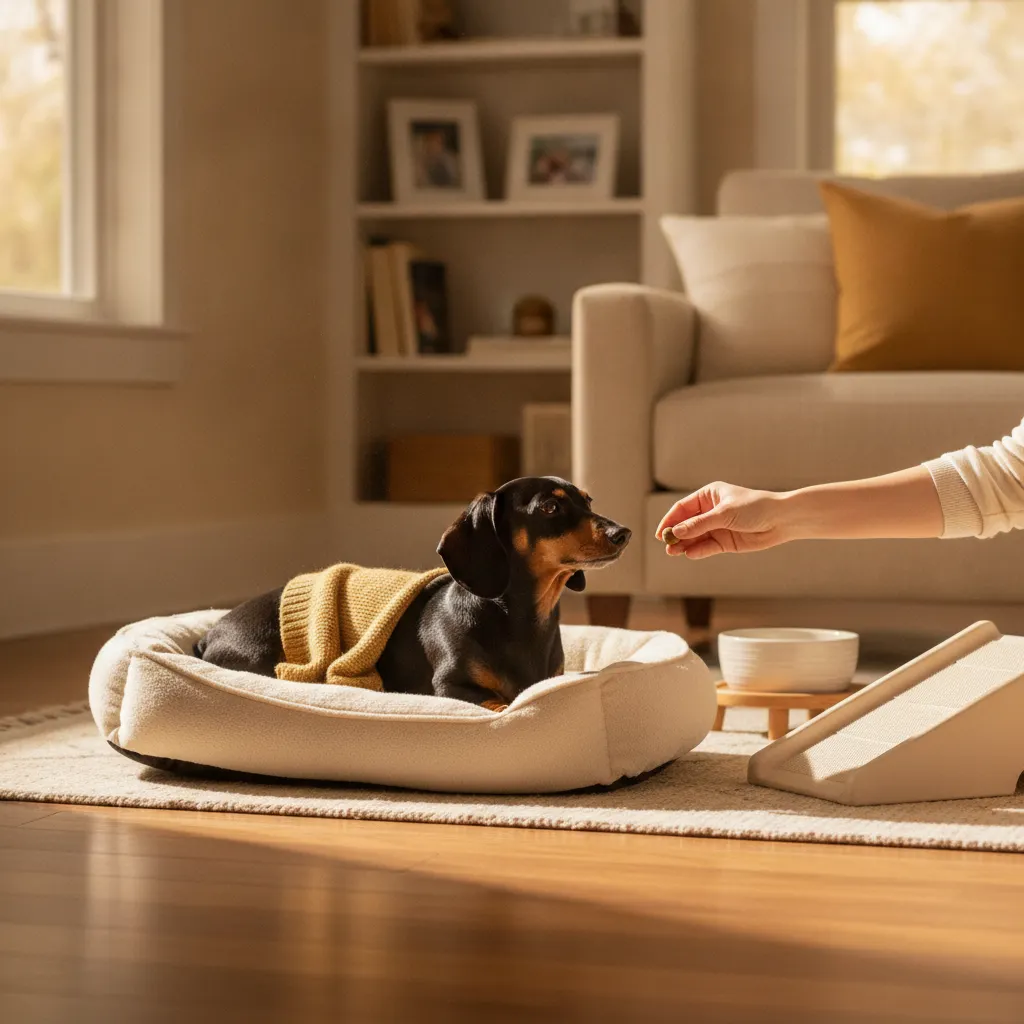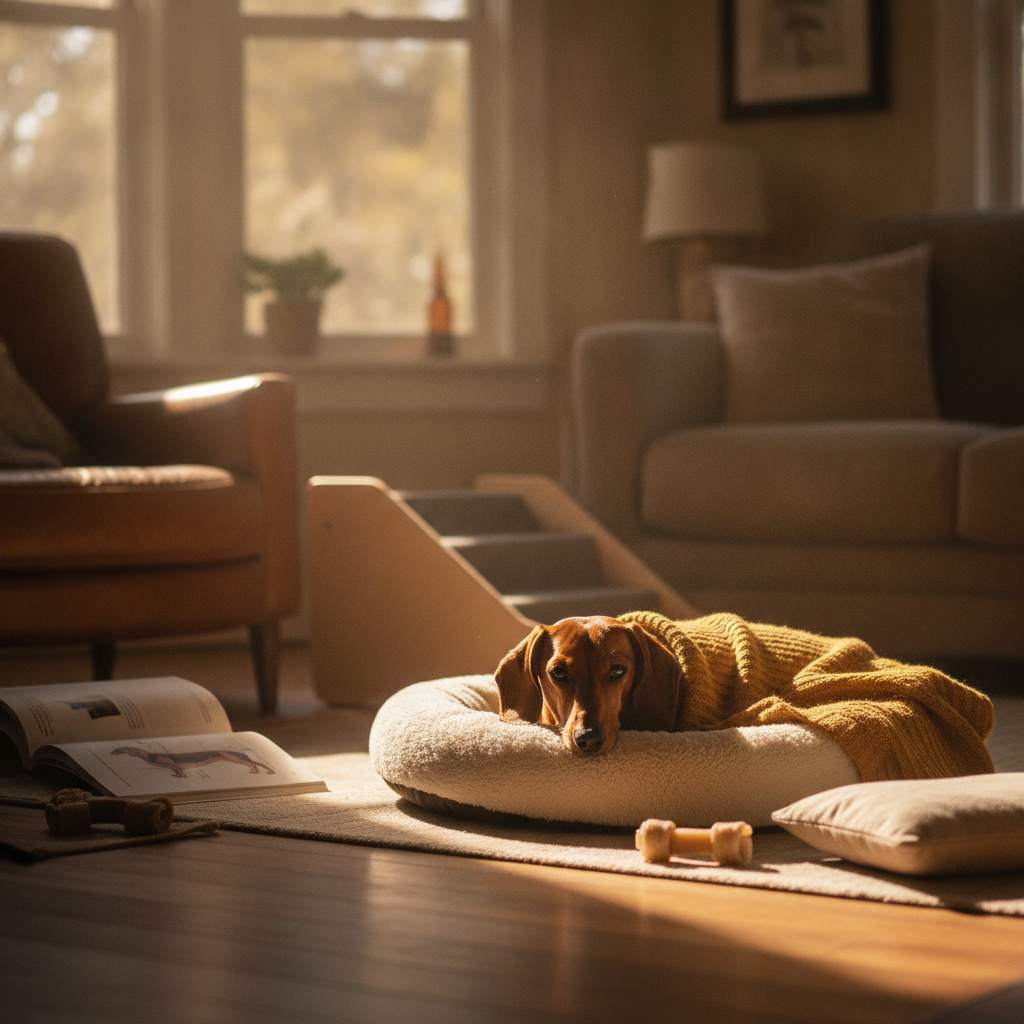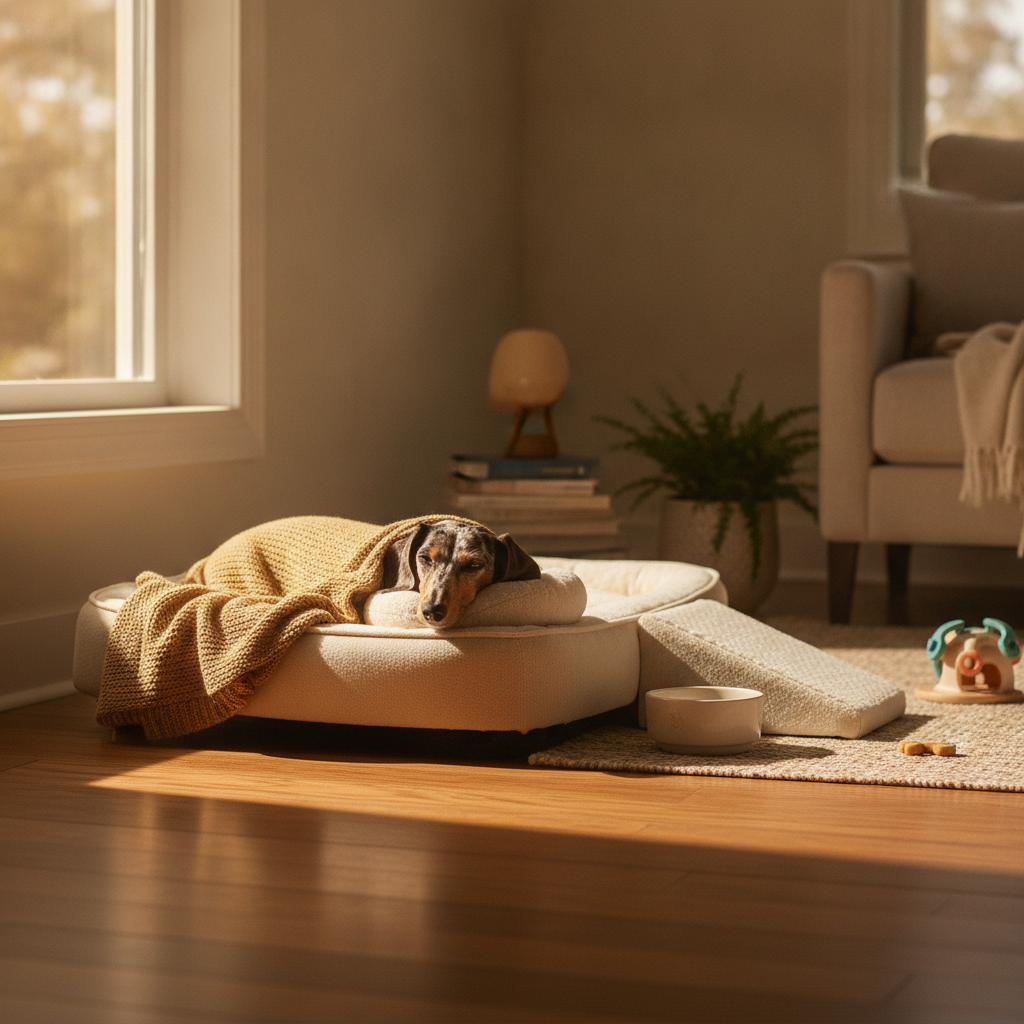
The vet says the three letters you’ve been dreading: I-V-D-D. Your heart plummets. Your vibrant, bouncy, trouble-making sausage dog is suddenly still, in pain, and the world feels like it’s tilted on its axis. I’ve been there. My hands have trembled trying to administer meds to a dog who can’t get comfortable, and my nights have been sleepless with worry. The first thing I want you to hear is this: take a deep breath. An IVDD diagnosis is not an ending. It’s the start of a new chapter, and you and your doxie are going to write it together. This guide is your roadmap, a steady hand to hold through the challenging journey of dachshund IVDD recovery.
The Overwhelming First Days: Why Google Is Not Your Best Friend
You get home from the vet, a folder of instructions in one hand and a bag of medications in the other. Your mind is a blur of terms like "anti-inflammatories," "corticosteroids," and "strict crate rest." So, what do you do? You turn to Google. And that’s where the real panic sets in.
You’re flooded with worst-case scenarios on forums, conflicting advice on social media, and cold, clinical descriptions of paralysis. One site says one thing, a Facebook group says the complete opposite. You start to question everything. Did I let them jump too much? Was their food wrong? The guilt can be crushing. You feel completely alone, trying to piece together a plan from a firehose of overwhelming, and often unhelpful, information.
The problem isn’t a lack of information; it’s a lack of a clear, calm, and reassuring path forward. What you’ve been trying—panicked research and worrying—isn’t working because it’s rooted in fear. We need to shift that.
The Reframe: This Isn't an End, It's a Marathon
Let's change our perspective. An IVDD episode is an injury, not a personality change. Inside that still, quiet body is the same stubborn, loving, bossy dachshund you’ve always known. They are not broken. Their spirit is waiting for their body to heal, and you are now their chief of staff, their nurse, and their number one cheerleader. The real challenge isn't just managing the physical injury; it's managing the long, slow, and often boring process of healing. Recovery is a marathon, not a sprint. Your new job is to be patient, be consistent, and be the calm leader your dog needs right now.
And please, hear this loud and clear: This guide is born from nearly 20 years of loving this breed through thick and thin, but it is never a substitute for veterinary advice. Your vet is the ultimate authority on your individual dog's health. Quirks are consistent; a sudden change is the signal. A sudden yelp, a reluctance to move, a wobbly walk—these are your signs to call the professional. This guide is here to help you manage the day-to-day journey once you have that professional diagnosis.
Your Step-by-Step Guide to Dachshund IVDD Recovery
The road to recovery has distinct stages. Knowing what to expect during each one can make the entire process feel more manageable and less overwhelming. Whether your vet has recommended conservative management (crate rest) or surgery, these principles of care will be the foundation of your doxie's healing.
Stage 1: The Healing Chamber (Weeks 1-4) - Strict Crate Rest
This is the most critical and non-negotiable phase. I know it feels cruel to confine your social, snuggly dog to a small space, but you must reframe the crate. It is not a cage; it’s a healing chamber. Every single time they twist, jump, or even walk around too much, they risk re-injuring the delicate spinal disc that is trying to heal. Strict rest is the only way to give it a real chance.
- Setting Up the Recovery Suite: Your dog's crate should be large enough for them to stand up and turn around, but not large enough to pace. Line it with comfy, supportive bedding that’s easy to clean. A firm orthopedic bed is better than fluffy blankets they can get tangled in. Keep food and water bowls close so they don't have to strain.
- Potty Breaks: This is the *only* time they should leave the crate. Use a leash and carry them outside to a small, confined area. Use a sling to support their hindquarters if they are wobbly. Let them do their business, then carry them right back inside to the crate. No sniffing around the yard. No exceptions.
- Pain Management: Follow your vet's medication schedule to the letter. This is crucial for their comfort and for reducing the inflammation that's causing the problem. Set alarms on your phone so you never miss a dose.
- Bladder and Bowel Care: Depending on the severity of the nerve compression, your doxie may have trouble controlling their bladder or bowels. Your vet will show you how to gently express their bladder if needed. It’s a bit awkward at first, but you’ll both get the hang of it. Puppy pads will be your best friend. This is a temporary phase, and it’s a profound act of love to help them with this.
Stage 2: The Plateau (Weeks 4-8) - Fighting the Boredom
After the first few weeks, the initial crisis has passed. Your doxie might seem brighter, less pained, and frankly, bored out of their mind. This is the most dangerous time for a well-meaning owner. You’ll be tempted to think, “Oh, they seem so much better! A little time on the couch won’t hurt.” It will. Stay the course. The healing is still happening on a microscopic level, even if they look fine on the outside.
- Mental Stimulation: A bored doxie is a frustrated doxie. Keep their brilliant minds busy. A frozen Kong with a bit of their food, a snuffle mat placed in their crate, or a simple food puzzle can work wonders.
- Quality Time: Move their crate into the room you’re in. Sit on the floor next to them and talk to them. Practice gentle touch, stroking their head and ears, but avoid patting or rubbing their back. Let them know they are not alone or forgotten.
- The No-Go List: Absolutely no jumping, no stairs, no running, no playing with other pets, and no furniture access. This is where 'Dachshund-proofing' your home with ramps and gates becomes a permanent lifestyle change to protect them in the future.
Stage 3: The Re-Entry (Week 8 and Beyond) - The First Wobbly Steps
This stage only begins after you get the green light from your vet. Do not rush it. Your vet will assess your dog’s progress and tell you when it’s safe to begin reintroducing controlled activity. This is a slow, gradual process.
- Controlled Walks: Start with very short, slow, leashed walks on a flat surface for just five minutes at a time. A harness is much safer for their back than a collar. Continue using a sling for support if needed.
- Physical Therapy: Ask your vet about rehabilitation options. Things like hydrotherapy (walking on an underwater treadmill) can help rebuild muscle without putting stress on the spine. Laser therapy and acupuncture can also be wonderful tools for managing pain and promoting healing.
- Listen to Your Dog: Pay close attention to their body language. If they seem tired, sore, or hesitant, you’re doing too much. It’s always better to go too slow than too fast. Recovery isn’t linear; there will be good days and not-so-good days.
A Note on Prevention and Long-Term Care
Once a dachshund has had one IVDD episode, they are at a higher risk for another. But you now have the knowledge to protect them. The single most important thing you can do is manage their weight. Extra pounds put immense strain on that long little back. A diet focused on lean protein and controlled portions is key to keeping them at a healthy weight. Similarly, using ramps for all furniture and discouraging high-impact activities will be your new normal. This is especially critical as they age, a topic we cover in our guide to caring for senior sausage dogs.
I remember with my Marley, after his first scare, the hardest part was retraining myself. I had to become the 'ramp police' and the 'no jumping' enforcer. It felt mean at first, but I knew I was doing it to protect that precious back and give us many more happy years together. It's a change in your habits, but it's the greatest gift you can give them.
The journey of dachshund IVDD recovery is a testament to the incredible bond we share with these dogs. It will test your patience and break your heart a little, but it will also show you the depth of your own strength and your dog's incredible resilience. You can do this.
Understanding your dachshund’s subtle signals is more important than ever during recovery. Knowing the difference between a pain signal and a plea for attention can make you a more confident caregiver. To better understand the 'why' behind all their quirky behaviors and build an even deeper bond, I’d love for you to have this. Get the free Dachshund Behavior Decoder.
Frequently Asked Questions
How long does dachshund IVDD recovery typically take?
Recovery is a marathon, not a sprint. With conservative management (strict crate rest), the initial healing phase is typically 6-8 weeks, but it can take several months for them to regain strength and coordination. Every dog's timeline for dachshund IVDD recovery is unique and depends on the severity of the injury.
Can a dachshund fully recover from IVDD without surgery?
Yes, many dachshunds make a wonderful recovery from less severe stages of IVDD (Stages 1-2) with conservative treatment, which is centered around strict crate rest and medication. The key is catching it early and being incredibly diligent with the rest protocol. Your vet will determine the best course of action for your specific dog.
What are the first signs of IVDD I should watch for?
Early signs can be subtle. Look for reluctance to jump or use stairs, a hunched back, crying out when touched or picked up, unexplained trembling, or a wobbly, 'drunken' walk. If you see any of these signs, especially if they are a sudden change, contact your vet immediately.
How can I prevent IVDD in my other dachshunds?
While you can't change their genetics, you can dramatically reduce the risk. The two biggest factors are maintaining a lean body weight to reduce stress on the spine and preventing high-impact activities. Use ramps for all furniture and beds, use a harness instead of a collar for walks, and avoid games that involve a lot of twisting and jumping.
Is it cruel to keep my dachshund on crate rest for so long?
It feels tough, but it's one of the kindest things you can do for them. Crate rest is not a punishment; it's a prescription for healing. By keeping them still, you are giving their spinal cord the best possible chance to recover without further damage, which is the cornerstone of a successful dachshund IVDD recovery.
What happens if my dog has another IVDD episode?
It's a reality for the breed that recurrences can happen. The good news is that you now know the signs to look for and the immediate steps to take (strict rest and a call to the vet). Future episodes are managed similarly, and your vet will guide you based on the specifics of the situation.
IVDD · dachshund health · back problems · dog recovery