Have you ever been at the dog park and seen a dog that looked like a tiny, long cow and someone said, “Oh, that’s my dachshund!”? Or maybe you’ve seen a scruffy, bearded creature that looked more like a miniature Irish wolfhound, only to be told it was, in fact, a wiener dog. It’s a moment that makes you look at your own classic red or black-and-tan doxie and wonder if they’re even the same species. Trying to understand the world of dachshund colors and coats can feel like opening a bag of jelly beans in the dark — you know they’re all good, but you have no idea what you’re going to get.
You just want to know what makes your little sausage special. You see terms thrown around online like “dapple,” “piebald,” “Isabella,” and “English Cream,” and it feels like a secret code. You scroll through breeder websites filled with jargon, or look at dry, boring breed standard charts from kennel clubs. It’s either a sales pitch or a science textbook, and neither one tells you what you actually want to know: what’s the story behind my dog’s unique look, and what does it mean for me?
Here’s the thing: you don’t need a PhD in canine genetics to get it. The confusion comes from trying to memorize lists. The real secret is to stop thinking about it like a chart and start thinking about it like a family tree. Every coat and color tells a story about where that particular dachshund’s ancestors came from and what job they were bred to do. Once you see it that way, it all clicks into place, and you’ll not only understand your own dog better, but you’ll also feel even more connected to the incredible 600-year history of this breed.
First Things First: The Three Dachshund Coat Types
Before we even get to the beautiful rainbow of dachshund colors, we have to start with the texture. A dachshund's coat is its uniform, telling you what division of the badger-hunting army it was bred for. There are three distinct types, and while they are all 100% dachshund, they can have slightly different temperaments and care needs.
The Smooth Coat: The Original Classic
This is the dachshund you picture in your head: sleek, shiny, and muscular. The smooth coat is the oldest and original variety. Their fur is short, dense, and feels like velvet. They are the quintessential “wash and wear” dog, needing minimal grooming beyond a quick wipe-down when they’ve rolled in something mysterious.
Personality-wise: Smooths often embody the core dachshund temperament. They are brave to the point of foolishness, incredibly bonded to their person, and can be a bit more one-track-minded. They were the frontline soldiers, bred to go into a dark tunnel and not back down. That singular focus is amazing when they’re chasing a ball, but can be a challenge when you’re trying to teach them to come back. As I explain in my guide to training these stubborn geniuses, you have to learn to speak their language.
The Longhaired Coat: The Elegant Aristocrat
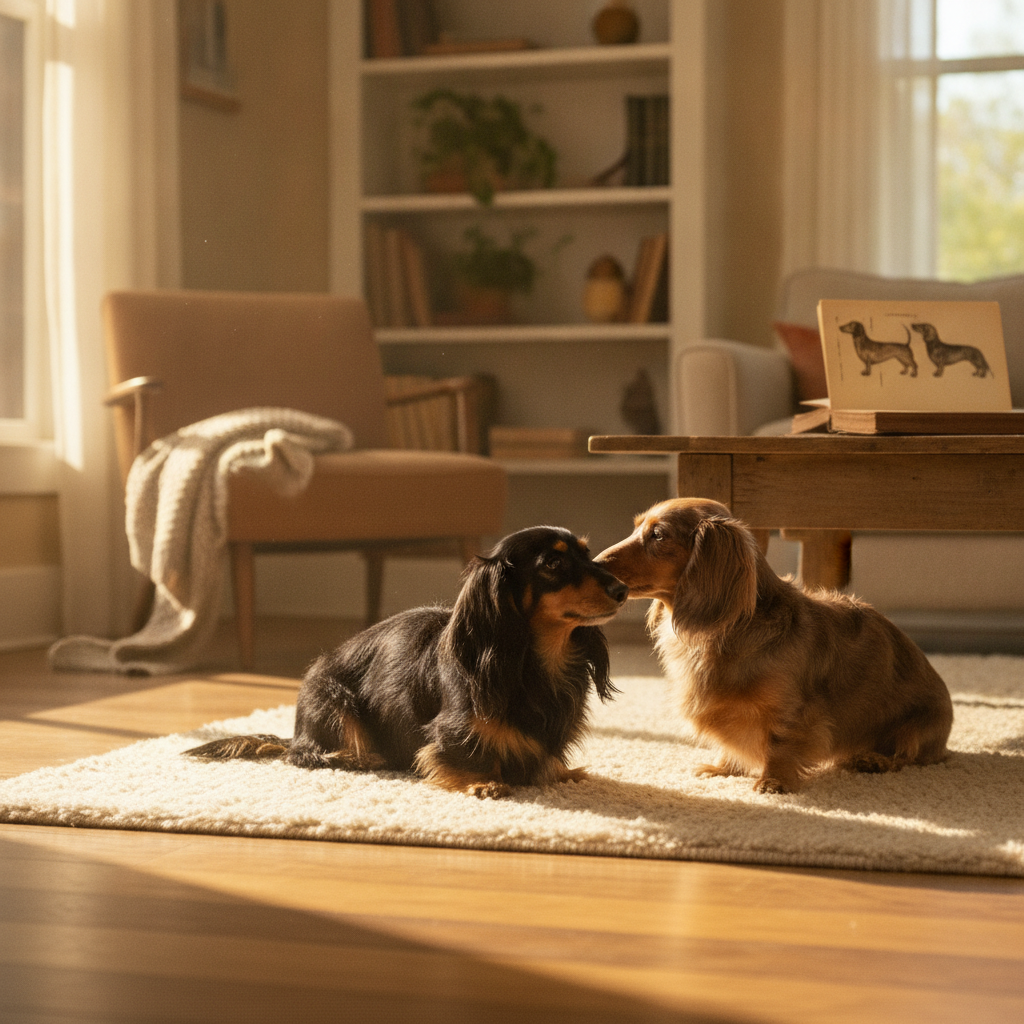
With their flowing, silky hair and feathered ears and tail, the longhaired dachshund is pure elegance. This coat type was developed a bit later, likely by crossing smooth dachshunds with small spaniels to create a dog that could withstand colder weather and harsher terrain. My Mia is a longhair, and her coat is her crowning glory… and the bane of my existence after a walk in the woods.
Care and Personality: They require regular brushing to prevent mats, especially behind the ears and in their “armpits.” Despite their regal appearance, they are just as likely as any other doxie to engage in their favorite pastime: burrowing. That's why you'll always find them snuggled deep inside a pile of blankets, a behavior I explore in my article on why dachshunds love to burrow. Temperamentally, many owners find longhairs to be a bit gentler and calmer than their smooth counterparts. They can be just as brave, but perhaps with a little less of the smooth’s headstrong rush to judgment.
The Wirehaired Coat: The Scruffy Professor
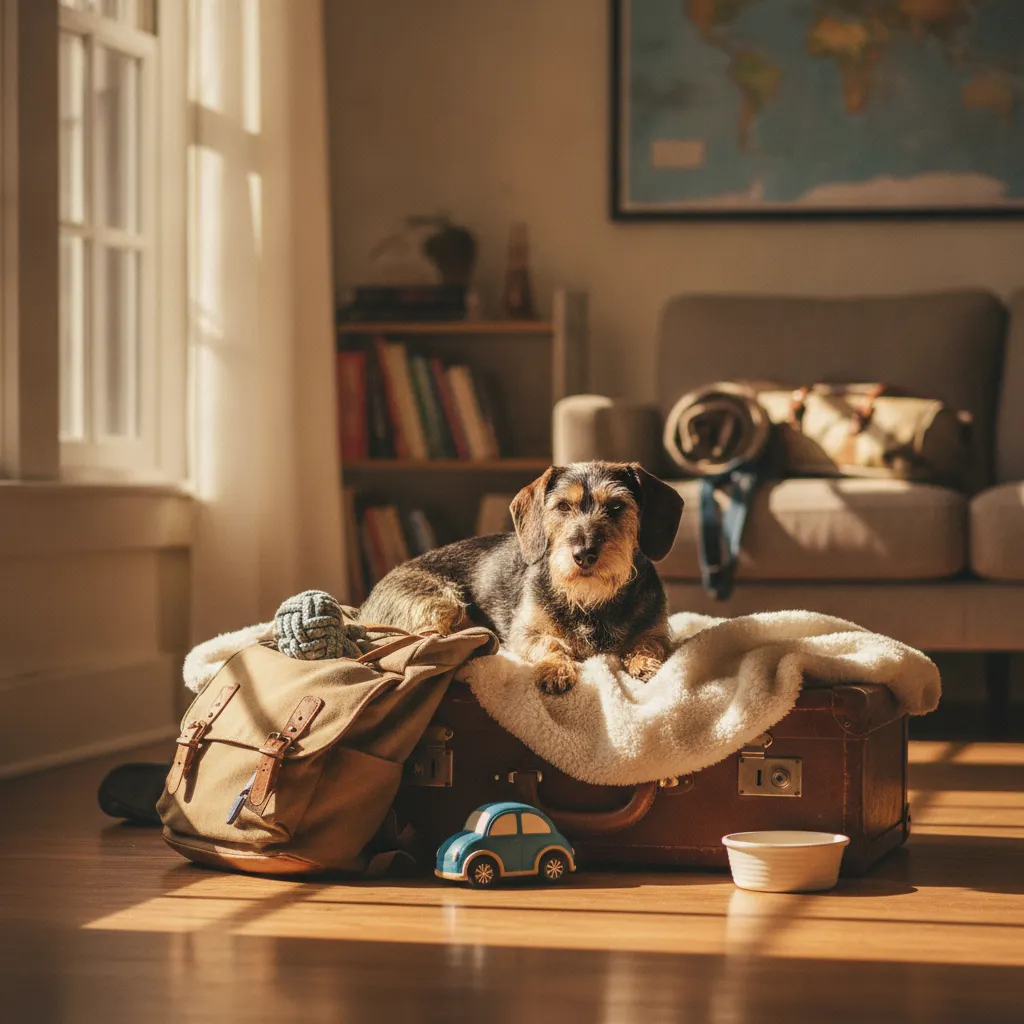
Oh, the wirehair. With their wiry, tight overcoat, soft undercoat, and distinguished beards and eyebrows, they are the terriers of the dachshund world. This coat was developed by breeding smooth dachshunds with terriers, like the Dandie Dinmont, to create a tough, weather-resistant jacket that could protect them from thorny brush and angry prey.
Care and Personality: Their coat requires a special kind of grooming called hand-stripping to maintain its proper texture, though many pet owners opt for regular clipping, which results in a softer (but less weather-proof) coat. Their terrier ancestry shines through in their personality. Wires are often the clowns of the family, full of mischief, determination, and an independent spirit that can be both hilarious and exasperating. They are tenacious problem-solvers, which is another way of saying they will figure out how to get into anything.
The Amazing World of Dachshund Colors and Patterns
Now for the fun part! Underneath those three coat types lies a stunning variety of colors and patterns. Think of the coat as the fabric and the color as the dye. You can mix and match in almost endless combinations.
Solid and Bi-Color Basics
These are the foundational colors of the breed. Most dachshunds will have one of these as their base.
- Red: This is the most iconic dachshund color, but “red” covers a huge range. It can be a light, wheaten-like strawberry blonde, a classic penny-copper, or a deep, rich mahogany. Many red dachshunds have some black shading, especially on their backs and ears, which is called an overlay.
- Black and Tan: The other classic look, reminiscent of a tiny Doberman or Rottweiler. A deep, glossy black body with rich, clear tan or cream points above the eyes, on the muzzle, chest, and paws.
- Chocolate and Tan: The same pattern as a black and tan, but with a warm, rich chocolate brown instead of black. They often have brown noses and paw pads, and lighter eyes, which gives them a uniquely soft expression.
- Cream: A beautiful, soft color ranging from a pale ivory to a rich golden honey. True “English Creams” are born very dark and lighten over time, a process that can take up to two years. American Creams are typically born a pale yellow and stay that way.
- Isabella (Fawn) and Blue (Grey): These are dilute colors. Isabella is a diluted chocolate, resulting in a lovely fawn or silvery-beige. Blue is a diluted black, resulting in a charcoal or steel grey. While beautiful, these dilute genes can sometimes be linked to skin issues (Color Dilution Alopecia), so it’s just something to be aware of and discuss with your vet. It’s not a definite problem, just a possibility.
The Dazzling Patterns
This is where things get really artistic. These patterns are like a second coat of paint applied over the base colors, creating some of the most eye-catching dachshunds you’ll ever see.
Remember our rule: Quirks are consistent; problems are a change. A dog born with a unique pattern is perfectly normal. A sudden change in your dog's coat or skin, however, is always worth a call to your vet.Dapple (or Merle)
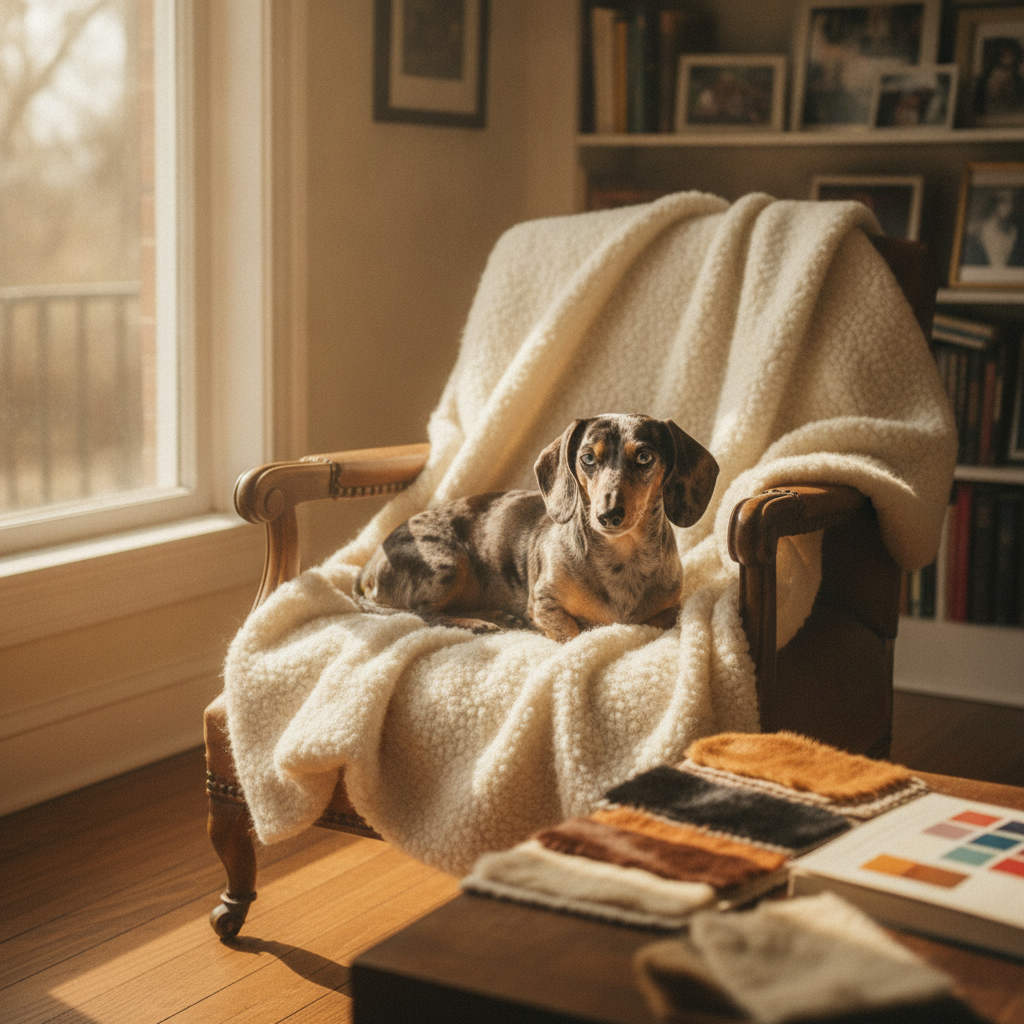
Dapple is one of the most popular patterns. It’s created by a gene that splashes patches of lighter color over a darker base coat, creating a beautiful mottled effect. A black and tan dapple will have patches of grey mixed in with the black. A red dapple will have patches of lighter red. One of the charming side effects can be one or two blue eyes.
A Gentle Word on Double Dapples: It is critically important to know about “double dapples.” This happens when two dapple dachshunds are bred together. The resulting puppies can have severe health problems, including being born blind or deaf. Responsible breeders never, ever do this. A double dapple is often mostly white and is different from a piebald. This isn't to scare you, but to empower you with knowledge. Knowing this helps protect the breed we love.
BrindleThe brindle pattern gives a dachshund beautiful “tiger stripes.” Dark stripes are overlaid on a lighter base color. You can have a red brindle, where black stripes appear over a red coat, or even a cream brindle. It’s a striking and handsome pattern that really highlights their muscular build.
PiebaldRemember that little cow-dog from the park? That was likely a piebald. The piebald pattern is characterized by a white base coat with large, solid patches of color (like black, red, or chocolate). They are not the same as double dapples and do not carry the same health risks. They are recognized by kennel clubs and are perfectly healthy, just wonderfully spotty! Making sure your home is safe for a dog with potentially different vision is always a good idea, as I cover in my guide to dachshund-proofing your home.
SableSable is sometimes confused with a heavily shaded red, but it’s a distinct pattern. A sable dachshund has hairs that are multi-colored; the hair shaft is red, but the tip is black. This gives the dog a beautiful, almost shimmering, dark overlay, especially over their back and head. It’s like they’ve been dusted with black pepper.
Understanding your dachshund’s coat and color is more than just trivia. It’s a window into their history and a celebration of their individuality. Whether you have a classic smooth red or a scruffy wirehaired dapple piebald, you have a living, breathing piece of history. And knowing their story makes you an even better parent to them.
Join the Tribe That Gets It
Feeling that “aha!” moment? That’s what being a doxie parent is all about—finally understanding why they do what they do, and why they look the way they look. If you love decoding your dachshund’s quirky behaviors, you’ll love our community. It’s a place for people who get it, who laugh at the stubbornness, and who would do anything to protect that long little back.
Start with the free Dachshund Behavior Decoder and learn the why behind their quirky actions. Get the free Dachshund Behavior Decoder
Frequently Asked Questions
Is my double dapple dachshund unhealthy?
Not necessarily, but they do have a much higher risk of congenital vision and hearing problems due to their genetics. If you have a double dapple, it’s essential to work closely with a vet to monitor their health. Responsible breeders avoid this pairing to prevent these potential issues.
Are certain dachshund colors rarer than others?
Yes. Solid black and solid chocolate (without tan points) are very rare. The dilute colors like Isabella (fawn) and blue are also less common than standard colors like red or black and tan. Patterns like piebald and dapple can also be less common depending on breeding trends.
Do different dachshund coat types have different personalities?
While every dog is an individual, there are general temperament trends associated with the coats due to their breeding history. Smooths are often seen as the bold classic, longhairs as slightly gentler, and wirehairs as mischievous, terrier-like clowns. But a dachshund is a dachshund—they're all going to be brave, stubborn, and loyal!
How do I know what color my dachshund puppy will be when it grows up?
A puppy's coat can change quite a bit! This is especially true for red and cream dachshunds. A red puppy might be born very dark and lighten up, while a true English Cream is born looking almost brown or grey and slowly lightens to a pale cream over the first couple of years.
Does the coat type affect how much a dachshund sheds?
All dachshunds shed, but the experience can be different. Smooth coats shed short, fine hairs that can weave into fabric. Longhairs shed longer, silkier hairs that are more visible and can form 'tumbleweeds'. Wirehaired dachshunds shed the least, especially if their coat is properly maintained by hand-stripping.
dachshund colors · dachshund coats · dapple dachshund · piebald dachshund