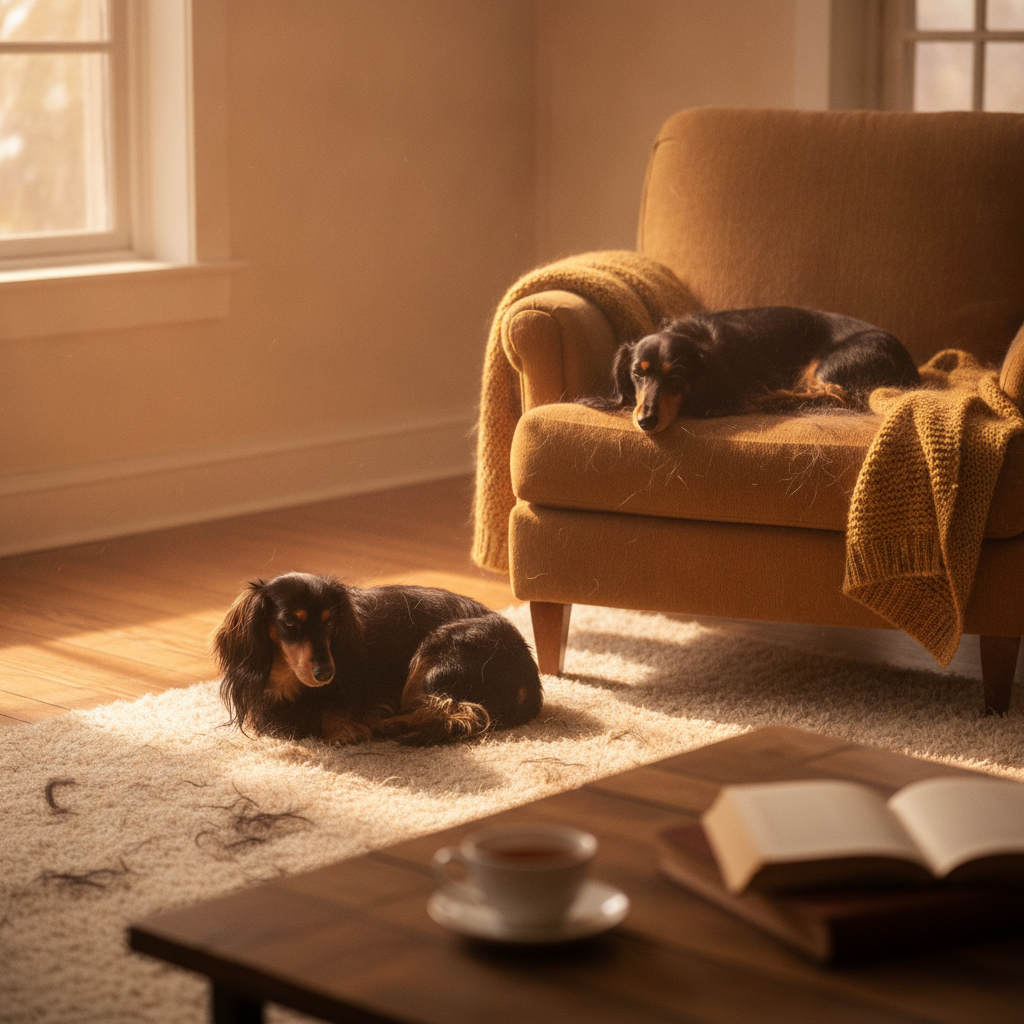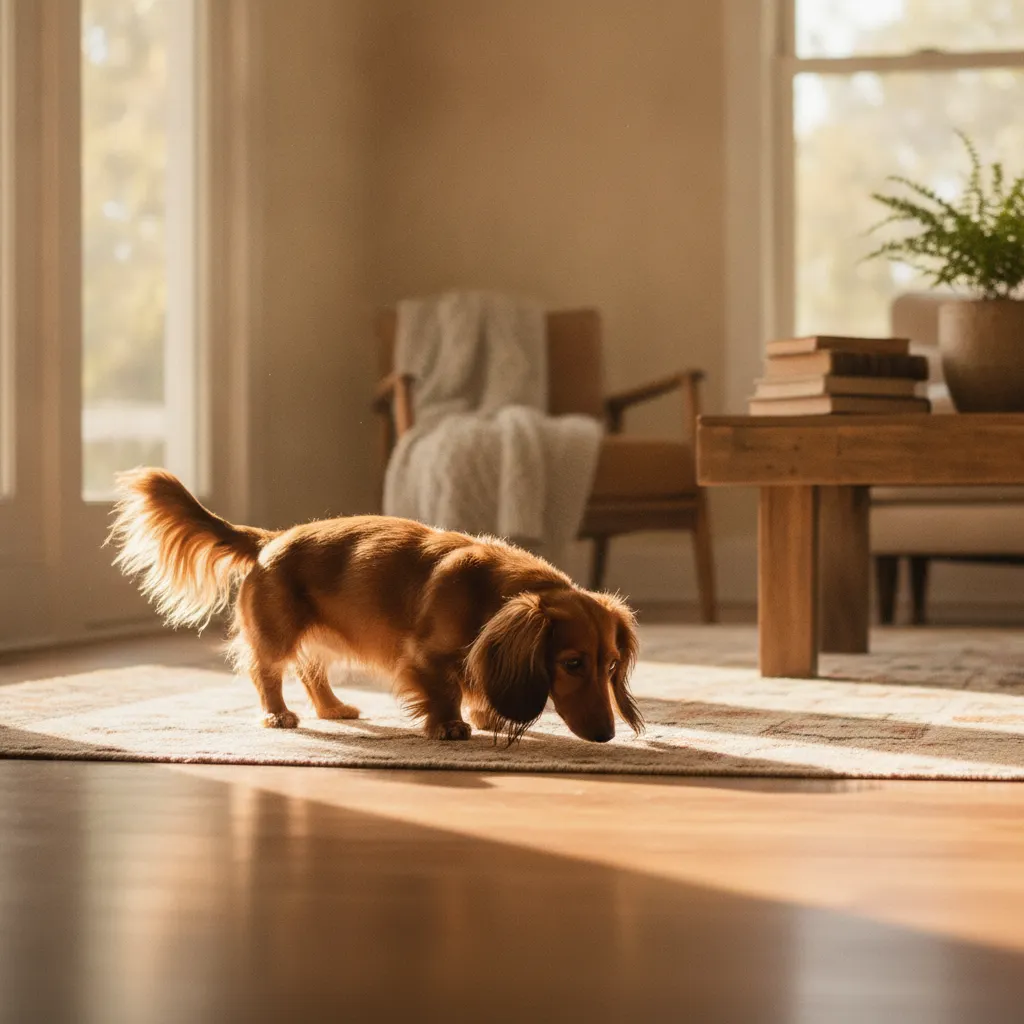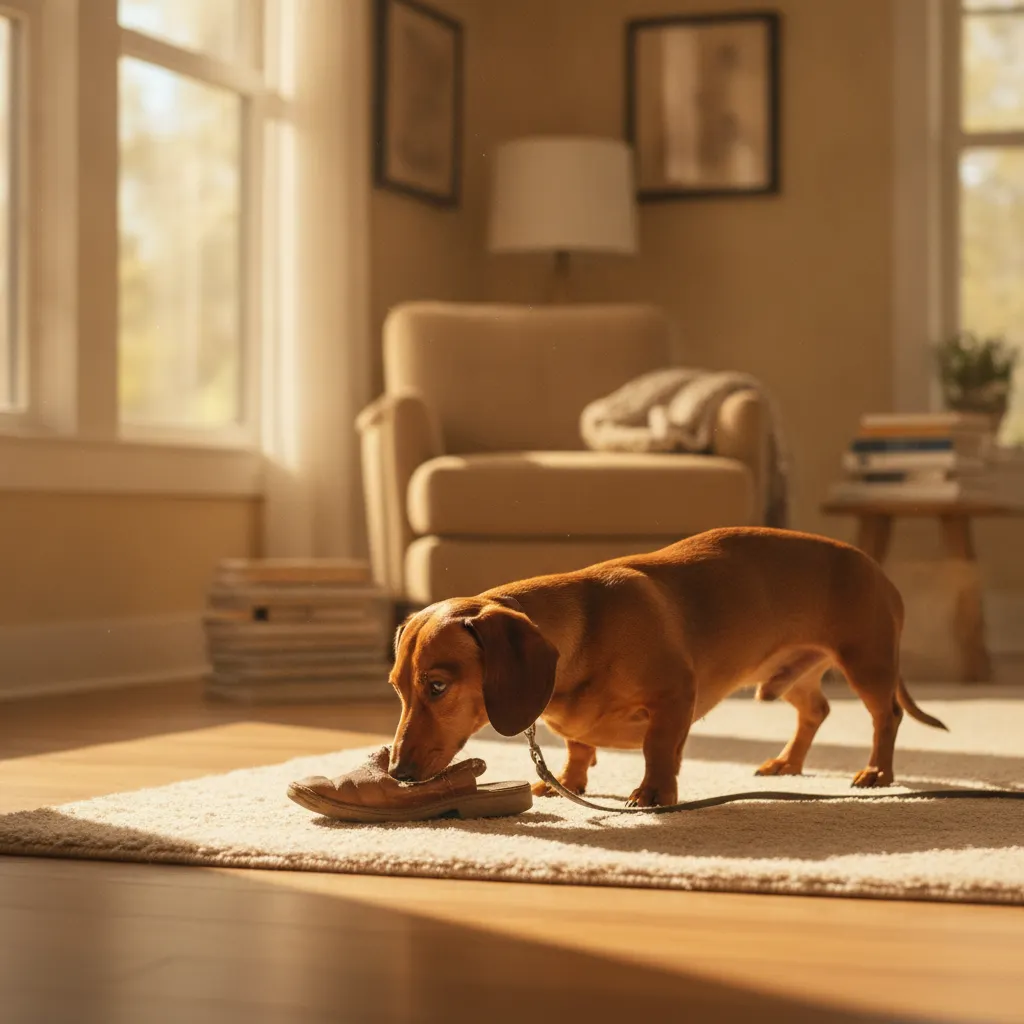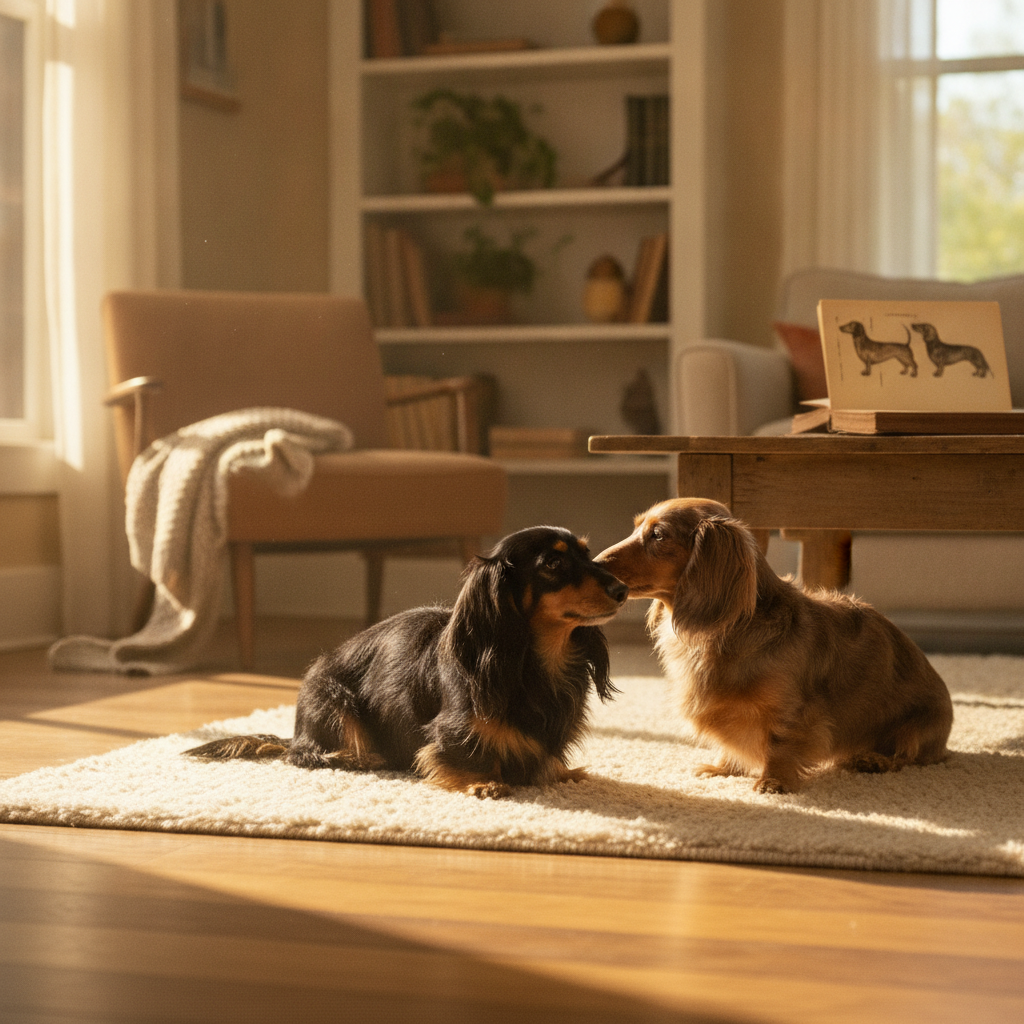
I once heard someone at the dog park declare with absolute certainty, "Oh, you have a long-hair? They're the calm ones. The wire-hairs are the clowns, and the smooths are the real hunters." It sounds so neat and tidy, doesn't it? A simple little chart to explain these complex, stubborn, hilarious creatures we share our lives with. But after nearly twenty years of my life being run by two dachshunds, Marley and Mia, I can tell you they both seem to have missed that memo entirely. This idea that the three main dachshund coat types are just different personality presets is one of the biggest myths in the doxie world.
The problem is, these stereotypes can cause real anxiety for a doxie parent. You read a blog post that says your wire-haired dachshund should be a fearless, independent troublemaker, but yours is a certified couch-cuddler who's scared of the vacuum cleaner. You start to wonder, "Is my dog... normal?" Or maybe you're looking for a new puppy and feel paralyzed, believing that picking the wrong coat means you'll get a personality that doesn't fit your life. You end up trying to fit your living, breathing, wonderfully unique sausage dog into a box that was never meant to hold them.
This leads us to try and "fix" what isn't broken. We might get frustrated with our sweet long-haired doxie for having a stubborn barking streak (that's not very "calm" of him!), or we're baffled when our classic smooth-coat couldn't care less about chasing a squirrel. We're judging them against a myth, not seeing the incredible individual right there on our lap (or, more likely, burrowed in our laundry pile).
So, let's reframe this. The coat isn't a personality switch. It's a faint, genetic echo of a tiny piece of their history. The real truth is that the core of your dog's personality isn't in their fur—it's in their Dachshund-ness. That brilliant, stubborn, loyal, courageous, and slightly manipulative brain is the operating system they all share. The coat is just the wrapping paper, and while it might give you a hint about what's inside, it's not the gift itself.
The Smooth-Haired Dachshund: The Original Classic
When you picture a dachshund, you're probably picturing a smooth. They are the original model, the blueprint from which the others were developed. Their story begins in Germany hundreds of years ago, where they were bred to be fearless badger hunters. Their short, sleek coat was practical—it didn't snag on brambles and was easy to clean after a long day's work underground.
Because they are the closest to that original hunting stock, the personality stereotypes for smooths often revolve around being bold, brave, and sometimes a bit of a "one-person dog." They can be incredibly loyal to their chosen person and a little more reserved with strangers. Think of them as the quintessential hunter: focused, determined, and deeply bonded to their pack leader (that's you). My first doxie, a little red smooth named Oscar, was exactly this. He was my shadow, my tiny protector, and he viewed the rest of the world with a healthy dose of suspicion. He wasn't unfriendly, just… discerning. He had a job to do, and that job was me.
This isn't to say every smooth-coat is a stoic hunter. Many are goofy, playful, and love everyone they meet. But that undercurrent of intense loyalty and bravery is a common thread that connects back to their roots. Their needs are simple: a warm lap, a soft blanket to burrow in, and the unwavering belief that they are, in fact, the boss of the house. Their grooming is the easiest of the three, but don't let that fool you—they still shed! You can learn more about what to expect in our guide, "Do Dachshunds Shed?".
The Long-Haired Dachshund: The Sweetheart with Spaniel Roots?
Now we get to the glamourous member of the family. The long-haired dachshund is just breathtaking, with a silky, flowing coat that turns heads everywhere they go. This coat didn't just appear out of nowhere. It's widely believed that in the 19th century, German breeders crossed smooth dachshunds with various types of small spaniels to achieve this look. The goal wasn't just aesthetic; it was also to create a dog with a coat that could withstand colder weather and wet conditions, and perhaps, to soften the intense hunting drive of the original model.
This infusion of spaniel DNA is where the long-hair's reputation for being sweeter, gentler, and perhaps a bit calmer comes from. Spaniels are famously eager to please and have a softer temperament than hardcore terriers or hunters. Does this mean every long-haired doxie is a docile lap dog? Absolutely not! They are still 100% dachshund, with all the stubbornness and smarts that come with it. However, you may find they have a slightly less intense prey drive or are a bit more biddable during training sessions.
My Mia is a long-hair, and while she is an absolute sweetheart who loves to be held like a baby, she also has a bark that could shatter glass and will defend the house from a falling leaf with the fury of a warrior. She embodies that perfect doxie mix: the soft, cuddly exterior of a companion dog with the fiery, courageous heart of a hunter. They are still dachshunds, through and through. They just happen to have fabulous hair while they're plotting world domination from your couch.
The Wire-Haired Dachshund: The Terrier in a Tuxedo?
Last but certainly not least is the scruffy, bearded, and endlessly entertaining wire-haired dachshund. They are often called the "clowns" of the breed, and for good reason. The wire-hair is the newest of the three varieties, developed by breeding smooth dachshunds with tough, scrappy terriers—most likely the Dandie Dinmont Terrier. The goal was to create a dog with a wiry, protective coat that could shrug off thorns, briars, and even bites from angry prey while hunting in dense undergrowth.
With that terrier blood comes a very specific set of personality traits. Terriers are known for being feisty, tenacious, mischievous, and incredibly funny. This is the genetic cocktail that gives the wire-haired doxie their reputation. They are often the most outgoing, the most likely to get into trouble, and the most persistent when they want something. They have an opinion about everything and are not afraid to share it. If the smooth is the stoic hunter and the long-hair is the elegant companion, the wire-hair is the court jester with a heart of gold and a mind for mischief.
Living with a wire-hair is an adventure. They will make you laugh every single day. They'll also test your patience with their clever schemes to get an extra treat or steal your spot on the sofa. But their playful spirit and boundless courage are infectious. They bring a special kind of chaotic joy to a home. Again, this is a generalization. I've met quiet, reserved wire-hairs. But that spark of terrier fire is almost always flickering just beneath the surface.
So, Which of the Dachshund Coat Types Has the Best Personality?
By now, you've probably figured out the answer: it's a trick question. There is no "best" personality, and the coat is only a tiny piece of the puzzle. The truth is, the single biggest predictor of your dachshund's personality is not their coat, but their *dachshund-ness*. They were all bred for the same core job: to be brave enough to face a badger, smart enough to solve problems on their own underground, and stubborn enough to never give up. That is the essence of every dachshund, whether their fur is sleek, silky, or scruffy.
Think of it like this: the breed standard is the main theme of a song. It's powerful and recognizable. The coat variety is like a slight change in instrumentation—a violin here, a trumpet there. It adds a different flavor, a subtle nuance, but it's still the same song. The most important factors that will shape your individual dog are:
- Individual Genetics: Just like with people, every puppy gets a unique shuffle of genes from its parents. Some are naturally bolder, some are shyer, regardless of coat.
- Socialization: A well-socialized puppy who has had positive experiences with different people, places, and other dogs will grow into a more confident adult. This is far more impactful than their fur type.
- Training: How you interact with and train your doxie makes a huge difference. Their brilliant minds need engagement. If you want to learn how to work with that famous stubborn streak, our guide on how to 'speak dachshund' can be a lifesaver.
- Your Home Environment: A calm, loving home will produce a different dog than a chaotic or stressful one.
My Marley, a smooth-coat, is the biggest clown I've ever met—a total wire-hair stereotype. And my long-haired Mia has a stubborn streak that could rival the most tenacious terrier. They are proof that you should never judge a doxie by their cover. They are individuals first, and members of a coat variety second.
Instead of worrying about stereotypes, focus on finding a reputable breeder who prioritizes temperament, or get to know the individual personality of a dog at a rescue. Fall in love with the dog, not the description in a book. The real joy of being a doxie parent is discovering the unique, quirky, and wonderful personality that lives inside that long little body.
Understanding these little echoes of their past is part of the fun, but decoding the dachshund in front of you right now is what truly builds that incredible bond. It's about learning why they burrow, why they bark at the mailman with the fury of a tiny dragon, and why they give you that soul-piercing stare. If you want to stop guessing and start understanding the 'why' behind their quirky behavior to become a more confident doxie parent, I've put everything I've learned into a simple guide. Get the free Dachshund Behavior Decoder and start speaking their language today.
Frequently Asked Questions
Which dachshund coat type is the calmest?
While long-haired dachshunds have a reputation for being calmer due to the influence of spaniel genetics, this is not a guarantee. Personality is highly individual. A dachshund's energy level is more influenced by their age, health, training, and individual temperament than by their coat type.
Do different dachshund coat types have different health problems?
The primary health concern for all dachshunds, regardless of coat, is Intervertebral Disc Disease (IVDD) due to their long spine. However, some coat-specific issues can occur. Long-haired varieties may be more prone to ear infections if their ears aren't kept clean and dry, and some specific skin conditions can be linked to certain color/coat combinations, like color dilution alopecia in blue or isabella doxies.
Is one dachshund coat type easier to train than others?
No single coat type is definitively "easier" to train. All dachshunds share a baseline of intelligence and stubbornness from their hunting background. Some people find the long-haired variety slightly more eager to please, but successful training always comes down to patience, consistency, and understanding how to motivate your individual dog.
Which coat type sheds the most?
This is a common misconception! All three dachshund coat types shed. Smooth-coats shed short, fine hairs year-round. Long-hairs shed seasonally and require frequent brushing to prevent mats. Wire-hairs shed the least, but their coat requires special grooming like hand-stripping to maintain its texture and health.
Does coat affect how well a dachshund gets along with children?
A dachshund's suitability for a family with children depends entirely on the individual dog's temperament and socialization, not its coat. A well-socialized doxie of any coat type who is taught to interact gently with respectful children can be a wonderful family pet. It's crucial to supervise all interactions between dogs and young kids.
Dachshund Behavior · Breed Characteristics · Dachshund Coats · Smooth Dachshund