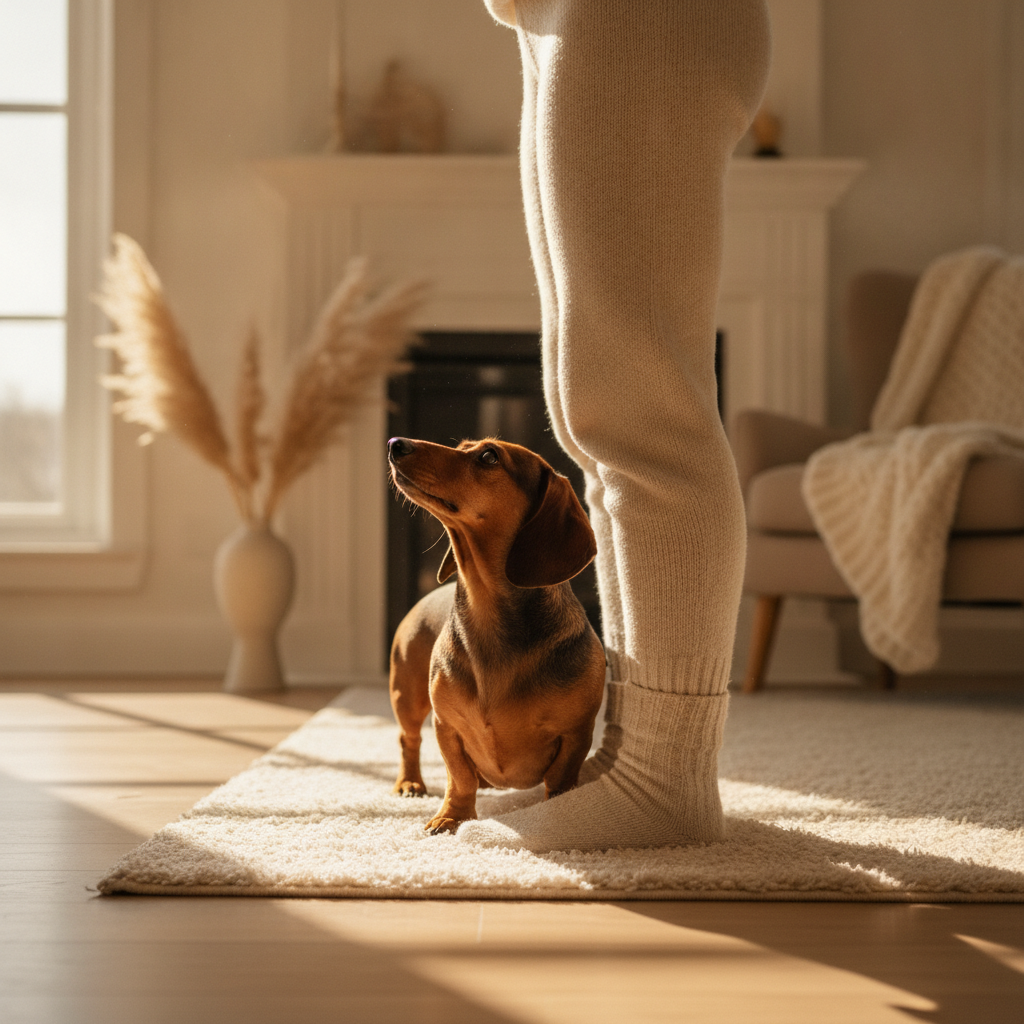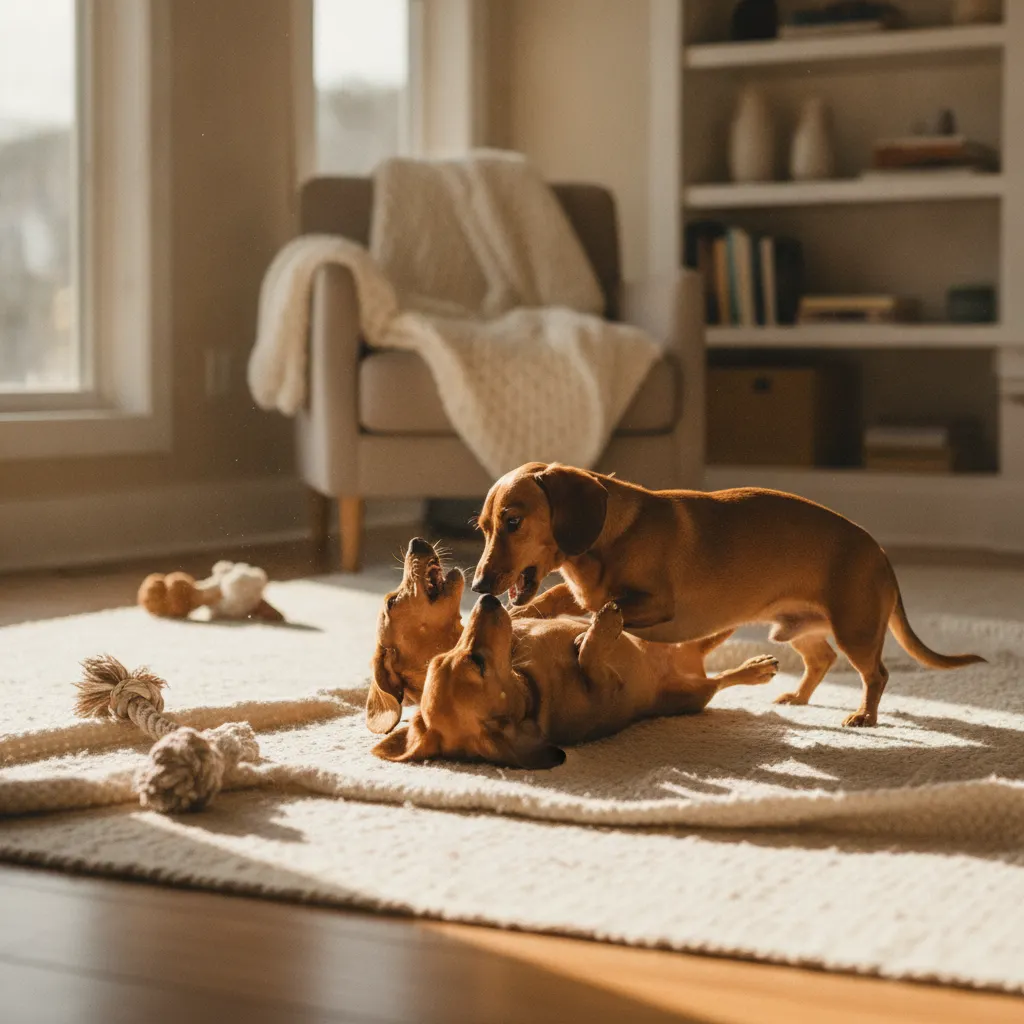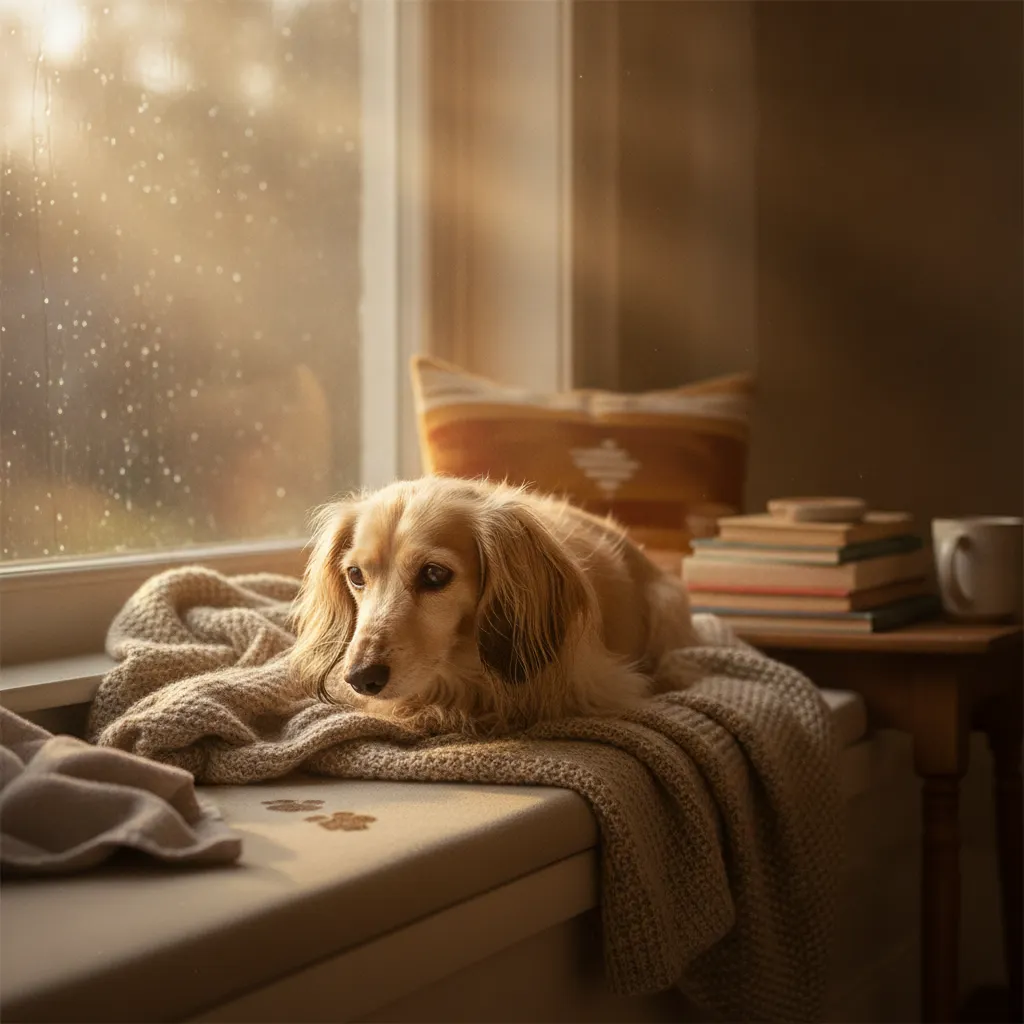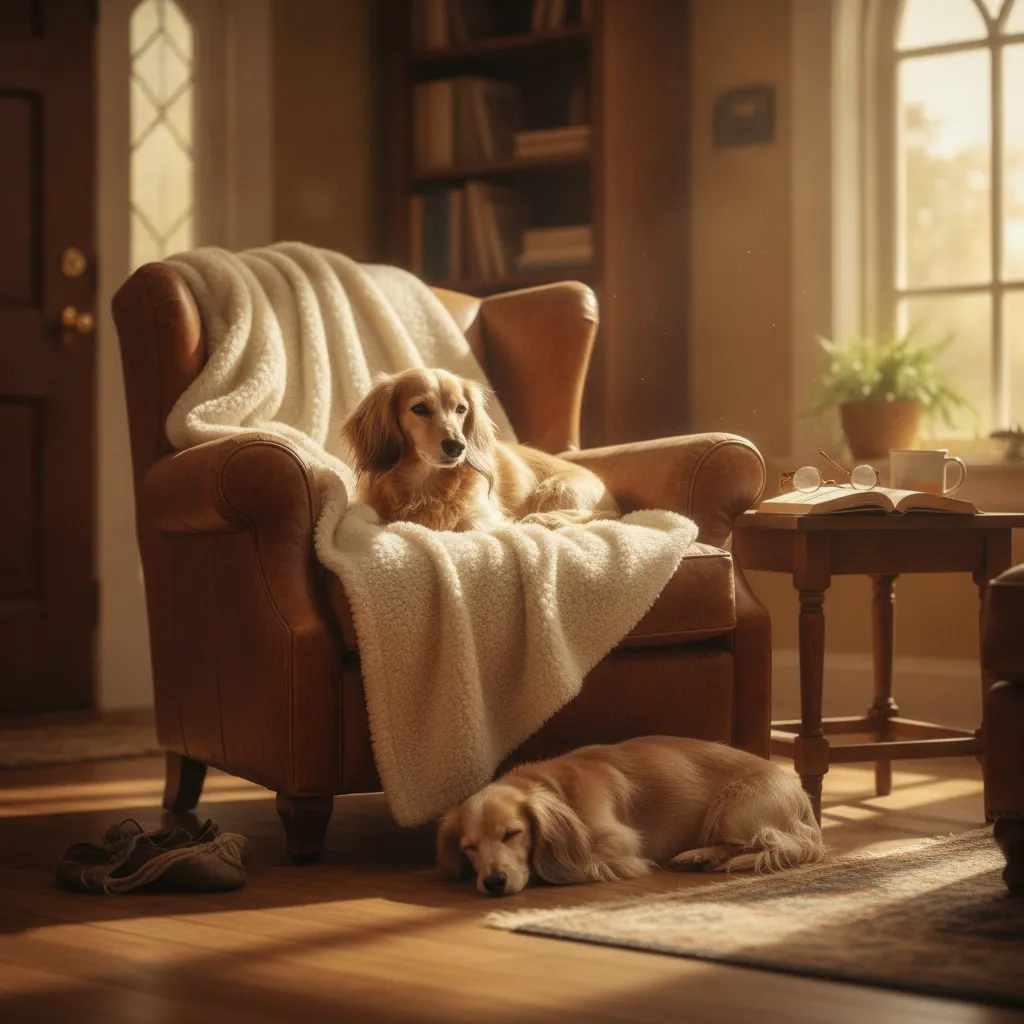
I have a confession to make. For years, the biggest separation anxiety problem in my house wasn't coming from my dachshunds, Marley and Mia. It was coming from me. I’d be out to dinner, phone clutched under the table, refreshing the doxie-cam feed like a day trader watching the stock market. A yawn? He’s bored! A stretch? She’s lonely! A long nap? Oh, the deep, sorrowful sleep of the abandoned! It was exhausting. And if you’re reading this, I bet you know exactly what I’m talking about.
That knot in your stomach when you grab your keys. The wave of guilt that hits you as you close the door on those big, brown, pleading eyes. This isn't just about your dog; this is about your heart. We're talking about owner separation anxiety, and it’s a heavy weight to carry. You love this little sausage dog more than words can say, and the thought of them being anything less than perfectly happy for the few hours you're gone can feel like a personal failure.
So you find yourself caught in a cycle of worry, unable to fully enjoy your time away, whether it's for work, errands, or a much-needed night out. The peace of mind you were hoping for feels a million miles away.
Why Hasn't Anything I've Tried Cured My Worry?
If you're like I was, you’ve probably tried to solve your anxiety by over-managing your dog's environment. You've created what I call the "Doxie Disneyland," a frantic attempt to preempt any possible moment of boredom or sadness.
You leave the TV tuned to Animal Planet. You scatter a dozen different toys across the floor, hoping one will capture their attention. You stuff a Kong with the most elaborate, time-consuming frozen treat you can concoct. You might even have a special playlist of calming dog music queued up. You do everything short of hiring a string quartet to play in the living room.
And what happens? You check the camera 20 minutes later, and your doxie is curled up in a tight little donut, fast asleep, completely ignoring the five-star resort you’ve laid out for them. The expensive puzzle toy is untouched. The TV is playing to an empty room. And your anxiety? It’s still right there, whispering, "See? They're so sad they can't even play. They've given up on life until you return."
The other failed solution is becoming addicted to the pet camera. It feels like a tool for reassurance, but for those of us with owner separation anxiety, it's often a tool for self-torture. We're not just checking in; we're searching for evidence to confirm our worst fears. Every sigh, every repositioning, every glance towards the door becomes proof that our dog is miserable. The camera stops being a window into their world and becomes a mirror reflecting our own guilt.
The Real Problem Isn't Your Dog's Loneliness, It's Your Story
Here’s the shift that changed everything for me. The problem wasn’t what my dachshund was *doing* while I was gone. The problem was the *story I was telling myself* about what he was doing. My guilt wasn't a reflection of my dog's reality; it was a projection of my own deep love and sense of responsibility.
Your guilt is a story you tell yourself, not a reflection of your dog's reality.
Dachshunds were bred to be tenacious, independent hunters who spent time in dark, quiet burrows. They are also world-champion nappers. For a well-adjusted doxie, a few hours of quiet time isn't a punishment; it's an opportunity to recharge their batteries for when their favorite person (you!) comes home. The silence you interpret as sadness is, more often than not, simple contentment.
Your job isn't to eliminate every second of boredom from your dog's life. That's an impossible and exhausting standard. Your real job is to manage your own narrative. It's time to shift your focus from "How can I fix my dog's sadness?" to "How can I trust that my dog is okay and learn to manage my own feelings of worry?" This isn't about loving them less; it's about loving them with more confidence and less anxiety.
How Do I Manage My Own Owner Separation Anxiety?
Managing your own anxiety requires a new system. It's not about buying more toys; it's about building better mental habits. Think of it as a calm departure protocol for your brain. This five-step framework is what finally gave me my freedom back, and it can do the same for you.
Step 1: Become a Data Scientist, Not a Worrier
For one week, use your pet camera as a research tool, not an anxiety-fueling device. Your mission is to collect objective data. Don't just watch; document. Get a notebook and create a simple log. Note the time and what your dachshund is *actually* doing.
- 9:15 AM: Sleeping in sunbeam.
- 10:30 AM: Got up, drank water, went back to sleep in crate.
- 11:45 AM: Barked once at the mail carrier, then laid down.
- 1:00 PM: Still sleeping.
After a few days, you will almost certainly have a logbook full of one word: "Sleeping." The data will prove to you what your anxious mind refuses to believe: your dog is fine. They are resting. They are content. This hard evidence is your most powerful weapon against the irrational stories your anxiety tells you.
Step 2: Engineer a Boring Goodbye (and a Calm Hello)
Our dachshunds are masters at reading our energy. If you spend ten minutes before leaving in a flurry of dramatic, high-pitched, guilt-ridden goodbyes ("Mommy will be back soon! Be a good boy! I love you so, so much!"), you are essentially screaming, "SOMETHING BIG AND SCARY IS HAPPENING!" You're injecting anxiety into the situation before you even walk out the door.
The solution is to make your departures and arrivals the most boring, non-eventful moments of the day. In the minutes leading up to your departure, ignore your dog. Gather your things calmly. When it's time to go, just go. No fanfare, no long goodbyes. The same applies when you return. Walk in, put your things down, and ignore your doxie for the first few minutes, no matter how excited they are. Once they have settled down, you can greet them calmly. This teaches them that your coming and going is a normal, predictable part of life, not a reason for panic.
Step 3: Create a "Peace of Mind" Environment
This step is about setting up your home in a way that soothes *your* anxiety, which in turn helps your dog stay safe. When you know they are secure, your mind is freer to relax.
- Embrace the Den: A crate isn't a jail; it's a safe, cozy den. When you know your doxie is in their secure space, you eliminate a hundred "what if" scenarios. You know they can't chew on an electrical cord, get into the trash, or attempt a dangerous leap off the sofa. For a loving guide on this, check out our post on transforming a crate into a cozy den.
- Back-Proof the Zone: The number one fear for many doxie parents is a back injury. Remove that worry from the equation. Use baby gates to block off access to stairs or rooms with high furniture. If they aren't crated, make sure their area is a ramp-accessible, no-jumping zone. Your peace of mind is worth it. This is a huge part of living with 'IVDD dread' and enjoying your time together, and apart.
- Smarter Enrichment: Instead of a dozen squeaky toys, leave one high-value puzzle toy or a long-lasting chew. This gives their brain a job to do, which is far more settling than frantic play. It channels their focus and helps the time pass constructively. We have a whole guide on the five types of toys every dachshund needs to keep them engaged.
Step 4: Schedule a "Worry Window"
This is a powerful technique from cognitive behavioral therapy. You cannot simply tell your brain to "stop worrying." It doesn't work. Instead, you need to contain the worry. Designate a specific, short period of time—say, five minutes at lunchtime—as your official "Worry Window."
During this window, you have permission to go all-in on your anxiety. Check the camera, fret about every little thing, imagine all the worst-case scenarios. Let it all out. But when that five-minute timer goes off, you are done. You close the app and put the worry away until your next scheduled window. This practice prevents the anxiety from bleeding into your entire day. It acknowledges the feeling without letting it take over your life.
Step 5: Re-write Your Internal Narrative
The final step is to consciously change the story you tell yourself. When you feel a pang of guilt, actively replace the anxious thought with a more realistic and positive one.
- Instead of: "My poor baby is so lonely and sad without me."
- Try: "My dog is resting peacefully in his safe den, recharging so he has plenty of energy to greet me when I get home."
- Instead of: "I'm a bad owner for leaving him alone."
- Try: "Providing my dog with predictable, calm alone time is part of raising a well-adjusted, confident dog. It's good for both of us."
This feels strange at first, but over time, you are literally rewiring the neural pathways in your brain. You are replacing the habit of anxiety with a habit of trust and reassurance. You are learning to be the calm, confident leader your dachshund knows you are.
The Proof is in the Sleeping Sausage
I can tell you from nearly two decades of experience, this works. When I finally stopped treating my departures like a five-act tragedy, Marley and Mia learned to see them as no big deal. When I stopped checking the camera obsessively and instead trusted the process, *I* started to feel calmer. My calm energy, in turn, helped them feel more secure.
Leaving your dachshund doesn't have to be a source of guilt and stress. It can be a normal, healthy part of your life together. By focusing on your own mindset, you give both yourself and your beloved sausage dog a tremendous gift: the gift of peace.
Feeling guilty is often a sign that we're just not sure what our dogs are thinking. If you want to replace that anxiety with confidence and finally understand the 'why' behind their quirky doxie behaviors, start here. Get the free Dachshund Behavior Decoder and learn to speak their language.
Frequently Asked Questions
What's the difference between my dog's separation anxiety and my own?
True canine separation anxiety often involves destructive behavior, constant vocalization (howling or barking), or having accidents in the house when left alone. Owner separation anxiety is the owner's own feelings of guilt, worry, and stress, which can exist even when the dog is perfectly calm and content while alone.
Is it cruel to leave my dachshund alone for 8 hours?
An adult dachshund can typically handle being alone for a standard workday, provided they have access to water and a safe space. The key is to ensure they get plenty of exercise and mental stimulation before you leave and as soon as you get home. A midday dog walker can be a great option to break up the day.
My dachshund cries for a minute when I leave. Doesn't that mean they're miserable?
A little bit of protest right at the moment of departure is very common and not necessarily a sign of deep distress. Often, they settle down within minutes. This is where your data collection (Step 1) is key. If the camera shows they cry for 60 seconds and then go to sleep for four hours, you can reassure yourself it's just a momentary complaint, not prolonged suffering.
How can I stop checking the pet camera so much?
The "Worry Window" (Step 4) is the best method for this. It's very difficult to go from constant checking to zero checking. By scheduling specific, short times to check, you contain the habit instead of letting it control you. Over time, you'll likely find you need the check-ins less and less.
Can my owner separation anxiety make my dog's anxiety worse?
Absolutely. Dogs are incredibly sensitive to our emotions. If you are frantic, stressed, and guilty every time you leave, your dog learns that departures are a very stressful event. By managing your own anxiety and practicing calm, boring goodbyes, you model confident behavior for your dog, which can help them feel more secure.
What if my dog is actually being destructive while I'm gone?
If your dog is exhibiting signs of true separation anxiety, like destroying furniture, frantic barking for hours, or self-harm, that is a more serious issue that goes beyond owner separation anxiety. This is the time to consult with your veterinarian and a certified professional dog trainer or behaviorist to create a specific behavior modification plan for your dog.
owner anxiety · separation anxiety · dachshund behavior · dog owner guilt