Why Does My Dachshund Follow Me Everywhere?
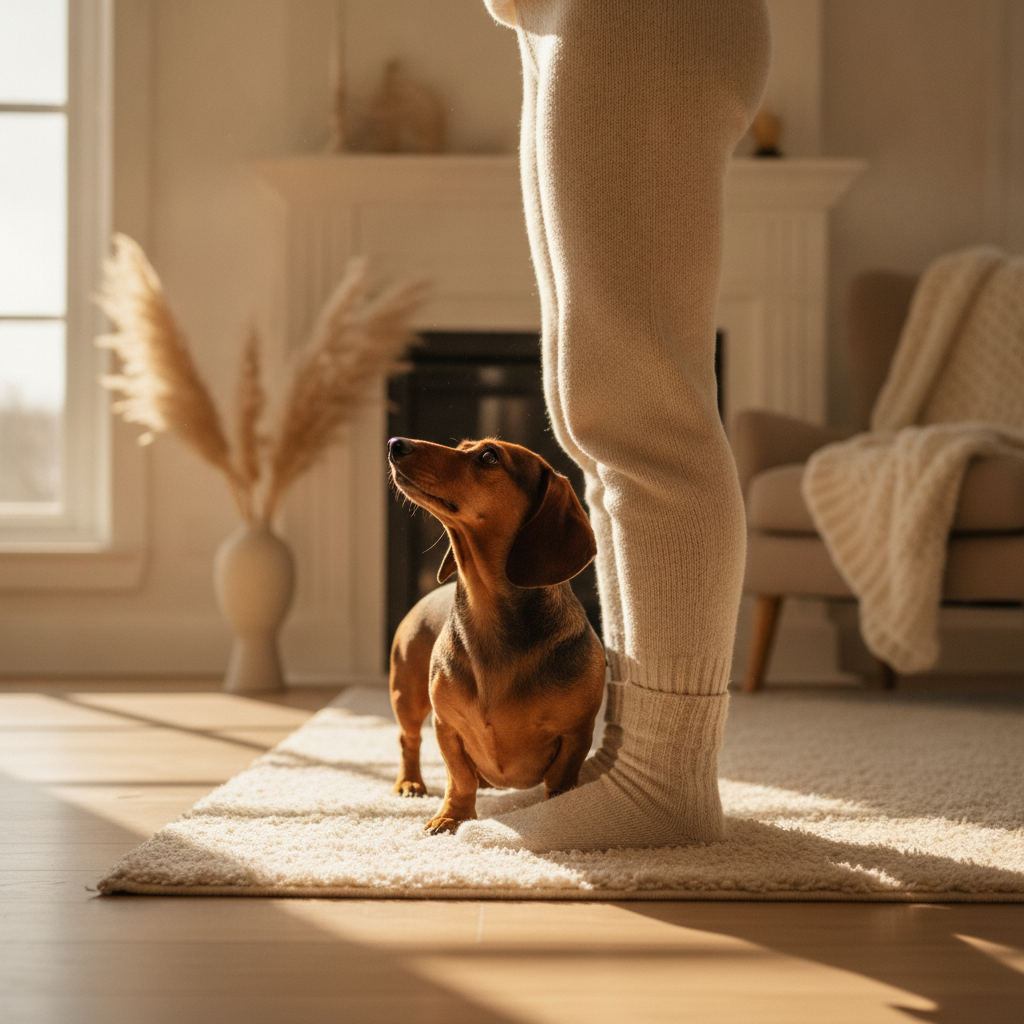
You get up from the couch to grab a glass of water, and you hear it: the tell-tale click-clack of four little paws on the hardwood floor right behind you. You go to the bathroom and a little brown nose pokes under the door, followed by a concerned whine. You try to cook dinner, and you have a permanent, sausage-shaped obstacle in the kitchen. If you feel like you haven’t been alone in years, you’re not imagining it. You have a furry little shadow, a four-legged stalker, a tiny, adorable private investigator who has made you their sole person of interest.
It’s one of the most common things I hear from fellow doxie parents. It’s cute, mostly. It’s flattering, definitely. But there’s a flicker of worry that comes with it, isn’t there? The cuteness fades when you grab your car keys and the sweet, adoring gaze turns into a frantic, high-pitched panic. This is the other side of the 'Velcro dog' coin: true dachshund separation anxiety. It's the feeling of guilt that hits you as you close the door, knowing your dog is about to be miserable. It's the worry about what you'll come home to—a chewed-up pillow? A noise complaint from the neighbors? It’s a heavy weight to carry.
The Things We Try (That Usually Don't Work)
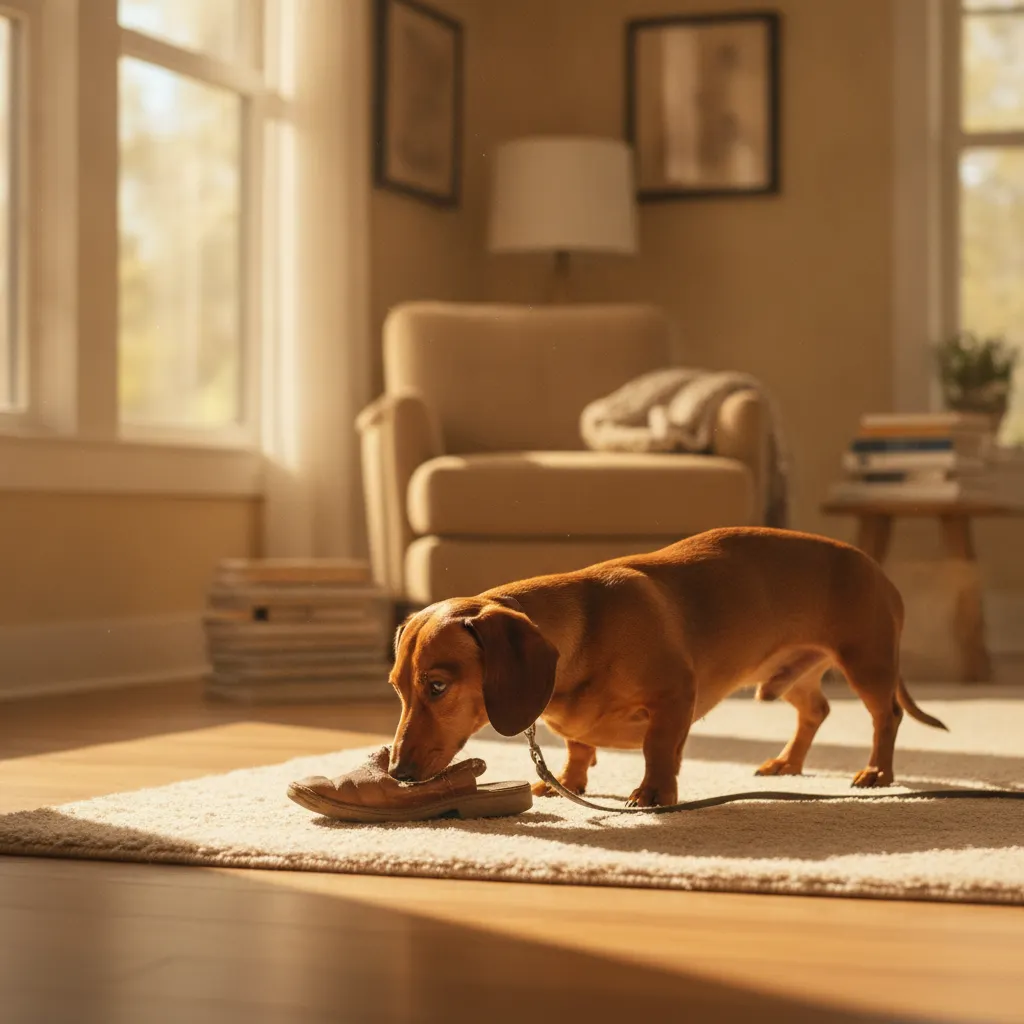
When faced with this panic, we do what any loving parent would do: we try to fix it. We buy the expensive puzzle toy that promises hours of engagement, only to find it untouched next to a shredded shoe. We try sneaking out, hoping they won’t notice, which only seems to make their panic worse when they realize we’ve vanished. Some of us try crating, and our hearts break listening to the desperate barks and whimpers from the other side of the bars.
Why do these things fail? Because they’re treating the symptoms, not the source. The chewing, the barking, the potty accidents—those aren’t acts of rebellion or spite. They are the outward expression of a genuine, deep-seated panic. Your dachshund isn't trying to punish you for leaving; they are having a panic attack because their safety, their pack leader, their entire world, has just walked out the door. They honestly don't know if you're ever coming back.
The Real Reason Your Doxie is So Clingy
Here’s the reframe that changed everything for me and my two, Marley and Mia. Your dachshund isn’t broken or spoiled. They are being a dachshund. This isn’t a flaw; it’s a feature of their design, honed over centuries.
Think about their original job. These weren't dogs bred to sit primly in a parlor. They were bred to go to ground, to dive headfirst into a dark, scary badger den with only their human hunter waiting for them up above. Their very survival depended on an unbreakable bond with their person. They needed to be brave, yes, but they also needed to be intensely connected to their human partner. That deep, primal need for their person is literally coded into their DNA.
So when your doxie panics when you leave, they aren’t being dramatic. Their ancient brain is screaming, "My human is gone! The pack is broken! I am alone in the scary tunnel!" Their world has been turned upside down. Understanding this shift—from seeing it as a behavioral problem to seeing it as an expression of their core identity—is the first step to actually helping them.
A Gentle Plan to Build Confidence and Calm
Once we understand we’re dealing with panic, not bad behavior, our approach can change. Our goal is no longer to stop the barking, but to lower the panic. It’s about teaching them, slowly and gently, that being alone is safe and that you will always, always come back. This isn't a quick fix; it's a process of building trust and confidence.
Step 1: Redefine What 'Alone' Means
Before you even think about leaving the house, we need to make separation inside the house no big deal. The goal is for your doxie to be calm and relaxed even if you're not in the same room. Start small. Ask your dog to stay in a room while you walk into another for just a few seconds. Use a baby gate so they can still see you. Come back before they have a chance to get anxious. Reward the calm. Slowly, and I mean slowly over days and weeks, increase the duration and distance. The point is to have hundreds of tiny, successful separations that teach them that you being out of sight isn't a catastrophe.
Step 2: De-weaponize Your Leaving Cues
Your dachshund is a brilliant detective. They know the sequence: you pick up the keys, you put on your shoes, you grab your coat, and then the Bad Thing happens (you leave). We need to break that association. Throughout the day, when you have no plans to leave, practice these triggers. Jingle your keys, then go sit on the couch. Put on your shoes, then walk to the kitchen and get a snack. Grab your coat, put it on, and then start doing the dishes. At first, they'll get anxious, but over time they’ll learn that keys jingling doesn't always mean you're abandoning them. The cues lose their power.
Step 3: Create a 'See You Later' Sanctuary
Your dog needs a place that is wonderful, safe, and only happens when you’re gone. This turns leaving from a negative into a positive. It could be a comfy crate, a gated-off area, or a specific room. The key is to load it with amazing things that they only get when they are alone. A special puzzle feeder with high-value treats (like peanut butter or cream cheese), a favorite chew toy they haven't seen all day. This is also where their natural instincts can help. Creating a cozy, den-like space taps right into their breeding. As we've talked about before, their instinct to burrow is all about seeking safety and comfort. A bed with lots of blankets to snuggle under can make their sanctuary feel like the safest place in the world.
Step 4: Master the Art of the Boring Goodbye
This one is so hard for us, because we love them! But long, emotional goodbyes—"Oh, Mommy loves you so much, I'll miss you, be a good boy!"—pour gasoline on their anxiety fire. You are signaling that this is a huge, dramatic, scary event. Instead, your departure needs to be the most boring thing that happens all day. A simple, "Be back soon," and then walk out. No big fuss. The same goes for when you return. I know you want to greet their frantic wiggles with just as much excitement, but it reinforces the idea that your return is a massive, high-emotion event. Walk in, ignore the initial frenzy, put your things down, and then once they’ve settled, give them calm, gentle affection.
Proof in the Pudding (and the Unchewed Shoes)
I speak from experience. My little Mia was a world-class shadow. If I so much as stood up, she was on high alert. Leaving the house was an ordeal. It took weeks of the 'key jingle game' before she stopped tensing up every time I touched my purse. We spent a month working on 'boring goodbyes' where my heart felt like it was breaking from the lack of fanfare.
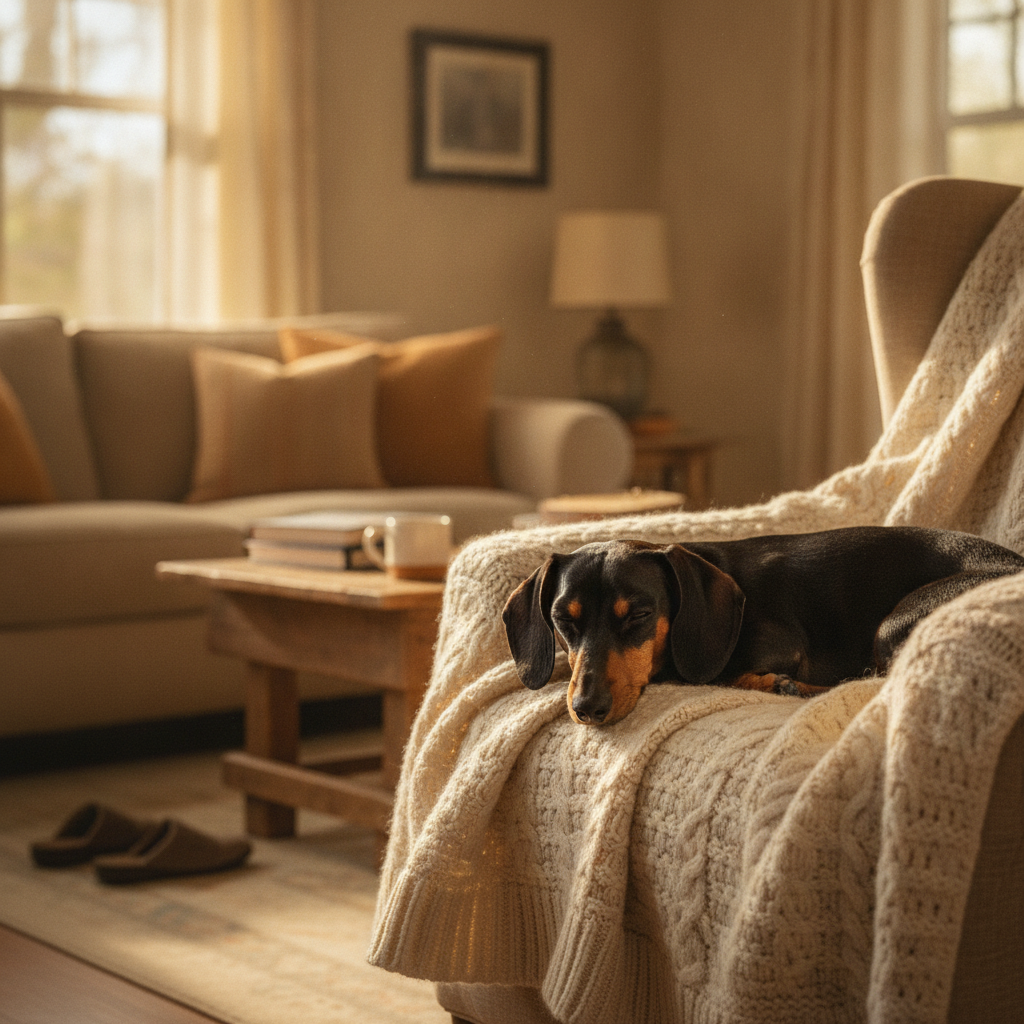
But slowly, it worked. One day I came home from the grocery store and she wasn't waiting at the door, panting. She was asleep in her bed, burrowed under her favorite blanket. She lifted her head, gave a little tail wag, and then rested her head back down. It was a miracle. It wasn't about her loving me less; it was about her trusting me more. She finally understood that I would always come home, and that her sanctuary was a safe, peaceful place to wait.
Your goal isn't to make your dachshund love you less. It's to make them feel secure enough to be okay when you're gone. It's a gift of confidence you give them.
Dealing with dachshund separation anxiety is a journey, not a destination. It requires patience and a deep understanding of what makes these long little dogs tick. But every unchewed shoe and every peaceful departure is a victory. You're not just training your dog; you're deepening the trust between you.
If you want to understand more of these quirky doxie behaviors—from the burrowing to the barking to the selective hearing—it all clicks into place when you see the world through their eyes. It’s why I put together a guide to help you do just that.
Get the free Dachshund Behavior Decoder
Frequently Asked Questions
Can a dachshund ever be truly happy alone?
Yes, absolutely! The goal isn't to make them completely independent—they are a companion breed, after all. The goal is to replace panic with peace. A well-adjusted dachshund can learn to be calm and content for reasonable periods, seeing it as quiet nap time until their favorite person returns.
Does getting another dog help with dachshund separation anxiety?
Sometimes it helps, but often it doesn't. True separation anxiety is about the bond with a specific person, not just general loneliness. If your dachshund's panic is about you leaving, another dog won't fix the core issue, and you might just end up with two anxious dogs.
How long does it take to see improvement?
This depends entirely on the dog and the severity of their anxiety. It requires patience and consistency. You might see small improvements in a few weeks, but it can take several months of dedicated, gentle work to build lasting confidence. Don't get discouraged by setbacks!
Is crating cruel for a dog with separation anxiety?
It can be if done incorrectly. Forcing a panicked dog into a crate will only make them feel trapped and intensify their fear. However, if you slowly and positively train them to see the crate as their safe, personal den—a sanctuary filled with wonderful things—it can be an incredibly helpful tool in managing dachshund separation anxiety.
What's the difference between true separation anxiety and just being a bit clingy?
Clinginess is when your dog prefers to be near you. Separation anxiety is when they experience genuine distress and panic when you leave. The key difference is the presence of panic symptoms: destructive behavior, excessive barking or howling, potty accidents, or frantic attempts to escape, which only happen when they're left alone.
dachshund behavior · separation anxiety · velcro dog · dog training