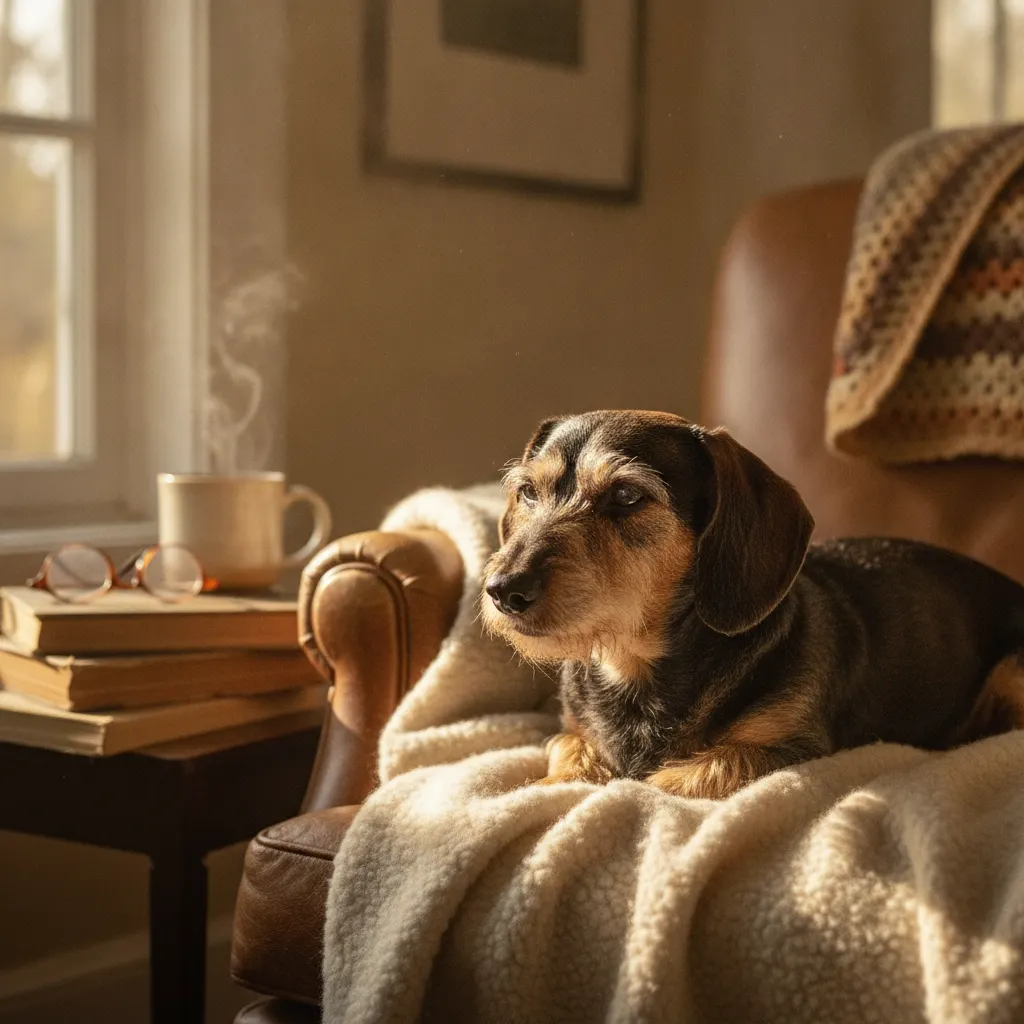
He’s standing in the corner, staring at the wall like it’s the most fascinating thing he’s ever seen. Five minutes ago, he barked to go outside, then stood on the porch looking utterly confused about why he was there. Last night, he paced the hallway at 2 a.m., his little claws making a soft, restless clicking sound on the floor. And your heart sinks, just a little. Is he just getting old and quirky? Is he mad at you? Or is this… something else?
If you’re watching your once-sharp little sausage dog seem to get lost in his own home, you know the particular kind of worry it brings. It’s a quiet, creeping anxiety. You feel a pang of frustration when he has an accident right after coming inside, followed by a wave of guilt for feeling frustrated at all. You love this dog more than words can say, but you feel like you’re slowly losing him, and you don’t know what to do. Is this just the price of a long life together?
Why Just 'Waiting It Out' Doesn't Work
Many of us fall into the same traps. First, we dismiss it. “Oh, he’s just being a grumpy old man.” We write off the confusion as a personality quirk. But the incidents become more frequent, and dismissal no longer feels right. Then, we might try a little retraining, as if he’s forgotten 14 years of perfect potty habits on purpose. This often leads to more frustration for both of you, because the root of the problem isn't defiance.
So we turn to Google, which can often lead to more anxiety. You type in the symptoms and find cold, clinical articles that can leave you feeling helpless. The problem with these approaches is that they treat the symptoms as isolated behavioral issues to be corrected, or as a diagnosis to be dreaded. They miss the most important part: what your dachshund is actually experiencing.
The Reframe: His Map Is Being Rewritten
Here’s the shift that changes everything: Your dachshund isn’t losing his mind. He’s losing his map. Imagine navigating your own home, a place you know by heart, but suddenly the doorways have moved, the furniture is in a different spot every time you look, and the familiar path to the back door now feels like a confusing maze. That’s a closer picture of what canine cognitive dysfunction (CCD), often called dog dementia, can feel like for our dogs.
It’s not malice when he soils the rug; it’s disorientation. He forgot where the door was or the signal to ask. It’s not stubbornness when he stares at a wall; it’s like his GPS is frozen, trying to find a signal. When we stop seeing these behaviors as problems to fix and start seeing them as signals of confusion, our entire approach can change. We move from being a frustrated trainer to being a loving, patient guide. Our job is no longer to correct him, but to help him feel safe in a world that’s becoming increasingly strange.
Your Guide to Navigating the New Map: A Loving Framework for Canine Cognitive Dysfunction
Instead of feeling overwhelmed, we can break this down into a simple, loving system. Think of yourself as the lighthouse keeper, providing clear, consistent signals to help your little sailor navigate his foggy world. It’s about adapting his environment and your routines to support the dog he is today.
Step 1: Become a Loving Observer (The DISHAA Method)
Before you can help, you need to understand what’s happening. Vets often use an acronym, DISHAA, to categorize the signs of canine cognitive dysfunction. Grab a notebook and, for a week, just gently observe. Don't judge, just watch. This will be invaluable information for your vet.
- Disorientation: Does he get stuck in corners? Seem lost in familiar places? Stare blankly at walls or into space? Forget why he went outside?
- Interactions (Social): Have his interactions with you or other pets changed? Is he more clingy and needy? Or more withdrawn and irritable? Does he still greet you at the door, or does he sometimes not seem to recognize familiar people?
- Sleep-Wake Cycle: This is a big one. Is he sleeping more during the day? Is he restless, pacing, or vocalizing at night when he used to sleep soundly?
- House Soiling: Is a previously house-trained dog having accidents indoors? Does he signal to go out and then forget what to do once he’s there?
- Activity Levels: Has his overall activity changed? Is he less interested in playing, walking, or exploring? Or is he showing new, repetitive behaviors like endless pacing?
- Anxiety: Does he seem more anxious, agitated, or fearful, especially when separated from you? Is he more sensitive to sounds that never bothered him before?
Jotting down notes on these things isn’t about building a case against your dog. It’s about creating a clear picture so your vet can help you rule out other issues. Remember our core rule: quirks are consistent, problems are a change. A sudden shift in any of these areas is your signal to pay closer attention.
Step 2: Adapt the Harbor (Making His World Safer)
Once you see the world through his confused eyes, you can start making it simpler and safer. The goal is to reduce anxiety by increasing predictability.
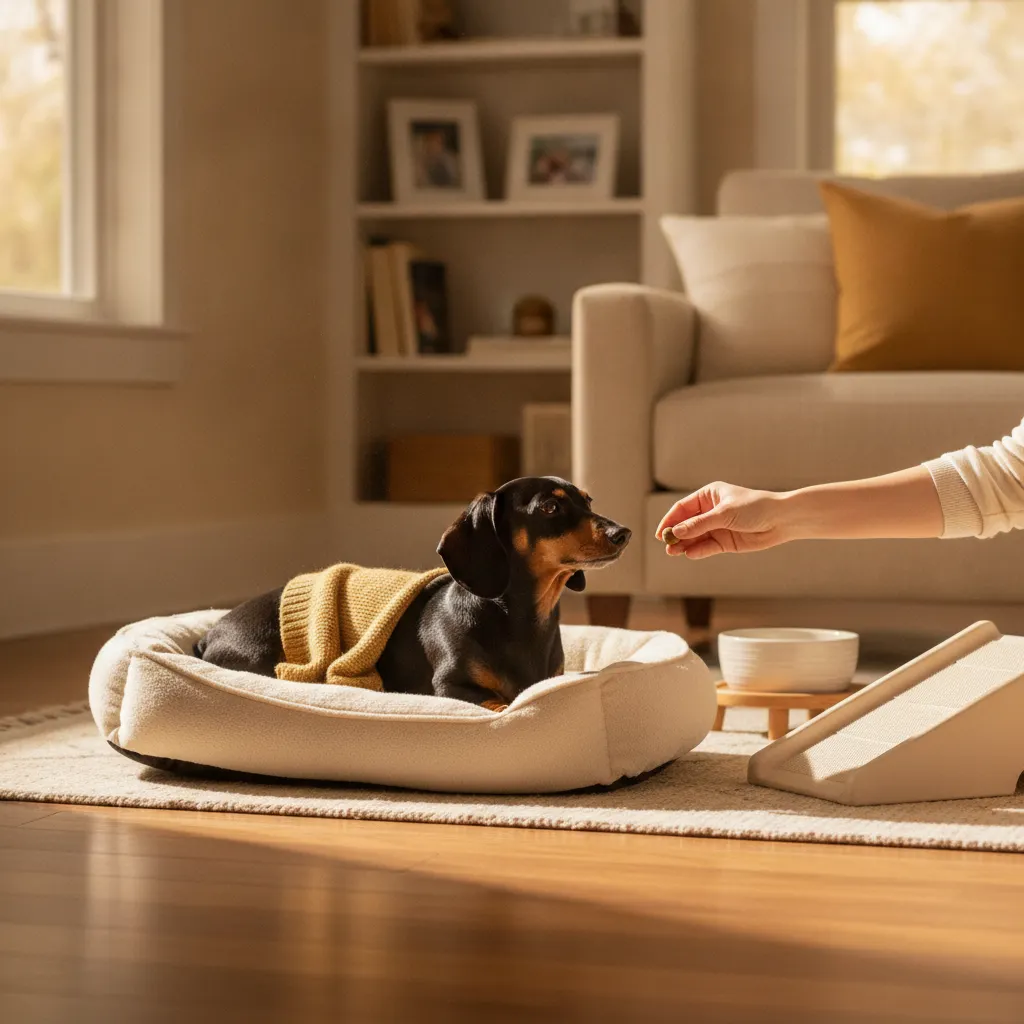
- Keep Things Consistent: Don't rearrange the furniture. Keep his food and water bowls, and his bed, in the exact same spot. A predictable world is a calm world.
- Light the Way: Plug in a few nightlights, especially along the path from his bed to his water bowl or the door. Many dogs with CCD experience increased anxiety in the dark.
- Improve Traction: Senior doxies who are already unsteady can lose their footing on slippery hardwood or tile floors. Use non-slip rugs or runners to create clear, safe pathways through the house.
- Simplify Access: Ramps, ramps, ramps. If you haven’t already, now is the time to ensure he has a ramp to the sofa and the bed. This isn’t just about protecting that long little back; it’s about giving him confident access to his favorite comfort zones. You can find more tips in our guide to back-safe travel, as many of the principles apply at home, too.
Step 3: Gentle Enrichment (Nourishing His Mind)
His brain may be changing, but it still needs engagement. The key is to switch from challenging activities to comforting, confidence-boosting ones.
- Scent is Everything: A doxie’s nose is powerful. Simple “find the treat” games with a high-value, smelly snack can be incredibly rewarding. Hide a treat under one of three cups, or just in your hand. Let him use his nose, not his memory. A gentle 'sniffari' walk, where he leads the way, is perfect mental stimulation. You can learn more about this in our guide to 'sniffari' walks.
- Easy Puzzles: Ditch the complex puzzle toys that might frustrate him. A snuffle mat or a simple lick mat with some dog-safe peanut butter can provide minutes of calm, focused activity.
- Routine, Routine, Routine: A predictable daily schedule for meals, walks, and potty breaks becomes a comforting anchor in his sea of confusion. It’s one less thing his brain has to worry about.
Step 4: Your Vet is Your Co-Pilot
This is the most important step. Your observations are clues, but not a diagnosis. It is absolutely critical to see your veterinarian. Many other conditions can mimic the signs of CCD.
A Gentle Reminder: This is educational content, not veterinary advice. Your vet is the only person qualified to diagnose your dog. A sudden behavioral change always, always warrants a check-up.
Things that can look like dementia include: vision or hearing loss, arthritis or other sources of pain, urinary tract infections, kidney disease, or even brain tumors. A thorough exam is non-negotiable. Go to your appointment armed with your DISHAA notes and even a few short videos of the behaviors that concern you. This gives your vet the full story. If you're wondering what subtle signs of discomfort look like, our guide on how to tell if your dachshund is in pain can be a helpful resource.
The Heart of the Matter: Loving the Dog You Have Today
I remember when my old boy, Marley, started having his moments. He’d get “stuck” behind a chair he could easily walk around. He’d forget he’d just eaten and beg for dinner again. My heart ached. It felt like I was losing the brilliant, bossy little dog I’d had for over a decade. But the moment I shifted my perspective—from “How do I fix this?” to “How do I make him feel safe?”—everything changed.
We put nightlights in the hall. We started doing five-minute scent games with his favorite cheese instead of long, tiring walks. When he got stuck, I wouldn’t just move him; I’d get on the floor, gently guide him out, and give him a reassuring cuddle. I was no longer trying to bring back the old Marley. I was focused on loving the Marley who was right in front of me, confusion and all. And in those moments of connection, I’d see a flicker of the old sparkle in his eyes. He was still in there.
It’s okay to feel sad. It’s a form of grief, watching a beloved companion change. But I promise you, there is still so much joy to be found. By managing their world, you free them from anxiety, and that’s when their personality can shine through again. You are not managing a problem; you are loving a changing friend through the twilight of their life. And that is a beautiful, profound gift.
Understanding what’s happening inside your doxie’s head is the first step to being a more confident, compassionate parent. If you want to learn the 'why' behind all their unique behaviors, from puppyhood to their golden years, it all starts with learning their language. Get the free Dachshund Behavior Decoder to feel more connected and less worried.
Frequently Asked Questions
What is the very first sign of canine dementia?
Often, the earliest signs are subtle changes in the sleep-wake cycle. You might notice your dog, who used to sleep through the night, starting to get restless, pace, or even whine in the early hours of the morning for no apparent reason.
Can canine cognitive dysfunction be cured?
Unfortunately, there is no cure for canine cognitive dysfunction. However, it can be managed. Through environmental adjustments, specific diets, potential medications, and supplements prescribed by your vet, you can slow the progression and significantly improve your dog's quality of life.
How do I know this isn't just normal aging?
This is a key question. While some slowing down is normal, CCD involves specific behavioral changes that go beyond typical aging. The rule is: quirks are consistent, problems are a change. A sudden onset of confusion, house soiling, or severe anxiety is not normal aging and warrants a vet visit to investigate potential canine cognitive dysfunction or other health issues.
Are dachshunds more prone to canine dementia?
Any dog can develop CCD, but it's more common in smaller breeds simply because they tend to have longer lifespans. Since dachshunds are living longer than ever, we are seeing it more frequently in the breed. Early awareness is key for any senior doxie parent.
What is one thing I can do tonight to help my confused dog?
Add a nightlight. Place one or two between your dog's bed and their water bowl, or near the door they use for potty breaks. Reducing disorientation in the dark can immediately lower their anxiety levels and help them navigate more confidently at night.
Does having canine dementia mean my dog is suffering?
Not necessarily. While the confusion can cause anxiety, our role as their caregiver is to manage their environment to minimize that stress. With a predictable routine, a safe home layout, and lots of patience and love, a dog with CCD can still have a wonderful, happy, and comfortable quality of life.
senior dachshund · canine cognitive dysfunction · dog dementia · senior dog care