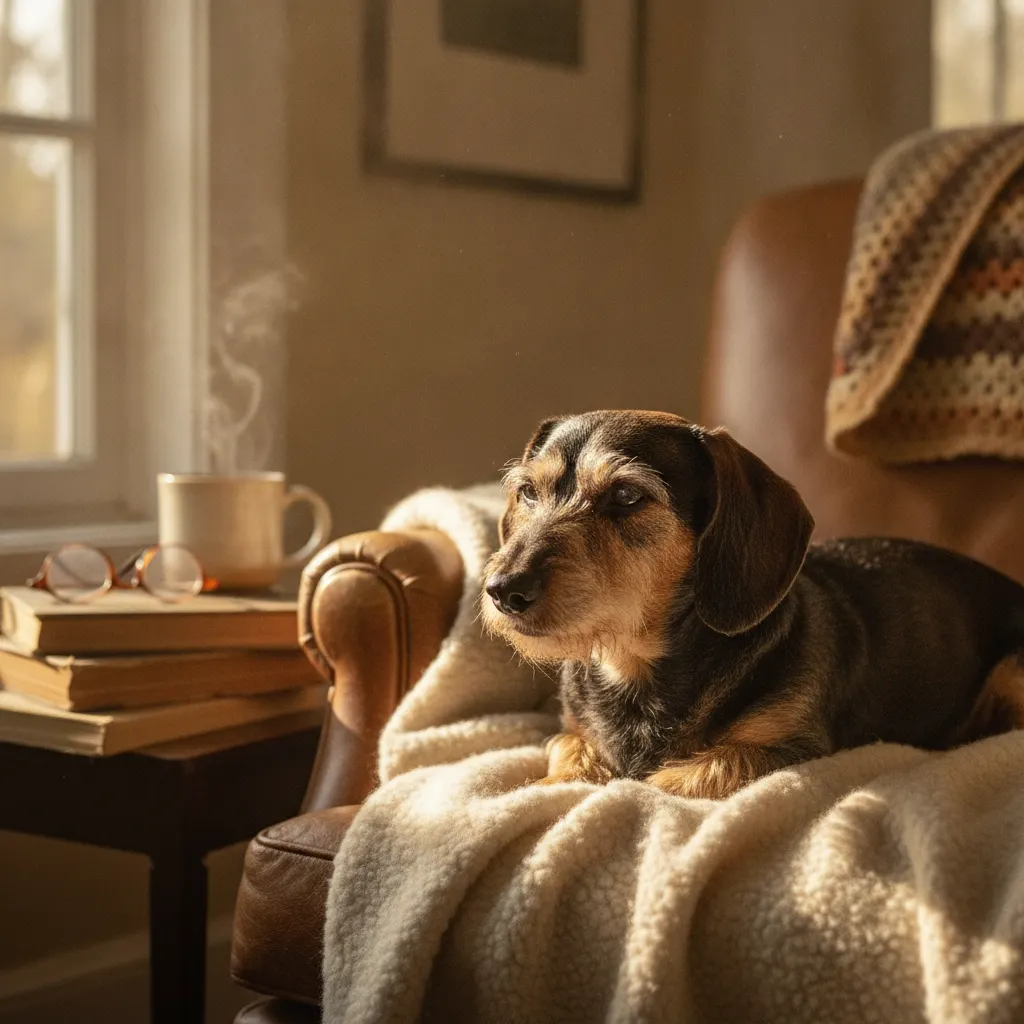
Every dachshund parent I know has a built-in radar for one thing: the back. We watch them like hawks, arranging furniture into elaborate ramp systems and holding our breath every time they get the zoomies. We’ve all heard the horror stories about IVDD, and that vigilance is born from deep love. But here’s something I’ve learned over 20 years with my doxies, Marley and Mia: while we’re all watching their spines, we can sometimes miss the quieter signals they send with their eyes.
And when you first notice something—a little cloudiness, some extra gunk in the corner—what do you do? You turn to Google. Suddenly you’re drowning in a sea of terrifying acronyms like PRA, KCS, and words like “enucleation.” Your heart sinks. You’ve just gone from a calm Tuesday morning to diagnosing your beloved sausage dog with a catastrophic, incurable disease. This is the exact moment of panic that sends good doxie parents into a spiral of anxiety, and it’s not helpful for you or your dog.
The problem with this panicked searching is that it gives you a mountain of information without the one thing you actually need: context. You’re reading a veterinary textbook without knowing the patient. You see a symptom, and Dr. Google presents the worst-case scenario first, because that’s what gets clicks. It fails because it treats every dog, every symptom, and every situation as a five-alarm fire. It can't tell you the difference between a sleepy eye booger and the first sign of glaucoma in your individual dog.
The Real Secret Weapon: Knowing Your Dog's "Normal"
So, let’s reframe this. Your goal isn’t to become an expert ophthalmologist overnight. Your true superpower as a doxie parent is becoming the world’s leading expert on one specific subject: your dog. This is the rule that has saved me more stress and worry than any other: Quirks are consistent; problems are a change.
A little bit of clear discharge your dog has always had after a nap is a quirk. A sudden switch to thick, yellow discharge is a change. That’s your signal. A gradual, slight haziness in the eyes of your 10-year-old doxie is likely a consistent part of aging. A dense, white spot that appears overnight is a change. That’s when you pick up the phone and call your vet. This single mindset shift moves you from a place of fear to a place of empowered observation. You have a job, and it’s one you’re perfectly qualified to do.
What Should I Be Looking For in My Dachshund's Eyes?
To spot a change, you first have to know the baseline. This is why I’m such a huge believer in a quick, weekly check-in. It’s not a stressful examination; it’s just a few minutes of focused attention while you’re cuddling on the couch. Think of it as building a mental library of what’s normal for your doxie. I walk through my whole process in my guide to the 5-Minute Weekly Health Checkup, but let's focus specifically on those expressive doxie eyes.
Clarity vs. Cloudiness: Not All Haze is a Problem
One of the most common sources of panic is seeing a bluish-gray haze appear in a senior dog's eyes. This is often a normal aging process called nuclear sclerosis. It looks like a slight cloudiness deep within the lens, but your dog can typically still see through it quite well. It’s a consistent, gradual change over years.
Cataracts, on the other hand, are different. A cataract is a dense, opaque, often white-ish blockage in the lens that does block vision. It can appear more suddenly or grow rapidly. The key difference? Nuclear sclerosis is like looking through a lightly fogged window; a cataract is like having the shade pulled down. A vet can easily tell the difference, so your job is just to notice the change and make the appointment.
Color, Redness, and the Whites of Their Eyes
Gently pull back your doxie’s eyelid and look at the white part, called the sclera. Is it mostly white? A few little pink blood vessels are normal, especially if they’ve just woken up or been playing hard. What you’re looking for is a change—a persistent, angry redness across the whole sclera, or bloodshot eyes that don’t clear up. This can be a sign of anything from a simple irritation (like dust) to something more serious like glaucoma or inflammation (uveitis). Again, you don’t need to diagnose it. You just need to see the change from their normal, calm-looking eyes and report it.
The Deal with Discharge: Good, Bad, and Gunky
Let's talk about eye boogers. A small amount of clear or slightly crusty, brownish material in the corner of the eye, especially in the morning, is usually just fine. It’s the equivalent of our “sleep” in our eyes. This is a consistent quirk.
The change to watch for is in color and consistency. Discharge that is yellow, green, or looks like pus is almost always a sign of infection that needs a vet’s attention. Another red flag is a sudden increase in the amount of discharge, or a change to a thick, stringy, mucus-like consistency. This can be a sign of Keratoconjunctivitis Sicca (KCS), or Dry Eye, which is very common in dachshunds.
Behavioral Clues: When Their Actions Speak Louder
Sometimes, the first sign of an eye problem isn’t in the eye itself, but in your dachshund’s behavior. They are masters at hiding discomfort, so you have to be a detective. This is where knowing the subtle signs a doxie is in pain becomes so important.
- Bumping into things: Is your dog suddenly bumping into the corner of the coffee table they’ve navigated for years? Are they more hesitant in dim light or at night?
- Reluctance to go down stairs: We often chalk this up to back issues, but it can also be a sign of vision loss and a lack of depth perception.
- Startling easily: If you seem to be “sneaking up” on your dog more often, it might be because they can’t see you approaching from one side.
- Pawing or rubbing the eye: This is a clear sign of irritation, pain, or itching. It could be a simple eyelash, or it could be a scratch on the cornea. Either way, it’s a signal to investigate.
- Squinting or holding one eye closed: This is a universal sign of pain in the animal world. Don't ignore it.
A Calm Look at Common Dachshund Eye Problems
Okay, you’ve mastered the art of observation. Now, let’s briefly touch on some of those acronyms so they feel less intimidating. This isn’t for you to diagnose, but to give you context for a conversation with your vet.
The goal is not to diagnose your dog from a blog post. It's to become such an expert on your dog's 'normal' that you spot a change the instant it happens.
Progressive Retinal Atrophy (PRA)
This is the big one people worry about. PRA is a genetic disease where the cells of the retina gradually deteriorate. The first sign is usually night blindness, which then slowly progresses to full blindness over months or years. The crucial things to know are: it is not painful, and it is very gradual. Dogs are incredibly adaptable and can learn to navigate their world beautifully using their other senses, especially if their environment stays consistent. A reputable breeder will test their breeding dogs for the PRA gene to avoid passing it on.
Glaucoma
This is one of the true eye emergencies. Glaucoma is a rapid increase in pressure inside the eye. It is very painful and can cause blindness quickly if not treated. The signs are usually sudden and dramatic: a bulging or swollen-looking eye, intense redness, a hazy or blue cornea, and obvious signs of pain like lethargy or head pressing. This is a prime example of why “spotting the change” is so critical. A dog that was fine this morning and has a red, bulging eye this afternoon needs to see a vet immediately.
Keratoconjunctivitis Sicca (KCS) or "Dry Eye"
This is a common condition where the eye doesn’t produce enough tears. Without that lubrication, the eye becomes dry, irritated, and prone to infections. The tell-tale sign is that thick, sticky, often yellowish discharge. It might look like a constant eye infection. The good news is that KCS is very manageable with daily eye drops prescribed by your vet.
Corneal Ulcers
A corneal ulcer is just a fancy term for a scratch or wound on the surface of the eye. Because dachshunds are so low to the ground, they can easily get poked by a blade of grass or a branch. The signs are usually squinting, pawing at the eye, redness, and discharge. Your vet can apply a special stain to the eye that makes the ulcer visible and will prescribe antibiotic drops to prevent infection and help it heal.
A Story From Our Pack
I remember one morning Mia’s eye was a little squinty. My heart did that familiar doxie-mom lurch. But because I do my quick check every week, I knew exactly what her 'normal' was. I gently checked for redness or discharge, and there was none. I watched her for an hour, and saw it was just a bit of sleep gunk she couldn't blink away properly. I gently wiped it with a warm, damp cloth, and she was perfectly fine. No vet trip needed.
But if it had been red, or cloudy, or if she was still squinting an hour later? I would have called the vet instantly. The system of knowing her baseline is what keeps me calm, not my non-existent veterinary degree. It allows me to differentiate between a simple quirk and a potential problem.
Knowing how to spot these physical changes is one half of the equation. The other half is understanding the 'why' behind their quirky behaviors that can also signal how they're feeling. When you can decode both their body and their behavior, you become a truly confident doxie parent, able to advocate for them calmly and effectively.
That's why I created the Decoder. It helps you connect the dots between what you see and what it means. Get the free Dachshund Behavior Decoder and learn to speak their language, from tail wags to eye squints.
Frequently Asked Questions
How can I tell the difference between normal aging cloudiness and cataracts?
Normal aging cloudiness (nuclear sclerosis) has a bluish, hazy appearance and your dog can usually still see through it well. Cataracts are typically more dense, white, and opaque, and they directly block vision. Your veterinarian can easily distinguish between the two during an exam.
Is Progressive Retinal Atrophy (PRA) painful for my dachshund?
No, PRA is not a painful condition. It is a gradual deterioration of the retina, similar to a light bulb slowly dimming. While the vision loss is permanent, it happens over a long period, giving your dog plenty of time to adapt to their changing world.
What should I do if I notice a sudden change in my dachshund's eyes?
Any sudden change—like intense redness, a bulging appearance, a cloudy cornea, or your dog constantly squinting—warrants an immediate call to your veterinarian. When it comes to eyes, it is always better to be safe and seek professional advice quickly, as some dachshund eye problems can progress rapidly.
Are long-haired dachshunds more prone to eye problems?
Long-haired dachshunds can sometimes be more susceptible to irritation if their hair isn't trimmed away from their eyes. This hair can trap debris or poke the cornea, potentially leading to scratches or infections. However, the major genetic dachshund eye problems, like PRA, affect all coat varieties.
Can diet help prevent dachshund eye problems?
While a balanced, high-quality diet rich in antioxidants (like those found in blueberries and carrots) supports overall health, including eye health, it cannot prevent genetic conditions like PRA or cataracts. Good nutrition is a cornerstone of wellness but isn't a substitute for regular vet check-ups and genetic awareness.
How often should my dachshund have an eye exam with the vet?
Your dachshund's eyes should be checked by your vet as part of their annual wellness exam. If your dog is a senior or belongs to a lineage with a history of eye issues, your vet might recommend more frequent checks, perhaps every six months, to catch any changes early.
dachshund health · eye problems · progressive retinal atrophy · PRA