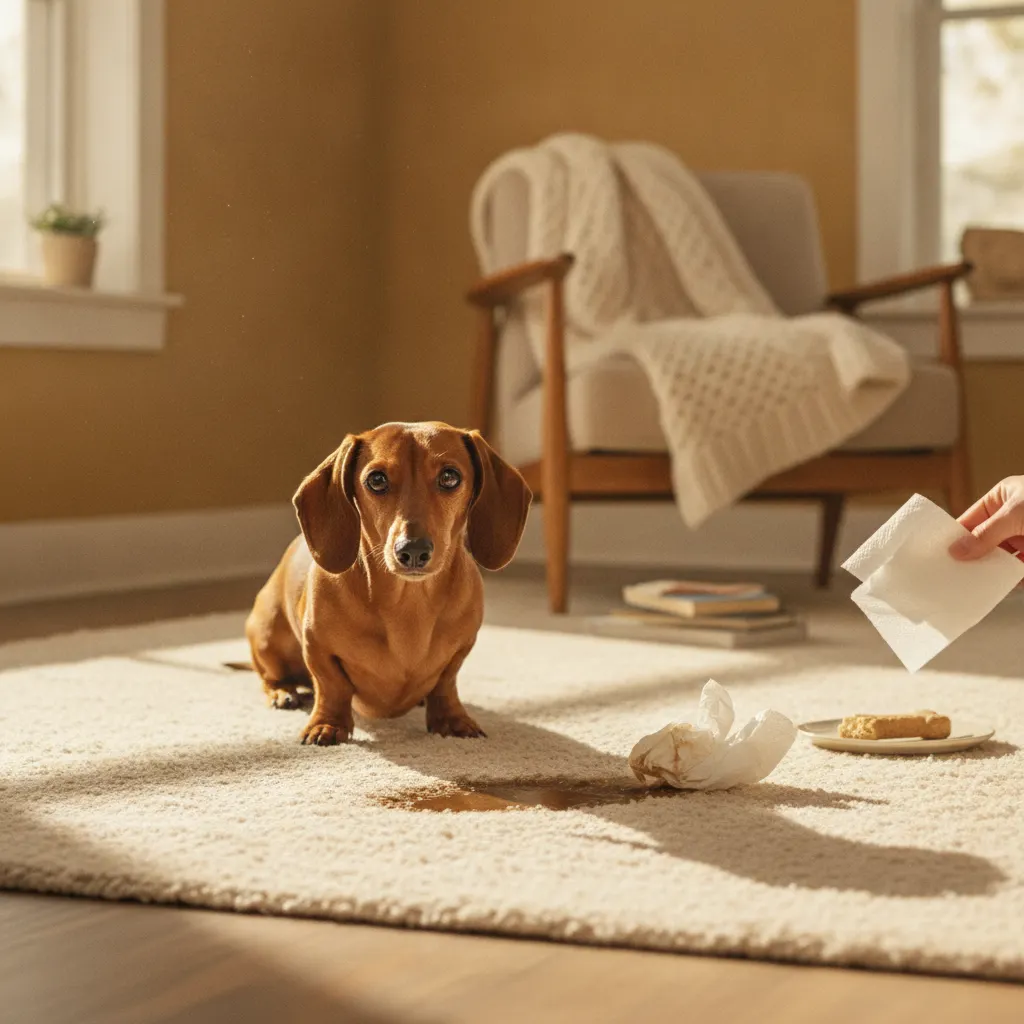
You see the toothbrush in your hand. Your dachshund sees it too. Their eyes narrow. The ears go back just a fraction. You take a step forward, cooing sweet nothings, and that’s when it happens: the full-body C-clamp, the lip curl of doom, the tactical retreat under the coffee table. Welcome to the nightly ritual that feels less like pet care and more like trying to perform amateur dentistry on a tiny, furious alligator.
If this sounds familiar, you are not alone. The struggle of brushing dachshund teeth is real, and it’s layered with a thick coating of guilt. You know you *should* be doing it. You’ve heard from other doxie parents about expensive, stressful dental surgeries. You’ve seen the tartar starting to build up on those back molars. Every time you give up and just toss them a dental chew, a little voice in your head whispers, “You’re failing them.” It’s a terrible feeling, a mix of frustration at your stubborn sausage and disappointment in yourself.
Why Has Everything I've Tried Failed?
You’ve probably tried all the “hacks.” You bought the finger brush, which your doxie immediately treated as a new, interesting chew toy for your finger. You tried the fancy water additives, which they suspiciously sniffed and then refused to drink for two days straight. You’ve attempted the “wrap ‘em in a towel like a burrito” method, which only resulted in a thrashing, growling burrito and a few new scratches on your arms.
Here’s the hard truth: these methods fail because they are all based on the same flawed premise. They treat dental care as a battle of wills, a chore that must be *done to* your dog. We, as loving owners, think, “This is for your own good, so just let me do it!” But to your dachshund, a creature bred for centuries to make its own decisions in a dark badger tunnel, being held down and having a strange object shoved in its mouth is an attack. Their resistance isn't them being “bad”—it’s them being a dachshund. They are communicating their fear, their discomfort, and their profound objection to the entire situation. And when we ignore that communication and just push harder, we’re not building a routine; we’re destroying trust.
The Reframe: It's Not a Battle, It's a Bond
This is where we need to completely change our perspective. Stop thinking about this as a fight you need to win. Your dachshund's mouth is not a battleground. The goal isn't a perfectly scrubbed set of teeth tonight. The real, long-term goal is to transform a moment of conflict into a moment of cooperative care. We have to make them a willing, or at least tolerant, participant in the process.
How? By breaking it down into impossibly small steps and associating every single step with something wonderful. We are going to use their powerful food drive and their love of routine to our advantage. We are going to teach them, over weeks, not minutes, that the toothbrush isn’t a weapon—it’s a magic wand that delivers delicious chicken-flavored paste. This isn’t about speed; it’s about patience. It’s about respecting their boundaries, even when it feels silly to do so. This is the same gentle approach we advocate for in The 'Polite Sausage' Project; we are teaching them what to expect and giving them a reason to cooperate.
The 'Happy Mouth' Method: A Step-by-Step Guide to Brushing Dachshund Teeth
Forget everything you’ve tried before. We’re starting from scratch. This process might take a month or even longer, and that is perfectly okay. A month of patient training is infinitely better than years of nightly wrestling matches. Grab your supplies—a soft-bristled baby toothbrush or a small dog toothbrush, and most importantly, a high-quality enzymatic dog toothpaste in a flavor they’ll love, like poultry or beef. Do NOT use human toothpaste; it’s toxic to dogs.
Phase 1: No Toothbrush Allowed (Building Trust)
For the first one to two weeks, the toothbrush doesn't even exist. Hide it. Put it away. Our only goal here is to make the *idea* of mouth-handling a positive experience.
Step 1: Toothpaste is a Treat.
Seriously. That’s the whole step. Once a day, put a tiny pea-sized dot of the dog toothpaste on your finger and let them lick it off. That’s it. Don’t try to touch their mouth. Don’t do anything else. Just let them enjoy the new, delicious treat. Do this for at least 5-7 days in a row, until they see you with the tube and get excited.
Step 2: The Gentle Gum Touch.
Once they are happily licking the paste from your finger, it’s time for the next micro-step. Put the paste on your finger, and as they lick it, use that same finger to gently and briefly rub the *outside* of their gums on one side. Just for a second. Then pull your hand away and praise them like they just won a Nobel Prize. Repeat this for another 5-7 days, gradually increasing the duration from one second to three. We are teaching them that a hand near their mouth brings a tasty treat.
Phase 2: Introducing the Tool (Creating Positive Association)
Now, and only now, can the toothbrush make an appearance. But it’s not for brushing. Not yet.
Step 3: The Brush is a Glorified Lick-Stick.
Put the same pea-sized amount of toothpaste on the bristles of the toothbrush. Kneel down to their level and simply hold it out for them to lick. Don’t move it. Don’t try to brush. Just let them lick the paste off the bristles. The goal is simple: they see the brush and think “YUM!” instead of “DANGER!” Do this for several days until they approach the brush without hesitation.
Step 4: The One-Second Brush.
This is the moment we’ve been building towards, and we have to get it right. While they are licking the paste off the brush, gently move it in a tiny circular motion on a single, easy-to-reach tooth (like a canine) for *one single second*. Then immediately pull the brush away and give them tons of praise. End the session right there. You must end on a high note, *before* they have a chance to protest. The next day, do it for two seconds. The day after, maybe you brush two teeth. The key is to build duration and scope at a glacial pace. If they ever pull away or resist, you’ve moved too fast. Go back a step for a few days.
Phase 3: Building a Lasting Routine
Once your doxie is tolerating 10-15 seconds of gentle brushing on one side of their mouth, you can move into the final phase: making this a normal, boring part of your day.
Step 5: Mapping the Mouth.
Don't try to be a hero and brush their entire mouth in one session. It's too much for them. Instead, break it up. Monday, do the outside of the upper left teeth. Tuesday, the outside of the upper right. Wednesday, the lower left. Focus your efforts on the outside surfaces of the back molars and canines, as this is where the most tartar accumulates. The inside surfaces are partially cleaned by their tongue. A 30-45 second session focused on one quadrant is far more effective than a two-minute battle where you accomplish nothing.
Step 6: Cementing the Habit.
Tie the tooth-brushing routine to something else they do every day. Maybe it’s right after their evening walk or just before their final bedtime potty break. Dogs thrive on predictability. When it becomes “the thing we do after our walk,” it loses its scary, random nature and just becomes part of the wallpaper of their life.
Remember the golden rule of dachshund care: quirks are consistent; problems are a change. A lifelong habit of good dental hygiene is one of the best ways to prevent sudden, painful, and expensive dental emergencies down the road. But if you ever notice a sudden change—bad breath that appears overnight, reluctance to eat, or facial swelling—that’s your cue. That’s when to call the vet, no matter how good your brushing routine is. This guide is for prevention, not diagnosis. Your vet is always the final authority on your dog’s health.
I learned this the hard way with my first doxie, Marley. I tried the force-it-on-him approach, and he developed such a fear of the toothbrush that it took me months to undo the damage. With Mia, my second, we started this 'Happy Mouth' method from the day she came home. Does she love getting her teeth brushed? Of course not. She’s a dachshund. But she tolerates it. She stands there, lets me do a quick 45-second brush of one section of her mouth, gets her praise, and we move on. It’s not a battle. It’s just... Tuesday.
This patient, trust-based approach is about more than just teeth. It's about understanding the unique wiring of a dachshund's brain. They aren't trying to be difficult; they are trying to communicate. Learning to listen to that communication, even in the middle of a frustrating moment, is the key to being a truly confident doxie parent.
Understanding *why* they do what they do—from barking at the mail carrier to growling when you move them on the couch—changes everything. It turns frustration into empathy. If you want to learn the 'why' behind all their other quirky behaviors, so you can build that same trust in every part of your life together, the next step is simple. I’ve put everything I’ve learned from nearly 20 years with this breed into a single guide. You can get it for free: Get the free Dachshund Behavior Decoder.
Frequently Asked Questions
How often should I brush my dachshund's teeth?
Daily brushing is the gold standard for preventing plaque and tartar buildup. However, life happens. If you can commit to brushing your dachshund's teeth thoroughly 3-4 times per week, you are still doing a fantastic job and providing significant dental health benefits.
What if my dachshund still hates it after all this?
If you've patiently followed the steps for several weeks and your doxie still puts up a huge fight, it's okay to adjust your goals. A 30-second swipe on the most important teeth (back molars) is infinitely better than nothing. Also, talk to your vet. They can recommend other products like dental gels, prescription diets, or determine if a professional cleaning under anesthesia is the best path forward.
Are dental chews or water additives enough on their own?
Think of dental chews and water additives like mouthwash for humans. They can help reduce bacteria and freshen breath, but they are not a substitute for the mechanical action of brushing. Brushing is what physically removes the sticky plaque before it can harden into tartar. These products are best used as a supplement to a brushing routine, not a replacement for it.
What's the best kind of toothpaste to use for a dachshund?
Always, always use an enzymatic toothpaste specifically formulated for dogs. Human toothpaste contains ingredients like fluoride and xylitol, which are toxic to dogs. Finding a flavor your dachshund loves (like poultry, beef, or vanilla-mint) is a key part of making the experience positive for them.
My dachshund's teeth already have a lot of tartar. Will brushing remove it?
Brushing is excellent for preventing *new* tartar from forming, but it cannot remove existing, hardened calculus. Once plaque has mineralized into that hard, brown tartar, it needs to be removed by a veterinarian with special tools during a professional dental cleaning. After a cleaning, your home brushing routine will be crucial for keeping their teeth clean.
When is the best time to start brushing my dachshund puppy's teeth?
The sooner, the better! You can start the process of handling your puppy's mouth and introducing them to toothpaste as a treat from the day you bring them home. Starting early normalizes the experience and makes brushing dachshund teeth a simple, accepted part of their lifelong routine rather than a scary new thing you introduce later.
dachshund health · dental care · dog training · preventative care