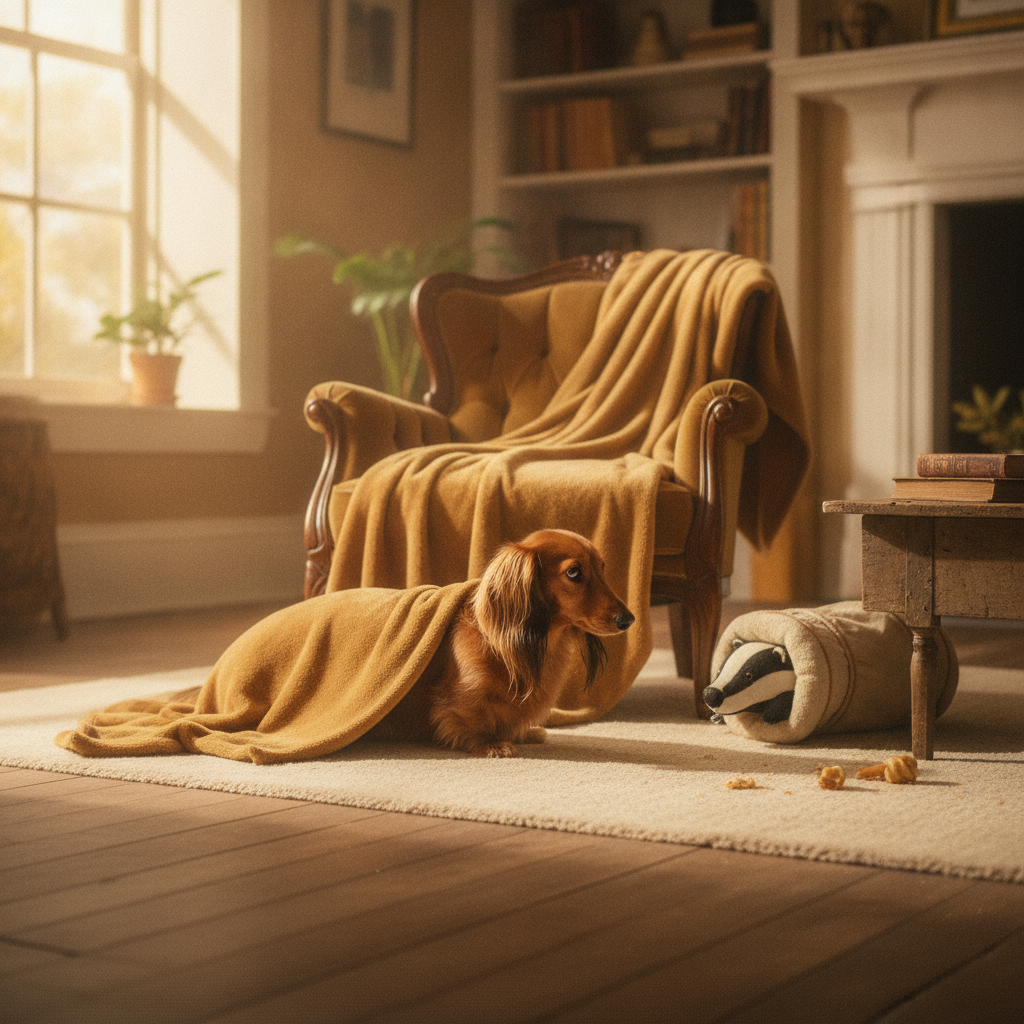
You're watching TV, and you see it out of the corner of your eye. Your dachshund, after five minutes of intense, strategic digging, has finally vanished into a pile of couch cushions, leaving only a single, twitching ear visible. A moment of panic flashes through your mind, followed by a question that thousands of doxie parents whisper to their sleeping sausages every day: is my dachshund normal?
I get it. I’ve been there. Whether it’s the ear-splitting bark that erupts when a leaf falls three blocks away, or the way they stare into your soul as if trying to download your thoughts, living with a dachshund is a masterclass in embracing the wonderfully weird. You start to worry. You Google things at 2 a.m. like “why does my dog sleep like a dead bug?” and “is it normal for a dog to make old man noises?” You see other people with their calm, obedient Golden Retrievers and wonder where you went wrong.
Here’s the thing: you haven’t gone wrong. And trying to apply generic dog training advice to a dachshund is like trying to use a toaster to dry your hair. It’s the wrong tool for a very, very special machine. You can’t “correct” a behavior that was meticulously engineered into their DNA for over 600 years.
The Reframe: Your Doxie Isn't Broken, They're a Specialist
The single most important shift you can make as a doxie parent is this: stop thinking of these quirks as behavioral “problems” and start seeing them as features. Your dachshund isn't being bad—they are being a dachshund. Every odd, frustrating, and hilarious thing they do is a little echo of their original job: to be a brave, independent, and relentless badger hunter.
They were bred to think for themselves in a dark tunnel, far from human direction. They were bred to be loud to signal their location underground. They were bred to be stubborn because giving up meant a badger won. Once you understand the “why” behind the “what,” everything changes. You stop asking, “How do I fix my dog?” and start saying, “Oh, that’s just my little badger hunter.” This simple reframe turns frustration into a deep, appreciative bond. As I always say, your dachshund isn't stubborn, he's a badger hunter, and that explains almost everything.
So, let's decode some of the most common behaviors that make new owners ask, “Is my dachshund normal?” The answer, you'll find, is a resounding yes.
1. The Compulsive Burrower
You leave a pile of clean laundry on the bed for two seconds, and it begins to move. A little snout pokes out, followed by a triumphant yawn. Your dachshund has made a nest. They do it in couch cushions, under the covers of your bed, and inside your favorite sweater. To them, a flat surface is a personal failure. Everything must become a den.
The Why: This isn't just a cute quirk; it's a deeply ingrained survival instinct. Dachshunds were bred to “go to ground,” chasing prey into underground burrows. These tunnels were dark, tight, and safe. Recreating that environment by burrowing into blankets provides them with an immense sense of security, warmth, and comfort. It’s their safe space, their man cave, their she-shed. It's where they go to feel protected from the big, scary world (and the vacuum cleaner).
How to Live With It: Embrace it! Instead of fighting it, facilitate it. Have plenty of soft blankets and beds around the house specifically for this purpose. A designated “digging blanket” can save your expensive duvet. My Mia has a basket of what we call her “nesting materials,” and she will meticulously pull each one out to build the perfect fort every evening.
2. The One-Dog Neighborhood Watch (and Their Mighty Bark)
The doorbell rings, and a sound erupts from your fifteen-pound dog that seems to violate the laws of physics. It’s a deep, booming, resonant bark that says, “There is a 100-pound hound on duty here, and you should reconsider your life choices.” They bark at delivery drivers, squirrels, the wind, and ghosts only they can see.
The Why: That surprisingly deep bark is a feature, not a bug. When a dachshund was underground in a badger sett, the hunter up top needed to know where they were. A high-pitched yip wouldn’t carry. They were bred to have a big-dog bark to signal their location and to intimidate their formidable prey. They aren’t just barking; they are sounding the alarm, doing the job they were born to do. It’s their way of protecting the pack (that’s you!). Sometimes, this escalates into the infamous dachshund scream, which is a whole other level of communication.
How to Live With It: Acknowledge the alert. Instead of yelling “stop barking,” I’ve found it more effective to go to the window, look out, and say calmly, “Thank you, Marley, I see it. All clear.” You’re acknowledging their signal and telling them the threat has been assessed. It doesn't stop it completely, but it validates their job and can shorten the duration of the alarm.
3. The Art of “Selective Hearing”
You call their name. Nothing. You say the “come” command you’ve practiced a hundred times. They look at you, make direct eye contact, and then deliberately turn and walk in the opposite direction. It’s not that they don’t hear you; it’s that they are weighing your suggestion and have decided their own plan is better.
The Why: This is the trait people mislabel as “stubbornness.” It’s actually radical independence. Underground, a dachshund couldn't wait for instructions. They had to make life-or-death decisions on their own. Do I turn left or right in this tunnel? Do I press the attack or back away? That ability to assess a situation and make an independent choice was critical for their survival. When you give a command, they aren't just obeying; they're running it through their own complex risk-reward analysis. This is why so many owners wonder, are dachshunds actually hard to train, or just smarter than us?
How to Live With It: Make it worth their while. You have to convince them that your idea is better than theirs. This means high-value treats, lots of praise, and making training feel like a fun game, not a chore. Their cooperation must be earned, never assumed.
4. The Velcro Dog (Especially in the Bathroom)
You can’t walk from one room to another without a long shadow trailing your every step. They lie on your feet while you cook, sit outside the shower, and insist on supervising all bathroom activities. Personal space is a concept they simply do not recognize.
The Why: Despite their independent minds, dachshunds are fiercely loyal pack animals. You are the center of their universe, their pack leader. Their instinct is to keep the pack together. In their mind, a separated pack is a vulnerable pack. By following you, they are ensuring the safety and cohesion of the family unit. It’s not neediness; it’s a deep-seated sense of duty and love.
How to Live With It: Honestly? Just enjoy it. This is the flip side of their stubborn coin. The same dog that will ignore your command to “come” will also press themselves against you when you’re sad, offering silent, unwavering companionship. If you need a few minutes of space, a puzzle toy or a long-lasting chew can be a great way to occupy their busy minds.
5. The Master Food Thief
You turn your back for a nanosecond, and the sandwich on your coffee table has vanished. There are no crumbs, no evidence, just a very satisfied-looking dachshund licking its chops in the corner. They are silent, swift, and ruthlessly efficient opportunists.
The Why: This comes from a combination of their intelligence, their powerful nose, and a hunter’s opportunism. They were bred to follow a scent relentlessly and be rewarded at the end of it. Your pizza is just a much more delicious badger. Their long body and short legs make them the perfect height for coffee table reconnaissance. They aren't being “bad”; they are simply acting on a powerful, scent-driven impulse that says, “Find the delicious thing and consume it.”
How to Live With It: Management is key. Doxies teach you to be a tidier human. Never leave food unattended on low surfaces. This isn’t just about protecting your lunch; it’s about protecting them from eating something harmful. A clean kitchen is a safe kitchen for a sausage dog.
6. The Solar-Powered Sausage
On a sunny day, you can always find your dachshund. They will be located in the one, single patch of sunlight streaming through a window, even if it’s only the size of a dinner plate. They will lie there, belly up, roasting themselves until they are hot to the touch, in a state of pure bliss.
The Why: Their long bodies have a large surface area, and their short, single coats (especially on smooth-haired doxies) aren't the best insulators. They get cold easily. Seeking out warmth is a basic, creature-comfort instinct. That patch of sun is like a free, perfectly-calibrated heating pad. They are simply recharging their internal batteries.
How to Live With It: Let them enjoy it! But be mindful on hot days that they don't overheat. In the winter, they will appreciate a soft sweater or a cozy bed near a (safely-operating) heat source. It’s all part of keeping your little hot dog at the perfect temperature.
7. The Language of Grunts, Groans, and Sighs
Dachshunds are not quiet dogs, even when they aren't barking. They have a whole vocabulary of dramatic sighs, grumpy groans, annoyed grunts, and happy chuffs. When you ask them to move from a comfy spot, you might be met with a groan worthy of a Shakespearean tragedy.
The Why: This is pure personality. These dogs are incredibly expressive. They wear their hearts on their short little sleeves. Their vocalizations are not just random noises; they are direct communications about their state of being. A deep sigh can mean contentment, while a grumpy groan is a clear expression of displeasure. They are telling you exactly how they feel about the current situation.
How to Live With It: Listen and laugh. It’s one of the most endearing things about them. You aren't just living with a dog; you're living with a tiny, opinionated roommate who is never shy about sharing their feelings. It’s part of the joy and comedy of being a doxie parent.
A Critical Note on Health: Quirks are consistent; problems are a change. A behavior your doxie has always had is almost never an emergency. A sudden shift is the signal to pay attention. If your burrowing dog suddenly stops wanting to be under blankets, or your food-motivated dog loses their appetite, that’s when it’s time to call the vet. You know your dog best. When in doubt, trust your gut and consult the professional who knows your individual dog.
Living with a dachshund means you'll never be bored. You'll be frustrated, amused, and endlessly adored. By understanding that their weirdest habits are actually relics of their proud heritage, you can build a stronger, more joyful life together. You’ll learn to see the hunter in their eyes, the loyalty in their shadow, and the hilarious, opinionated soul in their every groan.
If you loved decoding these quirks and want to become fluent in the language of your doxie, the next step is to understand the “why” behind all their unique behaviors. To help you do that and become a more confident doxie parent, I’ve put all my knowledge into a simple guide. Get the free Dachshund Behavior Decoder.
Frequently Asked Questions
Why is my dachshund so stubborn?
What we see as stubbornness is actually a bred-in trait for independent thinking. Dachshunds were developed to make decisions on their own while hunting underground, far from their human companions. When they seem to be ignoring you, they're often just weighing your request against their own assessment of the situation.
Is it normal for my dachshund to bark so much?
Yes, it's very normal. Dachshunds were bred to have a loud, deep bark to help hunters locate them when they were underground in a burrow. They are natural watchdogs and will alert you to everything they deem noteworthy, from a delivery person to a falling leaf.
Should I be worried if my dachshund sleeps on its back with its legs in the air?
No, you shouldn't be worried at all! This is a sign of a very comfortable, secure, and happy dog. Sleeping in this vulnerable position means they feel completely safe in their environment. So if you're asking 'is my dachshund normal' for sleeping like a tiny contortionist, the answer is yes, a very happy and normal one.
My dachshund suddenly stopped burrowing in blankets. Is this a bad sign?
This is a great example of when to pay attention. A sudden change in a long-standing behavior can be a signal that something is wrong. It could indicate pain or discomfort (like back pain) that makes the act of burrowing difficult. It's definitely worth a call to your vet to get it checked out.
Are these behaviors different between mini and standard dachshunds?
For the most part, the core behavioral instincts are the same across all sizes, from kaninchen to standard. The 'software'—their hunting heritage—is identical. You might see some slight variations in energy levels, but the burrowing, barking, and independent spirit are classic dachshund traits, regardless of size.
How can I tell if my dachshund's odd behavior is a sign of pain?
The key is a change from their baseline. If you wonder, 'is my dachshund normal,' compare their current actions to their usual self. Signs of pain can include a sudden reluctance to jump or use stairs, yelping when touched, a change in posture, loss of appetite, or becoming uncharacteristically withdrawn or aggressive. Any sudden, unexplained behavioral shift warrants a conversation with your veterinarian.
dachshund behavior · dachshund quirks · dog training · breed traits