You see the flyer online. Hundreds of dachshunds in one place. A sea of waddling sausages, a symphony of happy yaps. It’s a Wienerfest, a Doxie Derby, a local dachshund meetup. Your heart leaps. This is it. This is the moment you’ve dreamed of since you brought your little long dog home. It’s going to be heaven on earth.
And then, a tiny knot of dread forms in your stomach. You look at your own perfect sausage, currently snoozing upside down on the couch, paws twitching. He loves you. He loves his squeaky toys. He tolerates the mail carrier. But a hundred strange doxies at once? Suddenly, that beautiful dream looks a little... chaotic. What if he hates it? What if he gets scared? What if your sweet, social sausage turns into a grumpy, barking pickle in front of the entire local doxie community?
If you’re feeling this mix of excitement and anxiety, you are not alone. So many of us have been there. We see these massive, joyful events and assume our dog should just dive in and have the time of their life. We pack the water bowl, grab the leash, and just... show up. Then we’re shocked when our doxie spends the whole time hiding behind our legs, or worse, gets into a snippy argument with another wiener dog over a stray crumb.
We think we failed. We think our dog is “broken” or “anti-social.” But what we’ve tried hasn’t worked because our premise is wrong. We’re treating our dachshunds like they’re Golden Retrievers who just happen to be shaped like baguettes. And that’s the mistake that leads to a stressful day for everyone.
The Big Reframe: Your Doxie Isn't Anti-Social, They're a Specialist
Here’s the secret that will change how you view these events forever: Your dachshund wasn’t bred to be a party animal. They were bred to be a solo artist. For 600 years, their job was to think for themselves, make bold decisions, and bravely face down a furious badger in a dark tunnel, alone. They are independent contractors, not committee members. As I always say, your dachshund isn't stubborn, he's a badger hunter.
A giant field full of other dogs—even their own kind—can be an overwhelming sensory explosion for a creature wired for focus. It’s loud, it’s chaotic, and there are strange smells everywhere. It’s not that they don’t like other dogs; it’s that their brain is trying to process a thousand different inputs at once. The goal of your first Wienerfest isn't to force your doxie to make 50 new best friends. The goal is to be their calm, confident guide, helping them navigate a wild new environment so they can actually enjoy it on their own terms.
Think of yourself less as a parent dropping their kid at a party and more as a secret service agent protecting a very important, very short dignitary. Your job is to run interference, manage the environment, and ensure your VIP has a positive experience. Once you make that mental shift, everything else falls into place.
Your Wienerfest Survival Framework: From Chaos to Calm
Over my nearly two decades with dachshunds, I’ve taken my own dogs, Marley and Mia, to more of these events than I can count. I’ve made all the mistakes so you don’t have to. Here is the step-by-step framework I use to ensure a great day for both my doxies and me.
Phase 1: The Pre-Game Prep
A successful day starts long before you get in the car. This is where you set the stage for success.
- Know Thy Doxie: Be brutally honest with yourself. Is your doxie a social butterfly who has never met a stranger, or are they more of a reserved observer? My Marley would happily greet every single dog, while Mia prefers to watch from a slight distance first. Neither is wrong, but knowing their baseline personality helps you set realistic expectations. Don't expect your shy dog to suddenly become the life of the party.
- Gear Up for Safety: This is non-negotiable. Use a well-fitting harness, never just a collar. A sudden lunge or a tangle with another dog can put dangerous pressure on their neck and spine. A standard 6-foot leash is your best friend—NEVER a retractable one. You need to have absolute control in a crowd. Pack a portable water bowl, poop bags, and some extra-special, high-value treats that they only get on adventures.
- Practice in Miniature: Don’t make a 200-dog festival their first-ever social outing. Start small. Arrange a one-on-one playdate with a friend’s calm, well-behaved dog. Visit a smaller, less-crowded dog park during off-peak hours. Let them get used to the idea of co-existing with other dogs in a controlled setting.
Phase 2: The Arrival and Entry Strategy
How you walk into the event is just as important as what you do inside. Don’t just fling them into the fray.
- The Perimeter Walk: Park a little bit away from the main entrance. Let your doxie out and take a calm walk around the edge of the event first. This allows them to decompress from the car ride and to observe the sights, sounds, and smells from a safe distance. They can gather information and process what’s happening without being right in the middle of it.
- Find Your Home Base: Before you dive in, scan the area and find a slightly quieter spot to be your anchor. Maybe it’s under a tree or near the edge of the field. This is your safe zone. You can return here anytime your dog (or you!) needs a break from the stimulation.
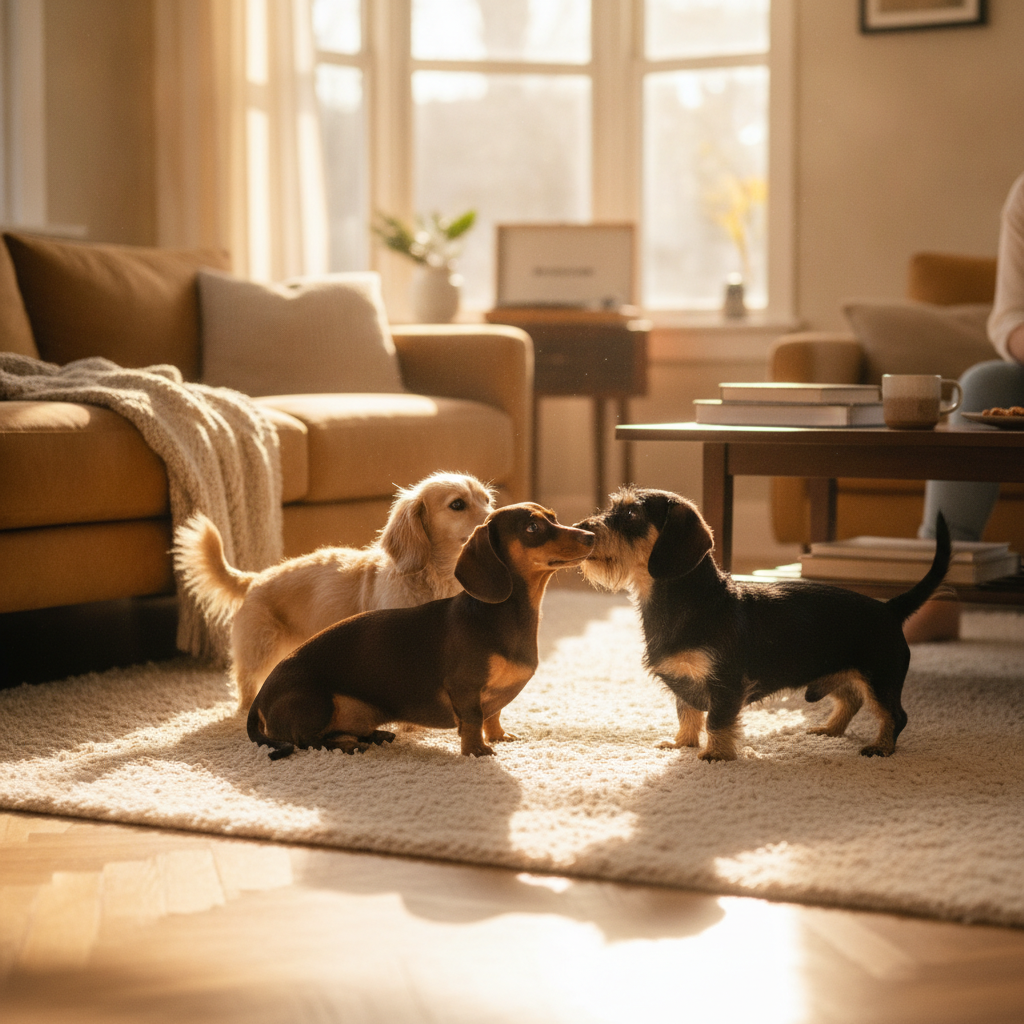
- Master the Three-Second Sniff: When you do start mingling, keep initial greetings short and sweet. The canine equivalent of a polite handshake is a quick, three-second sniff of the other dog's rear end. Avoid tense, face-to-face greetings, which can feel confrontational. Let them sniff, and then cheerfully say, “Okay, let’s go!” and walk away. Keeping it moving prevents tension from building.
Phase 3: Navigating the Doxie Crowd
You’re in. Now your job as their trusted agent begins. This is all about reading their cues and being their advocate.
- Become a Body Language Expert: Your dachshund is constantly talking to you, just not in English. Learn to spot the subtle signs of stress: yawning when they’re not tired, licking their lips, a stiff body, a tucked tail, or “whale eye” (when you can see the whites of their eyes). These are whispers that say, “I’m getting overwhelmed.” Our guide on the social sausage explains these signals in more detail.
- It's Okay to Say No: You will encounter owners who let their dogs rush up to yours. It is 100% okay for you to step between the dogs, put a hand out, and say with a smile, “Sorry, he’s a little overwhelmed, we need some space!” You are your dog’s only protector. Don’t worry about offending someone else; worry about your dog’s comfort.
- Enforce Mandatory Breaks: Don't wait for your dog to show stress signals. Be proactive. After ten or fifteen minutes of mingling, retreat to your home base for a water break and some quiet time. Let their little nervous systems reset. A few minutes of calm can make all the difference.
Phase 4: The Graceful Exit
This might be the most important and most-ignored step. Knowing when to call it a day is a superpower.
- Leave on a High Note: The goal is to end the experience while your dog is still having fun, not after they’ve had a meltdown. It’s like leaving a great party at midnight instead of 4 a.m. You want their final memory of the day to be a positive one. I aim to leave after about 45 minutes to an hour for a first-timer. It's far better to have a fantastic 45 minutes than a stressful two hours.
- The Post-Party Comedown: When you get home, they will likely be exhausted. All that social interaction and sensory input is tiring! Give them a quiet, cozy space to nap and recharge. They’ve earned it.
I learned this lesson the hard way with Marley. At his first big dachshund meetup, I just let him run wild. He seemed fine, but when we got home, he was so overstimulated and cranky for the rest of the day. With Mia, who is naturally more cautious, I used this exact framework. We did the perimeter walk, took lots of breaks at our “home base” under a shady oak, and left after an hour. She was happy, confident, and trotted out with her tail held high. She had a great time because she knew I was looking out for her.
Going to a Wienerfest isn't a test of how “good” your dog is. It’s a chance for you to deepen your bond by showing them that you understand their needs and will always keep them safe. You are their trusted leader, their calm anchor in a sea of sausages. And when they look up at you with those trusting brown eyes, you’ll know you got it right.
Understanding your doxie’s unique way of communicating is the key to being a more confident dachshund parent, both at a crowded event and in your own living room. It's about learning the 'why' behind their quirky behaviors. If you want to become fluent in their language, we can help. Get the free Dachshund Behavior Decoder and start understanding what your sausage is really telling you.
Frequently Asked Questions
What should I bring to a dachshund meetup?
The essentials are a secure harness and a standard 6-foot leash (no retractable leashes!), a portable water bowl and fresh water, poop bags, and some high-value treats. It's also wise to bring a small blanket to designate a “home base” for you and your doxie to relax.
How long should we stay at our first Wienerfest?
It's always better to leave on a high note. For a first-time experience, aim for 45 minutes to an hour. This is long enough for them to experience the event without becoming completely overstimulated or exhausted. Watch your dog, not the clock—if they show signs of stress earlier, it's time to go.
What if my dachshund doesn't seem to like other dachshunds?
That's perfectly normal! Dachshunds were bred for independence, not pack life. Some simply prefer the company of their humans. Don't force interactions. The goal of a dachshund meetup can simply be to co-exist peacefully in the same space, enjoying the atmosphere from a comfortable distance.
Are dachshund meetups safe for their long backs?
They can be, if you are vigilant. The main risks are overly rough play or jumping. Keep your doxie away from large, boisterous dogs and discourage them from jumping on or off obstacles. Using a harness instead of a collar helps distribute pressure more safely if you need to quickly move them.
How can I find a dachshund meetup near me?
Social media is your best friend here. Search on Facebook for groups like "[Your City] Dachshund Club" or "[Your State] Wiener Dog Owners." Local breed-specific rescue organizations also frequently host or promote these types of events as fundraisers.
My dachshund is a little reactive. Should we still go to a big event?
If your dog is truly reactive (barks, lunges, and is highly stressed by other dogs), a large, chaotic event is probably not the right environment for them. It could make their anxiety worse. It's better to work with a professional trainer on their reactivity in a controlled setting first, before attempting a busy dachshund meetup.
dachshund behavior · dog socialization · wienerfest · dachshund events