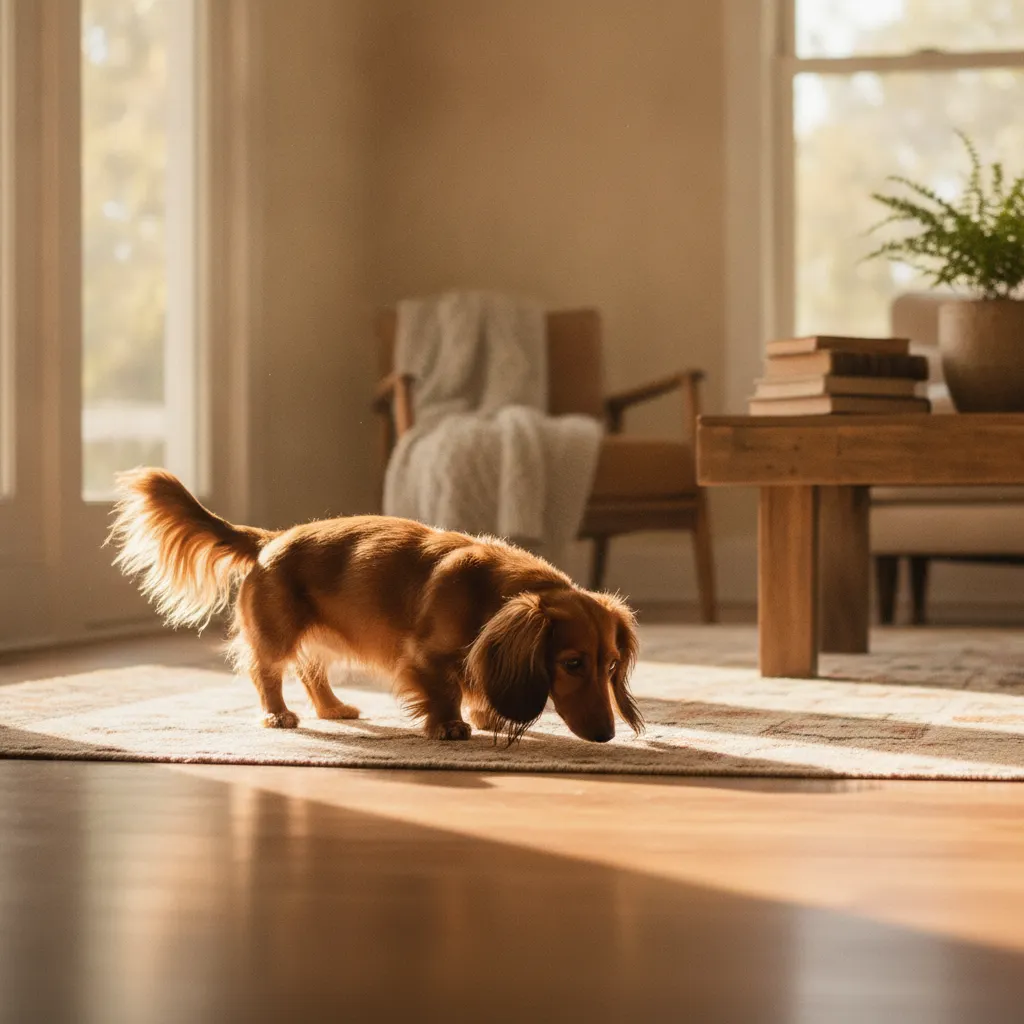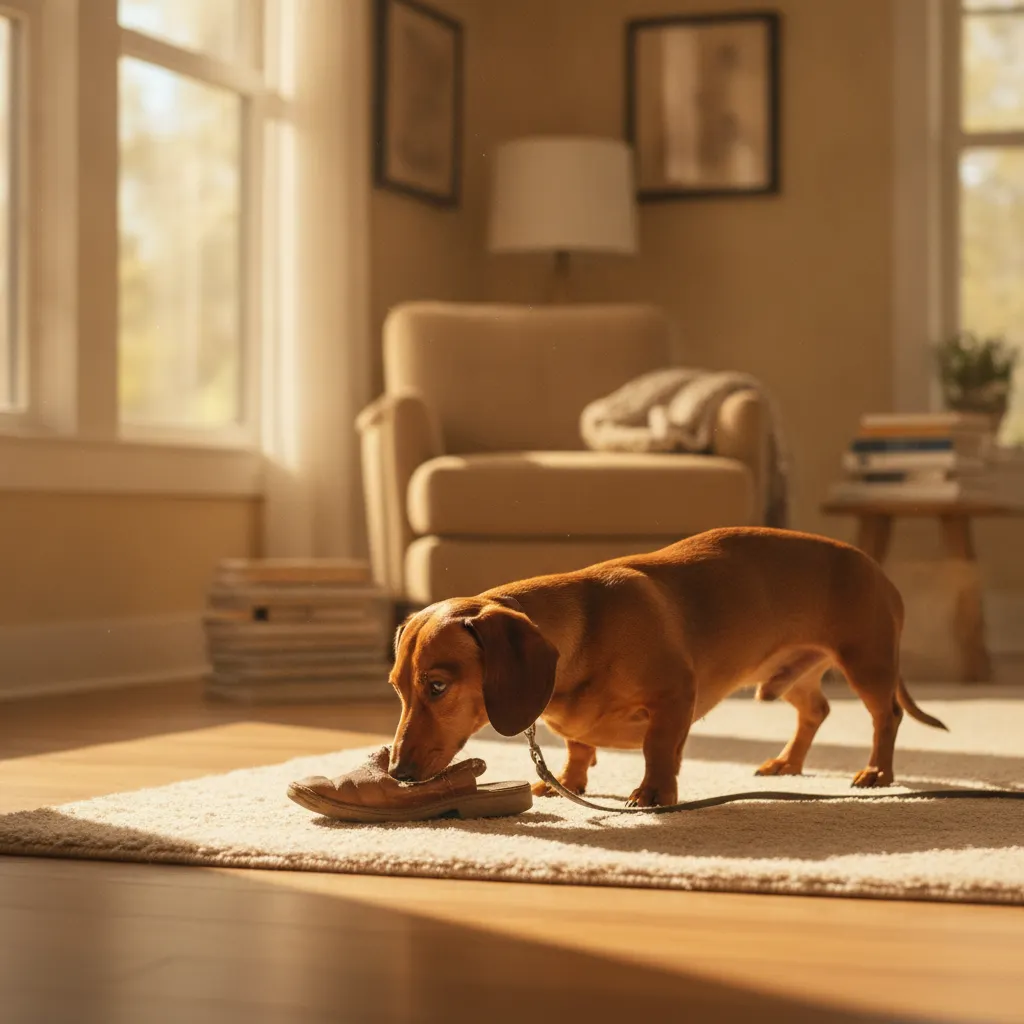
The harness is on. The leash is clipped. You open the front door with visions of a brisk, happy stroll around the block. Your dachshund trots out, tail wagging… for exactly twelve feet. Then, the brakes engage. The four little paws plant themselves like the roots of an ancient oak tree. The nose goes down. And you are now the stationary human anchor for a tiny, furry submarine scanning the depths of a single, fascinating patch of grass.
If this sounds familiar, you’re not alone. You’re just a dachshund parent. This is one of the most common and frustrating dachshund walking problems there is. It feels like a battle of wills, a silent, stubborn standoff on the sidewalk that leaves you feeling annoyed, embarrassed, and wondering if you’re the only one whose dog thinks a “walk” is a stationary activity.
Why Won't My Dachshund Just Walk Nicely?
You’ve probably tried everything. The gentle tug on the leash that quickly escalates into a full-on, feel-bad-about-it drag. The high-pitched, encouraging “Come on, let’s go!” that gets you strange looks from neighbors. You’ve tried bribing them with treats, only to create a monster who now refuses to move a single inch unless a snack is visibly presented. Maybe you’ve even given in, scooping up your little sausage and carrying them home in defeat, their smug little face peeking over your shoulder.
Here’s the hard truth: none of these things work because they are all based on a fundamental misunderstanding of what a walk is to a dachshund. We think the point of the walk is exercise, a potty break, getting from Point A to Point B. We see the sniffing and stopping as an interruption. But for your dachshund, the sniffing and stopping *is the entire point*.
You aren’t on a walk. You are on what I call a “Sniffari.”
Your dachshund isn't being stubborn; they are being a dachshund. Their nose is their newspaper, their internet, their social media feed all rolled into one. When they stop to sniff a fire hydrant for five minutes straight, they aren’t trying to annoy you. They are reading a detailed report on which dogs have been there, their gender, their mood, and what they had for breakfast yesterday.
They were bred for centuries to follow their nose into dark tunnels to hunt badgers. That world-class sense of smell is not a bug; it's the primary feature of their operating system. Expecting a dachshund not to sniff on a walk is like asking us not to look at our phones. It’s where all the interesting information is! The problem isn’t your dog’s behavior. The problem is our expectation.
The Reframe: From Frustrating Stroll to Fulfilling Sniffari
The moment you stop seeing the walk as a human-led mission and start seeing it as a dog-led sensory experience, everything changes. The frustration melts away because you’re no longer failing at your goal; you are succeeding at theirs. Their goal is mental stimulation, and that comes through their nose. A 20-minute Sniffari where they get to sniff to their heart's content is often more tiring and fulfilling for a doxie than a 40-minute forced march.
This is the secret. You don't need to fix your dog. You need to change the walk. And the best way to do that is to create a system that meets both of your needs.
Your Guide to Solving Dachshund Walking Problems for Good
Okay, so we’ve accepted that our doxies are nose-driven information sponges. How do we translate that into a pleasant walk for everyone? It’s about creating structure and communicating clearly with your dog. Here is the framework my family uses with Marley and Mia, and it has turned our walks from a source of stress into one of our favorite parts of the day.
Step 1: Designate Your Walks
Not all walks are created equal. The most powerful thing you can do is to create different *types* of walks and signal to your dog which one you’re on. This manages their expectations and gives you both what you need.
- The Sniffari (The Fun Walk): This is the default walk. This is your dog’s time. For this walk, you’ll use a longer leash (8-15 feet is great, but not a retractable one which can be dangerous). Your only job on this walk is to keep them safe while they lead the way. Let them sniff that bush for ten minutes. Let them double back to re-read a particularly juicy patch of pee-mail. Your pace is their pace. I often take a coffee or listen to a podcast on these walks. It’s a form of mindfulness for me and a sensory jackpot for them.
- The Potty Walk (The Business Walk): This is a short, focused trip with a clear mission: elimination. Use a standard 6-foot leash. Keep a steady pace, and use a specific cue like “go potty.” This walk happens first thing in the morning and last thing at night. It’s all business, no sniffing detours. They quickly learn the difference.
- The Training Walk (The Focused Walk): This is when you work on skills, like loose-leash walking or ignoring distractions. These should be very short—5-10 minutes at most—and full of positive reinforcement like treats and praise. The goal here is engagement with *you*, not the environment.
By having different types of walks, your dog learns what to expect. They know that on the Sniffari, they have freedom, so they are less likely to fight for it on the short Potty Walk.
Step 2: Check Your Gear
The right equipment can make a world of difference, especially for a dachshund’s unique body. Protecting that long little back is always priority number one.
- Harness, Not Collar: Please, please walk your dachshund on a harness. Pulling on a collar puts immense pressure on their delicate neck and trachea, and can contribute to spinal issues. A well-fitting, Y-shaped harness that doesn't restrict shoulder movement is ideal. It distributes pressure safely across their chest.
- The Right Leash: As mentioned, a longer leash (a 10-foot biothane or nylon leash is perfect) is a game-changer for Sniffaris. It gives them the freedom to explore without you having to stop and start every two seconds. For Potty and Training walks, a standard 6-foot leash gives you more control.
Step 3: Become a Dachshund Detective
Sometimes, the planting of the paws isn't about sniffing. It's a communication. It’s your job to figure out what they’re saying. Before you get frustrated, ask yourself:
- Are they scared? A loud truck, a barking dog behind a fence, a flapping plastic bag—the world can be a scary place for a little dog. If they stop and are looking around with wide eyes, a tucked tail, or flattened ears, they are likely afraid. Don’t pull. Stand with them, speak reassuringly, and create a safe space. You are their protector. This is especially true if you have a rescue dog still learning to trust the world. Building that bond is critical, as we discuss in our guide to adopting a rescue doxie.
- Are they in pain? This is a crucial one. A sudden refusal to walk, especially if it’s a new behavior, can be a sign of discomfort. Is the pavement too hot or cold for their paws? Could their back be bothering them? Learn to recognize the subtle cues your doxie gives you. If this is a new and persistent problem, it warrants a call to your vet. Always remember our rule: quirks are consistent, problems are a change. If you're ever worried, learning the subtle signs of pain in dachshunds is one of the most important things you can do as their parent.
- Are they overwhelmed? Just like us, dogs can get overstimulated. Too many sights, sounds, and smells in a busy environment can cause them to shut down. If you’re in a crowded area and they stop, it might just be too much for their brain to process.
Step 4: Master the Gentle Nudge
So you’ve given them plenty of sniff time, you’ve ruled out fear and pain, and you really do need to get moving. How do you do it without a fight?
- Happy Talk: Your tone of voice is magic. Instead of a frustrated “Come ON,” try a cheerful, high-pitched “This way!” and pat your leg as you start walking. Make it sound like the most exciting thing in the world is happening just a few feet ahead.
- The “Find It” Game: Toss a high-value treat on the ground a few feet in front of them and say “Find it!” This gets their brain and their feet moving in the right direction and turns moving forward into a fun game.
- The U-Turn: Sometimes, the path ahead is the problem. If they refuse to go forward, just cheerfully say “Okay!” and turn around 180 degrees and walk back the way you came for a few paces. This often resets their brain, and when you turn back around to continue, they’ll often come along without a fuss. It gives them a sense of control.
With my Marley, the cheerful U-turn is our go-to move. He plants his feet, I say “Okay, your choice!” and we turn around. Almost every time, he seems to realize he actually *did* want to go that way, and he trots right past his original stopping point when we turn back.
This isn't about being permissive; it's about being a smart, compassionate leader. A dachshund will fight you tooth and nail if you try to be a dictator, but they will happily follow a benevolent guide who respects their needs. Embracing their inner leader is part of understanding their classic 'big dog' attitude in a tiny body.
Changing your approach to walks won’t happen overnight. It takes patience and consistency. But when you reframe the goal from a battle to be won into a connection to be built, the entire experience transforms. You’ll build a deeper bond with your doxie, you’ll both be less stressed, and you’ll finally start enjoying your time outside together. The walk is not a chore; it’s a conversation. It’s time to learn their language.
Understanding this one quirky behavior is a huge step. But what about the barking, the burrowing, the selective hearing? They all have a reason rooted in the breed's history. To become a more confident doxie parent, you have to learn the 'why' behind the 'what'. That's why we created a guide to help. Get the free Dachshund Behavior Decoder and start understanding the brilliant little mind of your sausage dog.
Frequently Asked Questions
Why does my dachshund suddenly stop and refuse to move on walks?
This is one of the most common dachshund walking problems. Most often, they've caught an overwhelming or incredibly interesting scent and their powerful nose is telling them to stay and investigate. It can also be a sign of fear, overstimulation from a busy environment, or sometimes physical discomfort, so it's important to observe their body language.
Can weather affect my dachshund's willingness to walk?
Absolutely. Dachshunds are sensitive to temperature extremes. Their low-slung bodies are close to hot pavement in the summer and cold, icy ground in the winter. Many doxies also famously dislike rain or wind and will simply refuse to walk in unpleasant conditions.
Is it okay to just pick my dachshund up when they stop walking?
While it's a tempting quick fix, it should be a last resort. Picking them up doesn't address the reason they stopped and can reinforce the behavior—they learn that stopping gets them a free ride! It's better to use gentle encouragement techniques to solve the problem and build their confidence.
How can I tell if my dachshund is stopping because of pain versus stubbornness?
The key is to look for a change in behavior. If your dog has always been a sniffer and a stopper, it's likely just their personality. But if your previously brisk walker suddenly starts refusing to move, limps, or seems hunched, it could be a sign of back or joint pain. When in doubt, a check-up with your vet is always the best course of action.
What's the best type of leash for a dachshund with walking problems?
A long leash (8-15 feet, not retractable) is fantastic for enrichment walks or "Sniffaris," as it lets them explore without pulling you. For more focused potty breaks or training sessions, a standard 6-foot leash provides better communication and control. Always attach the leash to a well-fitting harness, not a collar, to protect their neck and back.
My dachshund puppy doesn't stop, he just pulls constantly! What do I do?
This is the opposite side of the same coin—a dog that isn't in sync with their walker. Pulling is common in puppies and requires patience and consistent loose-leash training. Focus on rewarding them heavily when the leash is slack and stopping or changing direction the moment they start to pull.
dog walking · dachshund behavior · dog training · stubborn dog