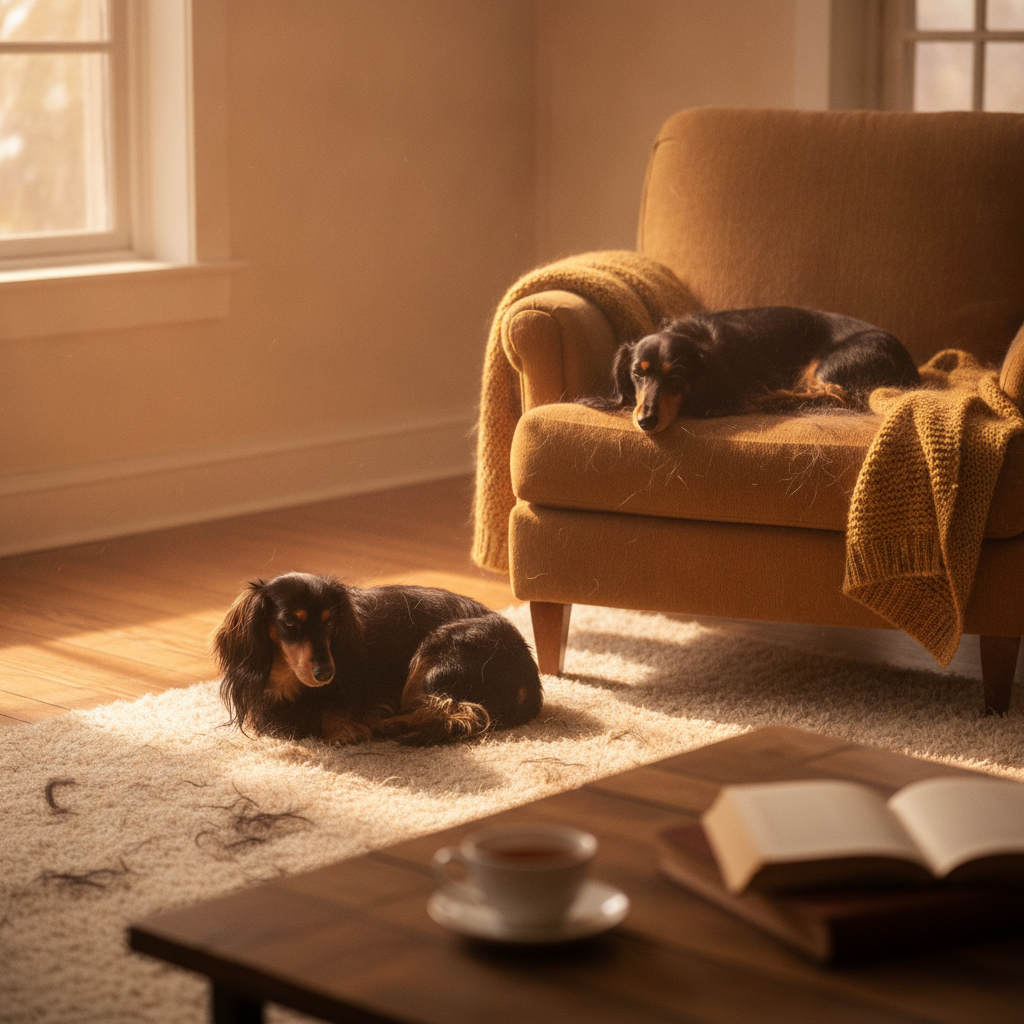
I once found a single, tiny, reddish-brown dachshund hair inside a sealed jar of pickles. A pickle jar. I have no explanation. If you’re a doxie parent, you’re probably nodding right now, maybe even picturing the time you found one in your butter dish or clinging to a freshly washed plate. It’s a special kind of magic, a testament to the pervasive power of doxie glitter.
So, let's get right to it. The big question you’re Googling, probably while plucking hair off your black sweater: do dachshunds shed? The short answer is yes. The long, more helpful answer is: yes, but they do it in three completely different ways, and the internet has probably confused you about all of them.
You’re stuck in a loop. You read they’re a “low-shedding breed,” but your vacuum cleaner canister tells a very different story. You bought a brush someone recommended on a forum, and your doxie looks at you with the betrayal of a thousand ancestors every time you bring it out. You just want a straight answer so you can manage the fur without turning your home into a lint roller commercial and, most importantly, make sure the amount of shedding is normal and your long little dog is healthy.
The problem isn't the advice you've been given; it's that most of it is generic. It treats a “dachshund” as a single entity. That’s like giving the same hair advice to someone with a buzz cut and someone with waist-length ringlets. It just doesn’t work. Trying to use a one-size-fits-all approach to doxie shedding is why you feel frustrated and covered in hair.
Here’s the reframe: Stop asking “do dachshunds shed?” and start asking “how does my dachshund shed?” The secret isn’t in finding a magic brush to stop it, but in understanding the specific engineering of your dog’s coat—be it smooth, long-haired, or wire-haired. Each one is a completely different machine with its own maintenance schedule, its own output, and its own unique way of leaving its mark on your life (and your furniture). Once you understand your doxie's specific coat, managing the shedding becomes simple, predictable, and so much less stressful.
The Three Doxie Coats: A Complete Shedding Breakdown
For nearly 20 years, I’ve had the joy of living with these stubborn, charming dogs, and I’ve seen the full spectrum of shedding. My life with Marley and Mia has been a masterclass in fur management. Let's break down the reality of what to expect from each of the three distinct dachshund coat types, because they couldn't be more different.
1. The Smooth-Haired Dachshund: The Masters of Stealth Shedding
This is the classic, sleek wiener dog. Their coat is short, shiny, and lies flat. People often assume this means “no shedding.” Oh, you sweet summer child. That is adorably incorrect.
The Shedding Pattern: Smooth-haired dachshunds are year-round shedders. They don’t typically “blow their coat” in big seasonal clumps like some breeds. Instead, they release a steady, consistent stream of short, stiff, needle-like hairs. These are the hairs that have the incredible ability to weave themselves into the very fabric of your sofa, your car seats, and your favorite jeans. You won't see big tumbleweeds of fur, but you'll feel it. It’s the constant prickle on your clothes, the reason you own stock in a lint roller company. They are masters of stealth shedding.
Grooming Needs: The good news is that they are incredibly low-maintenance to groom. Forget complex brushes. All you need is a rubber curry brush (like a ZoomGroom) or a grooming mitt. Once a week, a good rubdown with one of these will pull out the loose hairs before they embed themselves in your upholstery. It also feels like a massage to them, so they’re much more likely to cooperate. Bathing should be infrequent, only when they’re truly dirty, as over-bathing can dry out their skin and actually worsen shedding.
My Experience: With my smooths, the battle isn't about volume, it's about embedding. I learned early on that certain fabrics are magnets for these little hair splinters. A good quality vacuum with a proper upholstery attachment is your best friend. But the weekly curry brush massage is the single most effective thing you can do. It’s five minutes of bonding that saves you hours of cleaning.
2. The Long-Haired Dachshund: The Glamorous Tumbleweed Generators
With their elegant, silky, flowing locks and feathered ears, long-haired dachshunds are the glamour models of the breed. That glamour, however, comes with a bit more upkeep and a different kind of shed.
The Shedding Pattern: Unlike the smooths, long-haired doxies are more seasonal shedders. You’ll notice a significant increase in shedding in the spring and fall as they prepare for the changing temperatures. Their hair is finer and longer, so instead of weaving into fabric, it tends to clump together and form little dust bunnies or “tumble-weeds” of fur that drift across your hardwood floors. While it can look like a lot more hair, it’s often easier to clean up because it doesn’t embed as aggressively.
Grooming Needs: This is where the work comes in. A long-haired doxie needs to be brushed several times a week—daily, if possible—to prevent mats and tangles, especially behind the ears, in their “armpits,” and on their feathery tails. A pin brush is great for the main coat, and a steel comb is essential for working through those tangle-prone areas. Regular brushing not only prevents painful mats but also removes loose hair before it has a chance to decorate your home. Consistent grooming is non-negotiable for these dogs.
A Quick Tip: When you're brushing, don't just skim the top layer. Learn to “line brush,” where you gently part the hair and brush from the skin outwards. This ensures you're getting the undercoat and removing all the loose fur, not just polishing the surface.
3. The Wire-Haired Dachshund: The Low-Shedding Myth (That's Actually True)
The scruffy, bearded, endlessly charming wire-haired doxie is often touted as the best choice for people concerned about shedding. And for the most part, it's true! But it comes with a very important condition.
The Shedding Pattern: A properly groomed wire-haired dachshund sheds the least of the three varieties. Their coat is made of two layers: a soft, dense undercoat and a harsh, wiry outer coat. The outer coat doesn't fall out easily on its own. The dead hairs need to be removed manually. If you don't, they can shed, but not nearly as much as the other two types.
Grooming Needs: This is the crucial part. To maintain the coat's texture and its low-shedding properties, a wire-haired doxie needs to be hand-stripped two to three times a year. Hand-stripping is a process where the dead outer coat is pulled out by hand or with a special stripping knife, allowing a new, harsh coat to grow in. It sounds scary, but it doesn't hurt the dog when done correctly, as the hairs are already dead.
A critical warning: Never, ever shave or clip a wire-haired dachshund's coat unless it's for a medical necessity. Clipping cuts the harsh outer hair, leaving the soft undercoat to take over. This ruins the coat's texture, making it soft and fuzzy, and can actually turn your low-shedding dog into a shedder.Finding a groomer who knows how to hand-strip is key to owning a wire-haired doxie.
What Else Affects How Much My Dachshund Sheds?
Beyond the coat type, a few other factors can influence the fur situation in your home. Understanding these can help you keep your doxie's coat in top condition.
- Diet and Nutrition: A high-quality diet rich in omega fatty acids is the foundation of a healthy coat. If your dog’s food isn't meeting their nutritional needs, their coat will be one of the first places you see it—it might be dull, dry, and shed more than usual.
- Stress and Anxiety: Just like humans can lose hair when they're stressed, so can dogs. A major change in routine, a new environment, or separation anxiety can sometimes lead to an increase in shedding. If your doxie is a classic “velcro dog,” managing their anxiety can sometimes have the pleasant side effect of a healthier coat.
- Allergies and Health Issues: This is the most important one. A sudden, drastic change in shedding, accompanied by bald patches, excessive scratching, or skin irritation, is not normal. This is your cue to call the vet. Remember my golden rule: quirks are consistent; problems are a change. A steady shed is a quirk. A sudden fur explosion is a signal. This is educational content, not veterinary advice, and your vet is always the ultimate authority on your dog's health.
Ultimately, living with a dachshund means accepting a certain amount of “doxie glitter” in your life. But by understanding their specific coat, you can move from feeling frustrated to feeling empowered. You know what to expect, you have the right tools, and you can spend less time cleaning and more time enjoying that wonderful, burrowing, bossy, long little dog who runs your house. And maybe, just maybe, you'll be able to keep their hair out of the pickle jar.
Understanding why your doxie does what they do—from shedding to burrowing under the blankets—is the key to a happier life together. It's not about fighting their nature, but working with it.
Protecting That Long Little Back (and Your Furniture)
While we're talking about managing your home for your doxie, it's not just about the hair. Creating a safe environment is paramount, especially for their vulnerable spines. Simple adjustments can make a world of difference. To learn more about easy ways to make your home safer, check out my guide on how to 'Dachshund-Proof' Your Home and Protect Their Precious Backs. It’s peace of mind you can’t put a price on.
Shedding is just one tiny piece of the beautiful, complex, and hilarious puzzle that is the dachshund. Understanding their coat is like learning a new word in their language. If you want to become fluent in all the other quirky things they do—from stealing your spot on the couch to that intense stare—you’ll love my free guide.
Get the free Dachshund Behavior Decoder
Frequently Asked Questions
Are dachshunds hypoallergenic?
No, dachshunds are not considered a hypoallergenic breed. While some coat types shed less than others (like a properly groomed wire-haired), all of them produce dander, which is the primary cause of pet allergies. There's no truly hypoallergenic dog, but a wire-haired doxie might be a better fit for those with mild allergies.
Which dachshund coat type sheds the least?
The wire-haired dachshund sheds the least, but only if they are properly groomed through hand-stripping. If a wire-haired coat is clipped instead of stripped, it can actually cause it to shed more. Among the other two, it's a toss-up: smooths shed small hairs constantly, while longs shed more seasonally in bigger clumps.
How can I reduce the amount of dachshund hair in my house?
You can't stop shedding, but you can manage it. The best strategy is consistent grooming with the right brush for your doxie's coat type to remove loose hair before it falls. Feeding a high-quality diet and ensuring your home has doxie-friendly fabrics (like leather or tightly woven materials) can also make a huge difference.
Can I just shave my long-haired dachshund to stop the shedding?
Please don't! Shaving a long-haired dachshund can permanently damage their double coat, ruining its texture and ability to insulate them from heat and cold. It doesn't stop shedding; it just makes the hairs that fall out shorter. The best approach is always regular brushing and professional grooming.
My dachshund is suddenly shedding way more than usual. Should I be worried?
A sudden, significant change in your dog's shedding pattern is always worth paying attention to. While it could be seasonal, it can also be a sign of stress, allergies, or an underlying health issue. If the increased shedding is accompanied by bald spots, skin irritation, or other behavioral changes, it's definitely time to schedule a visit with your vet.
dachshund shedding · dachshund grooming · dachshund coat types · dog shedding