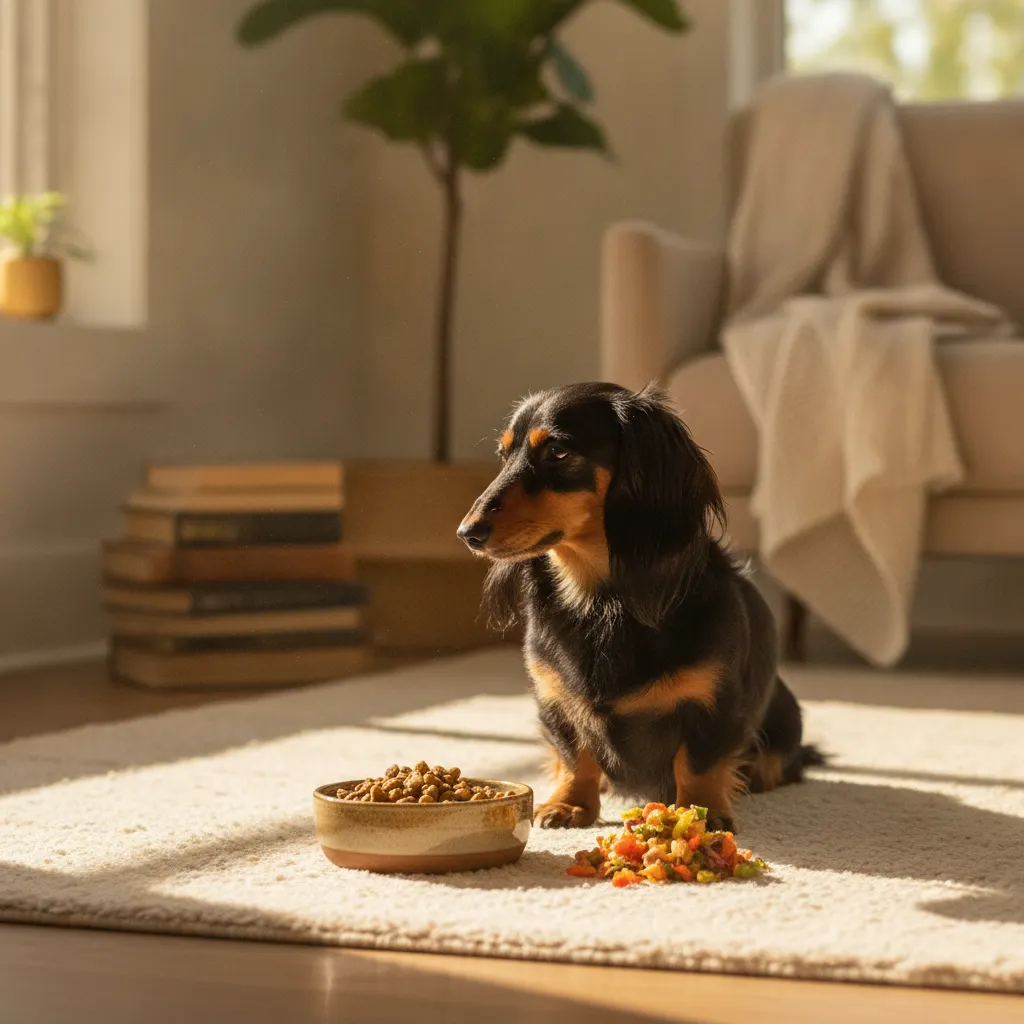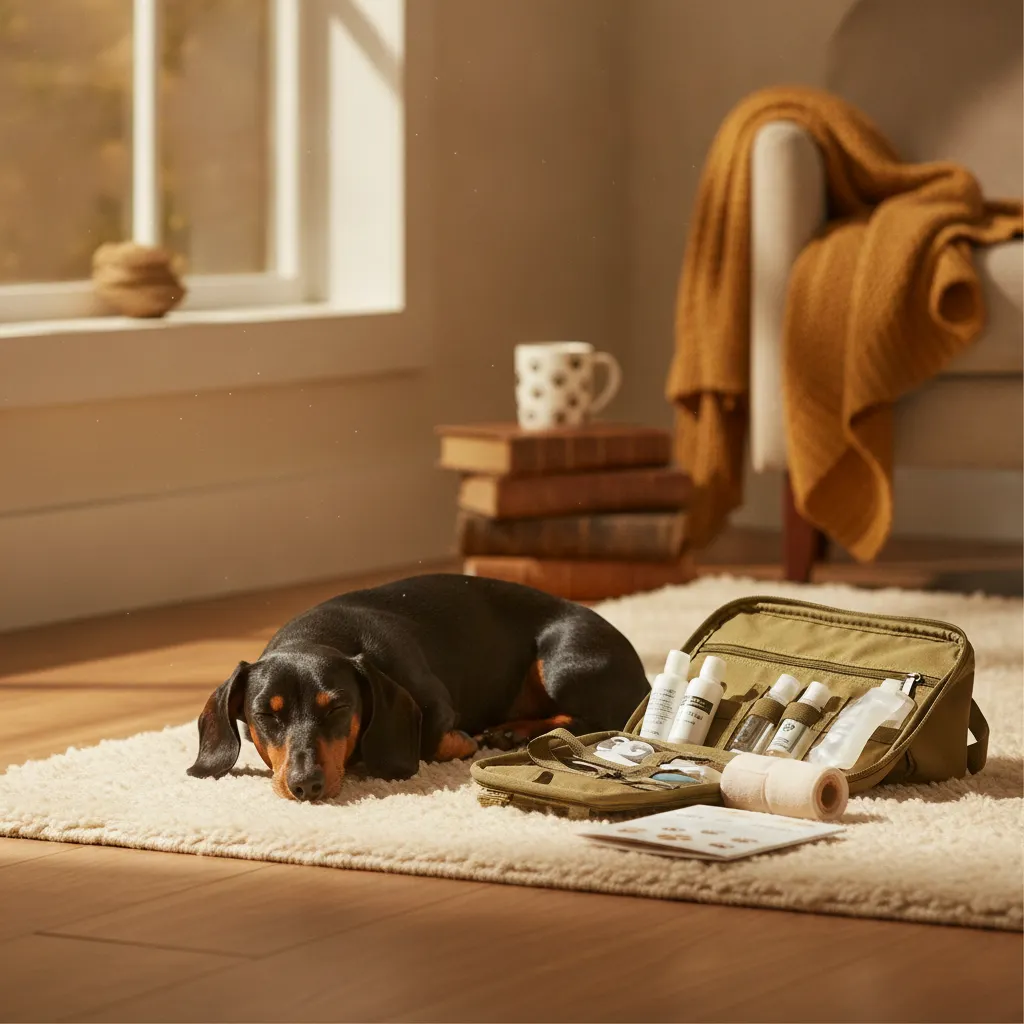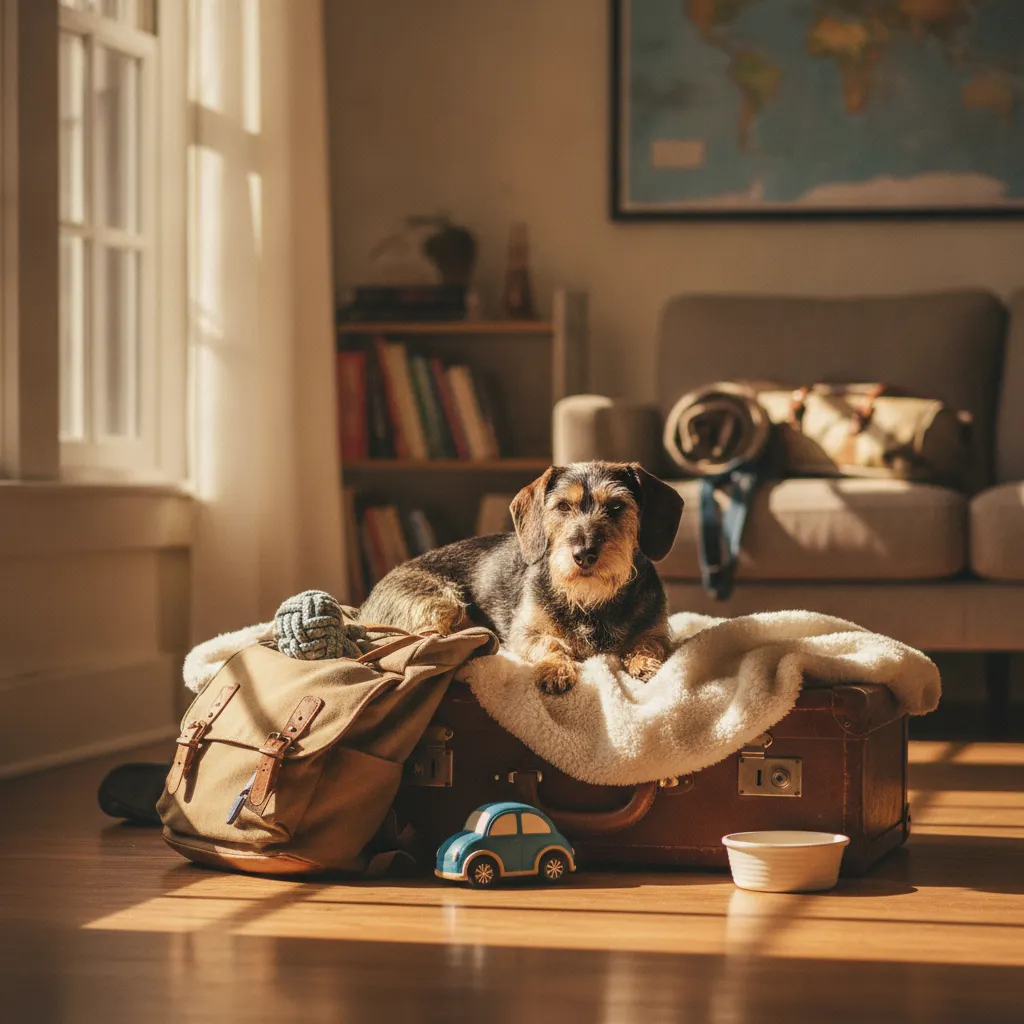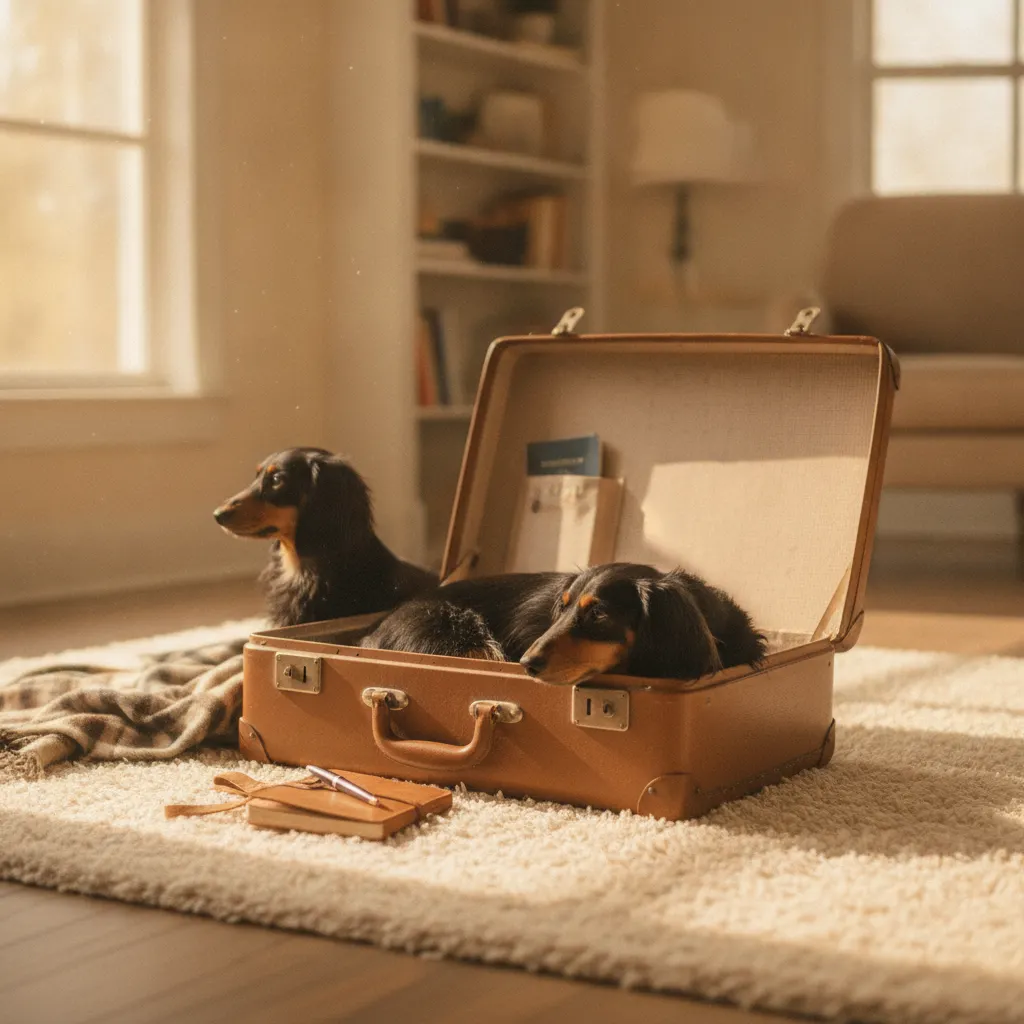
You finally did it. You clicked “confirm” on that plane ticket, and for a glorious thirty seconds, you’re dreaming of sunshine and quiet. Then, the feeling hits. It starts in your stomach and works its way up to your throat. It’s the Dachshund Guilt. Who is going to watch the dog? Suddenly, the vacation you just booked feels less like a relaxing escape and more like a logistical nightmare centered on a long, low, and very particular sausage dog. The challenge of **traveling with a dachshund**—or the even bigger challenge of leaving them behind—is enough to make you want to cancel the whole thing.
This isn't just regular dog owner anxiety. This is different. You know in your bones that dropping your doxie off at a standard kennel feels like leaving a toddler at a monster truck rally. Asking a well-meaning neighbor feels like handing them a fragile, antique lamp with a PhD in manipulation. And taking them with you? That opens up a whole new world of worries about stairs, hotel policies, and protecting that precious back on the road. The core of the problem is that the world is built for regular-shaped dogs, but you’re in love with a stubborn, brilliant, burrowing creature who operates by their own set of rules.
Why Do The "Easy" Options Feel So Wrong for a Dachshund?
If you've ever felt a wave of panic exploring your options, you're not alone. What works for a Golden Retriever often feels like a complete non-starter for a dachshund, and for good reason. The standard solutions just don't account for the unique physical and emotional wiring of our favorite low-riders.
Why a Standard Kennel Can Be a Poor Fit
Picture it: cold concrete floors, loud barking from giant dogs, and staff who, while probably kind, are used to handling 80-pound labs. For a dachshund, this environment can be overwhelming. Their short legs mean they feel every vibration and are constantly looking up at a world of giants. They get cold easily and are bred to burrow in soft, warm spaces, not shiver on a plastic bed.
And then there's the back. The single biggest fear for any doxie parent is Intervertebral Disc Disease (IVDD). Can you be sure the kennel staff understands that "no jumping" isn't a suggestion, but a critical safety rule? Do they know how to properly pick up and support a long-bodied dog? In a busy facility with a high dog-to-staff ratio, the risk of improper handling or a bad interaction during group playtime is a constant source of anxiety.
The Well-Meaning Friend or Family Sitter
This seems like a warmer, more loving option. Your friend loves your dog! Your sister has a dog of her own! What could go wrong? Well, a lot, actually. Loving a dog and understanding the specific needs of a dachshund are two very different things. They might not see the danger in letting your doxie hop off the couch "just this once." They might not recognize the subtle signs of back pain or the onset of separation anxiety. They might even over-feed them with treats, thinking they're being kind, without realizing the impact of extra weight on that long spine. The burden of educating them on every single doxie quirk and rule can feel like a full-time job, adding stress to what should be a relaxing time away.
The Dream of Taking Them Everywhere
This feels like the perfect solution—no separation, no guilt! But the reality of **traveling with a dachshund** can be incredibly complex. Hotels that claim to be "dog-friendly" often have hidden flights of stairs or slick floors. Long car rides can be stressful and require a setup that keeps their back safe and supported. What do you do when you want to visit a museum or eat at a restaurant that doesn't have a patio? Your entire trip can become dictated by your dog's needs and limitations, turning your vacation into a high-stakes management project. For a truly relaxing guide on this, you might want to check out our detailed guide to road tripping with a low-rider.
The Real Question Isn't 'Where Do They Go?' But 'Who Is My Dog?'
Here’s the shift that changes everything. We spend so much time agonizing over the logistics of the *options* that we forget to start with the most important variable: our dachshund's individual personality. The guilt and anxiety come from trying to force our unique dog into a pre-made box labeled "boarding," "sitter," or "travel."
The real problem isn’t that the options are bad; it’s that we’re asking the wrong question. Instead of asking, “Which of these three options is least terrible?” we need to ask, “What environment will make *my specific dachshund* feel the most safe, secure, and comfortable?”
Is your doxie a social butterfly who loves other small dogs, or are they a grumpy old man who wants nothing more than their favorite spot on the couch? Are they a velcro dog who panics when you leave the room, or an independent spirit who is happy as long as their routine is maintained? Once you reframe the decision around your dog's temperament, the right choice becomes much clearer. You stop choosing a logistical solution and start creating a personalized care plan.
A Dachshund-Centric Guide to Your Three Vacation Options
Let's break down each option not by what it is, but by which type of dachshund it's best suited for. This is your new, personality-first framework for making a guilt-free decision.
Option 1: Taking Them With You on Vacation
This isn't just about bringing your dog; it's about planning a dachshund-centric trip. It requires more work upfront but can be incredibly rewarding.
- Best For: The highly anxious or bonded “velcro” doxie who would be more stressed by your absence than by a change in scenery. Also great for dogs with specific medical needs that require constant monitoring, or for owners planning a trip where the dog can be the star (think cabin rentals, hiking trips, or visiting family).
- How to Make It Work: Success is all in the preparation. Call hotels directly to confirm ground-floor rooms and ask about stairs. Pack a “doxie-to-go” bag with their bed, blankets, favorite toys, and food to create a sense of home. Use a back-supporting car seat or a secured crate for travel. Plan your itinerary around dog-friendly activities and have a plan for the times you can't be with them, like a local rover sitter for a few hours. This approach turns the challenge of **traveling with a dachshund** into a joyful adventure.
Option 2: The Professional In-Home Pet Sitter
This option prioritizes stability and routine by keeping your dachshund in their own familiar territory. It’s often the gold standard for doxie comfort.
- Best For: The homebody dachshund. The dog who thrives on routine, is territorial, or gets anxious in new environments. It's also the best choice for multi-doxie households or those with a history of IVDD, as it eliminates environmental risks and travel stress. My Marley is this dog—he wants his couch, his sunbeam, and his dinner at 5 PM sharp. Anything else is chaos.
- How to Make It Work: The key here is finding the right person and creating a comprehensive “Dachshund Owner's Manual.” This isn't just a list of emergency numbers. It’s a detailed guide to your dog's soul. Include their exact feeding and potty schedule, medication instructions (with photos!), a clear explanation of back safety rules (e.g., “Use the ‘hot dog’ hold to carry him, never let him jump from furniture”), and a list of their funny quirks and fears. Does the sound of the garbage truck send them into a frenzy? Does a specific blanket calm them down? The more detail you provide, the more confident you and your sitter will feel. This is especially important for anxious dogs who fear loud noises. Also, empower your sitter with this simple rule: quirks are consistent, a sudden *change* is a problem. A dog who has always been a picky eater is just being a doxie; a dog who suddenly stops eating needs a vet call.
Option 3: The Right Kind of Boarding Facility
Forget the image of a cold, impersonal kennel. A new breed of boutique boarding facilities can feel more like a doggy spa retreat, but you have to be incredibly selective.
- Best For: The confident, social, and adaptable dachshund. The doxie who genuinely enjoys the company of other dogs (of a similar size!) and isn't easily stressed by new environments. My Mia has a bit of this in her; she loves meeting new friends and has a bolder personality.
- How to Make It Work: Your mission is to vet these facilities with the intensity of a secret service agent. Your non-negotiable checklist should include: a separate play area for small dogs only, staff who can articulate and demonstrate how to handle a long-bodied breed, raised beds or cots (not concrete floors), and a policy that allows you to bring their own food and bedding. Ask direct questions: “How do you manage dogs with potential for back injuries?” “What is your staff-to-dog ratio in the playgroups?” “Can you accommodate a dog who needs to be carried up and down steps?” A tour is mandatory. If you get a clinical, chaotic, or dismissive vibe, walk away.
How Do You Choose the Right Path for Your Doxie?
So, how do you decide? Sit down with a piece of paper and answer these questions about your dachshund honestly:
- Social Score: On a scale of 1 (Grumpy Hermit) to 10 (Party Animal), how much does my dog enjoy new dogs and people? A low score points to a sitter; a high score might make boarding an option.
- Anxiety Level: How does my dog react when I leave the house for a few hours? A full-blown panic suggests taking them with you might be best. Mild pouting is manageable for a sitter.
- Adaptability: Does my dog handle changes in routine well, or does a late dinner throw their whole world off-kilter? A dog who thrives on routine needs to stay home with a sitter.
- Physical Needs: Does my dog have a history of IVDD, arthritis, or other mobility issues? This almost always makes an in-home sitter the safest and kindest choice.
I've used this exact framework for years with Marley and Mia. Marley, my senior boy, is a pure homebody. The stress of travel or a new environment isn't worth it for him. An in-home sitter who respects his routine is the only choice. Mia, on the other hand, is more resilient and social. For a short trip, a very carefully selected small-dog boarding facility could work for her, although an in-home sitter is still my preference for them as a pair.
There is no single right answer, only the right answer for *your* dog. By putting their personality at the center of your decision, you can finally trade that Dachshund Guilt for peace of mind and actually look forward to your vacation.
Understanding the 'why' behind your doxie's unique needs is the first step to becoming a more confident doxie parent—both at home and when you travel. If you want to get a deeper insight into their quirky brains, learning why they do what they do, it can make all the difference. Get the free Dachshund Behavior Decoder to learn the secrets behind their stubborn, smart, and sensitive nature.
Frequently Asked Questions
How can I prepare my dachshund for being away from me?
Start with short trial separations well before your trip. If using a sitter, have them visit a few times so your doxie gets familiar with them. Leave a worn t-shirt or blanket with your scent, and stick to their routine as much as possible to provide a sense of security and predictability.
What should I pack if I'm traveling with my dachshund?
Pack a dedicated bag with their food, water bowl, medications, a favorite bed or blanket, a few comforting toys, poop bags, and their harness and leash. Also include a copy of their vaccination records and your vet's contact information. Creating a familiar 'home base' for them wherever you go is key to successful **traveling with a dachshund**.
Are 'dog-friendly' hotels really safe for dachshunds?
They can be, but you must do your homework. When booking, specifically request a ground-floor room to avoid stairs. Ask if there are any breed or size restrictions. Once you arrive, do a quick safety sweep of the room for any hazards at doxie-level.
How much should I expect to pay for a professional in-home pet sitter?
Rates vary widely based on your location, the sitter's experience, and whether they are staying overnight. Expect to pay anywhere from $50 to $150+ per day. While it can be more expensive than boarding, the one-on-one care and peace of mind for a sensitive or special-needs doxie is often priceless.
My dachshund has a history of IVDD. Can they ever be boarded?
It's generally not recommended. The risk of re-injury from accidental jumping, improper handling, or rough play with other dogs is too high. An experienced in-home sitter who understands the strict limitations (no jumping, ramp use, proper carrying) is by far the safest option for a dog with a history of back problems.
What is the best way to find a trustworthy sitter?
Word-of-mouth referrals from other local dachshund owners or your veterinarian are the gold standard. Services like Rover or Wag can be good resources, but be sure to read reviews thoroughly, conduct an in-person interview, and check their references. Look for sitters who have experience with small or long-bodied breeds specifically.
dachshund travel · pet boarding · in-home pet sitter · vacation planning