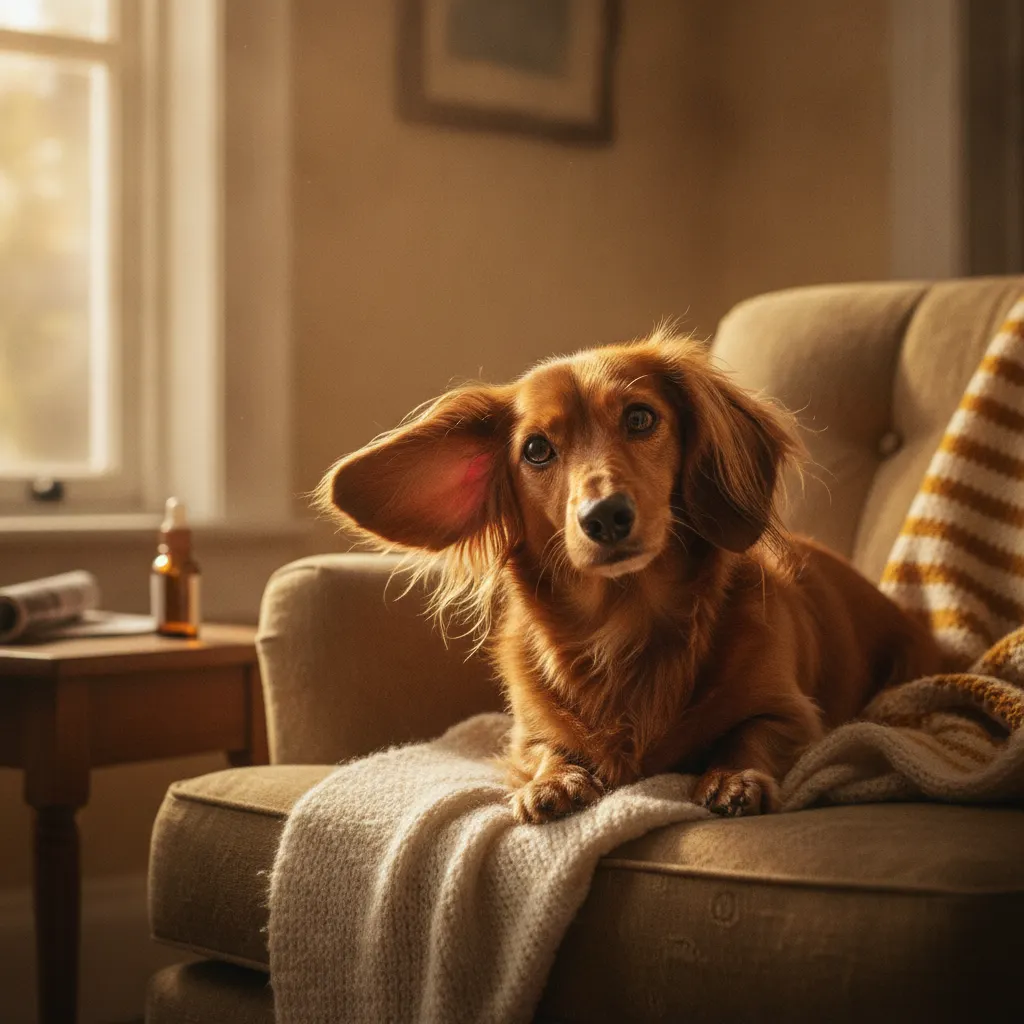
You know the sound. The sudden, violent thwump-thwump-thwump of a dachshund ear flap hitting their skull, followed by a full-body wiggle that rattles the dog bed. You might even see them drop and drag their head along the rug in a desperate attempt to scratch an itch they can't reach. Then, when they come over for a cuddle, you catch it: that funky, yeasty, not-quite-right smell. And your heart does that little lurch every doxie parent knows.
Immediately, your mind starts racing. You dive into a late-night Google session, typing in “dachshund ear infections” and finding a wall of clinical-looking websites with confusing, technical words. Is it just wax? Is it mites? Is it an allergy? Is it something worse? The worry is instant and heavy, because all you want is for your little sausage dog to be comfortable and happy.
You’ve probably tried the obvious things. You’ve gently wiped the visible part of the ear with a cotton ball, but the head-shaking returns an hour later. Maybe you bought a bottle of ear cleaner from the pet store, but the moment your doxie saw it, they transformed into a wiggling alligator, making the whole process feel like a failure. You feel helpless, frustrated, and a little guilty, wondering what you’re doing wrong.
The Reframe That Will Set You Free
I want you to take a deep breath and hear this: This is almost certainly not your fault. You are not a bad doxie parent. The real issue isn’t something you’ve failed to do, but rather the very design of the dog we love so much. Those adorable, long, velvety ears that frame their face are an architectural marvel of inefficiency.
Think of it this way: a dog with upright ears, like a German Shepherd, has an open-air system. Air flows freely, keeping things dry. A dachshund, on the other hand, has a heavy, non-porous flap that covers the ear canal completely. This creates a warm, dark, and humid environment—basically a five-star, all-inclusive resort for yeast and bacteria to thrive. The problem isn’t a single infection; the problem is that you’re managing a breed-specific, built-in challenge. Once you see it that way, you can shift from feeling reactive and guilty to being proactive and confident.
Your Step-by-Step Plan for Healthy Doxie Ears
Managing your doxie’s ears isn’t about a magic cure; it’s about a simple, consistent routine. It’s about prevention over panic. Here’s the framework that has kept my Marley and Mia’s ears happy and healthy for years.
Step 1: Understand the Unique Architecture
Unlike a human ear canal that goes straight in, a dog’s ear canal is L-shaped. It goes down vertically and then takes a sharp turn horizontally towards the eardrum. This means that debris, wax, and moisture can easily get trapped in that corner. When your doxie shakes their head, they’re trying to use centrifugal force to fling stuff up and out of that deep canal, but it’s an uphill battle. This L-shape is why you can’t just wipe the part you can see and call it a day; the trouble is almost always brewing deeper down.
Step 2: What Are the Telltale Signs of a Dachshund Ear Infection?
Your doxie can’t tell you their ear hurts, but they will show you. Learning to read these signals early is your superpower. Look for:
- The Head Shake: This is the classic sign. A single shake after a nap is normal; persistent, frantic shaking is a red flag.
- Scratching: Desperate scratching at the ear with a back paw, or rubbing their head on furniture, the carpet, or even your leg.
- The Smell: Don't underestimate your nose! A healthy doxie ear doesn't smell like much. An infected ear has a distinct odor. It can be yeasty like corn chips or bread dough, or it can be foul and sour if bacteria is involved.
- Redness and Swelling: Lift the ear flap and look inside. The skin should be a pale, healthy pink. If it's bright red, inflamed, or puffy, something is wrong.
- Discharge or Debris: This is a major clue. A little bit of light brown wax can be normal, but look for a thick, dark brown, waxy buildup (a common sign of yeast), a yellow or greenish pus-like discharge (often indicating bacteria), or a dry, black, gritty substance that looks like coffee grounds (the classic sign of ear mites).
- Pain and Sensitivity: Your dog might yelp or pull away when you try to touch their head or ears. They might become withdrawn or irritable. An ear infection can be incredibly painful, and this can sometimes be the cause behind a suddenly grumpy couch dragon who doesn't want to be moved.
- Head Tilting or Loss of Balance: In more severe cases, an inner ear infection can affect their equilibrium, causing them to hold their head at a tilt, walk in circles, or seem wobbly. This is a sign to see your vet immediately.
Step 3: The Usual Suspects – What Causes Ear Infections?
An infection is just the symptom. The real goal is to figure out the underlying cause. Most dachshund ear infections are caused by one or a combination of these culprits:
Quirks are consistent; problems are a change. A behavior your doxie has always had is almost never the emergency—a sudden shift is. A sudden onset of head shaking is a change you need to investigate.
Yeast Overgrowth (Malassezia): This is the most common offender. Yeast is a normal resident on your dog's skin and in their ears. The problem starts when the ear's environment gets thrown off balance—usually by moisture or inflammation—allowing the yeast to multiply out of control.
Bacterial Infections: Bacteria can be the primary cause of an infection, or they can show up as a secondary problem after yeast has already set the stage. Bacterial infections often have a more pungent smell and a pus-like discharge.
Allergies: This is the hidden villain in so many chronic ear infection cases. Allergies to something in their food (like a specific protein) or their environment (like pollen, dust mites, or grass) cause systemic inflammation. For many dogs, this inflammation shows up first and worst in their ears and skin. I learned this the hard way with my Mia. She had a recurring ear infection one summer that we just couldn't kick. My vet helped me realize it was an underlying food sensitivity. Once we changed her diet, the ear problems vanished. It wasn't an ear problem; it was a whole-body problem expressing itself in her ears.
Moisture: The catalyst for everything. Water from a bath, a swim, or even just rolling in wet grass can get trapped in that L-shaped canal and create the perfect swampy breeding ground for yeast and bacteria.
Step 4: The Golden Rule: When in Doubt, Your Vet Knows Best
This is the most important step of all. You cannot and should not try to diagnose and treat a suspected ear infection at home. Here’s why:
- You can’t see the whole picture. Your vet has an otoscope, a special tool that lets them look deep into the ear canal to see the eardrum and assess the extent of the infection. Trying to clean an ear with a ruptured eardrum can cause permanent damage.
- You don’t know the culprit. You can’t tell the difference between a yeast and a bacterial infection just by looking. They require completely different medications. Using the wrong one is ineffective at best and harmful at worst.
- Your vet can identify the root cause. By taking a quick swab of the ear debris and looking at it under a microscope, your vet can identify the exact organism causing the problem. This allows for targeted, effective treatment.
If you see the signs, your job isn't to fix it; your job is to make an appointment. This is one of those clear moments for when to call the vet. Don’t wait.
Step 5: Your Proactive Prevention Routine
Once your vet has cleared up any active infection, your job is to prevent the next one. This simple routine is your best defense:
- Weekly Checks: Once a week, make it a habit to lift each ear flap, look inside, and give it a sniff. This takes five seconds and helps you catch problems before they escalate.
- Clean When Needed: You don't need to clean pristine ears, but if you see a bit of debris or notice a faint smell, it's time for a gentle cleaning. For my dogs, this is usually every 2-3 weeks.
- The Right Technique:
1. Use a high-quality, vet-approved ear cleaner. Do not use water, alcohol, peroxide, or vinegar mixtures, as they can be irritating.
2. Gently hold your doxie and fill their ear canal with the cleaning solution until it's about to overflow.
3. Massage the base of the ear (the part connecting to the head) for about 30 seconds. You should hear a squishy, gurgling sound. This is the sound of success! It means the solution is breaking up debris deep in the canal.
4. Stand back and let them shake their head vigorously. Have a towel ready for the spray!
5. Use a cotton ball or a piece of gauze to gently wipe away all the liquid and debris from the part of the ear you can easily see. - NEVER Use Q-tips: Never, ever stick a cotton swab or anything else down into your dog’s ear canal. You risk pushing debris further in, packing it against the eardrum, or even causing a painful rupture.
That head shake and that funky smell are signals. Your dachshund is communicating with you in the only way they know how, telling you that something is off. Learning to decode their body language is the most powerful skill you can have as a doxie parent, turning worry into confident action.
If you want to become fluent in what all their other quirky, funny, and sometimes confusing behaviors mean—from the frantic digging in the blankets to the stubborn refusal to walk in the rain—it all starts with understanding their world. It’s why I put together a guide to help you do just that. To be a more confident doxie parent, you can start here: Get the free Dachshund Behavior Decoder.
Frequently Asked Questions
How often should I clean my dachshund's ears?
You should only clean your dachshund's ears when they are dirty. For many doxies on a good prevention plan, this might be every 2-4 weeks. Over-cleaning can strip the ear of its natural protective oils and cause irritation, so check weekly and clean only when you see mild debris or notice a faint odor.
Can I use Q-tips to clean my dachshund's ears?
No, you should never use Q-tips or any other object to clean deep inside your dachshund's ear canal. Their ear canal is L-shaped, and using a Q-tip can easily push wax and debris further down, pack it against the eardrum, or even cause a painful rupture. Only use cotton balls or gauze to wipe the outer, visible parts of the ear after cleaning.
Are some dachshunds more prone to ear infections than others?
Yes. While all dachshunds are anatomically predisposed due to their floppy ears, those with allergies (either food or environmental) are significantly more prone to chronic or recurring dachshund ear infections. Inflammation from allergies creates the perfect environment for yeast and bacteria to overgrow.
What's the difference between a yeast and bacterial ear infection in a dachshund?
A yeast infection typically produces a dark brown, waxy discharge with a sweet or musty, bread-like odor. A bacterial infection often involves a yellow or green pus-like discharge and a more foul, sour smell. However, they can look similar and often occur together, which is why it's critical to have your vet take a sample to know exactly what you're treating.
Can I treat my dachshund's ear infection at home with natural remedies?
No. While natural remedies may sound appealing, they are often ineffective and can sometimes make the problem worse by changing the pH of the ear or causing further irritation. A suspected ear infection requires a proper diagnosis and prescription medication from a veterinarian to ensure you are treating the correct organism and not causing further harm.
ear infections · dachshund health · grooming · veterinary care