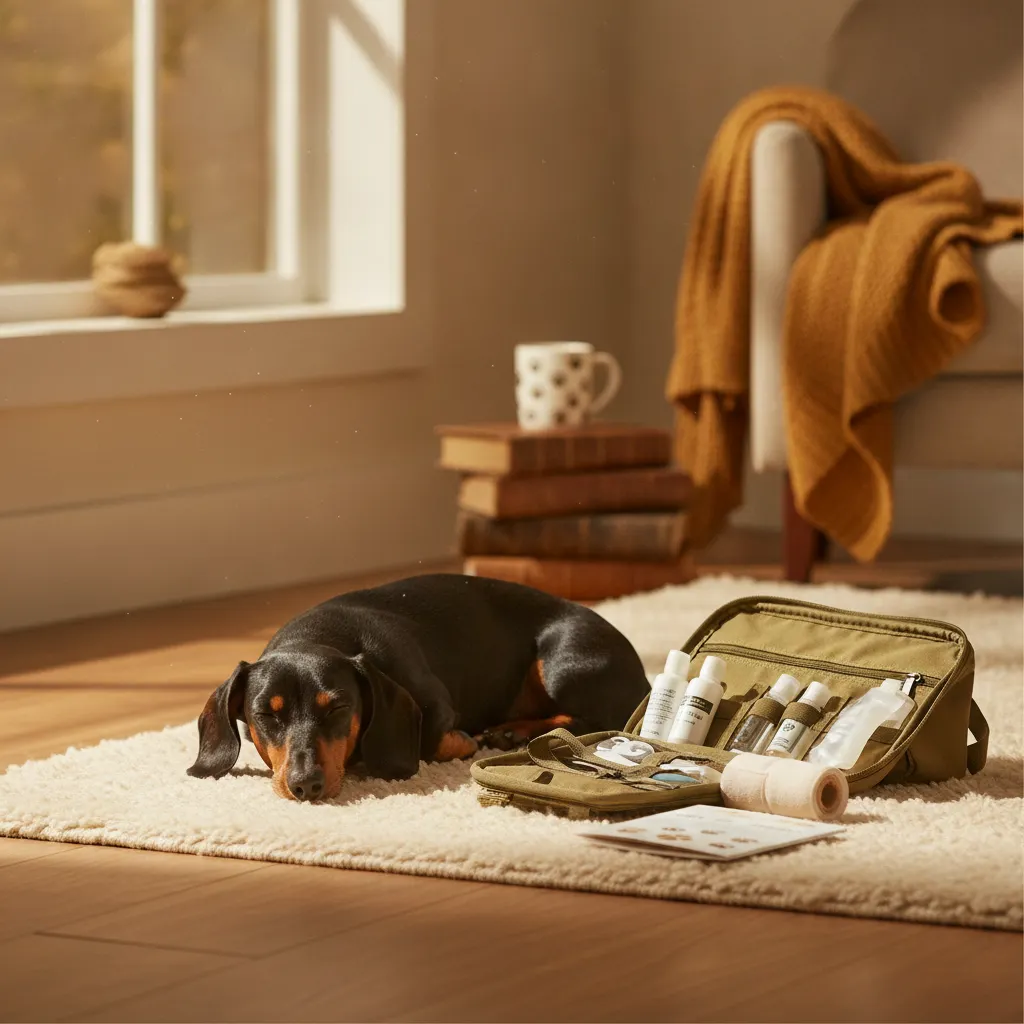
My heart was doing a frantic tap dance against my ribs. I handed Mia’s leash over to the vet tech, her little body trembling just slightly. She was just in for a dental cleaning, a routine procedure. But in my head, a ten-part disaster movie was playing on a loop. The phrase “going under” feels so… final. So out of our control. And when you have a dachshund, a breed we’re taught to wrap in bubble wrap, that feeling of helplessness is a hundred times worse.
If you’re reading this, you know that feeling. It’s that lump in your throat when the vet says your doxie needs a procedure requiring anesthesia. Suddenly, all the internet horror stories you’ve ever skimmed come rushing back. Your mind races. Are they too small? Too sensitive? What if something goes wrong? This specific fear, the deep-seated worry about dachshund anesthesia safety, is a unique burden we carry as doxie parents.
The Cycle of Anxiety: Why Googling Makes It Worse
So what do we do? We dive headfirst into the internet, typing frantic questions into a search bar at 2 a.m. We land on a forum post from 2009 where someone’s cousin’s friend had a bad experience. We read a headline that confirms our worst fears. We piece together a worst-case narrative from whispers and anecdotes, and we end up more anxious than when we started.
This approach fails because it’s like trying to learn to fly a plane by reading crash reports. You’re gathering data on disaster, not on successful navigation. You start to see your vet not as a partner, but as a gatekeeper to a mysterious and dangerous process you don’t understand. You feel powerless, and that powerlessness is the root of the anxiety. You’re treating anesthesia like a game of chance, crossing your fingers and hoping for the best. But it’s not a gamble.
The Reframe: You Are Not a Passenger, You're the Co-Pilot
Here’s the shift that changed everything for me: Your job is not to be a passive, worried passenger. Your job is to be the co-pilot. Anesthesia isn’t something that just *happens* to your dog. It’s a meticulous, controlled process that you are an active and essential part of. Your vet is the pilot, the expert with their hands on the controls. But you? You’re the co-pilot who knows the passenger—your precious cargo—better than anyone. You provide the critical information, you help run the pre-flight checks, and you ensure the entire team has what they need for a smooth flight and a safe landing.
When you see yourself as the co-pilot, the fear doesn’t vanish, but it changes. It morphs from a paralyzing anxiety into focused, productive concern. You’re no longer just handing over the leash; you’re handing over a flight plan you helped create.
Your Co-Pilot's Checklist for Dachshund Anesthesia Safety
So how do you step into that co-pilot role? You come prepared. You ask questions. You provide information. This isn’t about challenging your vet; it’s about collaborating with them. Here is the checklist I run through every single time one of my doxies needs a procedure.
Part 1: The Pre-Flight Check (Weeks & Days Before)
This is where the most important work is done. A safe flight starts with careful planning long before takeoff.
1. The All-Important Pre-Anesthetic BloodworkIf your vet offers pre-anesthetic bloodwork, it is not an optional upsell. It is the single most important piece of the safety puzzle. Think of it this way: the bloodwork is your vet’s map of your dachshund’s internal world. It tells them how the liver and kidneys are functioning. These are the organs responsible for processing and clearing the anesthetic drugs from the body. Flying without this map is flying blind. A healthy-looking dog can have underlying issues, and this screening allows the vet to choose the safest possible drugs and dosages for your specific doxie. For older dogs, it's even more critical. If you're managing other senior health issues, this data is invaluable. For more on that, you might want to read my guide on navigating Cushing's, kidney, and heart health in senior doxies.
2. The “Tell-Them-Everything” BriefingNow is not the time to be shy. You know your dog better than anyone. Tell your vet *everything*, even if it seems silly. That includes:
- All medications AND supplements: Every. Single. One. Some herbal supplements can affect clotting time or interact with anesthetic agents. Things you might be giving for joint health, like those discussed in our dachshund supplements guide, need to be on their chart.
- Any recent weirdness: A little cough? A day of weird poops last week? Less energy than usual? Remember our core rule: quirks are consistent, a change is the signal. A sudden change is information your vet needs.
- Past reactions: Have they ever had a weird reaction to a vaccine or medication? Tell them.
- Eating habits: Do they gobble up things they shouldn’t? Is there any chance they ate something weird in the yard yesterday? Be honest.
You are the keeper of your dog’s history. Your detailed briefing helps the pilot navigate around potential turbulence.
What Questions Should I Ask for My Dachshund's Anesthesia Safety?
This is where you truly step into the co-pilot’s seat. Asking good questions shows your vet you’re an engaged partner and gives you the peace of mind you crave. Don’t worry about “bothering” them. A good veterinary team wants you to ask these questions.
I usually say something like, “I know you do this every day, but he’s my whole world, so my heart is in my throat. Would you mind just walking me through your process so I can feel a bit calmer?”
Here are the key questions to ask:
- "Will they have an IV catheter and fluids?" An IV catheter is a lifeline. It provides immediate access to a vein in case of an emergency. Running IV fluids during the procedure helps maintain blood pressure and keeps them hydrated, which helps their organs process the drugs more efficiently. For me, this is non-negotiable.
- "Who will be monitoring my dog?" You want to hear that a dedicated, trained veterinary technician or nurse will be with your dog from induction (when they go to sleep) to recovery (when they are waking up). Their sole job is to monitor your dog's vitals.
- "What specific things will you be monitoring?" The answer should include, at a minimum: heart rate and rhythm (EKG), blood pressure, oxygen saturation (pulse oximetry), and body temperature. This is the modern standard of care.
- "How do you keep them warm?" This is a huge one for little dogs. Dachshunds have a high surface-area-to-volume ratio, meaning they lose body heat fast. Anesthesia lowers body temperature, which can be dangerous and slow recovery. Your vet should be using warming blankets, heated tables, or other active warming methods.
- "What is your pain management plan?" Good pain control isn't just compassionate; it's safer. Pain causes stress, which can impact heart rate and blood pressure. A multi-modal approach—pain meds before, during, and after the procedure—is the gold standard. This ensures your doxie wakes up as comfortable as possible.
Part 2: The Day Of (The Hand-Off)
You’ve done your pre-flight checks. Now it’s time for takeoff. Your main job today is to be a calm, reassuring presence for your dog.
Follow Fasting Instructions Religiously: This is critical. If your dog has food in their stomach, they could vomit while under anesthesia and inhale it (aspiration), which can cause a serious lung infection (aspiration pneumonia). No snacks, no little bites, no exceptions.
Project Calm: I know it’s hard. But your dog feeds off your energy. If you are frantic and crying, they will be stressed and anxious. Take a deep breath. Give them a calm, confident cuddle. Speak in a soothing voice. You are their rock. You’ve done the prep work. You trust your pilot. It’s going to be okay.
Part 3: The Landing (Post-Op and Recovery)
You got the call—everything went great! The relief is immense. But your co-pilot job isn't over yet. The landing and taxi to the gate are just as important.
The Pick-Up Debrief: When you pick them up, a vet or tech should go over the post-op instructions with you. Don't be afraid to ask questions. What should you expect tonight? What's normal grogginess versus something to worry about? What are the signs of pain? When should they have their next meal? Get it all in writing if you can.
Create a Recovery Nest: Your doxie will be sleepy, a bit disoriented, and possibly cold. Have a cozy, warm, and safe space ready for them on the floor. A crate or a pen lined with soft blankets is perfect. They should not be allowed to jump on or off furniture. Keep them separate from other boisterous pets. They just need to rest.
Watch and Wait: Expect them to be sleepy for the next 12-24 hours. They might not be hungry right away. They might have a slight cough for a day or so from the breathing tube. This is all normal. What you’re watching for is that “change” we always talk about. Are they getting progressively sleepier instead of brighter? Are they showing signs of escalating pain? Is the incision site looking red or swollen? Your vet is your first call if you're worried. Trust your gut.
It's a Conversation, Not a Coin Flip
I’ve been through this process with Marley and Mia for everything from routine dentals to lump removals. Each time, my heart does that same little dance of anxiety. But it’s no longer a dance of terror. It’s a dance of focused preparation. By stepping into the co-pilot role, by having these conversations with my vet, I transformed an overwhelming experience into a manageable, collaborative process. It built trust and gave me the peace of mind that I was doing everything in my power to ensure a safe outcome.
Anesthesia will never be zero-risk, for any living creature. But with modern medicine, diligent monitoring, and a prepared, engaged owner, it is overwhelmingly safe. You are your dachshund’s greatest advocate. By asking these questions and being a partner in their care, you are ensuring they get the best and safest treatment possible. You’ve got this.
Being a confident doxie parent is all about understanding the 'why' behind their health, their quirks, and their needs. It's about trading anxiety for knowledge. To get a deeper look into their unique little minds and be a more confident parent, I'd love for you to have my guide on their behavior. Get the free Dachshund Behavior Decoder.
Frequently Asked Questions
Are dachshunds really more sensitive to anesthesia?
This is a common belief, largely based on old types of injectable anesthetics (barbiturates) that are rarely used today. Modern gas anesthetics (like isoflurane and sevoflurane) are much safer as they are cleared from the body quickly via the lungs. The primary concerns for dachshund anesthesia safety today relate more to their small size, potential for heat loss, and any underlying health conditions, not an inherent breed sensitivity to the drugs themselves.
What's the biggest risk factor for dachshunds under anesthesia?
Aside from an unexpected allergic reaction, which is very rare, the biggest risks often stem from a lack of thorough monitoring. Issues like hypothermia (low body temperature), hypotension (low blood pressure), and hypoventilation (inadequate breathing) are the most common preventable complications. This is why asking about dedicated monitoring and warming protocols is so crucial for your peace of mind.
Is anesthesia safe for my senior dachshund?
Age is not a disease. While senior dogs may have more underlying health issues, a healthy senior dog can handle anesthesia just as well as a younger dog, provided the proper precautions are taken. This is why pre-anesthetic bloodwork and a thorough physical exam are non-negotiable for older pets. The results allow the vet to tailor the anesthetic protocol specifically to your doxie's needs, making it very safe.
What about anesthesia for a dachshund with a history of IVDD?
This is a valid concern. The key is careful handling and positioning. Let your veterinary team know about your dog's IVDD history, including which areas of the spine were affected. They will take extra care to support your dog’s back when they are being moved and positioned for the procedure to avoid any torque or pressure on their spine.
How can I find a vet I trust for a procedure?
Trust is built on communication. A great vet will be happy to answer all the questions listed in this guide without making you feel rushed or silly. Look for a practice that is transparent about their protocols and costs, and one where the staff seems calm, confident, and compassionate. Word-of-mouth referrals from other local doxie owners can also be a great resource.
Can I skip the pre-anesthetic bloodwork to save money?
While it can be tempting to cut costs, this is the one area where you absolutely should not. The bloodwork is a critical safety check that can uncover hidden problems with the liver, kidneys, or blood cells that could make anesthesia dangerous. Skipping it is like removing the smoke detectors from your house to save on batteries; the potential cost of not having it is far, far greater.
dachshund health · anesthesia · veterinary care · pet safety