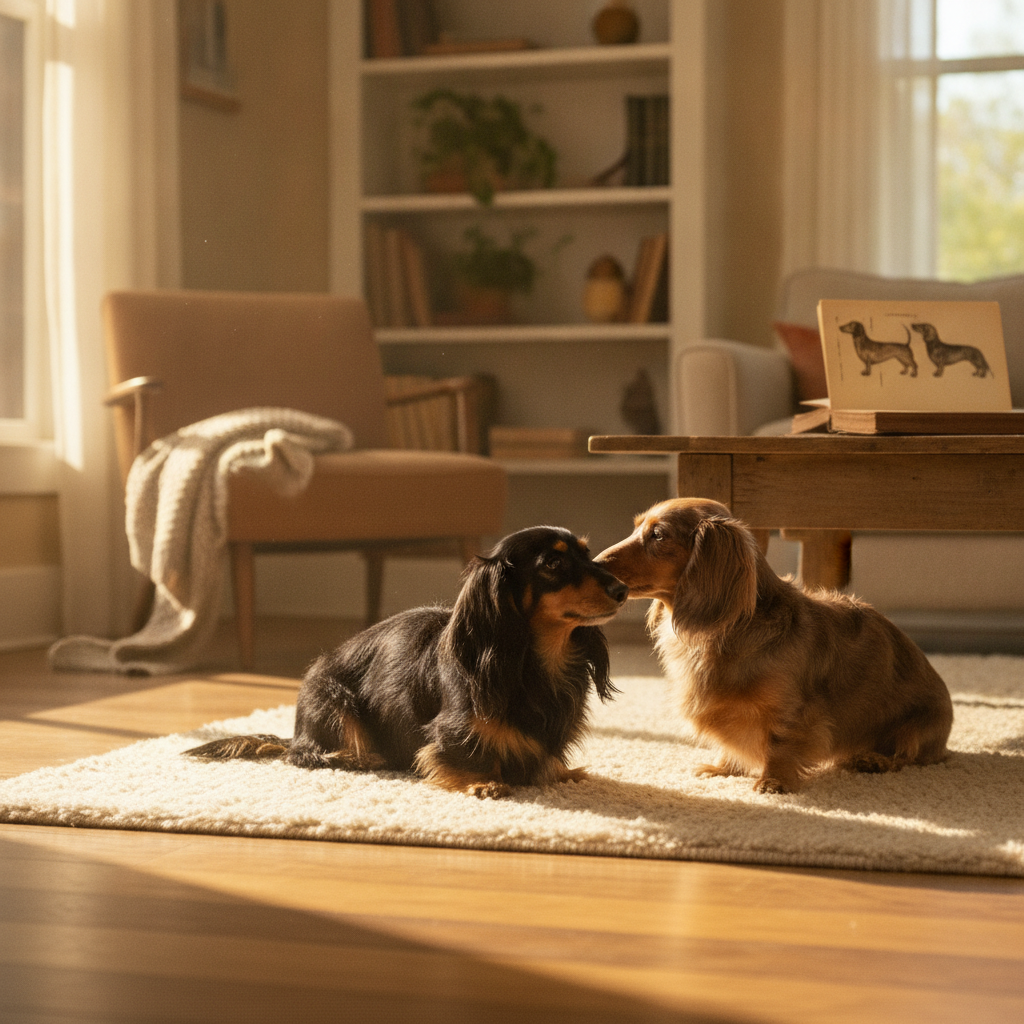
You see them at the dog park. There’s the sleek, serious-looking smooth dachshund, watching everything with the intensity of a tiny general. Over by the water bowl is the scruffy, mischievous wire-haired doxie, probably plotting to steal a golden retriever’s tennis ball. And then there’s the long-haired, trotting along with a majestic, flowing coat, looking like canine royalty. You’ve probably thought to yourself, “They can’t all be the same on the inside, can they?”
If you've ever tried to figure out the real differences between the various types of dachshunds, you've likely fallen down a rabbit hole of confusing and conflicting advice. You read a breed standard that says they’re all “courageous to the point of rashness,” which is true, but not very helpful when you’re trying to understand why your friend’s long-haired doxie is a total couch potato and your smooth-coat acts like he’s on a 24/7 badger patrol in your backyard.
You’ve probably scrolled through forums where one person swears all wire-hairs are clowns and another insists their wire-hair is a sensitive soul. It leaves you feeling like you’re missing a piece of the puzzle. The descriptions are either too generic to be useful or so specific to one dog that they feel like random anecdotes. It doesn't help you understand your own sausage dog's unique brand of wonderful weirdness.
Here’s the secret the breed books don’t tell you in a warm, friendly way: the coat isn't a magic personality switch. But—and this is a big but—the ancestry required to *create* that coat is the ultimate clue. It’s not the hair; it’s the heritage. Each coat type tells a story of a different dash of DNA added to the original dachshund recipe, and that’s where the fascinating personality differences come from.
What are the main types of dachshunds?
When we talk about the different types of dachshunds, we're primarily talking about their three distinct coat varieties. Each one was developed for a specific purpose, and to get there, breeders introduced other dogs into the dachshund bloodline centuries ago. Think of it less as three different models and more as three unique flavors of the same wonderful, stubborn, lovable breed. Let's break down the family tree.
The Smooth Dachshund: The Original Recipe
The smooth dachshund is the OG, the blueprint, the one that started it all. Their short, sleek, shiny coat is what most people picture when they hear “wiener dog.” Because they are the original model, their personality is the baseline for the breed: pure, concentrated dachshund.
They are the direct descendants of the German badger hunters. This means they are brave, incredibly determined, and have a one-track mind that’s a marvel of the animal kingdom. When a smooth doxie wants something—be it the crumb under the sofa or the sunny spot you just vacated—their focus is absolute. This is often mislabeled as stubbornness, but as I always say, your dachshund isn't being stubborn, he's being a badger hunter. That instinct is baked right in. They are fiercely loyal to their people, forming bonds that are deep and unwavering. They can be a bit more reserved with strangers, taking a moment to size them up before deciding if they are worthy of their attention. They are the quintessential dachshund, embodying the bold spirit that defines the breed.
The Wire-Haired Dachshund: The Scrappy Comedian
Now, let's add a little spice. To create a dog that could better withstand thorny underbrush and harsher weather while hunting, breeders crossed smooth dachshunds with terriers. And let me tell you, that terrier DNA did not just bring a wiry, scruffy coat and adorable little beards—it brought a whole new personality to the party.
Your wire-haired dachshund is the class clown of the family. They have a mischievous streak a mile wide and a sense of humor that will keep you laughing (and on your toes). That terrier influence often makes them more bold, more tenacious, and sometimes a bit more vocal than their smooth cousins. They are problem-solvers, which is a polite way of saying they are masters of getting into things you thought were secure. My friend’s wire-hair, Barnaby, once figured out how to open the pantry door, drag out a bag of flour, and “redecorate” the entire kitchen. You can’t even be mad; you just have to admire the ingenuity. They are endlessly entertaining, full of spunk, and their scrappy, can-do attitude is utterly charming.
The Long-Haired Dachshund: The Gentle Aristocrat
And for the final flavor, we have the long-haired dachshund. To achieve that beautiful, flowing coat, breeders are thought to have introduced spaniels into the dachshund line. This infusion didn't just give them silky fur; it often tempered some of that intense dachshund determination with a touch of spaniel sweetness.
Long-haired dachshunds can often be the calmest and most gentle of the three varieties. They tend to be a little less confrontational and a bit more eager to please. My long-haired Mia is a perfect example. While she still has her moments of classic doxie defiance, her first instinct is to cuddle. She’s happiest when she’s curled up on a lap, being admired. They are still 100% dachshund—brave, clever, and loyal—but the edges are often a little softer. They can be incredibly affectionate and are often the most “lap dog-like” of the bunch, though they’ll still chase a squirrel with the fiery passion of their ancestors at a moment’s notice. Their grooming needs are obviously higher, but the trade-off is a companion with a uniquely sweet and loving disposition. For a full breakdown on grooming for each coat, you can check out our guide on whether dachshunds shed.
Does the Coat Type Guarantee a Certain Personality?
So, we've laid out the blueprints: the classic smooth, the feisty wire-hair, and the sweet long-hair. But here’s the most important thing to remember: these are strong tendencies, not unbreakable rules. You are not ordering a dog from a catalog where “long-haired” automatically equals “calm.”
Think of the coat’s ancestry as a strong suggestion of the personality you might get. However, individual temperament, training, socialization, and life experiences are enormously powerful forces. I’ve met shy, reserved wire-hairs and I’ve met smooths who were the biggest cuddle bugs you’ve ever seen. My Mia, a long-hair, has a stubborn streak that could rival any badger hunter when she decides she doesn’t want her nails trimmed.
The beauty of dachshunds is their individuality. The coat gives you a clue to their history, a peek into the genetic ingredients that make them who they are. But the dog standing in front of you, barking at a leaf blowing across the yard, is a unique soul. Their ancestry is the starting point, not the destination.
In my nearly 20 years with this breed, I’ve seen these patterns hold true more often than not. The terrier spark in a wire-hair is undeniable, and the gentle nature of a long-hair often shines through. But what I’ve learned most is that every single dachshund, regardless of coat, is a master of wrapping you around their little paw.
Understanding these foundational differences helps you appreciate the subtle nuances of your own dog. It helps you see that your wire-hair isn’t being “naughty,” he’s just channeling his inner terrier. It explains why your long-hair might prefer a gentle stroll over a rough-and-tumble play session. It’s another layer to understanding and loving these incredible, long little dogs.
If you love figuring out the “why” behind your doxie's quirks, from their coat to their funny habits, you'll love our free guide. It helps you become a more confident doxie parent by truly understanding their unique logic. Get the free Dachshund Behavior Decoder and join the pack!
Frequently Asked Questions
Which dachshund coat type is the calmest?
Generally speaking, the long-haired dachshund often has the calmest and gentlest temperament due to the influence of spaniel ancestry in their breeding. However, this is just a tendency, and individual personality, training, and socialization play a huge role in any dog's calmness.
Do wire-haired dachshunds bark more?
Their terrier heritage can make wire-haired dachshunds more prone to being vocal and acting as vigilant watchdogs. Terriers were bred to be alert and scrappy, and that trait can translate to more barking. That said, all dachshunds were bred to have a loud bark to alert hunters, so any doxie can be a talker!
Is one type of dachshund easier to train than others?
While some owners find the long-haired variety slightly more eager to please due to their spaniel roots, all types of dachshunds possess an independent and intelligent mind. Success in training comes down to patience, consistency, and understanding their motivation, not their coat type. You have to learn to speak their language.
Does the coat affect their health or risk for IVDD?
No, the coat type has no bearing on a dachshund's risk for Intervertebral Disc Disease (IVDD) or other major health issues. The risk is tied to their long spinal structure, a characteristic shared by all dachshunds. Proper back care, like using ramps and maintaining a healthy weight, is critical for all of them.
Can you really predict a puppy's personality from its coat?
A puppy's coat gives you strong clues about the likely temperament based on the ancestry of the different types of dachshunds. It's a good starting point for what to expect, but it's not a guarantee. The puppy's parents' temperaments and early socialization are far better predictors of their future personality.
dachshund personality · dachshund coats · wire-haired dachshund · long-haired dachshund