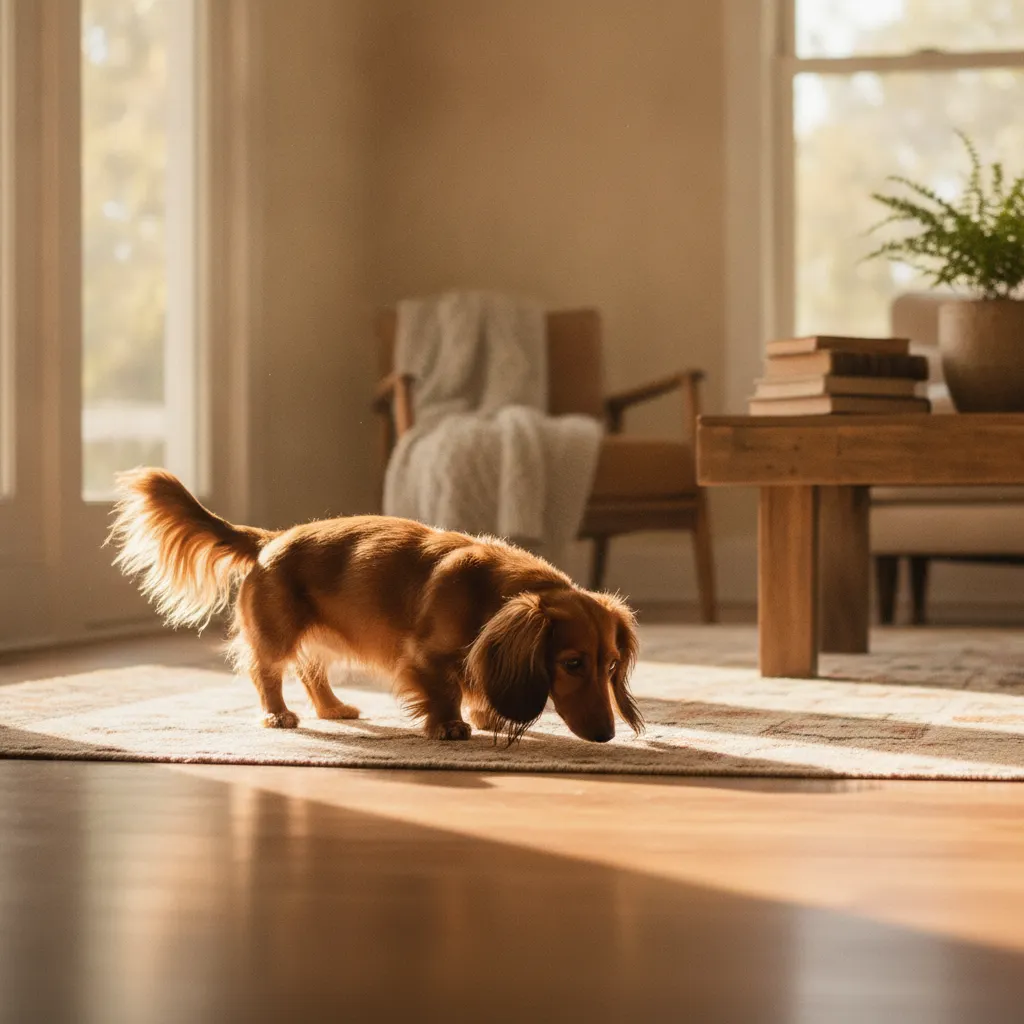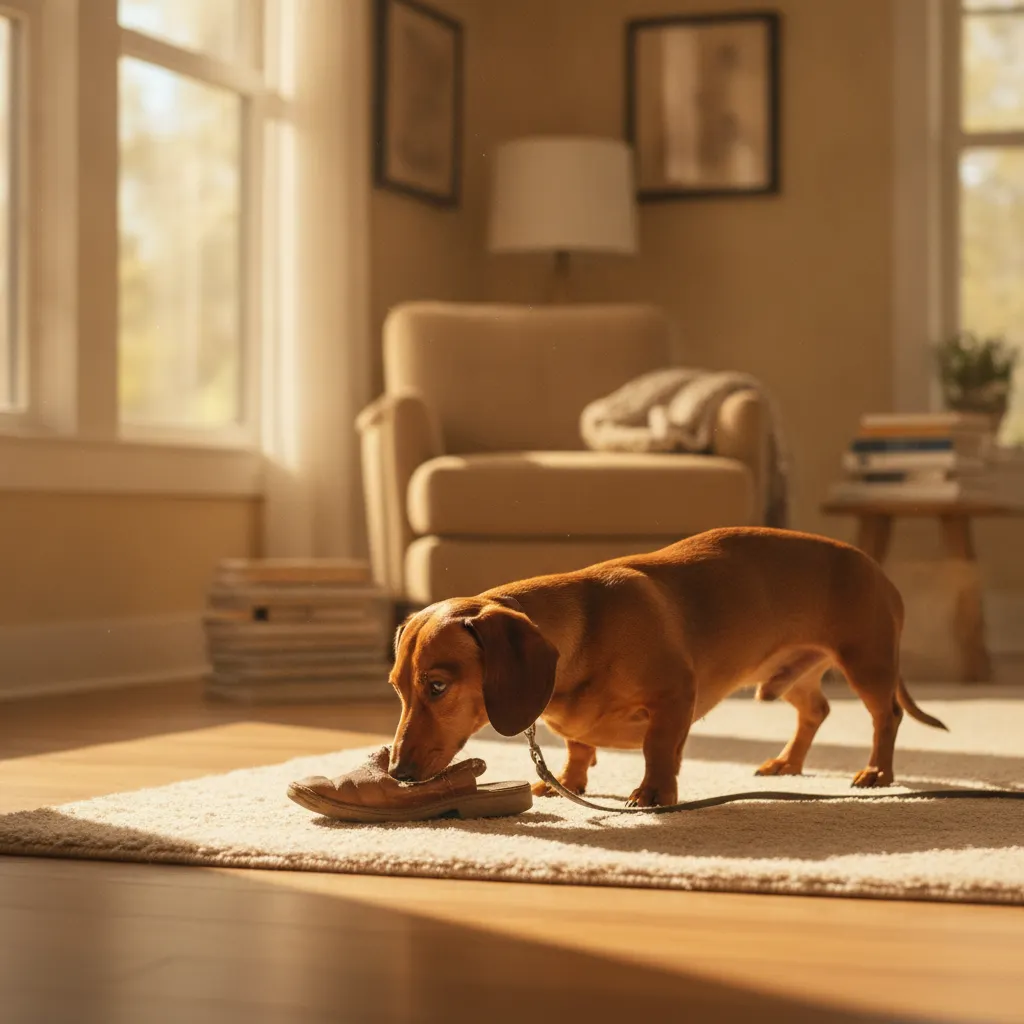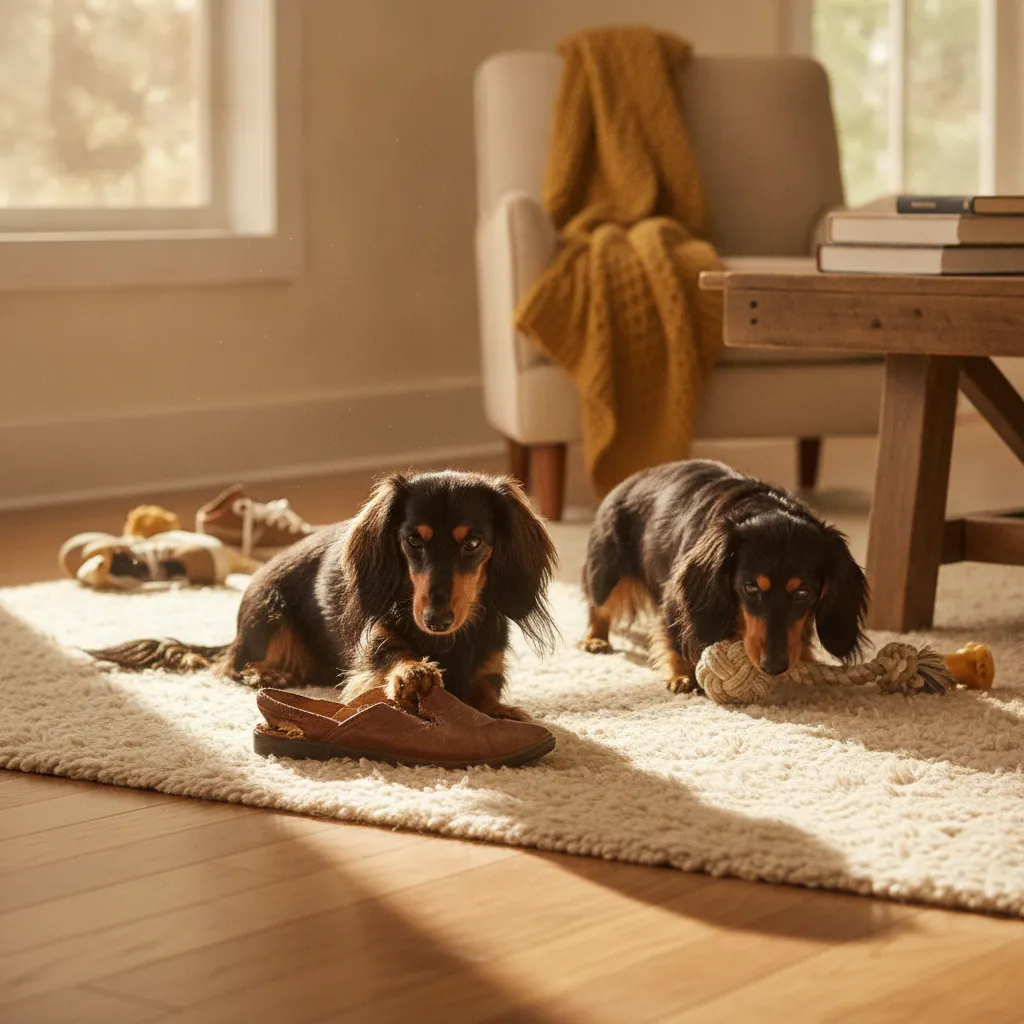
You hear it from the other room. A faint, rhythmic, *gnaw-gnaw-gnaw* sound that makes the hair on your arms stand up. You freeze, mid-step. It’s not the sound of a kibble crunch or a squeaky toy. It’s the sound of… expensive silence. You tiptoe into the living room to find your beloved dachshund, tail wagging innocently, with the corner of your favorite leather shoe clamped firmly in their jaws. They look up at you, drop the slobbery evidence, and give you that look. The one that says, “Who, me? I would never.”
If this scene feels painfully familiar, you are not alone. You are simply a member of the doxie pack. The constant worry about what they’ll destroy next, the frustration of replacing yet another phone charger, the guilt you feel after scolding them—it’s exhausting. It can make you feel like you’re failing, like your dog is deliberately defying you. But I’m here to tell you something that might change everything: Your dachshund isn’t being bad. They’re being a dachshund.
The Real Reason Your Doxie Chews: It’s a Job, Not a Crime
For nearly two decades, living with my own doxies, Marley and Mia, has taught me one profound truth: most of what we call “bad behavior” is just a job description being acted out in the wrong office. The problem of dachshund chewing isn’t about malice or a lack of love. It’s about a brilliant, tenacious, 400-year-old hunting brain trapped in a modern living room with absolutely nothing to hunt.
Think about their history. These long little dogs were bred to be fearless badger hunters. That meant digging, thinking independently, problem-solving underground, and using their powerful jaws. That instinct doesn’t just vanish because they now sleep on a velvet cushion. When that powerful instinct has no outlet, it curdles into what we see as destructive behavior. Chewing on a table leg is a poor substitute for wrestling a badger out of a burrow, but it’s the best job they can find. Your dachshund isn’t destroying your home; they’re just underemployed.
You’ve probably tried the standard advice. You’ve bought a mountain of toys that sit untouched in a basket. You’ve used those bitter-tasting sprays, only to find your doxie seems to think it’s a zesty new condiment. You’ve said “No!” a thousand times, and it works for about three seconds. These solutions fail because they only address the symptom—the chewing itself—without giving that brilliant doxie brain the work it’s craving.
The Doxie Work-Life Balance: A 4-Step Framework to Stop Destructive Chewing
Instead of fighting the instinct, we’re going to give it a proper job. This isn’t about complicated training schedules or expensive gadgets. It’s a simple shift in perspective that honors the dog you have. We’re going to manage their environment, enrich their minds, and redirect their energy. Let’s get your little hunter a new, shoe-free career.
Step 1: Become the World’s Best (and Kindest) Manager
The first step is acceptance. You live with a creature whose primary instinct is to investigate the world with its mouth. For a while, especially with a puppy, you have to become a master of prevention. This isn’t a punishment; it’s setting your dog up for success. A human toddler can’t be expected to ignore a box of crayons left on the floor, and a doxie can’t be expected to ignore a tempting pair of leather shoes. Doxie-proofing is an act of love.
- Get on Their Level: Literally. Lie on the floor and look around. What do you see? Dangling phone chargers, loose wires, the corner of the rug, the wooden legs of the coffee table. These are all prime chew targets. Use cord protectors, tuck wires away, and temporarily move or block access to tempting furniture.
- The Shoe Sanctuary: Shoes are irresistible. They smell like you, their texture is satisfying, and they’re the perfect size to carry off to a secret lair (under the bed). For now, all shoes live in a closet with a closed door or on a high shelf. No exceptions.
- The Crate as a Den, Not a Jail: A crate, when introduced properly, can be a safe, cozy den for your dachshund. It’s an essential management tool for when you can’t supervise them. Make it a wonderful place with a comfy bed and a special, crate-only chew toy. It keeps them safe from swallowing something dangerous and keeps your home intact.
Step 2: Be a Detective: What's Driving the Chew?
Chewing isn’t a one-size-fits-all behavior. The reason a 4-month-old puppy is chewing is very different from a 4-year-old adult. Before you can offer the right solution, you need to be a bit of a detective.
Is it Teething? (Approx. 3-7 months old)
Puppy chewing is frantic, intense, and often focused on anything that provides relief to their sore gums. Their adult teeth are pushing through, and it’s uncomfortable! During this phase, your job is to provide safe and soothing outlets. Frozen carrots, a washcloth soaked in water and then frozen, or puppy-specific teething toys from the freezer can be lifesavers. The goal is to teach them *what* to chew on, not to stop the chewing entirely.
Is it Boredom? (The #1 Culprit in Adults)
This is the big one. A bored dachshund is a destructive dachshund. If the chewing happens most when they’ve been left alone, or in the evening when the house is quiet, it’s likely a cry for mental stimulation. They’ve had their naps, their meals, their potty breaks… and now their brain is yelling, “Give me a job!” This is where enrichment becomes your most powerful tool. As I explain in my guide to brain games for dachshunds, a few minutes of mental work is more tiring than a long walk.
Is it Anxiety?
Does the chewing happen exclusively when you’re preparing to leave or right after you’ve gone? Does it come with other signs like barking, whining, or pacing? This might be separation anxiety. The chewing is a self-soothing mechanism, a way to cope with stress. This is more complex than boredom and may require a more structured approach, sometimes with the help of a professional trainer or your vet. The key is that the chewing is a symptom of a deeper emotional distress.
Step 3: Hire Them for a Better Job (Enrichment and Redirection)
Once you’ve managed the environment and diagnosed the likely cause, it’s time for the fun part: giving them a better job than “Furniture Quality Control Inspector.” You need to provide legal, satisfying outlets for that chewing instinct.
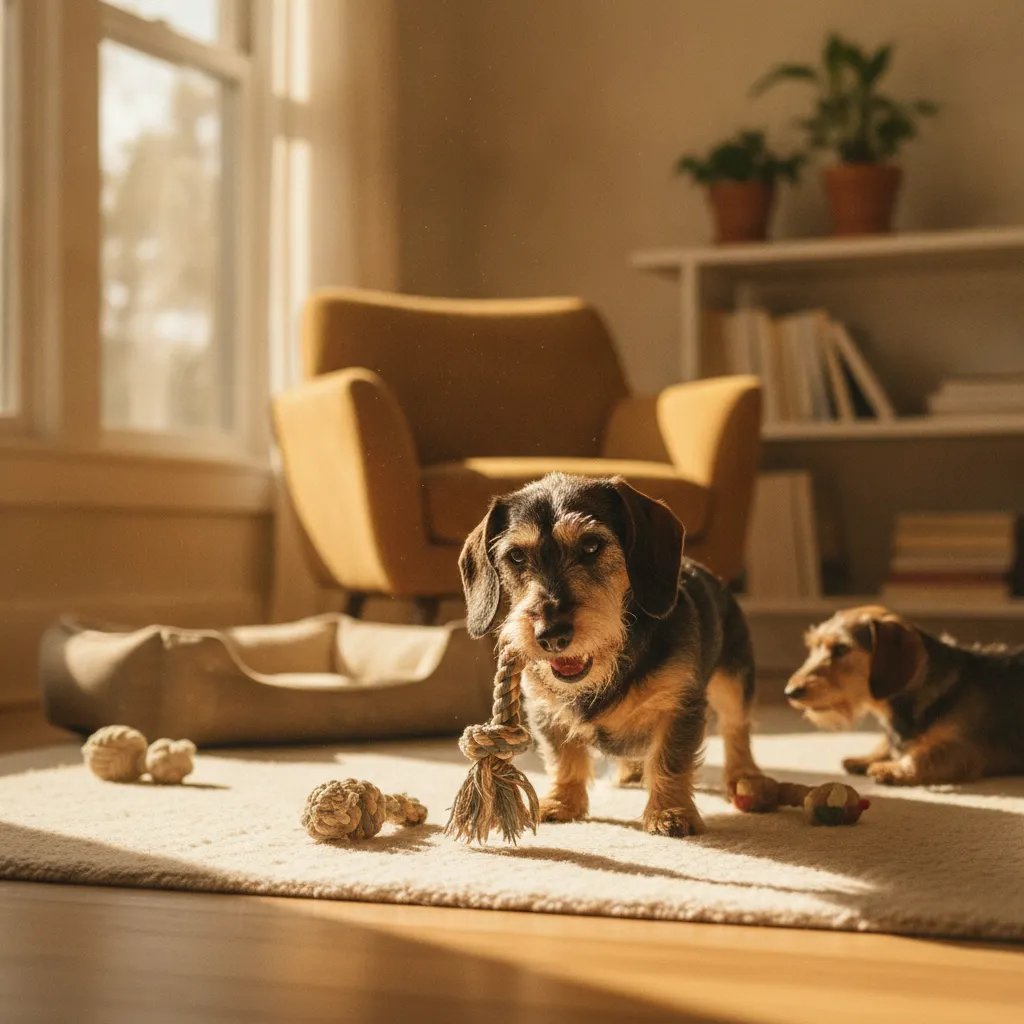
The Chew Toy ArsenalDon’t just buy one type of toy. You need a library of options because different moods call for different chews. I keep a rotation for Marley and Mia to keep things interesting.
- Long-Lasting Chews: These are for serious chewing sessions. Things like nylon bones (like Nylabones), coffee wood chews, or hard rubber toys (like KONGS). These are great for persistent chewers.
- Edible Chews: These provide the satisfaction of actually consuming something. Bully sticks, beef tendons, or dental chews are fantastic. ALWAYS supervise your doxie with edible chews to ensure they don’t choke or swallow a large piece.
- Puzzle Toys: This is where you hit the jackpot for a doxie’s brain. A KONG stuffed with peanut butter and frozen, a snuffle mat for foraging, or a puzzle ball that dispenses treats. These toys combine the physical act of chewing and licking with the mental work of problem-solving. It’s the perfect doxie job.
What do you do when you catch them in the act? Yelling “No!” and snatching the item away can create a game of keep-away or resource guarding. Instead, master the art of the trade. Calmly approach with a high-value chew toy or a tasty treat. Say “Trade!” in an upbeat voice, and offer them the better item. When they drop the forbidden object (the shoe, the remote), praise them lavishly and give them their prize. You’re not rewarding the initial chewing; you’re rewarding the act of giving the item up. You’re teaching them that letting go of things leads to better things.
Step 4: Audit the Daily Routine (A Tired Doxie is a Happy Doxie)
Sometimes, destructive chewing is a sign that their overall daily needs aren’t being met. A walk around the block on a leash is great for a potty break, but it does little to engage their hunter’s brain.
Incorporate a “sniffari” into your walks. Let them lead the way (safely, of course) and spend as much time as they want sniffing a single blade of grass. Sniffing is incredibly stimulating and tiring for a dog. Five minutes of intense sniffing can be more exhausting than a 15-minute brisk walk.
Also, dedicate just 5-10 minutes a day to a fun training session. Practice cues they already know or teach them a new trick. This direct engagement works their mind, strengthens your bond, and burns off that excess mental energy that often fuels the dachshund chewing habit. Many of these odd habits are just part of the breed, as I discuss in my article on whether certain doxie habits are normal, but destructive chewing is one we can and should address.
Your dachshund’s chewing isn’t a sign of disrespect. It’s a cry for engagement from one of the world’s most intelligent and work-oriented breeds. When you reframe the behavior as an unmet need, you stop being a frustrated warden and become a loving and effective boss.
I remember a phase when Mia decided the wicker basket holding our blankets was her personal chew toy. Every evening, I’d find new little bits of wicker on the floor. My first instinct was frustration. But then I took a breath and asked, “What job is she trying to do?” She was doing it in the evening, when we were settled in watching TV. She was bored! So, I started saving her dental chew for that specific time. The moment she’d even look at the basket, I’d say “Mia, want your chew?” and she’d come running. The basket was saved, and she was happier having a sanctioned “job” to do while we relaxed. It wasn't about stopping the chew, it was about redirecting it to the right place.
Living with a dachshund means making small, loving adjustments to your world to accommodate their giant spirit. By managing their space, understanding their needs, and providing fulfilling work, you can save your shoes—and more importantly, build a deeper, more understanding relationship with your wonderful, stubborn, brilliant little sausage dog.
If this “aha!” moment about chewing has you curious about the *why* behind all the other quirky things your doxie does, from the barking to the burrowing, I’ve got just the thing for you. It’s the key to becoming a more confident doxie parent. Get the free Dachshund Behavior Decoder and start understanding the brilliant little hunter living in your home.
Frequently Asked Questions
Why does my dachshund chew on blankets and soft things?
Chewing on soft items like blankets is often a self-soothing behavior, similar to a child sucking their thumb. It can be a sign of comfort or a way to deal with mild anxiety. As long as they aren't ingesting the fabric, it's generally a harmless habit that speaks to their need for security.
Is it normal for a dachshund puppy to chew so much?
Yes, it is completely normal and expected. Between three and seven months of age, dachshund puppies are teething, and their gums are sore. Providing plenty of safe, frozen chew toys can help soothe their gums and will teach them what is appropriate to chew on during this intense phase.
What are some chews that are unsafe for dachshunds?
You should avoid cooked bones of any kind, as they can splinter and cause serious internal damage. Many vets also caution against rawhide, which can pose a choking and digestive blockage risk. Hard items like antlers or bones can also be too hard and risk cracking a tooth, a common and painful issue for doxies.
How can I stop my dachshund from chewing when I'm not home?
The best strategy is a combination of management and enrichment. Crate training provides a safe space where they can't get into trouble. To prevent boredom, leave them with a high-value puzzle toy, like a frozen KONG, that will keep their mind busy while you're away. This makes their alone time a positive and engaging experience.
Can a sudden increase in dachshund chewing be a medical issue?
Yes. While most dachshund chewing is behavioral, a sudden change could signal a problem. Dental pain, gastrointestinal discomfort, or nutritional deficiencies can sometimes lead to an increase in chewing. If your adult dog's chewing habits change dramatically and suddenly, it's always wise to schedule a check-up with your vet to rule out any underlying health issues.
At what age do dachshunds stop the destructive chewing phase?
The intense teething-related chewing usually subsides by 7-8 months of age. However, chewing is a natural dog behavior that never truly stops. The goal is to transition them from destructive puppy chewing to appropriate adult chewing on toys and safe chews by managing their environment and meeting their mental enrichment needs.
chewing · dachshund behavior · puppy training · dog enrichment