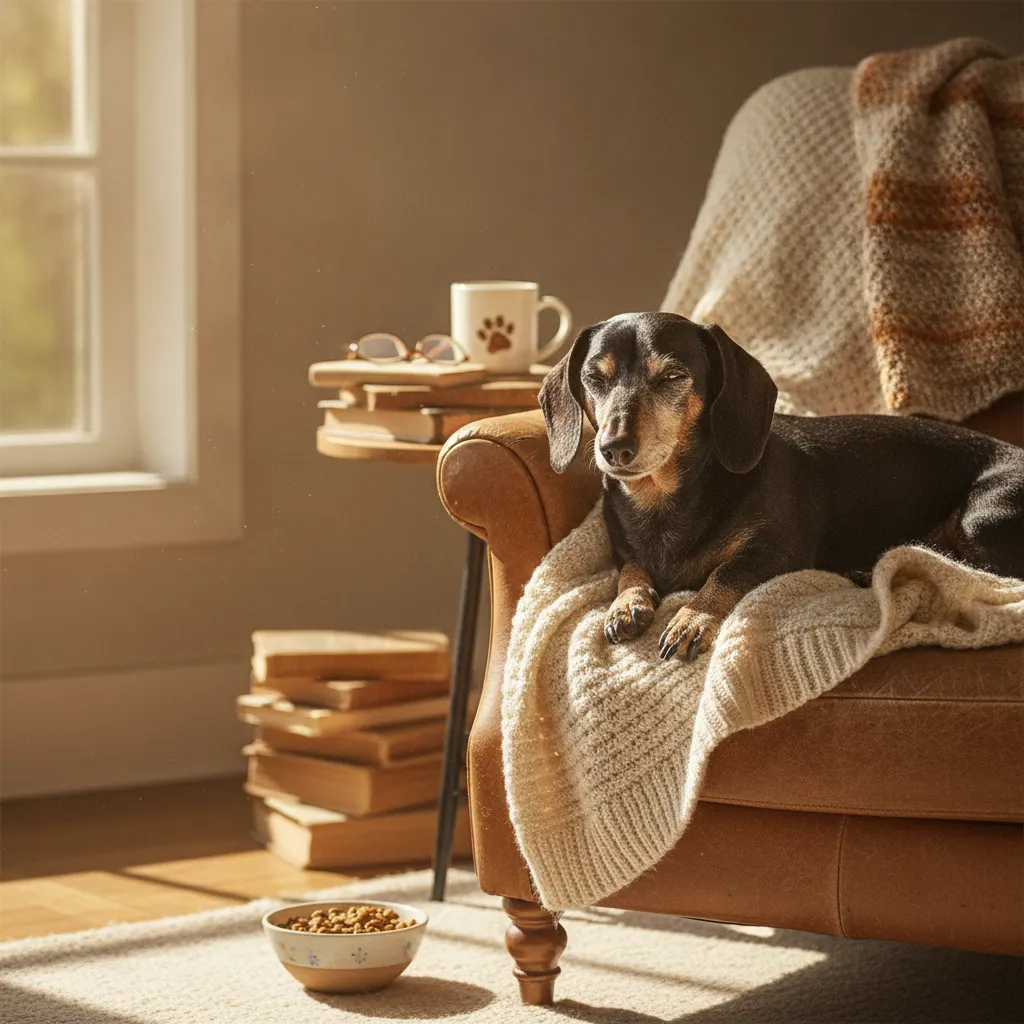
I once spent an entire weekend in a low-grade panic because Marley, my older doxie, started sneezing. Not a normal sneeze, but a weird, snorting, honking sneeze that sent my heart into my throat. I Googled. I watched YouTube videos. I convinced myself he had everything from a collapsed trachea to a foxtail lodged in his brain. On Monday, my vet took one look, chuckled, and said, "Sondra, it's just allergies."
We’ve all been there. As doxie parents, we’re conditioned to live with a certain level of anxiety. We build our homes around ramps and watch every jump with the laser focus of an air traffic controller. We become experts in IVDD, that big worry that lives in the back of our minds. But in our hyper-focus on the back—and maybe, as they age, the brain—we can develop a kind of tunnel vision. We’re so busy watching for the sudden, dramatic crisis that we miss the quiet, creeping changes that signal other common issues in senior dachshund health.
The real challenge isn't just one big thing; it's the slow, subtle drift of their 'normal' that can signal issues with their kidneys, their adrenal glands, or their heart. And when you try to figure it out on your own, you fall into the same traps that leave you feeling more anxious, not less.
Why Panicked Googling Doesn't Work
You notice your doxie is drinking a lot more water. So you type “dachshund drinking a lot” into a search bar and are immediately hit with a tidal wave of possibilities: kidney failure, diabetes, Cushing’s disease. You land in a forum where five people confidently diagnose your dog based on a two-sentence description, each one contradicting the last. You try to “wait and see,” but now you’re watching the water bowl with an obsessive dread. Every slurp sounds like a siren.
This approach fails because it’s reactive, not proactive. It’s based on fear, not observation. You’re looking for a diagnosis, which isn't your job. Your real job, the one that will actually help your dog and preserve your sanity, is to be the world’s leading expert on one very specific subject: your dog’s daily routine. The problem isn’t that our senior doxies get sick. The problem is that we’re looking for a single, loud event instead of listening for a quiet, consistent whisper.
The Reframe: From Symptom Detective to Routine Scientist
Here’s the shift that changes everything: Stop trying to be a vet. Start being a scientist of your dog’s normal. Your vet has the medical degree, but you have the data. You are the one who knows how many times your doxie circles before pooping, the specific squeak that means “I need to go out NOW,” and the exact spot on the couch that gets the best sunbeam at 3 PM.
These aren't just cute quirks; they are data points. And when it comes to the big three “silent” senior issues—Cushing’s, kidney disease, and heart trouble—your data is the most powerful tool you have. The goal is to walk into your vet's office and say, “For the last two weeks, her resting breath rate has been 30 breaths per minute, up from her usual 22,” instead of a panicked, “I think she’s breathing funny.” One is data; the other is anxiety. Vets work best with data.
The Three 'T's of Senior Doxie Wellness: Thirst, Tummy, and Trot
To make this simple, I’ve broken it down into three key areas to observe. Think of these as your daily check-in, a mindful moment to notice the trends. This isn't about adding another worry to your list; it's about replacing vague anxiety with focused, loving attention.
1. Thirst & Pee: Your Window into Kidneys and Cushing's
Increased thirst (polydipsia) and urination (polyuria) are the classic, billboard signs for both Chronic Kidney Disease (CKD) and Cushing’s disease. But “increased” is relative. That's why establishing a baseline is so important.
What are these conditions, simply?
- Cushing's Disease: Think of it as the body’s stress-hormone dial being stuck on high. The adrenal glands produce too much cortisol, which affects nearly every system in the body. It’s a slow, sneaky condition that often gets mistaken for “normal old age.”
- Chronic Kidney Disease (CKD): This means the kidneys, the body’s amazing filtration system, are gradually losing their ability to do their job. It's a common issue in older dogs of all breeds.
How to be a Routine Scientist:
- Measure the Water: Don't just guess. For three days, measure exactly how much water you put in the bowl in the morning and how much is left 24 hours later. A normal dog drinks about one ounce of water per pound of body weight per day. A 15-pound doxie should drink around 15-20 ounces. Knowing their specific “normal” is pure gold for your vet.
- Observe the Output: Are you suddenly filling more potty pads? Is your perfectly house-trained doxie having accidents overnight? This isn't them being “bad”; it’s a physical signal they can’t control. Note the frequency and volume if you can.
- Look for Other Clues: With Cushing’s, you might see a pot-bellied appearance, thinning skin, hair loss (often symmetrical on the body), and low energy. With kidney disease, you might notice a chemically smell to their breath, a decreased appetite, or weight loss. A sudden refusal to eat is always a vet-worthy call, as any seasoned doxie parent knows from experience with a stubborn sausage's dinner strike.
The golden rule of senior pet care is this: Quirks are consistent; problems are a change. If your doxie has always been a big drinker, that's their baseline. If they suddenly start draining the bowl twice as fast, that's new data.
2. Tummy & Breath: Listening to the Heart
We don't often think about heart health in dachshunds, but it's a crucial part of the senior dachshund health picture. Congestive Heart Failure (CHF) happens when the heart can no longer pump blood efficiently, leading to fluid backup, often in the lungs. The earliest signs are incredibly subtle and easy to miss if you're not looking for them.
How to be a Routine Scientist:
- Count the Breaths: This is the single most important tool you have for monitoring heart health at home. When your doxie is fully asleep (not just snoozing, but deep sleep), count the number of breaths they take in one minute. One rise and fall of their chest is one breath. A healthy, resting dog's rate should be under 30 breaths per minute, and often closer to 15-25.
- Establish a Baseline: Do this once a week and write it down. Just like with water, you're looking for a trend. If their normal rate is 20, and one day it’s 24, that’s fine. If it’s suddenly 35, and the next day it’s 38, that is a clear, objective signal to call your vet immediately.
- Listen for a Cough: A heart-related cough is often soft and persistent, and may be worse at night or after they’ve been lying down. It’s different from a “reverse sneeze” or kennel cough. It sounds more like they’re trying to clear their throat.
- Check Energy Levels: Is your doxie suddenly tiring out halfway through your normal walk? Are they less interested in playing? While this can be a sign of many things, including joint pain we discuss in our guide to knees and hips, when combined with a rising respiratory rate, it points toward the heart and lungs.
3. Trot & Mood: Gauging Overall Vitality
This category is about your dog’s general spark. It’s less about a specific organ and more about their overall quality of life. As doxies age, we expect them to slow down, but a significant change in their movement or mood can be a sign of underlying pain or illness, not just a number on their birth certificate.
How to be a Routine Scientist:
- Watch Their Gait: Are they stiff when they get up? Do they hesitate before jumping onto their favorite (and hopefully ramp-accessible) chair? While we always think of the back, this can also be arthritis in the hips, knees, or even their little wrists.
- Observe Their Engagement: Is your once-curious doxie now seeming distant or confused? Do they get “stuck” in corners or seem to forget why they walked into a room? This could be a sign of Canine Cognitive Dysfunction, or doggy dementia. We have a whole guide on telling the difference between grumpiness and something more.
- Note Their Appetite and Weight: Any unexplained weight loss is a red flag. A dwindling appetite can be tied to everything from dental pain to kidney issues. Keep track of their weight, either at home or with a quick stop at the vet's office scale.
My Experience with Mia's 'Quiet' Change
For years, my focus was on protecting my doxies' backs. Then one day, I realized Mia, my sweet little girl, just wasn't her peppy self. It wasn't one big thing. She was just... flatter. She was also drinking more water. My old self would have panicked. But my “routine scientist” self kicked in. I measured her water intake for three days—it was consistently double her normal. I checked her resting respiratory rate—it was normal. I noted that she was still eating, but with less enthusiasm.
I went to the vet with a notebook. “Here’s her water intake for the last 72 hours. Her energy is at about 60% of normal. Her appetite is down 20%. Everything else seems the same.” A few blood tests later, we had our answer: early-stage kidney disease. Because we caught it early with data, not panic, we were able to make simple dietary changes and start medications that have given her years of happy, comfortable life. My observation was the key. Your observation will be, too.
You are the guardian of your dachshund's well-being. Shifting from a place of fear to a place of focused observation is the kindest thing you can do for your dog and for yourself. You know them better than anyone. Trust that knowledge.
Understanding these health trends is one part of being a confident doxie parent. The other is understanding the 'why' behind their quirky day-to-day behavior. Our free Dachshund Behavior Decoder helps you connect the dots, so you can tell the difference between a funny quirk and a potential signal that something is off. Get the free Dachshund Behavior Decoder and feel more in control of your senior doxie's care.
Frequently Asked Questions
How can I tell the difference between normal aging and a serious health problem?
The key is the mantra: quirks are consistent, problems are a change. A slow, gradual graying of the muzzle is normal aging. A sudden, drastic increase in water consumption over two weeks is a change that warrants a vet visit. Tracking their routine helps you spot those changes early.
What are the most important blood tests for a senior dachshund?
Your veterinarian will likely recommend a “senior panel” during annual or semi-annual checkups. This typically includes a Complete Blood Count (CBC) and a chemistry panel, which checks liver values, kidney values (like BUN and creatinine), electrolytes, and blood sugar. This is one of the best tools for monitoring your senior dachshund health proactively.
Is a pot belly in a senior dachshund always a sign of Cushing's?
Not always, but it's a classic sign that should be investigated. A pot-bellied appearance can also be caused by simple weight gain, fluid in the abdomen from other conditions, or an enlarged liver. Your vet can help determine the cause, but if you notice this change, it's worth making an appointment.
My senior doxie is coughing. Should I panic?
Don't panic, but do observe and act. Note when the cough happens (at night, after exercise?), what it sounds like (wet, dry, honking?), and start measuring their resting respiratory rate. A persistent cough is always worth a call to your vet to rule out serious issues like heart disease or tracheal problems.
How does this focus on senior dachshund health connect to their back health?
It's all connected! Maintaining a healthy weight is critical for protecting their back, and conditions like Cushing's can cause muscle wasting and weight gain that puts extra strain on their spine. Similarly, managing arthritis and overall pain helps keep them mobile and strong, which supports their core and back. A healthy dog is a back-safe dog.
At what age is a dachshund considered a "senior"?
Generally, dachshunds are considered seniors around 8 years of age. However, this is just a guideline. The most important thing is to start thinking about proactive senior care and wellness checks as they approach this age to catch any potential issues as early as possible.
senior dog · dachshund health · Cushing's disease · kidney disease