The Muppet in Your Living Room
You brought home a tiny, fuzzy, whiskered creature that looked like a character straight out of Jim Henson's workshop. You fell in love with that scruffy beard, those expressive eyebrows, and that wiry little jacket. But a few months in, the adorable scruff starts to look... well, a little less adorable and a lot more like a neglected shag carpet. The fur is getting long, soft, and maybe even a bit matted. So you do what any loving owner would do: you book an appointment at the groomer.
And that's where the confusion begins. One person tells you to never, ever let clippers touch your dog. Another says hand-stripping is cruel and expensive. You just wanted your doxie to look neat and tidy, but now you're feeling stuck, unsure how to make a choice that won't "ruin" their coat forever. It feels like a much bigger decision than a simple haircut, and frankly, it is. But it doesn't have to be this confusing.
Why Is Wire-Haired Dachshund Grooming So Complicated?
The heart of the problem isn't about which tool to use. It's that most of us, and even many professional groomers, misunderstand what a wire coat actually is. We think of it as hair, like our own or a poodle's, that just grows continuously. So, we think the logical solution is to cut it. Simple, right?
This is the number one mistake owners of wire-haired dogs make. That wiry coat isn't just for looks; it's a piece of functional equipment. It’s a weatherproof, dirt-proof, briar-proof jacket developed over centuries to protect a tenacious little hunter diving into badger dens and thorny bushes. When you treat that high-performance jacket like a simple fleece pullover, you start to see the problems pile up:
- The Color Fades: That vibrant wild boar or deep red color starts to look pale and washed out, turning into a dull, flat apricot or grey.
- The Texture Changes: The crisp, wiry feel is replaced by a soft, cottony, or even greasy texture that mats easily and holds onto dirt and moisture like a sponge.
- The Protection is Gone: Your doxie's built-in raincoat stops working. Instead of water beading up and rolling off, it soaks right through to their skin, leaving them damp, cold, and miserable on rainy potty breaks. You can find more tips on this in our guide to handling potty strikes in the rain.
You took your dog for a trim to solve a problem, and instead, you created three new ones. You're not a bad owner for this; you were given the wrong information based on a fundamental misunderstanding of your dog's coat.
The Reframe: It’s Not a Haircut, It’s a Coat Renewal
Here’s the shift in thinking that changes everything: Clipping is a haircut. Stripping is a coat renewal.
A wire-haired dachshund has a double coat. It consists of two layers:
- A soft, dense undercoat for insulation.
- A harsh, wiry outer coat of guard hairs for protection from the elements.
These wiry guard hairs don't grow indefinitely. They grow to a certain length, die, and then sit in the follicle until they are pulled out, making way for a new, vibrant wire hair to grow in its place. It's a cyclical process, much like a tree shedding its leaves in the fall.
When you use clippers, you're just cutting the dead wire hair and the living undercoat to the same length. The dead hair remains in the follicle, blocking the new wire hair from growing in properly. The soft undercoat, now cut, begins to grow faster and take over. Repeat this cycle a few times, and you're left with a coat that is almost entirely soft undercoat. You've effectively told the body to stop producing its protective layer.
Hand-stripping, on the other hand, works *with* this natural cycle. It's the process of gently pulling out those dead outer hairs that are ready to come out anyway. It doesn't hurt the dog because the hair is already released from the follicle. This action stimulates the follicle to produce a brand new, healthy, wiry hair. You are simply helping your dog shed the old, dead layer to reveal the new coat waiting underneath.
Your Guide to a Perfect Wire-Haired Coat
So, how do you achieve this? Proper wire haired dachshund grooming is a system, not a single event. It's about maintaining that natural cycle. Whether you choose to do it yourself or find a professional, here is the framework for success.
Method 1: The Gold Standard - Hand-Stripping
This is the ideal method for maintaining the coat's color, texture, and function. It can seem intimidating, but the basics are straightforward.
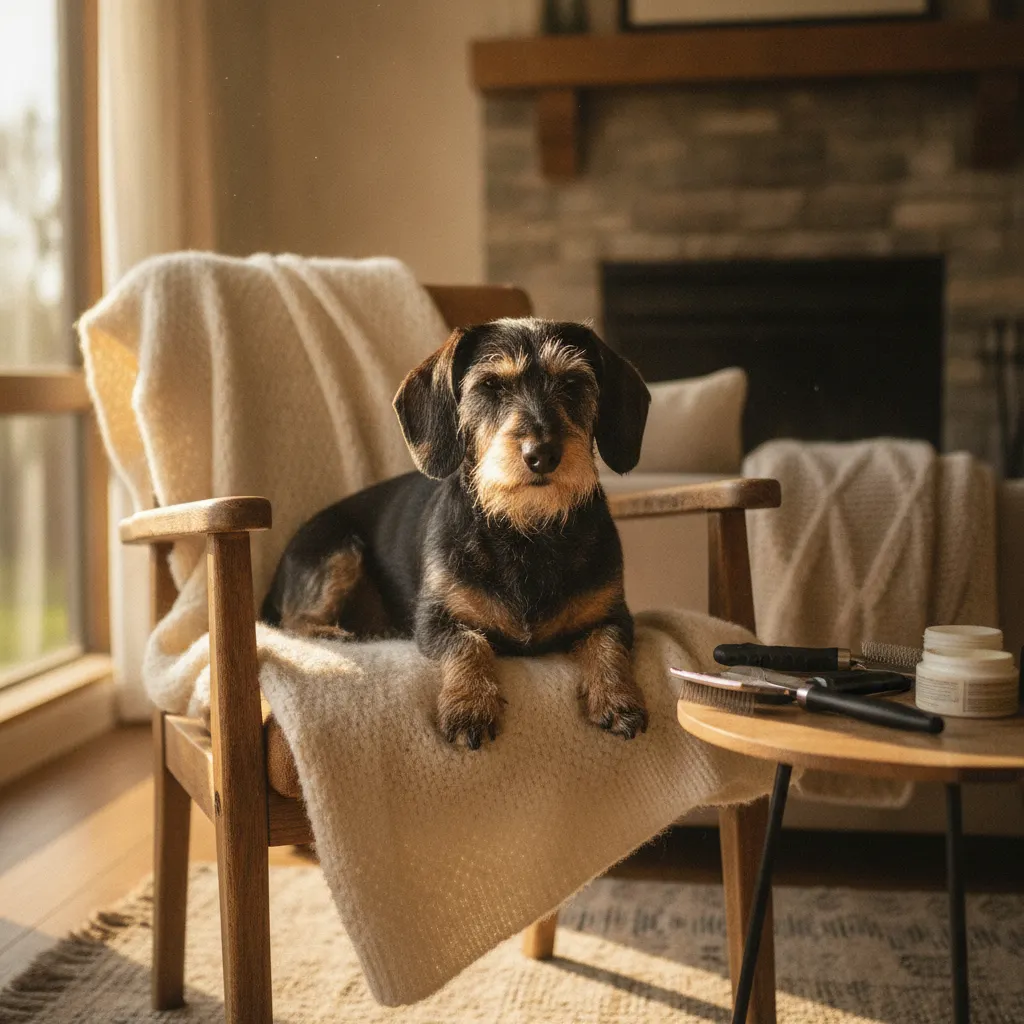
The Tools You'll Need:- Stripping Knives: Don't let the name scare you! These are not sharp. They are dull tools with teeth that help you grip the hair. You'll want a coarse one for the body and a fine one for detail work on the head and ears.
- Stripping Stone: A pumice or grooming stone can help grip fine hairs.
- Latex Gloves or Finger Cots: These can give you a better grip on the hair.
- A Good Brush and Comb: For removing loose hair and checking your work.
The core principle is to pull a small amount of hair at a time, in the direction it grows, while holding the skin taut with your other hand. You're not yanking; it's a firm but gentle plucking motion.
- Start Young: Get your puppy used to being handled and having their fur pulled gently all over their body. Make it a positive experience with lots of praise and treats.
- Know When to Strip: The coat is "blown" or ready to be stripped when the hairs are at their maximum length and you can pull them out easily without resistance. You can test this by pinching a small section of hair and pulling gently. If a little clump of wiry hair comes out easily, it's time.
- Work in Sections: Start with the back and work your way down the sides. Hold the skin taut behind the area you're working on and pull a few hairs at a time with your thumb and forefinger (or your stripping knife). Always pull in the direction of hair growth.
- Rolling the Coat vs. A Full Strip: Some owners "roll" the coat, which means they do a little bit of stripping every week or two to constantly remove the longest hairs and maintain a consistent length. Others prefer to do a full strip twice a year when the entire coat is ready. For a pet dachshund, rolling the coat is often easier to manage.
- Furnishings and Sensitive Areas: The beard, eyebrows, and leg furnishings are typically left longer. These areas, along with the belly and under the tail, are more sensitive. Many groomers will use thinning shears to tidy these spots rather than stripping them completely.
Method 2: Finding a Professional
If DIY isn't for you, finding a groomer who is skilled in hand-stripping is crucial. This is a specialized skill, and not all groomers know how to do it correctly. When you call, don't just ask if they do hand-stripping. Ask specific questions:
- "What breeds do you typically hand-strip?" (You want to hear answers like Terriers, Schnauzers, and other wire-coated breeds).
- "Can you explain your process to me?"
- "What is the price difference between a clip and a hand-strip?" (Expect it to be significantly more expensive due to the time and skill involved).
A good groomer will be happy to explain the benefits and show you their work. A bad sign is a groomer who tries to talk you out of stripping and into the "easier" option of clipping.
Method 3: The Clipping Compromise
Let's be realistic. Sometimes, hand-stripping just isn't an option. It can be expensive, skilled groomers may not be available in your area, or your dog may have a skin condition or temperament that makes it impossible. My first wire-haired doxie, Marley, was clipped his whole life before I knew better.
If you must clip, you can still take steps to mitigate the damage to the coat. This isn't ideal, but it's far better than doing nothing.
- Use a Longer Guard Comb: Ask the groomer to use a longer blade or a guard comb. Shaving the coat down to the skin is what does the most damage. Leaving some length can help protect the skin.
- Carding is Your Best Friend: "Carding" is the process of using a stripping knife or a specialized tool like a Coat King to rake through the coat and remove the dead, fluffy undercoat. If you are clipping, regular carding at home (once or twice a week) is non-negotiable. This will help reduce the bulk of the undercoat, prevent matting, and allow the skin to breathe.
- Accept the Change: You have to accept that the coat's texture and color will change. It will be softer and paler. It will not be weatherproof. But with regular brushing and carding, you can still keep it healthy and comfortable for your dog.
I learned this the hard way with Marley. His vibrant red coat turned a soft, pale apricot. In the rain, his clipped coat would get soaked to the skin in minutes. With my second wire, Mia, I was determined to learn hand-stripping from the start. Today, her coat is like a little Gore-Tex jacket. Water beads right off, she rarely gets dirty, and her color is as rich as the day we brought her home. It's more work, but seeing that functional, beautiful coat makes it all worth it.
Putting It All Together
Caring for that wiry coat is a journey. Don't be discouraged if it feels overwhelming. The most important step is the one you've already taken: seeking to understand the *why* behind the grooming. You're no longer just thinking about a haircut; you're thinking about the health and function of your dachshund's purpose-built jacket.
Whether you choose to learn hand-stripping, find a trusted professional, or make the best of a clipped coat, you're now equipped to make an informed decision. You understand the cycle of the coat, and you can advocate for your scruffy little sausage dog. That knowledge is the best tool you can possibly have.
Understanding your doxie's unique coat is just like understanding their quirky behaviors—like why they burrow, why they bark at everything, or why they give you that famous side-eye. It's all about knowing the 'why' behind the 'what.' To become a more confident doxie parent by learning the reasons behind their most confusing actions, Get the free Dachshund Behavior Decoder.
Frequently Asked Questions
Does hand-stripping hurt my dachshund?
When done correctly on a coat that is ready, hand-stripping does not hurt. The wiry outer hairs have a natural life cycle where they die and loosen in the follicle. Stripping simply removes these already-dead hairs, similar to how you might shed hair from your own head.
Can I reverse the damage if my wire-haired dachshund has been clipped?
It is sometimes possible, but it requires patience and effort. You must stop clipping and let the coat grow out completely. Then, using carding tools and eventually stripping, you can begin to remove the built-up undercoat and try to encourage new wire hairs to grow. It can take several growth cycles and may never return to its original quality, but improvement is often possible.
How much does professional hand-stripping cost?
The cost varies widely by location and groomer expertise, but you should expect it to be significantly more expensive than a standard clip and groom. It can often be two to three times the price because it is a time-consuming, manual process that requires specialized skill.
How do I know when my dog's coat is ready to be stripped?
The coat is ready when it looks overgrown and shaggy, and the hairs come out easily with a gentle pull. You can test it by pinching a small section of the longest hairs and tugging lightly. If a little tuft comes out without resistance, the coat is "blown" and ready for stripping.
What's the difference between a stripping knife and a regular knife?
A stripping knife is not sharp at all. It's a grooming tool with a dull edge and serrated teeth designed to help you grip small sections of hair to pull them out. It should never cut the hair; its sole purpose is to improve your grip for the stripping process.
Is wire haired dachshund grooming more difficult than for other coats?
It requires a different technique than grooming for smooth or long-haired dachshunds. While the process of hand-stripping takes more time and skill than simple brushing or clipping, many owners find that a properly maintained wire coat is easier to care for day-to-day as it naturally repels dirt and doesn't mat as easily.
wire-haired dachshund · dog grooming · hand stripping · dachshund care