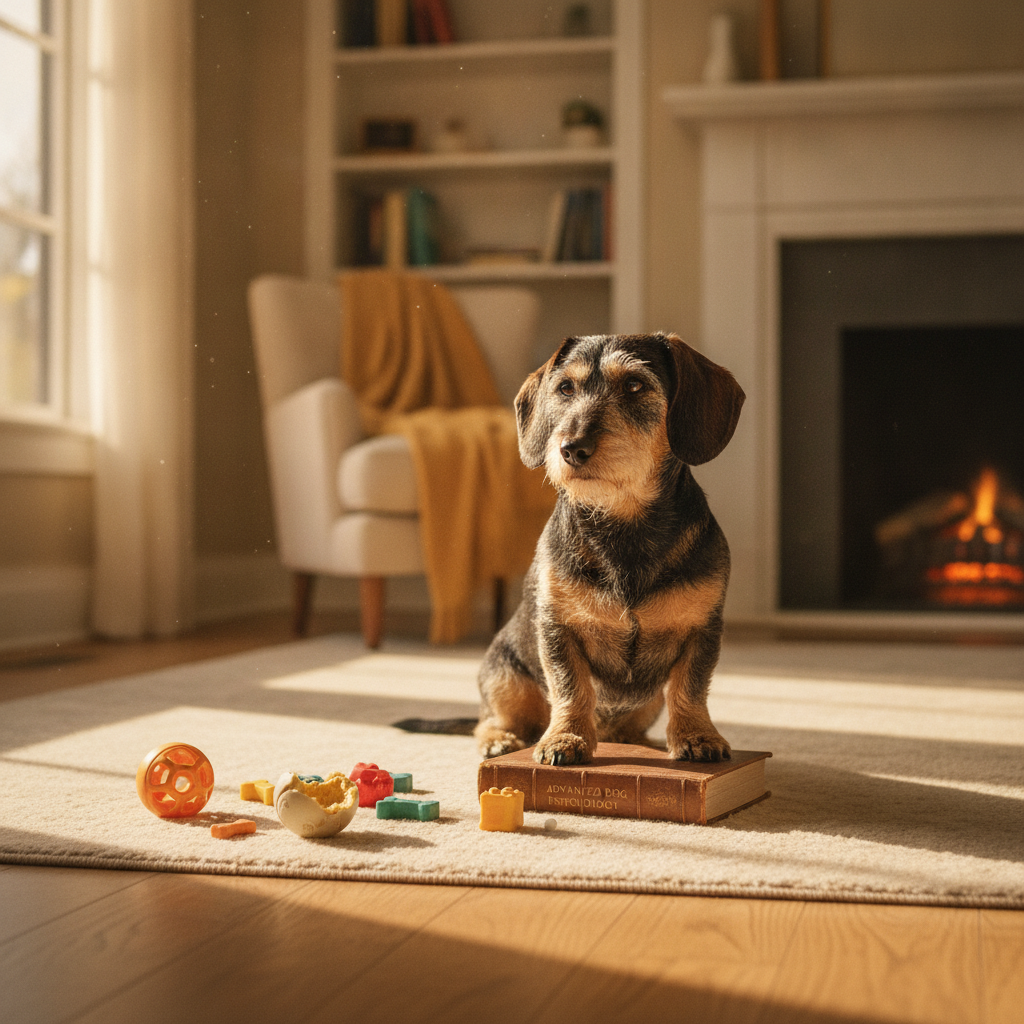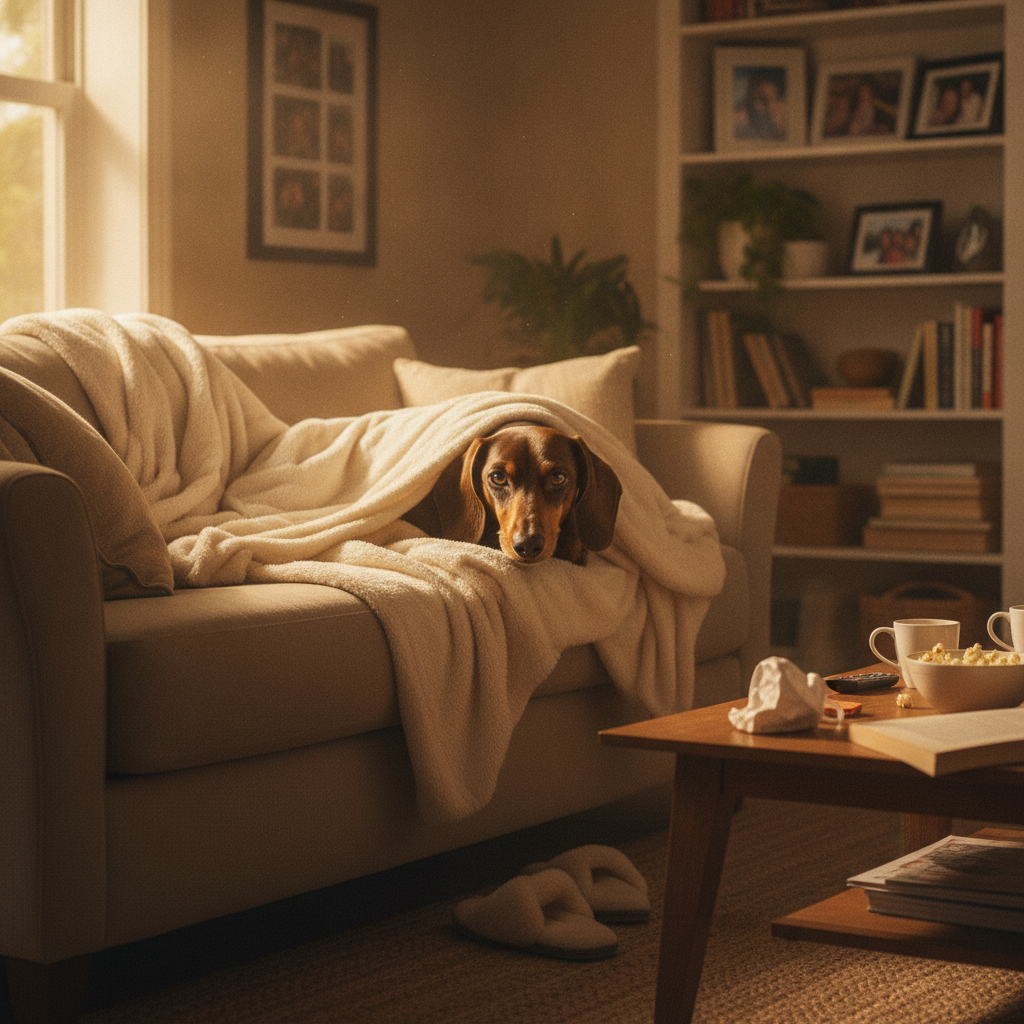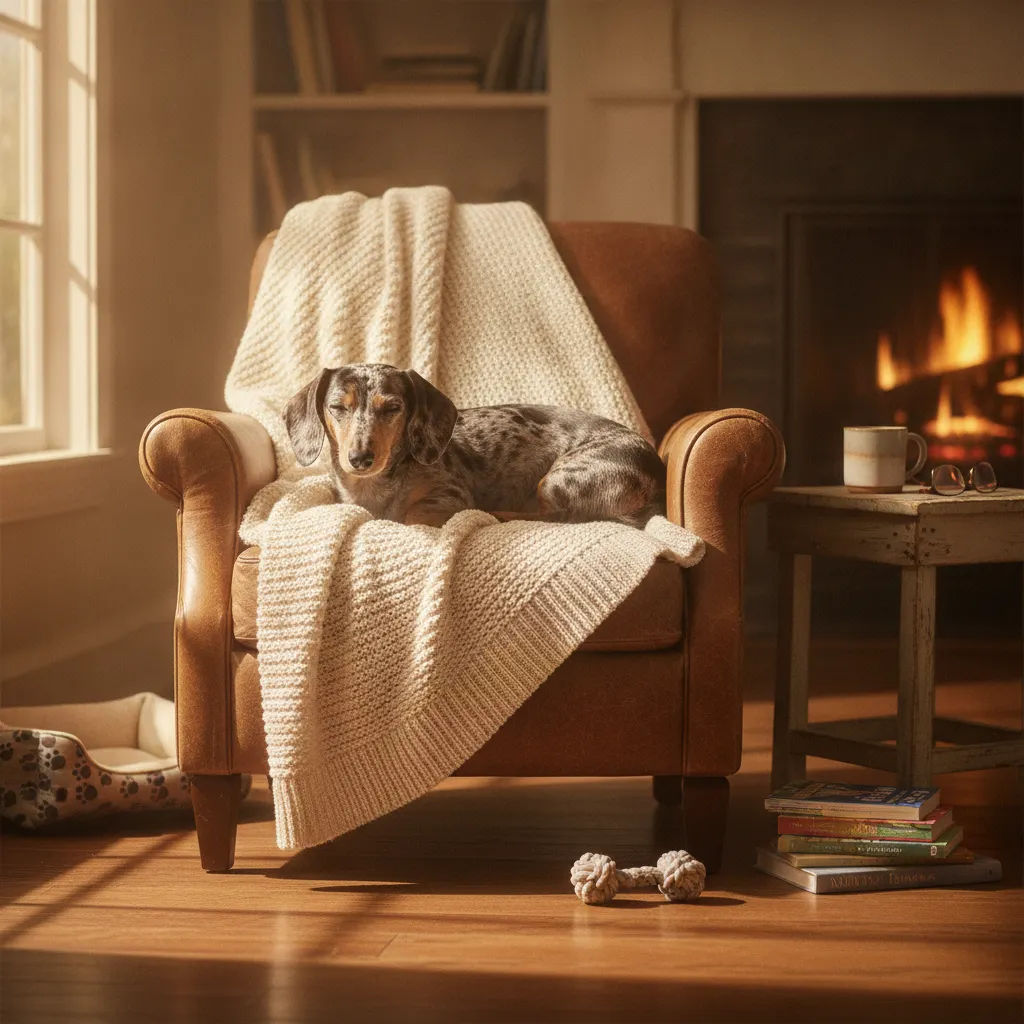
Let’s be honest. You saw a picture on the internet, didn’t you? Those soulful eyes. The ears that defy gravity. The impossibly long body on comically short legs, maybe even stuffed into a tiny cable-knit sweater. Your heart melted, and a single thought took root: “I need one.” And I get it. After nearly 20 years with my two, Marley and Mia, I still get that heart-squeeze when I see them curled up. But the internet is a highlight reel. It shows you the adorable nap, not the hour-long barking fit that preceded it. It shows you the cute head-tilt, not the puddle of defiance on your favorite rug.
The biggest problem prospective doxie parents face is a mismatch of expectations. You see a small dog and think, “Easy. Apartment-friendly. A little lap warmer.” You’re looking for a pet. What you’re actually getting is a 30-pound German badger hunter trapped in a 12-pound body, and that hunter has opinions. This isn't just one of the many reasons to get a dachshund; it's the central reason. You're signing up for a character, a comedian, and a tiny, furry dictator. When you expect a placid lap dog and get a four-legged mastermind, the frustration can be overwhelming. You might think you’re failing, that your dog is “bad,” or that you’re doing something wrong.
You’ve probably done your research. You’ve read the dry breed descriptions on kennel club websites that use polite terms like “courageous,” “clever,” and “independent.” But they fail to translate what that means for your daily life. “Courageous” means they will try to fight a delivery truck. “Clever” means they will figure out how to open the refrigerator. “Independent” means they will listen to your command, weigh its merits, and decide their original plan to bark at a leaf was, in fact, the better option. You’ve seen the cute videos, but you haven’t seen the 57 failed takes it took to get that perfect shot. These resources give you facts, but they don’t give you the truth of what it feels like to live with, and be outsmarted by, a sausage dog.
Here’s the reframe that changes everything: You are not getting a small dog. You are getting a very big dog on very short legs. That’s it. That’s the secret. Once you stop thinking of them as a member of the “toy” or “small breed” group and start seeing them for what they are—stubborn, intelligent, scent-driven hounds—everything clicks into place. Their baffling behaviors suddenly make perfect sense. They aren’t being bad; they are being dachshunds. And being a dachshund is a very specific, very demanding, and very rewarding job.
The 10 Brutally Honest Truths of Doxie Life
So, before you bring home that adorable little sausage, let’s talk about what you’re really signing up for. This isn't a list of cons; it's a loving, honest look at the quirks that make this breed so challenging and so utterly irresistible. These are the real reasons to get a dachshund, if you're ready for the adventure.
1. They Are Not Lap Dogs. They Are Lap Invaders.
A dachshund’s love is a physical, all-consuming force. They don’t just want to be near you; they want to be molecularly bonded to you. This means they will be on your lap when you work, under the covers with you when you sleep (hogging more space than a dog their size has any right to), and serving as your tiny, furry shadow in the bathroom. They have zero concept of personal space. But here’s the catch: it’s entirely on their terms. They are the emperors of comfort. If you dare to shift your position in a way that displeases them, you will be met with a sigh of profound disappointment and a series of disgruntled wiggles until they find their perfect spot again. They don’t ask for affection; they demand it, absorb it, and then act as if they’ve done you a great service by allowing you to be their personal heated furniture.
2. Their Bark is Bigger Than Their Body (And They Use It. A Lot.)
Dachshunds were bred to have a loud, deep bark so that hunters could locate them when they were deep inside a badger den. Your doxie has not forgotten this. They will bark at the mail carrier, a leaf blowing across the yard, a car door slamming three blocks away, a change in the atmospheric pressure, and the ghost of a squirrel from 1972. They are not just barking; they are sounding the ALARM. They are performing their sacred duty of letting their pack (you) know about every single potential threat, which, in their opinion, is everything. It’s not malicious yapping; it’s a full-throated, serious announcement. Learning to manage this is key, and it starts with understanding the ‘why’ behind the noise. It's less about stopping the bark and more about acknowledging the alert and reassuring your tiny security guard that you have the situation under control. We go into more detail in our guide on why your dachshund barks so much and how to gently manage it.
3. Potty Training is a Marathon, a Steeplechase, and a Test of Faith.
There are two things every dachshund owner will bond over: back worries and potty training sagas. The infamous doxie stubbornness is on full display here. They know what you want them to do. They simply don’t see why they should have to do it in the cold, wet grass when there is a perfectly good, warm rug right over there. Their low-slung bodies mean they feel the damp and cold more acutely, giving them one more reason to protest. Consistency, patience, and a truly absurd amount of positive reinforcement are your only weapons. You will have accidents. You will think you’ve finally cracked it, only to find a puddle of protest because it was raining. It is a journey. But when you finally get there, the victory is sweeter than you can imagine.
4. You Will Now Arrange Your Entire Home for the Dog.
The moment you bring a dachshund home, your career as an interior designer is over. Your new job is ‘canine ergonomic safety consultant.’ That beautiful, high-profile bed? Nope. That chic, leggy sofa? Not without a ramp. Every piece of furniture becomes a potential hazard for their long, delicate spine. You will find yourself constantly assessing jump heights and creating safe pathways. This isn’t about spoiling them; it’s about protecting them from Intervertebral Disc Disease (IVDD), the breed's biggest health risk. You’ll become an expert on ramps and gates, and your home will look less like a magazine spread and more like a puppy-proofed fortress. But a doxie-proof home is a safe home, and protecting that long little back will become your highest priority.
5. They Have Two Brain Modes: 'Food' and 'Is That Food?'
Dachshunds are pathologically food-motivated. This is a double-edged sword. On one hand, it makes them highly trainable... for the right price (which is usually a tiny piece of cheese). On the other hand, it makes them relentless, shameless food thieves. They will watch every bite you take with an intensity that could power a small city. They will learn the unique sound of the cheese wrapper from three rooms away. They will hoover up any crumb that hits the floor with the speed of a high-powered vacuum. My Mia once managed to pull an entire cooling rack of bacon off the counter. It was a culinary crime scene. You have to be vigilant, keep counters clear, and invest in a trash can with a lid they can’t solve like a Rubik's Cube.
6. They Weren't Just Bred to Hunt Badgers. They Were Bred to Argue With Them.
This is the root of their infamous stubbornness. A dachshund’s job was to go into a dark tunnel, alone, and face a creature much larger and meaner than itself. They had to make their own decisions, trust their own instincts, and be brave to the point of absurdity. They have never lost this trait. When your doxie refuses to come inside or insists on sniffing one particular blade of grass for ten minutes, they aren’t being disobedient. They are making an independent decision. They are weighing your request against their own deep, instinctual priorities. Your job is not to crush this spirit but to learn how to negotiate with a tiny, furry CEO who is absolutely certain they know best. It requires patience, a sense of humor, and the understanding that you are a partner, not a master.
7. Their Love Language is Burrowing.
Dachshunds are den animals. For them, security and happiness mean being buried under a mountain of soft things. Blankets, pillows, clean laundry, your duvet—it’s all fair game. You will frequently lose your dog, only to find them snoozing peacefully inside a throw pillowcase or deep within the recesses of your hamper. This burrowing instinct is deeply ingrained. Providing them with plenty of soft blankets and cozy cave beds isn’t just a luxury; it’s a necessity for their well-being. It’s their safe space, their den, their happy place. And yes, you will learn to pat down every pile of blankets before you sit on the couch.
8. You Don't Take Them for a Walk. You Accompany Them on a 'Sniffari'.
If you’re looking for a jogging partner, look elsewhere. A walk with a dachshund is not about mileage or pace. It is a slow, meandering journey of intense olfactory investigation. Their powerful hound nose is their window to the world, and they need time to read the “pee-mail” left by other dogs, track the ghost of a squirrel that passed by yesterday, and analyze every single fascinating smell. Rushing them through a walk is like dragging a book lover through a library while yelling, “No reading!” It defeats the entire purpose. Walks are for their mental enrichment. Your cardio will have to happen some other time. Embrace the sniffari, and you’ll start to see the world through their nose—a much more interesting place.
9. That Long Little Back is Your New Obsession.
This is the one truth that isn’t funny. Intervertebral Disc Disease (IVDD) is a serious risk for the breed, affecting as many as 1 in 4 dachshunds. It’s a degenerative spinal condition that can lead to pain, mobility issues, and even paralysis. But fear is not the answer; education and prevention are. This is why the furniture rule is so important. It’s why you’ll learn to support their back when you pick them up (one hand under the chest, one under the rump, like a little submarine). It’s why keeping them at a healthy weight is non-negotiable. It’s not about wrapping them in bubble wrap; it’s about making smart, daily choices to protect them. You can and should still have fun with them, focusing on back-safe activities that build core strength without risky jumping.
The most important rule I've learned in 20 years: Quirks are consistent; problems are a change. A behavior your doxie has always had is almost never the emergency—a sudden shift is. A reluctance to move, a yelp when picked up, a change in gait—those are the signs that warrant an immediate call to your vet. This is educational content, not veterinary advice, and your vet is always the final authority on your individual dog's health.
10. They Will Ruin Your Life... In The Best Possible Way.
Yes, they will chew your favorite shoes. They will bark during your important Zoom call. They will require more patience than you thought you possessed. But they will also greet you with a full-body wiggle of pure joy every time you walk in the door, even if you were only gone for five minutes. They will make you laugh until you cry with their ridiculous antics. They will snuggle up to you when you’re sad, as if they know your heart needs mending. They force you to be more present, more patient, and more in tune with the simple joys of a warm blanket and a good snack. Owning a dachshund isn’t just having a pet. It’s a lifestyle. It’s joining a pack. It’s a hilarious, frustrating, and deeply loving adventure. They are not an easy dog, but for the right person, there is no better dog in the world.
If you read through this list and found yourself nodding, laughing, and thinking, “Yes, I can handle that,” then you might just be ready. Understanding the ‘why’ behind their quirky behavior is the first step to becoming a confident, happy doxie parent. To help you get started, I’ve put all my years of experience into a simple guide. Get the free Dachshund Behavior Decoder and learn to speak their language from day one.
Frequently Asked Questions
Are dachshunds a good choice for first-time dog owners?
They can be, but it requires commitment. Their intelligence and stubbornness can be a challenge for new owners. If you're patient, consistent, and willing to learn about their unique needs (especially back safety), they can be wonderful first dogs. Many of the reasons to get a dachshund, like their loyalty and humor, make the effort worthwhile.
Are dachshunds really that hard to potty train?
They are notoriously one of the more difficult breeds to housebreak. Their stubborn streak and aversion to bad weather play a big role. Success requires a very strict schedule, endless patience, and tons of positive reinforcement. It's a marathon, not a sprint.
Do all dachshunds get back problems like IVDD?
Not all of them, but the breed is genetically predisposed to it, with some studies suggesting up to 25% are affected at some point. Prevention is key: keep them at a lean weight, use ramps for furniture, and avoid activities that involve a lot of jumping. Proactive care significantly reduces the risk.
How much exercise do dachshunds need?
They need moderate exercise. Two shorter walks a day (or 'sniffaris') plus some playtime is usually sufficient. It's more about mental stimulation than physical exhaustion. Games that engage their brain, like those in our brain games guide, are just as important as physical walks to prevent boredom and mischief.
Are dachshunds good with children and other pets?
It depends on the individual dog and proper socialization. They can be wonderful with children who are taught to be gentle and respect the dog's space, especially their back. With other pets, early and positive introductions are crucial, as their hunting instincts can sometimes kick in with smaller animals.
Is getting a dachshund worth all the trouble?
For the right person, absolutely. The challenges are real, but the rewards are immense. The deep bond, constant entertainment, and unwavering loyalty you get from a dachshund are unparalleled. The best reasons to get a dachshund are the ones you discover after they've already stolen your heart (and your spot on the couch).
dachshund breed info · new dachshund owner · dachshund personality · dachshund pros and cons